
200+ crypto news providers in one place.

CoinFeather
200+ crypto news providers in one place.

Quick market read from this story
Ripple expands payments platform to offer end-to-end stablecoin infrastructure
New capabilities include managed custody, virtual account collections, and fiat-to-stablecoin settlement
Ripple's payments platform has processed over $100 billion in total volume
The expansion positions Ripple as a single provider for enterprise digital asset payments across 60 markets.
Deep Dive
Ripple has significantly expanded its payments platform, transforming it into a comprehensive infrastructure layer for both fiat and stablecoin money movement. This strategic move positions Ripple as a single provider for enterprise digital asset payments, offering managed custody, virtual account collections, and fiat-to-stablecoin settlement capabilities across 60 markets.
The expanded platform allows businesses to collect, hold, exchange, and pay out funds in traditional currencies and stablecoins through a unified provider. This eliminates the need for businesses to integrate multiple vendors for separate functions like custody, collections, conversion, and settlement.
These new capabilities are bolstered by two recent acquisitions: Palisade, which provides managed custody and treasury automation, enabling businesses to provision wallets and manage funds efficiently; and Rail, a virtual accounts and collections platform that facilitates fiat and stablecoin pay-ins via named virtual accounts with automated processing.
Monica Long, president at Ripple, stated that the company has built an infrastructure blueprint for blockchain-based enterprise solutions designed for regulated finance operating at a global scale. This aims to provide fintechs and financial institutions with infrastructure that handles digital assets with the same rigor as traditional finance.
Ripple announced that its platform has processed over $100 billion in total volume. This achievement occurs amidst a broader trend of increasing stablecoin adoption, with global annual transaction volumes reaching $33 trillion and stablecoins now representing 30% of all on-chain transaction volume.
While XRP has experienced price pressure, the payments business operates independently of the token's market performance. The ongoing institutional adoption suggests traction for Ripple's enterprise strategy, irrespective of spot market fluctuations.
Source, catalyst, and sector overlap from the latest feed.
US spot Bitcoin ETFs saw $1.4 billion in inflows over 5 days. Bitfinex analysts suggest ETF inflows may not translate to immediate spot market buying. ETF creation/redemption mechanics can cause a lag between demand and actual BTC purchases. This lag may explain Bitcoin's price stagnation despite significant ETF inflows.
Bitcoin failed to hold $70,000, now trading around $67,600. Ether and Solana experienced declines, with Solana being the worst weekly performer. Asian equities saw significant drops, with South Korean stocks at multi-year lows due to Middle East tensions. Market sentiment is cautious, awaiting clarity on the Iran situation and its impact on traditional markets and oil prices.
Polymarket has removed nuclear detonation prediction markets due to public outcry and scrutiny. Concerns about insider trading on war and military actions have intensified. Previous nuclear detonation markets had significant trading volume, with one contract showing a 19% implied chance in 2023. Regulators are considering rules to bar event contracts tied to war and other sensitive topics.
Bitcoin rebounds toward $70,000 driven by short-covering after geopolitical fears did not escalate. BTC ETFs attracted $1.45 billion in net inflows over the past five trading days. On-chain and derivatives data show improving spot demand but cautious positioning. Momentum indicators are recovering but remain below neutral levels, indicating hesitant market conviction.
Donald Trump urges passage of the Clarity Act to prevent crypto industry moving overseas. Banking industry opposes stablecoin yield offerings, fearing deposit flight. Negotiations continue between banking and crypto sectors over market structure bill language. The Clarity Act aims to regulate stablecoins and market structure, with ongoing debate on yield provisions.
Pantera-backed Solana Company launches Pacific Backbone infrastructure expansion in APAC. Project aims to improve Solana staking, validator operations, and performance for market makers. Company holds over 2.2 million SOL and shifts strategy from treasury to active staking and liquidity services. HSDT shares fell 8.3% following the announcement, with broader crypto stocks also trading lower.
Ripple Payments expanded to over 60 markets with new stablecoin and fiat collection, custody, and liquidity tools. The platform now supports unified collections and advanced liquidity features, aiming to reduce vendor complexity for businesses. Over $100 billion in volume has been processed, with more than 75 licenses globally, targeting financial institutions and fintechs. XRP price action remains volatile, with analysts suggesting a potential fractal pattern indicating a move higher later in March.
BitGo expands MiCA-compliant crypto-as-a-service to 30 EEA countries. Service enables banks and fintechs to integrate licensed custody, payments, and trading via API. Offering includes multi-asset wallets, SEPA fiat rails, and $250 million in insured custodial wallets. Expansion follows MiCA implementation, aligning with broader European institutional adoption of digital assets.
OpenAI released GPT-5.3 Instant, updating ChatGPT's default model for improved accuracy and conversational flow. The new model reduces unnecessary refusals and disclaimers, aiming for more direct and helpful user interactions. Internal evaluations show hallucination rates dropped by nearly 30% with web use and 19.7% without. GPT-5.2 Instant will be retired on June 3, marking a transition period for users.
Ripple expands stablecoin payments platform for banks and fintechs. Platform upgrade supports collection, custody, conversion, and payout of stablecoins. Aims to reduce reliance on pre-funded accounts and correspondent banking networks. Ripple USD (RLUSD) supply reaches $1.5 billion.
XRP experienced a 45% price drop in the past month, but network activity increased by 30%. Three AI models project XRP prices ranging from $1.50-$2 (utility-driven), $3-$5 (cyclical growth), to potential double-digit figures (liquidity shock scenario). Future price action depends on institutional adoption, broader market cycles, and XRP Ledger utility growth. Short-term price movements are heavily influenced by market sentiment, while long-term trends align with utility and adoption.
Circle minted $1 billion in USDC on Solana in hours. Total 2026 USDC issuance on Solana reaches $23.75 billion. Minting fuels liquidity for trading, DeFi, and new token launches on Solana. Surge viewed as significant 'dry powder' for market deployment.
Tether's US stablecoin (USAT) passed its first independent reserve check by Deloitte. Reserves for USAT were $17.6 million against $17.5 million in circulation, a 100.57% backing ratio. Deloitte's attestation is for USAT reserves only, not Tether's broader operations. USAT is positioned as a regulated competitor to USDC in the US institutional market.
Former LAPD officer convicted of kidnapping and stealing $350K in Bitcoin. Conviction stems from a 2024 home invasion where victim was threatened with death. Case highlights the increasing trend of violent 'wrench attacks' targeting crypto holders. CertiK reported a 75% increase in wrench attacks globally in 2025.
Indiana governor signed House Bill 1042 into law, allowing crypto in retirement plans. State retirement and savings plans must offer crypto investment options by July 2027. Bill also bars public agencies from enforcing rules against crypto payments, self-custody, or mining. Clarifies non-custodial transfers do not require a money transmitter license.
Live Feed
Loading the broader stream in the same flow as the homepage feed.

22 of 36 top AI models favored Bitcoin over fiat in simulated economic tests No AI models selected fiat as their preferred currency AI models evaluated Bitcoin's properties for store of value, payments, and settlement efficiency
472 million XRP, valued at $652 million, moved to Binance, marking record February inflows. XRP is exhibiting resilience with higher highs and higher lows despite macro headwinds. Analysts suggest XRP is at a liquidity crossroads, facing potential volatility due to exchange inflows and macro risks. XRP transactions are confirmed immutable by Ripple CTO.
Ethereum validator queue reaches 3.4 million ETH, a significant increase from 904,000 ETH in early January. New validators face an estimated 60-day wait to activate, indicating strong demand for staking. This surge suggests investors are choosing to stake ETH for yield rather than sell in current market conditions.

Upbit has listed the EDGE token. Trading pairs include KRW, BTC, and USDT. EDGE is an on-chain trading platform aggregator.
Binance plans to secure five additional regulatory licenses in Asia this year. Asia-Pacific region saw a 69% year-over-year increase in crypto transaction volume, reaching $2.36 trillion. Binance's strategy involves hyperlocalization to adapt operations to local regulatory standards. Seven Asian nations are among the top 10 in Chainalysis' Global Crypto Adoption Index.

Korean stock markets (Kospi, Kosdaq) dropped over 10%, triggering circuit breakers due to Middle East conflict. Global stock markets experienced significant losses, with Japan's Nikkei down nearly 4% and Hong Kong's Hang Seng down 3%. Crude oil prices surged, with Brent up 14% and WTI up 12%, impacting oil-importing nations like South Korea. Crypto market capitalization saw a minor dip of 0.5% despite the broader geopolitical shock.

Selling pressure on Bitcoin has subsided as BTC approaches $70,000 after a drop to $59,000. Analysts at 10x Research suggest the worst phase of selling may be over, citing stable price action despite negative news. Bollinger Bands are tightening, indicating potential for a larger move, but the long-term trend remains bearish due to macro factors. Derivatives market funding rates and potential short squeezes are identified as key drivers of recent price stabilization.
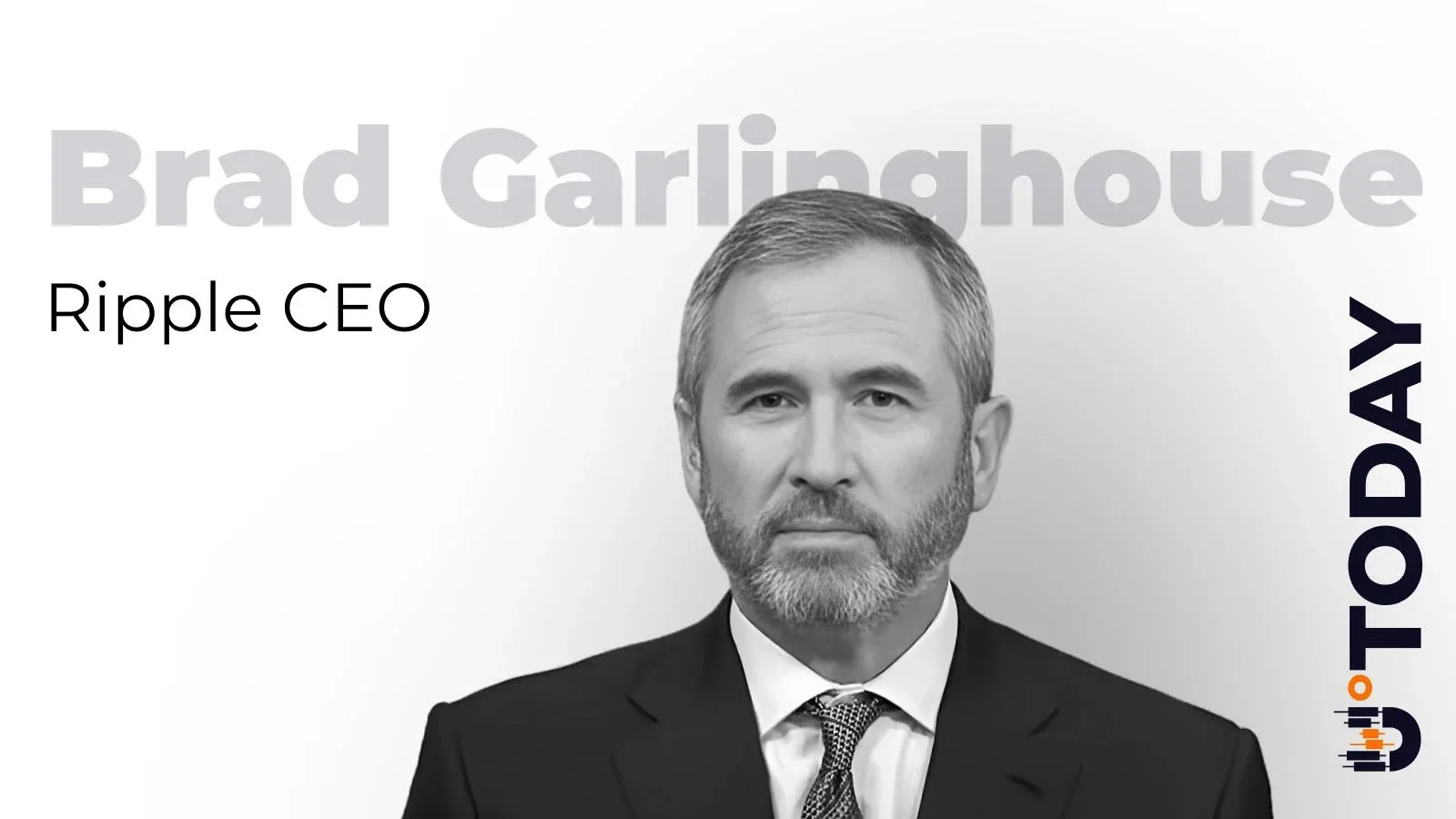
Ripple CEO Brad Garlinghouse supports the Clarity Act, stating it protects American interests. White House warns banks against obstructing the Clarity Act while reporting record profits. Garlinghouse estimates an 80-90% probability of the Clarity Act passing by April 2026. Coinbase CEO Brian Armstrong visited the White House amid ongoing regulatory discussions.

Polymarket archived nuclear detonation market after public backlash and accusations of insider trading. Over $838,000 in volume was traded on the controversial market before it was pulled. The CFTC is advancing formal rulemaking for prediction markets amid mounting overseas bans. Accusations of insider trading on war and conflict markets are drawing attention from US lawmakers and international regulators.

Binance aims to secure five new regulatory licenses in Asia this year. The exchange is expanding its presence in the growing Asia-Pacific crypto market. Binance currently holds approvals in Australia, India, Indonesia, Japan, New Zealand, and Thailand. South Korea is expected to be added following the Gopax acquisition.

Crypto perps platform Hyperliquid saw over $11.5 billion in trading volume during a weekend of geopolitical events. Traditional finance investors used crypto rails for 24/7 trading of tokenized assets like crude oil and gold. Bitwise CIO Matt Hougan now expects traditional finance to adopt on-chain trading much sooner than his previous 5-10 year estimate. The NYSE is developing a 24/7 tokenization platform, indicating broader TradFi interest in blockchain infrastructure.
Signal context only. Validate with price action, liquidity, and risk limits before taking a position.
