
Payments Sector News
Latest Payments stories with sentiment, impact, and action bias for active crypto traders.
Context filters
Narrow this sector stream by time window.
Stablecoin News: PYUSDx Launches to Power PayPal USD-Backed Stablecoins
MoonPay and M0 have launched PYUSDx, an infrastructure layer enabling developers to issue application-specific stablecoins backed by PayPal USD reserves. This move positions PayPal's stablecoin as a foundational reserve for programmable finance, potentially reducing issuance timelines from months to days. The development signifies a strategic shift for PayPal towards supporting third-party token ecosystems, moving beyond direct retail adoption. This infrastructure aims to simplify the creation of branded stablecoins, with USD.ai being the first announced user for AI infrastructure.

AI Is the Missing Link for Crypto Mass Adoption, Says Tether Co-Founder
Tether co-founder Reeve Collins argues AI is the missing link for crypto mass adoption, acting as a user-friendly interface similar to web browsers. He envisions intent-based wallets where AI handles complex on-chain actions, powered by stablecoins for 24/7 settlement. Major firms are developing AI-ready tools, signaling a potential shift towards seamless digital commerce.

SoFi Enables Direct Solana Deposits in U.S. Banking First
SoFi has become the first U.S. nationally chartered bank to enable direct on-chain Solana (SOL) deposits. This allows users to transfer SOL from private wallets into their SoFi bank accounts, bypassing traditional brokerage-style exposure. The integration leverages Solana's speed and low fees, potentially setting a new standard for crypto integration with traditional banking.

Iran crisis puts the regime's $7.8 billion crypto shadow economy in spotlight
Iran's geopolitical crisis is highlighting its significant $7.8 billion crypto "shadow economy," used by the regime for international trade and by citizens as a financial lifeline. Bitcoin mining and stablecoin adoption, particularly USDT, have surged, with the IRGC heavily involved. Renewed conflict poses risks to mining infrastructure and potentially impacts hash rates.

The 'stablecoin sandwich' is dead: Why the next phase of crypto payments is all about the user relationship
The stablecoin market is maturing, shifting focus from issuance to user distribution, according to a former Diem executive. Meta's upcoming stablecoin integration is seen as part of this trend, prioritizing direct user relationships over technical infrastructure. This pivot benefits incumbents with large user bases, like card networks, who can commoditize the underlying assets.

Midnight Network Secures Google Cloud and MoneyGram Ahead of Mainnet Launch
Midnight Network has secured Google Cloud and MoneyGram as founding node operators for its Kūkolu mainnet, launching March 2026. This partnership emphasizes "rational privacy" using Zero-Knowledge Proofs for selective disclosure, aiming to bridge traditional finance with blockchain in a regulatory-friendly manner. The participation of major institutions signals potential for increased institutional adoption and capital inflow.

Solana News: Payments.org and Payments Hub Debut as Stablecoin Volumes Reach $2T
Solana has launched payments.org and a Payments Hub to consolidate payment data, developer tools, and institutional use cases on its blockchain. The initiative highlights significant stablecoin transfer volume ($2T quarterly) and payment activity ($300M monthly), with major firms like Visa and PayPal reportedly running live payment flows. The platform aims to position Solana as a primary payment network, emphasizing low fees and 24/7 settlement capabilities.
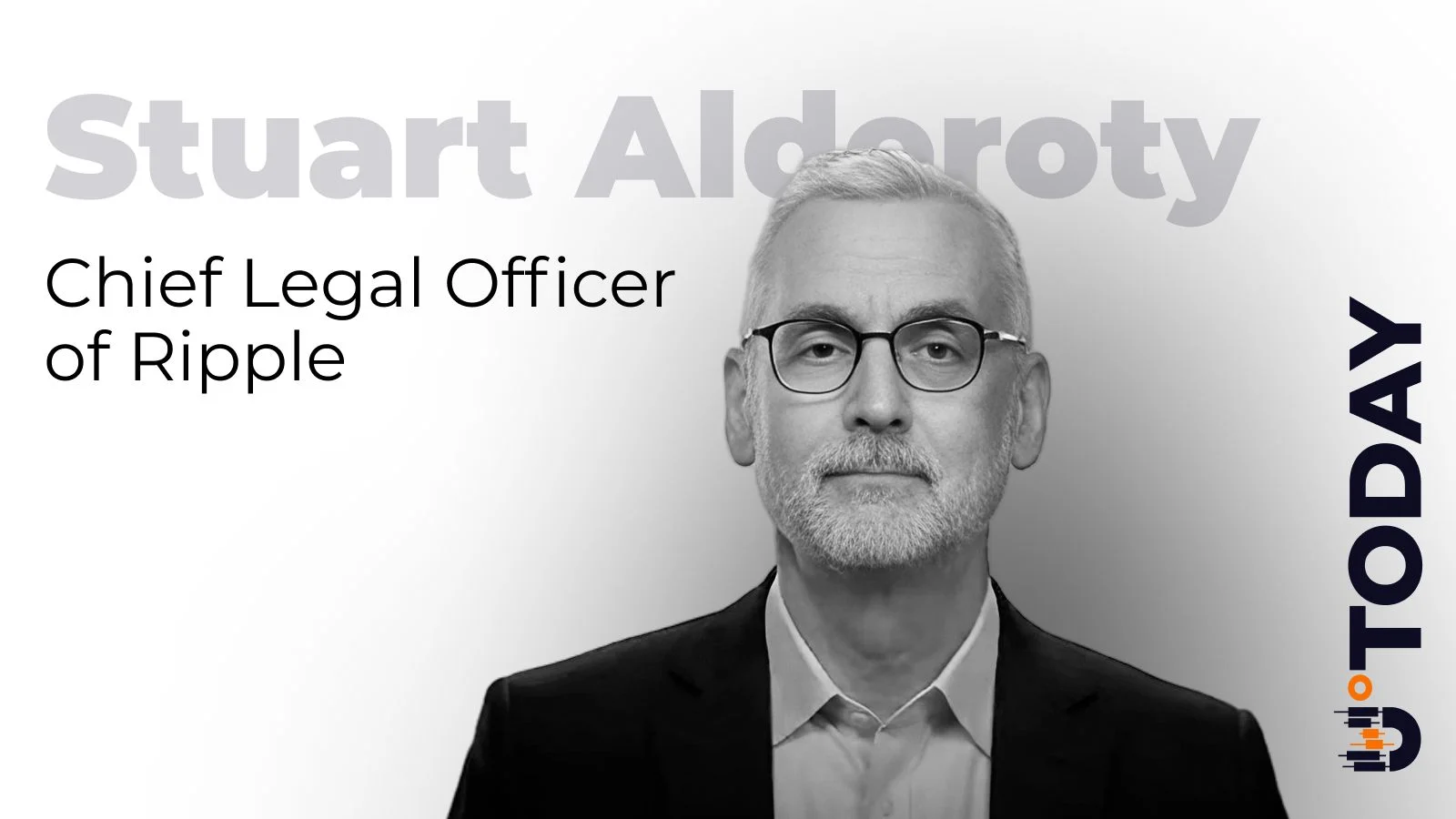
Ripple CLO Corrects The New York Times Over 'Crypto Is Useless' Narrative
Ripple's CLO, Stuart Alderoty, publicly criticized The New York Times for what he described as a "lazy and outdated" narrative portraying crypto as "useless." Alderoty, also president of the National Cryptocurrency Association, argued that crypto is vital economic infrastructure supporting millions of Americans and businesses. He offered the NCA as a resource for more balanced reporting, highlighting the ongoing efforts to shape crypto policy and legislation.
Ripple CEO Reveals The “I Was Wrong” Moment with Former SEC Chairman Gary Gensler
Ripple CEO Brad Garlinghouse claims former SEC Chairman Gary Gensler admitted "I was wrong" regarding Ripple's operations during a White House meeting. This reported acknowledgment, following the resolution of the SEC's lawsuit, is framed as a significant milestone for digital assets and regulatory dialogue. The event suggests a potential shift towards greater mainstream acceptance and collaboration between regulators and crypto innovators.
Indiana Pension Funds Set to Embrace Crypto Under New Law
Indiana has passed legislation (HEA 1042) requiring public pension funds to offer cryptocurrency investment options by 2027. This move allows public employees to access digital assets like BTC, ETH, and XRP through self-directed accounts, signaling growing institutional acceptance and potentially setting a precedent for other states.
Why Did the US Attack Iran?
Geopolitical tensions escalated as the US and Israel launched joint strikes on Iran, targeting military and nuclear facilities. This development triggered significant market fear, leading to a sharp decline in Bitcoin and other cryptocurrencies. The events have increased regional instability and raised concerns about potential retaliation.
Crypto News: Block Shrinks Workforce After 33% Bitcoin Revenue Surge
Block has laid off over 4,000 employees, representing nearly half its workforce, following a significant AI-driven efficiency boost. Despite the cuts, the company's Bitcoin business, particularly Cash App, saw a 33% surge in gross profit in Q4 2025. Block's stock reacted positively, rising 24-27% as investors rewarded the demonstrated AI-driven productivity and profitability.
Is 2026 the Year Banks Finally Adopt XRP? Clarity Act and Ripple’s Next Move
The Clarity Act, with an 80% chance of passing by April according to Ripple CEO, could classify XRP as a digital commodity. This would enable U.S. banks to adopt Ripple's On-Demand Liquidity and potentially pave the way for XRP ETFs. Ripple has built out its full-stack infrastructure in anticipation, positioning itself for institutional adoption in 2026.
Tether froze $4.2B in tokens tied to illicit activity in 3 years: Report
Tether has frozen approximately $4.2 billion in USDt linked to illicit activities over the past three years, with a significant portion frozen since 2023. This action highlights increasing reliance on stablecoin issuers by authorities to combat fraud and sanctions evasion. Concurrently, USDt is experiencing its largest monthly supply drop in three years, though Tether attributes this to distribution changes rather than demand.

PayPal and MoonPay Let Anyone Launch Their Own Stablecoin – Here’s How
PayPal, MoonPay, and M0 have launched PYUSDx, a framework enabling developers to create custom stablecoins backed by PayPal USD (PYUSD). This initiative allows for branded tokens for specific applications, with USD.ai focused on AI infrastructure payments as an early use case. The structure aims to simplify stablecoin issuance on regulated rails, potentially shifting towards modular, application-layer stablecoins.
Barclays Bets on Blockchain to Future-Proof Its Banking Infrastructure
Barclays is actively developing a blockchain-based platform to modernize its core banking infrastructure, focusing on payments, deposits, and settlements. The bank aims to replace legacy systems with a real-time, 24/7 solution capable of handling stablecoins and tokenized deposits. Vendor selection is expected by April 2026, indicating a strategic push into digital asset settlement following its investment in Ubyx.

Crypto News: MetaMask Launches 3% Cashback Card Amid Crypto’s Shift Into Banking
MetaMask has launched its Mastercard-powered card across the US, offering up to 3% cashback in its native stablecoin, mUSD. This move signifies a broader industry trend of crypto platforms integrating with traditional finance infrastructure, akin to neobanks. While the card aims to drive real-world stablecoin spending, its success hinges on user adoption beyond speculation, with only a small fraction of stablecoin transactions currently used for goods and services.

Tether Freezes $4.2B in USDT to Fight Crime
Tether has frozen $4.2 billion in USDT, with $3.5 billion frozen since 2023, to combat illicit activities. This action, including blocking $61 million linked to "pig-butchering" scams, highlights Tether's ability to remotely freeze tokens upon authority requests. The move demonstrates stablecoin utility in fighting crypto crime, amidst a circulating supply exceeding $180 billion.

