
200+ crypto news providers in one place.

CoinFeather
200+ crypto news providers in one place.
Quick market read from this story
Binance aims to secure five new regulatory licenses in Asia this year
The exchange is expanding its presence in the growing Asia-Pacific crypto market
Binance currently holds approvals in Australia, India, Indonesia, Japan, New Zealand, and Thailand
South Korea is expected to be added following the Gopax acquisition.
Deep Dive
Binance is strategically expanding its footprint in Asia by targeting the acquisition of five additional regulatory licenses within the current year. This move is driven by the region's rapidly expanding cryptocurrency market. The exchange has already secured approvals in key markets including Australia, India, Indonesia, Japan, New Zealand, and Thailand. Furthermore, Binance anticipates adding South Korea to its list of licensed jurisdictions following its planned acquisition of the Gopax exchange.
The Asia-Pacific region is identified as a critical market for Binance due to the accelerating adoption of cryptocurrencies. The company emphasizes its commitment to enhancing compliance measures and actively collaborating with regulatory bodies as it pursues new licenses across several Asian territories.
Source, catalyst, and sector overlap from the latest feed.
22 of 36 top AI models favored Bitcoin over fiat in simulated economic tests No AI models selected fiat as their preferred currency AI models evaluated Bitcoin's properties for store of value, payments, and settlement efficiency
XRP experienced a 45% price drop in the past month, but network activity increased by 30%. Three AI models project XRP prices ranging from $1.50-$2 (utility-driven), $3-$5 (cyclical growth), to potential double-digit figures (liquidity shock scenario). Future price action depends on institutional adoption, broader market cycles, and XRP Ledger utility growth. Short-term price movements are heavily influenced by market sentiment, while long-term trends align with utility and adoption.
Live Feed
Loading the broader stream in the same flow as the homepage feed.
Tether's US stablecoin (USAT) passed its first independent reserve check by Deloitte. Reserves for USAT were $17.6 million against $17.5 million in circulation, a 100.57% backing ratio. Deloitte's attestation is for USAT reserves only, not Tether's broader operations. USAT is positioned as a regulated competitor to USDC in the US institutional market.
Korean stock markets (Kospi, Kosdaq) dropped over 10%, triggering circuit breakers due to Middle East conflict. Global stock markets experienced significant losses, with Japan's Nikkei down nearly 4% and Hong Kong's Hang Seng down 3%. Crude oil prices surged, with Brent up 14% and WTI up 12%, impacting oil-importing nations like South Korea. Crypto market capitalization saw a minor dip of 0.5% despite the broader geopolitical shock.
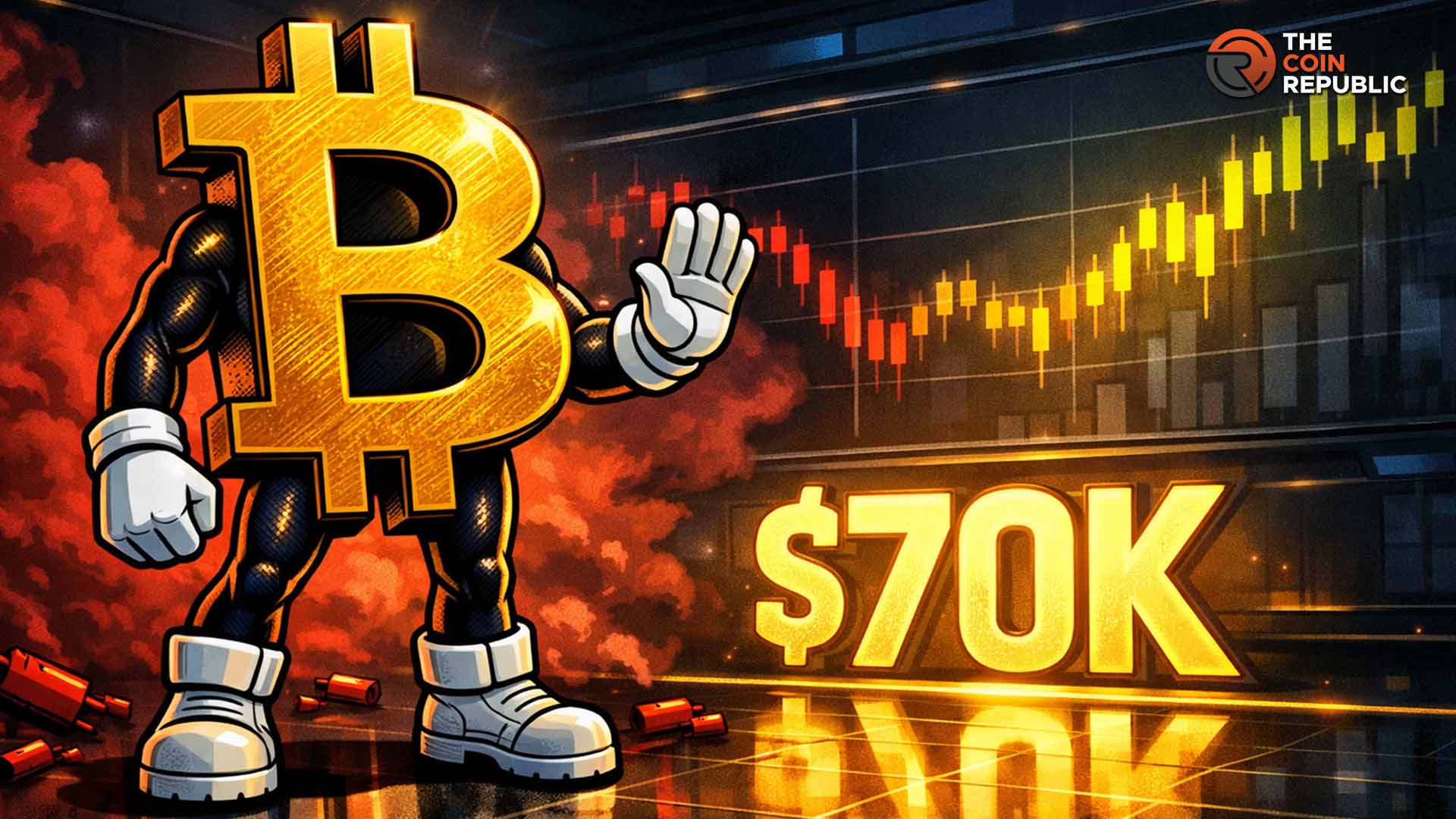
Selling pressure on Bitcoin has subsided as BTC approaches $70,000 after a drop to $59,000. Analysts at 10x Research suggest the worst phase of selling may be over, citing stable price action despite negative news. Bollinger Bands are tightening, indicating potential for a larger move, but the long-term trend remains bearish due to macro factors. Derivatives market funding rates and potential short squeezes are identified as key drivers of recent price stabilization.

Bitcoin failed to hold $70,000, now trading around $67,600. Ether and Solana experienced declines, with Solana being the worst weekly performer. Asian equities saw significant drops, with South Korean stocks at multi-year lows due to Middle East tensions. Market sentiment is cautious, awaiting clarity on the Iran situation and its impact on traditional markets and oil prices.

Pantera-backed Solana Company launches Pacific Backbone infrastructure expansion in APAC. Project aims to improve Solana staking, validator operations, and performance for market makers. Company holds over 2.2 million SOL and shifts strategy from treasury to active staking and liquidity services. HSDT shares fell 8.3% following the announcement, with broader crypto stocks also trading lower.

Ripple expands payments platform to offer end-to-end stablecoin infrastructure. New capabilities include managed custody, virtual account collections, and fiat-to-stablecoin settlement. Ripple's payments platform has processed over $100 billion in total volume. The expansion positions Ripple as a single provider for enterprise digital asset payments across 60 markets.

Crypto perps platform Hyperliquid saw over $11.5 billion in trading volume during a weekend of geopolitical events. Traditional finance investors used crypto rails for 24/7 trading of tokenized assets like crude oil and gold. Bitwise CIO Matt Hougan now expects traditional finance to adopt on-chain trading much sooner than his previous 5-10 year estimate. The NYSE is developing a 24/7 tokenization platform, indicating broader TradFi interest in blockchain infrastructure.
Signal context only. Validate with price action, liquidity, and risk limits before taking a position.
