
200+ crypto news providers in one place.

CoinFeather
200+ crypto news providers in one place.

Quick market read from this story
Bitcoin rebounds toward $70,000 driven by short-covering after geopolitical fears did not escalate
BTC ETFs attracted $1.45 billion in net inflows over the past five trading days
On-chain and derivatives data show improving spot demand but cautious positioning
Momentum indicators are recovering but remain below neutral levels, indicating hesitant market conviction.
Deep Dive
Source, catalyst, and sector overlap from the latest feed.
Bitcoin failed to hold $70,000, now trading around $67,600. Ether and Solana experienced declines, with Solana being the worst weekly performer. Asian equities saw significant drops, with South Korean stocks at multi-year lows due to Middle East tensions. Market sentiment is cautious, awaiting clarity on the Iran situation and its impact on traditional markets and oil prices.
Live Feed
Loading the broader stream in the same flow as the homepage feed.

Binance aims to secure five new regulatory licenses in Asia this year. The exchange is expanding its presence in the growing Asia-Pacific crypto market. Binance currently holds approvals in Australia, India, Indonesia, Japan, New Zealand, and Thailand. South Korea is expected to be added following the Gopax acquisition.

38% of altcoins are trading near all-time lows, a deeper slide than post-FTX. ALTS/BTC monthly MACD has remained green for three consecutive months, a first this cycle. A high percentage of altcoins near ATL combined with improving momentum suggests potential for a wider move. Capital rotation back into altcoins against Bitcoin is a key feature of altcoin season.

48.3% of AI models chose Bitcoin as their top monetary instrument in a Bitcoin Policy Institute study. 79.1% of AI models preferred Bitcoin for preserving purchasing power over multi-year horizons. Stablecoins were preferred for payment scenarios and cross-border transfers by 53.2% of AI models. 91% of AI models chose a digital instrument over fiat currency.

Former Trump advisor David Bailey states US government support for Bitcoin needs to move beyond rhetoric to tangible actions. The US government has yet to begin accumulating Bitcoin for a Strategic Bitcoin Reserve, despite an executive order. Bailey believes Bitcoin will succeed regardless of government action, but government support could accelerate its success. The CLARITY Act and market structure are also mentioned as potential regulatory developments.

Ethereum staking entry queue reaches 3.4 million ETH, creating an estimated 60-day backlog. Demand for staking is driven by corporates and exchanges seeking yield on large ETH holdings. This represents a shift from late 2025 when the exit queue was significantly larger. Analysts suggest this indicates a more defensive institutional stance and potential for ETH outperformance due to payments and AI narratives.
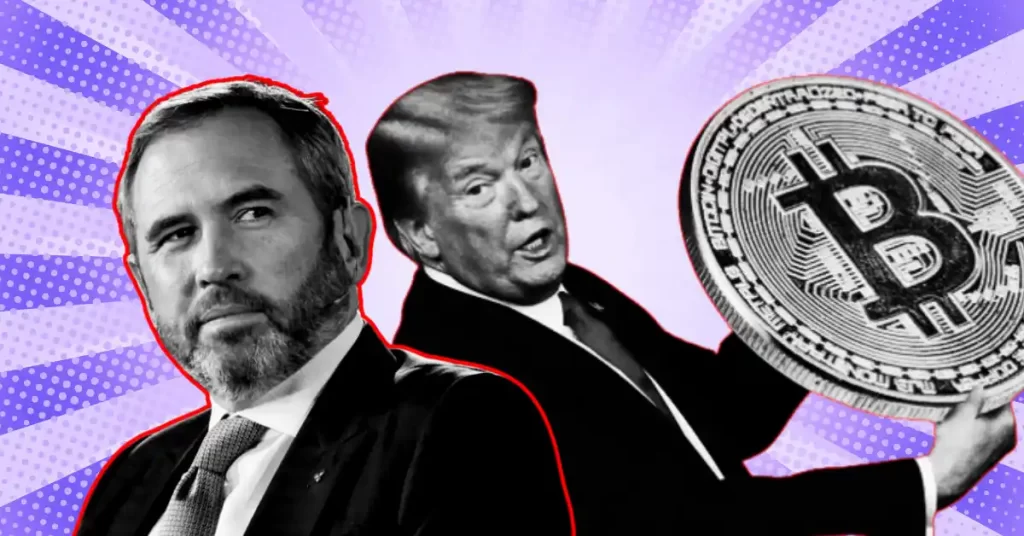
Donald Trump backs CLARITY Act, warns banks against undermining US crypto agenda. Ripple CEO Brad Garlinghouse calls Trump's message 'extremely pointed' regarding crypto legislation delays. US political figures and industry voices express urgency for crypto market structure legislation. Regulatory clarity is cited as crucial for US firms to compete internationally and foster innovation.

ECB warns stablecoin adoption undermines eurozone monetary policy transmission and financial stability. ECB estimates a 10% stablecoin market cap increase reduces bank lending by 0.2%. Widespread stablecoin adoption could import US monetary conditions to Europe due to dollar backing. ECB projects accelerated effects if stablecoin market cap reaches $2-4 trillion by 2030.

Australia could gain $17 billion annually from tokenized markets and digital assets with regulatory progress. Current trajectory without regulatory changes projects only $710 million in gains by 2030. Key recommendations include a regulatory sandbox for testing tokenized financial market use cases. Tokenized government bonds and CBDCs are suggested for deployment within the sandbox.

22 of 36 AI models preferred Bitcoin over fiat and other digital assets in simulations. No AI model selected fiat currency as its top monetary preference. Stablecoins were favored for medium of exchange and settlement roles (53.2% and 43%) over Bitcoin (36% and 30.9%). Anthropic models showed the strongest Bitcoin preference at 68.0%.

Donald Trump criticizes banks for stalling the crypto market structure bill (GENIUS Act/CLARITY Act). Banks are lobbying against stablecoin yield payments, citing risks to the banking system. The GENIUS Act aims to regulate stablecoins but bans direct yield payments to holders. House Representative French Hill suggests the Senate adopt the House's CLARITY Act if no agreement is reached.

Colombian Supreme Court rejected an appeal based on AI detection, only for its own ruling to be flagged by the same tools. AI detection software has demonstrated unreliable and inconsistent results, flagging human-written text as AI-generated. Experts and studies confirm the inaccuracy of AI detection tools, with some universities disabling them. Colombia's judicial branch has issued guidelines regulating AI use, emphasizing human review for sensitive tasks.
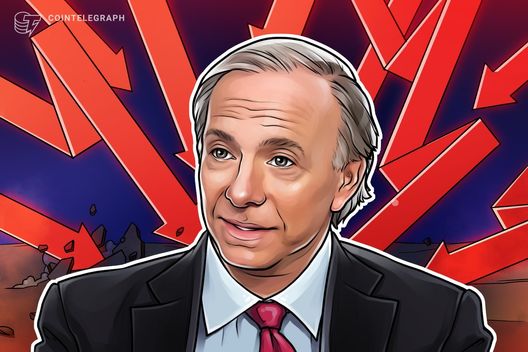
Ray Dalio expresses skepticism about Bitcoin's role as a safe-haven asset and digital gold. Dalio cites Bitcoin's lack of central bank support, privacy concerns, and quantum computing vulnerability. He contrasts Bitcoin with gold, highlighting gold's established status as a reserve currency and safe haven. Dalio previously suggested a 15% portfolio allocation to Bitcoin or gold for risk-return optimization.
Signal context only. Validate with price action, liquidity, and risk limits before taking a position.
Ripple expands payments platform to offer end-to-end stablecoin infrastructure. New capabilities include managed custody, virtual account collections, and fiat-to-stablecoin settlement. Ripple's payments platform has processed over $100 billion in total volume. The expansion positions Ripple as a single provider for enterprise digital asset payments across 60 markets.
