
200+ crypto news providers in one place.

CoinFeather
200+ crypto news providers in one place.

Quick market read from this story
Ray Dalio expresses skepticism about Bitcoin's role as a safe-haven asset and digital gold
Dalio cites Bitcoin's lack of central bank support, privacy concerns, and quantum computing vulnerability
He contrasts Bitcoin with gold, highlighting gold's established status as a reserve currency and safe haven
Dalio previously suggested a 15% portfolio allocation to Bitcoin or gold for risk-return optimization.
Deep Dive
Ray Dalio, a prominent investor, has expressed skepticism about Bitcoin's viability as a long-term store of value and safe-haven asset. He cited a lack of central bank support, privacy concerns, and potential threats from quantum computing as key drawbacks.
Speaking on the All-In Podcast, Dalio stated that Bitcoin cannot function as digital gold, asserting that "there is only one gold." He described gold as the most established money and the second-largest reserve currency held by central banks, questioning why central banks would opt for Bitcoin over gold. Dalio previously acknowledged Bitcoin's hard money characteristics and its correlation with tech stocks, noting that supply and demand could be impacted by market squeezes.
“So, from an ownership perspective, supply and demand can be affected if somebody gets squeezed in one area and has to sell something else they hold.”
He also highlighted Bitcoin's transactional transparency, where "any transaction can be monitored," and the potential risk posed by quantum computing to the network.
In July, Dalio had suggested a 15% allocation to Bitcoin or gold for an optimal return-to-risk ratio, citing America's debt issues and currency debasement. Between July and early October, both Bitcoin and gold saw gains. However, a subsequent crypto market crash led to significant losses in leveraged positions. Since its October peak, Bitcoin has fallen over 45% to $68,420, while gold has risen over 30% to $5,120 during the same period.
Dalio recently warned that the global World Order, led by the US for decades, has "broken down." He advised investors to reconsider wealth preservation strategies amidst increasing geopolitical conflict and economic instability. He reiterated his long-standing belief that stores of value, particularly gold, are the most effective means to preserve wealth when currencies weaken and credit systems face breakdown, making debt assets vulnerable.
Source, catalyst, and sector overlap from the latest feed.
Australia could gain $17 billion annually from tokenized markets and digital assets with regulatory progress. Current trajectory without regulatory changes projects only $710 million in gains by 2030. Key recommendations include a regulatory sandbox for testing tokenized financial market use cases. Tokenized government bonds and CBDCs are suggested for deployment within the sandbox.
Donald Trump criticizes banks for stalling the crypto market structure bill (GENIUS Act/CLARITY Act). Banks are lobbying against stablecoin yield payments, citing risks to the banking system. The GENIUS Act aims to regulate stablecoins but bans direct yield payments to holders. House Representative French Hill suggests the Senate adopt the House's CLARITY Act if no agreement is reached.
Crypto industry PACs are spending millions on US party primaries for the 2026 midterm elections. The outcome of these primaries could influence future crypto legislation in Congress. Super PACs like Fairshake have significant funds and a track record of influencing elections to support pro-crypto candidates. Specific races, such as the Texas Senate primary, are seeing substantial political spending.
Bitcoin functions as everyday money in parts of Africa, not just a store of value. Merchants in some African economies prefer satoshis over dollars due to rapid inflation. Sub-Saharan Africa saw over $205 billion in onchain value from July 2024 to June 2025, a 52% year-on-year increase. Retail transfers under $10,000 represent over 8% of total value sent in Sub-Saharan Africa, indicating strong retail adoption.
CFTC Chair Michael Selig anticipates "true perpetual futures" for cryptocurrencies in the US within the next month. The CFTC is also preparing to issue guidance on prediction markets soon. Discussions on a market structure bill are ongoing, with a need for Congressional clarity for the SEC and CFTC. The CFTC aims to bring offshore liquidity back to the US by addressing these market structures.
Live Feed
Loading the broader stream in the same flow as the homepage feed.
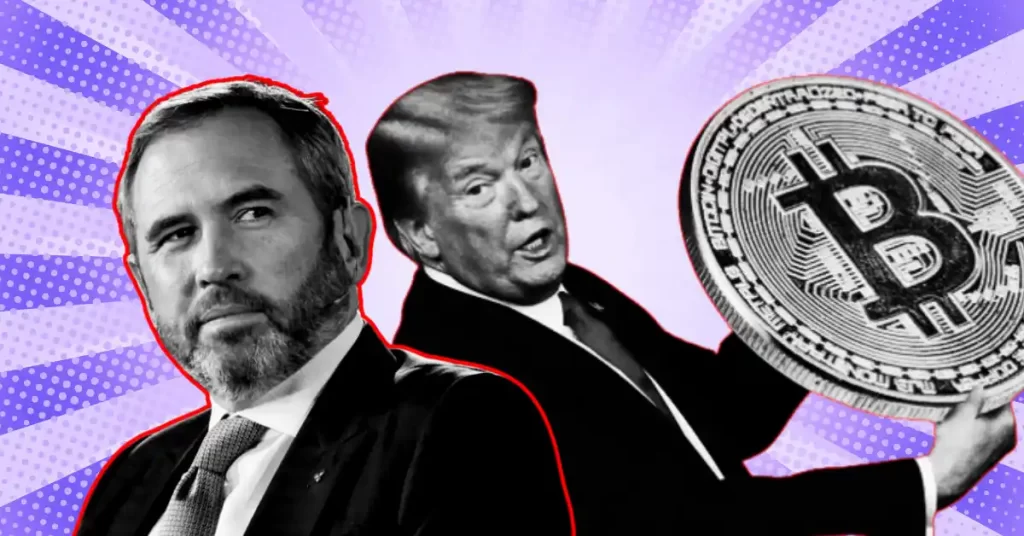
Donald Trump backs CLARITY Act, warns banks against undermining US crypto agenda. Ripple CEO Brad Garlinghouse calls Trump's message 'extremely pointed' regarding crypto legislation delays. US political figures and industry voices express urgency for crypto market structure legislation. Regulatory clarity is cited as crucial for US firms to compete internationally and foster innovation.

ECB warns stablecoin adoption undermines eurozone monetary policy transmission and financial stability. ECB estimates a 10% stablecoin market cap increase reduces bank lending by 0.2%. Widespread stablecoin adoption could import US monetary conditions to Europe due to dollar backing. ECB projects accelerated effects if stablecoin market cap reaches $2-4 trillion by 2030.

22 of 36 AI models preferred Bitcoin over fiat and other digital assets in simulations. No AI model selected fiat currency as its top monetary preference. Stablecoins were favored for medium of exchange and settlement roles (53.2% and 43%) over Bitcoin (36% and 30.9%). Anthropic models showed the strongest Bitcoin preference at 68.0%.

Colombian Supreme Court rejected an appeal based on AI detection, only for its own ruling to be flagged by the same tools. AI detection software has demonstrated unreliable and inconsistent results, flagging human-written text as AI-generated. Experts and studies confirm the inaccuracy of AI detection tools, with some universities disabling them. Colombia's judicial branch has issued guidelines regulating AI use, emphasizing human review for sensitive tasks.

Shiba Inu (SHIB) price has fallen to 2023 levels with successive technical failures. XRP shows a modest attempt at stabilization with a short-term rising support line, but overall trend remains negative. Bitcoin (BTC) is consolidating below $70,000 after bouncing from $63,000, with increasing volume supporting the recovery. Market sentiment is weak due to institutional uncertainty and low retail liquidity.

X will suspend creators from its revenue-sharing program for 90 days if they post undisclosed AI-generated war videos. The policy aims to prevent manipulation and ensure access to authentic information during wartime. Violators face permanent removal from the monetization program for repeat offenses. This policy targets the financial incentives for creators to post misleading AI-generated content.

Indiana mandates crypto inclusion in state-managed retirement and savings plans. House Bill 1042 signed into law by Governor Mike Braun on March 3. State plans must offer at least one cryptocurrency as an investment option in self-directed brokerage accounts. Pension providers have until July 1, 2027, for full integration.
President Trump urges Congress to pass crypto market structure legislation (CLARITY Act) urgently. Dispute over stablecoin yield programs between banks and crypto firms stalls CLARITY Act negotiations. JPMorgan CEO Jamie Dimon argues crypto firms offering stablecoin yield should operate as banks. The GENIUS Act, a stablecoin framework, has been enacted and is being implemented by regulators.
Ripple Payments expanded to over 60 markets with new stablecoin and fiat collection, custody, and liquidity tools. The platform now supports unified collections and advanced liquidity features, aiming to reduce vendor complexity for businesses. Over $100 billion in volume has been processed, with more than 75 licenses globally, targeting financial institutions and fintechs. XRP price action remains volatile, with analysts suggesting a potential fractal pattern indicating a move higher later in March.

Donald Trump urges passage of the Clarity Act to prevent crypto industry moving overseas. Banking industry opposes stablecoin yield offerings, fearing deposit flight. Negotiations continue between banking and crypto sectors over market structure bill language. The Clarity Act aims to regulate stablecoins and market structure, with ongoing debate on yield provisions.

Strategy Inc. acquired an additional 3,015 BTC for $204 million, increasing its total holdings to 720,737 BTC. 470 million XRP were deposited on Binance in the past week, raising concerns of potential sell-offs. Dogecoin ETFs have recorded zero net inflows since February 3rd, indicating a lack of investor demand.

South Korean police arrested individuals paid in cryptocurrency for "private revenge" attacks. Payments ranged from $337-$675 or 500,000-1,000,000 KRW worth of crypto. Tactics included vandalism, threats, and spreading human waste. Authorities are investigating potential links to a larger Telegram-based organization.

MARA Holdings clarifies its 10-K filing allows flexible Bitcoin sales, not a mandated sell-off strategy. Company VP Robert Samuels directly refuted claims of a shift toward a Bitcoin treasury sell-down. MARA holds 53,822 BTC valued at approximately $3.7 billion, making it a significant holder among public miners. The clarification aims to address market speculation regarding MARA's Bitcoin treasury management.

Jamie Dimon states stablecoin issuers paying interest should be regulated as banks. Dimon argues for a level playing field between traditional banks and crypto firms offering similar services. The CLARITY Act discussions are ongoing in Washington regarding stablecoin oversight. Banks want stablecoin issuers to meet bank standards including capital, liquidity, and AML rules.
Signal context only. Validate with price action, liquidity, and risk limits before taking a position.
