
Navigating Crypto News

CoinFeather
Navigating Crypto News

Source, catalyst, and sector overlap from the latest feed.
Google's quantum computing update has triggered a market rotation towards quantum-resistant cryptocurrencies, indicating a proactive pricing of long-term technological security risks by traders. While theoretical, the potential for quantum computers to break current cryptography is driving significant short-term gains in specific altcoins, highlighting a speculative appetite for 'future-proof' assets. The market's reaction suggests that even distant technological threats can influence near-term price action, potentially impacting the perceived value of established cryptocurrencies like BTC and ETH if defenses are not adequately addressed.
Live Feed
Loading the broader stream in the same flow as the homepage feed.
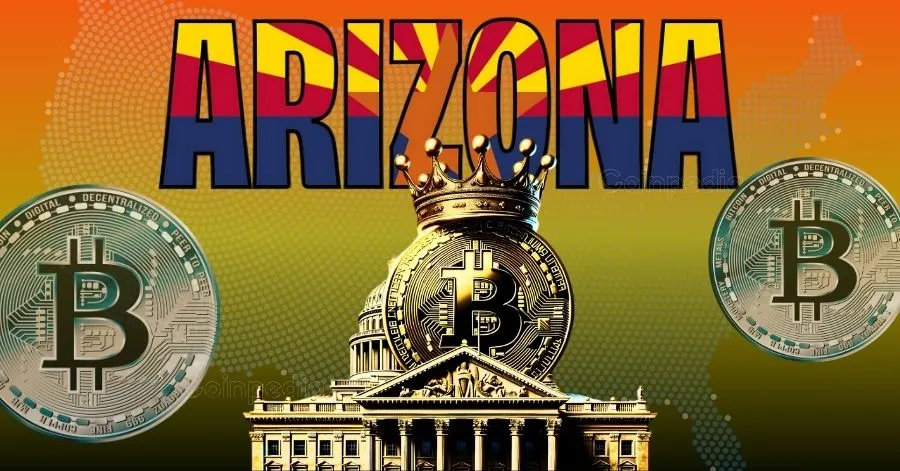
Arizona's legislative approval of bills allowing state investment in cryptocurrencies and the creation of a digital asset fund signals increasing institutional acceptance and potential for new capital inflows into the crypto market. New Hampshire's plan for Bitcoin-backed municipal bonds, with a provisional Ba2 rating and no taxpayer risk, demonstrates innovative financial structuring that could pave the way for similar state-level initiatives and broaden Bitcoin's utility. These state-level regulatory advancements, particularly regarding public fund investment and bond issuance, suggest a growing trend of integrating digital assets into traditional financial frameworks, potentially influencing broader market sentiment and adoption.
Strategy's continued weekly Bitcoin accumulation signals sustained institutional conviction, potentially providing a foundational support for the broader market. The shift in investor preference towards direct revenue-generating tokens like HYPE, which has surpassed ADA in market cap, indicates a rotation away from research-focused chains towards more immediate utility. Pepeto's presale success, driven by its focus on verified tools and a Pepe co-founder's involvement, suggests a market appetite for utility-focused meme-adjacent projects with clear upcoming catalysts like a Binance listing. The article highlights a growing concern around AI-powered scams and crypto ATM fraud, emphasizing the increasing importance of security and verification tools for capital protection.

Render's transition to Solana and increasing demand for decentralized GPU infrastructure, particularly for AI workloads, position it as a key player in the evolving compute marketplace. The article presents a bullish long-term outlook for RNDR, projecting significant price appreciation by 2026 and 2030, contingent on sustained adoption and network utilization. On-chain analysis indicates stable network usage and development activity, suggesting a fundamental growth cycle rather than pure speculation, which could support future price expansion. While the article forecasts substantial long-term growth, near-term price action in April 2026 is expected to be in a consolidation phase between $2 and $5, awaiting a breakout above $3 resistance.
The deployment of an RPC server on Pi Testnet enables direct developer interaction with the blockchain, significantly advancing the network's readiness for smart contract deployment and complex application development. This technical upgrade, part of the (Protocols 21-23) roadmap, is a crucial step towards Pi Network's open mainnet phase, aiming to ensure robust infrastructure for future decentralized applications and services. While the RPC server enhances long-term utility and developer tooling, potential near-term price pressure may arise from a substantial token unlock of approximately 210.91 million tokens this month, potentially capping immediate upside.

Fidelity's analysis suggests Bitcoin's current cycle drawdown is significantly shallower than historical cycles, indicating market maturation and increased institutional confidence which could support a more stable store of value narrative. The observed 'diminishing returns' and reduced volatility across cycles, as highlighted by Fidelity, imply a potential shift in Bitcoin's market dynamics away from pure speculation towards a more established asset class. While historical patterns suggest a potential bottom in late September or early October 2026, Bitcoin's current position below key daily moving averages (50-day and 200-day EMA) and near the 200-week EMA indicates near-term technical headwinds.

Jack Dorsey's vision of AI replacing middle management at Block signals a potential paradigm shift in corporate structure, impacting operational efficiency and workforce dynamics. The company's recent 40% staff reduction, attributed to AI acceleration, highlights a trend of tech firms leveraging AI for restructuring and cost optimization. Block's transition towards an 'intelligence' model, where AI handles coordination and task assignment, suggests a move away from traditional hierarchical management structures. While AI is central to the new model, the continued emphasis on human involvement in key business and ethical decisions indicates a hybrid approach to future operations.
The 13th anniversary of Bitcoin first surpassing $100 serves as a historical marker, highlighting its significant evolution from a nascent asset to a recognized financial instrument. Bitcoin's initial surge past $100 was influenced by external financial stress and the Cyprus banking crisis, underscoring its early role as a perceived hedge against traditional financial instability. The milestone signifies Bitcoin's growing adoption and market presence, transitioning from a niche experiment to an emerging asset class driven by increased exchange activity and media attention.

Rising whale accumulation of LINK, evidenced by significant outflows from Binance, suggests potential future price appreciation despite current weak altcoin market conditions. Increased average daily outflows from top whale transactions indicate a gradual building of positions by large holders, signaling sustained interest in Chainlink. While whale activity is a bullish signal, analysts caution that past accumulation phases did not immediately reverse market trends, suggesting a need for careful observation before decisive action. A 46% jump in LINK trading volume alongside price consolidation around $8.82 indicates market anticipation, with key resistance at $9.55 that could trigger further price discovery if breached.

US authorities have charged ten individuals from four crypto market making firms for alleged market manipulation, signaling increased regulatory scrutiny on trading practices. The charges, including wash trading allegations, aim to curb artificial market activity and protect investors, potentially impacting the operations of firms involved and setting a precedent for future enforcement. The arrests and charges highlight the DOJ's commitment to regulating the crypto space, suggesting a heightened risk environment for market participants engaging in potentially manipulative strategies.
The scheduled monthly release of 1 billion XRP from Ripple's escrow is a predictable event, designed to manage supply and prevent market shocks. While the unlock increases circulating supply, Ripple's strategic use of a fraction for ODL and institutional sales limits immediate sell pressure on the open market. Speculation regarding escrow burning is unlikely to be a significant catalyst, as demonstrated by historical examples like Stellar (XLM) where token burns did not guarantee sustained price appreciation.
CFTC enforcement director David Miller has explicitly stated that insider trading laws apply to prediction markets, classifying event contracts as swaps and signaling increased regulatory scrutiny. The CFTC's focus on "misappropriated information" and "market abuse" in prediction markets suggests a heightened risk for participants engaging in non-compliant trading activities. Recent legislative proposals and platform self-regulation indicate a growing effort to address insider trading concerns in prediction markets, potentially impacting platform operations and user behavior.
The Pi Network's new Launchpad model incentivizes active participation by rewarding users with higher token allocations and potential discounts based on staking and engagement levels. This development signals a shift towards more structured token distribution mechanisms within the Pi ecosystem, aiming to foster stronger community involvement post-launch. Users who do not participate in the Pi Launchpad will miss out on initial listing prices and potential early advantages, necessitating secondary market purchases at potentially higher costs.
Signal context only. Validate with price action, liquidity, and risk limits before taking a position.
Quick market read from this story
XRP is experiencing significant supply reduction with 7.03 billion tokens leaving exchanges in February, indicating potential accumulation, yet price action remains capped, creating an unresolved setup.
Despite tightening supply, XRP's failure to break above the $1.34-$1.35 resistance zone suggests persistent selling pressure, implying that the current price compression could resolve in a sharp move.
Analysts highlight that the current market dynamic for XRP, characterized by shrinking supply and stalled price action, typically precedes a significant directional move, with key support at $1.31-$1.32 and resistance at $1.42.
Deep Dive
XRP is currently trading around $1.34, showing a modest gain despite significant outflows from exchanges in February, which have tightened available supply. This disconnect between shrinking supply and stagnant price action suggests an unresolved market setup.
In February, approximately 7.03 billion XRP tokens left exchanges, a strong indicator of supply compression. Concurrently, the Binance scarcity indicator reached its highest level since 2024 at 0.59. Despite these signals, XRP has repeatedly tested the $1.33-$1.34 resistance zone, with early breakout attempts failing to sustain momentum. Buyers have defended dips near $1.31, establishing a pattern of higher lows, but late-session buying has not yet led to decisive follow-through.
Technical analysis highlights a mismatch between tightening supply and a lack of price expansion. While large outflows typically reduce selling pressure, sellers continue to cap rallies just above current levels. Elevated trading volume without significant price increases suggests strategic positioning rather than broad market conviction. This type of compression often precedes a sharper directional move.
Traders are closely watching the $1.34-$1.35 resistance level; a decisive break above this could open the way towards the next upside target of $1.42. Conversely, $1.31-$1.32 remains the critical support zone that needs to hold to maintain the current structure. If XRP continues to stall despite shrinking supply, it would indicate persistent selling pressure overhead.
Morgan Stanley's approval for a low-fee Bitcoin ETF, priced at 14 basis points, unlocks a significant $6.2 trillion advisory channel, potentially driving new capital inflows into BTC. The potential resolution of the Iran conflict, coupled with the Morgan Stanley ETF, presents a dual catalyst for Bitcoin in Q2, suggesting a possible shift from its recent sideways trading range. Despite geopolitical optimism and ETF developments, Bitcoin's muted reaction relative to equities highlights a persistent divergence, indicating that traditional risk-on sentiment is not fully translating to crypto assets.
