
Navigating Crypto News

CoinFeather
Navigating Crypto News

Quick market read from this story
Fidelity's analysis suggests Bitcoin's current cycle drawdown is significantly shallower than historical cycles, indicating market maturation and increased institutional confidence which could support a more stable store of value narrative.
The observed 'diminishing returns' and reduced volatility across cycles, as highlighted by Fidelity, imply a potential shift in Bitcoin's market dynamics away from pure speculation towards a more established asset class.
While historical patterns suggest a potential bottom in late September or early October 2026, Bitcoin's current position below key daily moving averages (50-day and 200-day EMA) and near the 200-week EMA indicates near-term technical headwinds.
Deep Dive
Bitcoin has experienced a market cycle drawdown of approximately 50%, a significantly less severe decline compared to previous cycles where drawdowns historically reached 80% to 90%. This trend, observed by Fidelity Digital Assets research analyst Zack Wainwright, suggests a maturing market with potentially diminishing returns and reduced volatility over time.
In the current cycle, Bitcoin's price hit a low of just over $60,000 on February 6th, marking a 52% decrease from its October 6th all-time high of approximately $126,000. This contrasts sharply with the previous cycle, which saw a 77% drop from its 2021 all-time high of $69,000 to a bear market low below $16,000 in November 2022.
Wainwright noted that each cycle has shown less dramatic upside than the preceding one, and the current downside risk has also been less severe. This observation points to a potential shift in Bitcoin's market dynamics.
Nick Ruck, director of LVRG Research, commented that Fidelity's assessment indicates a maturing market with reduced volatility and stronger institutional confidence. He believes this shift signals Bitcoin evolving from a speculative asset towards a more stable store of value, which could foster greater adoption.
Further analysis by Alphractal founder Joao Wedson suggests that Bitcoin's top occurred 534 days after the last halving, a shorter period than in the previous cycle. This pattern implies a potential bottom between 912 and 922 days post-halving, pointing towards a market bottom in late September or early October 2026.
Currently, Bitcoin remains below key technical indicators, including the 50-day and 200-day exponential moving averages. It is hovering around the 200-week EMA, approximately $68,000, a level that has historically acted as significant support during market downturns.
Source, catalyst, and sector overlap from the latest feed.
Jack Dorsey's vision of AI replacing middle management at Block signals a potential paradigm shift in corporate structure, impacting operational efficiency and workforce dynamics. The company's recent 40% staff reduction, attributed to AI acceleration, highlights a trend of tech firms leveraging AI for restructuring and cost optimization. Block's transition towards an 'intelligence' model, where AI handles coordination and task assignment, suggests a move away from traditional hierarchical management structures. While AI is central to the new model, the continued emphasis on human involvement in key business and ethical decisions indicates a hybrid approach to future operations.
CFTC enforcement director David Miller has explicitly stated that insider trading laws apply to prediction markets, classifying event contracts as swaps and signaling increased regulatory scrutiny. The CFTC's focus on "misappropriated information" and "market abuse" in prediction markets suggests a heightened risk for participants engaging in non-compliant trading activities. Recent legislative proposals and platform self-regulation indicate a growing effort to address insider trading concerns in prediction markets, potentially impacting platform operations and user behavior.
Mercado Libre's decision to sunset its Mercado Coin loyalty token, while continuing with its MUSD stablecoin, signals a strategic pivot away from proprietary reward tokens towards more established stablecoin models. The failure of Mercado Coin, following Nubank's Nucoin, highlights the challenges of launching and sustaining in-house utility tokens in Latin America, potentially impacting investor confidence in similar initiatives. Mercado Libre's continued substantial holdings of Bitcoin (BTC) as a treasury asset, with significant unrealized gains, contrasts with its withdrawal from its own loyalty token, underscoring a preference for established cryptocurrencies over experimental ones.
Moody's Ba2 rating for New Hampshire's Bitcoin-backed bond, placing it below investment grade, highlights the market's ongoing caution regarding Bitcoin's inherent volatility despite its declining trend. The speculative grade rating may limit institutional investor participation, as some funds have mandates restricting investments to higher-rated assets, potentially impacting the bond's market reception and liquidity. This development represents a novel use case for Bitcoin as collateral in municipal finance, signaling a potential, albeit cautious, step towards integrating digital assets into traditional financial instruments.
New research suggests functional quantum computers could be feasible by 2030 with significantly fewer qubits than previously estimated, potentially accelerating the timeline for quantum threats to cryptography. The development of ultra-efficient error correction in neutral-atom quantum systems could drastically reduce the resources needed for fault-tolerant quantum computing, impacting the urgency for blockchain migration to post-quantum cryptography. While theoretical, this advancement highlights the accelerating pace of quantum computing research, prompting a re-evaluation of long-term security strategies for digital assets and blockchain infrastructure.
Significant XRP supply compression, with 7 billion tokens leaving exchanges, suggests a tightening sell-side that historically precedes price appreciation. Divergent flows show spot buyers accumulating XRP while perpetual traders build short positions, creating a setup ripe for a short squeeze if price breaks key resistance levels. Despite bullish supply and derivatives signals, XRP remains technically bearish, trading below major moving averages, making a Bitcoin-driven catalyst crucial for initiating a potential upward move. The high correlation (0.87) with Bitcoin indicates XRP's price action is heavily dependent on BTC's performance, with external factors like geopolitical events influencing Bitcoin's direction and, consequently, XRP's potential breakout.
The CLARITY Act's potential to classify XRP as a digital commodity under U.S. law could permanently resolve legal ambiguity, paving the way for increased institutional adoption and capital inflows. A clear regulatory framework for stablecoins and digital assets, as proposed by the CLARITY Act, is expected to foster greater integration with traditional finance and encourage broader adoption of XRP in payments and settlements. The U.S. establishing clear digital asset regulations through the CLARITY Act could set a global standard, influencing international regulatory approaches and accelerating worldwide adoption of assets like XRP.
Bitget Wallet's integration of XRP Ledger enhances its payment capabilities, leveraging XRPL's low-cost, near-instant transaction features to drive broader adoption of crypto payments. The partnership signals a strategic move by Bitget Wallet to expand its global payment solutions, potentially increasing transaction volume and user engagement on both platforms. XRPL's focus on payments and Bitget Wallet's planned features like crypto cards and QR payments suggest a push towards mainstream utility for digital assets in everyday transactions.
Bitcoin transaction fees have fallen below $0.40, reaching historic lows not seen since 2017, indicating improved network efficiency despite sustained activity. The reduction in fees, attributed to inscriptions and better block space management, suggests a more cost-effective environment for Bitcoin users, potentially encouraging greater on-chain utilization. Despite low fees, Bitcoin price action remains volatile with significant sell walls around $69K, suggesting that short-term price movements are more influenced by whale activity and market sentiment than network cost efficiency. Persistently low transaction fees could pose a long-term concern for miner incentives as block rewards diminish, potentially impacting the network's security model if not offset by other revenue streams.
The Fusaka Hard Fork upgrade for Ethereum enhances scalability and transaction speed, aligning with Bitcoin Suisse's $7,000-$9,000 ETH price targets for 2026, contingent on regulatory clarity from the CLARITY Act. While ETH's long-term outlook is positive due to infrastructure improvements, the article highlights a presale for 'Pepeto' as a potential source of faster, higher returns compared to ETH's projected 3.6x growth over months. Pepeto's presale has attracted over $8 million, driven by features like zero-fee trading, a risk scorer, and a free cross-chain bridge, with a 190% APY staking reward and a structured listing timeline suggesting potential for significant gains post-Binance listing.
Live Feed
Loading the broader stream in the same flow as the homepage feed.

Plume's new tokenized payroll system, integrating WisdomTree Prime and Toku, signifies a significant expansion of Real-World Asset (RWA) tokenization into payroll and taxation services. The development allows users to receive portions of their salary as investments in money market funds, directly bridging traditional finance with digital asset investment opportunities. WisdomTree's involvement highlights the growing trend of established financial institutions leveraging blockchain infrastructure for innovative financial products, with its operations on the Avalanche network. Toku's role in ensuring tax compliance for this tokenized payroll system demonstrates the increasing need for regulatory solutions within the expanding RWA ecosystem.

March 2026 saw a significant increase in crypto hacks, with losses doubling to $52 million, indicating a heightened risk environment for digital assets and associated platforms. The ResolvLabs $USR hack, resulting from an AWS KMS breach and an 'infinite mint' exploit, highlights critical vulnerabilities in infrastructure and token generation mechanisms, impacting interconnected DeFi protocols like MorphoBlue, Euler, and Fluid. The diversification of attack vectors, including social engineering leading to significant losses for a Kraken whale, underscores the need for enhanced security measures across all facets of the crypto ecosystem, from smart contracts to user protection.

Australia's passage of its first crypto law mandates exchanges and custodians to obtain AFSL licenses, integrating digital asset platforms into the traditional financial regulatory framework. The new regulation aims to enhance consumer protection and reduce risks from exchange failures by aligning crypto businesses with established financial rules and providing oversight by the Australian Securities and Investments Commission. This regulatory clarity in Australia could foster greater industry trust and potentially encourage institutional adoption, though it imposes compliance burdens on existing crypto businesses.

MicroStrategy's STRC preferred stock maintained its 11.5% dividend rate, marking the first time it has not increased since launch, indicating a stabilization in its yield strategy. The steady dividend rate on STRC, coupled with its price stabilizing near $100 par, positions it as a yield-focused savings alternative, potentially attracting capital seeking stable, high-yield options. The success of Strive's SATA product reaching par and enabling further Bitcoin purchases highlights a growing trend of treasury asset managers utilizing preferred stock to fund digital asset accumulation.
The proposed CLARITY Act, if enacted, could classify XRP as a commodity, removing significant regulatory uncertainty and potentially unlocking substantial institutional capital for broader adoption. Formal classification under the CLARITY Act would provide XRP with a clear legal framework, enabling developers and institutions to build structured markets with reduced legal risk. Evernorth's planned deployment of 473 million XRP into on-ledger markets and launch of native XRP lending could inject significant liquidity and demonstrate the utility of XRP within DeFi ecosystems. Regulatory clarity for XRP could set a global precedent, influencing the development of tokenized capital markets worldwide and expanding XRP's reach beyond current limitations.

Australia's new digital asset framework mandates financial services licenses for crypto exchanges and custody platforms, signaling a move towards greater regulatory oversight and potentially increasing operational costs for businesses operating in the country. The legislation targets companies holding customer assets, aiming to mitigate risks like commingling and insolvency, which could enhance investor confidence and attract institutional capital by providing a clearer, more secure operating environment. This regulatory development is expected to foster significant growth in Australia's digital finance sector, with estimates suggesting a potential increase from A$1 billion to A$24 billion annually, indicating a positive outlook for compliant digital asset businesses.

Malta's opposition to EU crypto centralization signals a potential regulatory fragmentation within Europe, which could lead crypto firms to seek more favorable jurisdictions. The stance highlights a conflict between national innovation-focused regulation and centralized EU oversight, potentially impacting the growth trajectory of crypto businesses operating within or looking to enter the EU market. This development suggests that regulatory arbitrage may continue to be a significant factor for crypto firms, influencing their operational bases and potentially impacting liquidity flows across different regions.

U.S. authorities have charged ten foreign nationals with crypto market manipulation, signaling increased regulatory scrutiny on illicit market-making activities. The indictment involves wash trading and pump-and-dump schemes, highlighting the risks associated with artificial inflation of token prices and the potential for significant investor losses. The seizure of over $1 million in digital assets and the arrests of key individuals demonstrate the tangible consequences of such schemes and the government's commitment to enforcement. This coordinated global operation, involving multiple firms and international cooperation, suggests a broader trend of targeted enforcement against market manipulation in the crypto space.

Bitcoin has broken a five-month losing streak with a marginal 1.84% gain in March, marking its first green monthly candle since September 2025. Despite the positive monthly close, Bitcoin experienced significant volatility within March, trading near $76,000 before dropping below $65,000, indicating underlying weakness and uncertainty. The current market sentiment remains cautious as the small green candle resembles a doji or spinning top, suggesting indecision and the need for further confirmation before a sustained bullish trend can be established.

The SEC and CFTC's joint classification of Shiba Inu as a digital commodity, alongside established assets like Bitcoin and Ethereum, signals a potentially broader regulatory approach to tokens with utility features, despite its meme coin origins. An analyst's questioning of Shiba Inu's commodity classification highlights the evolving and potentially ambiguous nature of current regulatory frameworks, suggesting that assets may not fit neatly into predefined categories. The inclusion of SHIB as a digital commodity, rather than a digital collectible, could imply a shift in how regulators perceive meme coins that develop ecosystems, staking, or other functional aspects, potentially impacting future classifications and market expectations.

Google's research highlights a potential quantum computing threat to current blockchain cryptography, specifically mentioning 'on-spend' attacks on Bitcoin's 10-minute block confirmation window. Binance founder CZ downplays immediate panic, stating the crypto industry can adapt by transitioning to quantum-resistant algorithms, though acknowledges the significant challenge of decentralized implementation and upgrades. The core market implication is a long-term security concern that necessitates proactive development and adoption of post-quantum cryptography, rather than an immediate threat to current market participants.
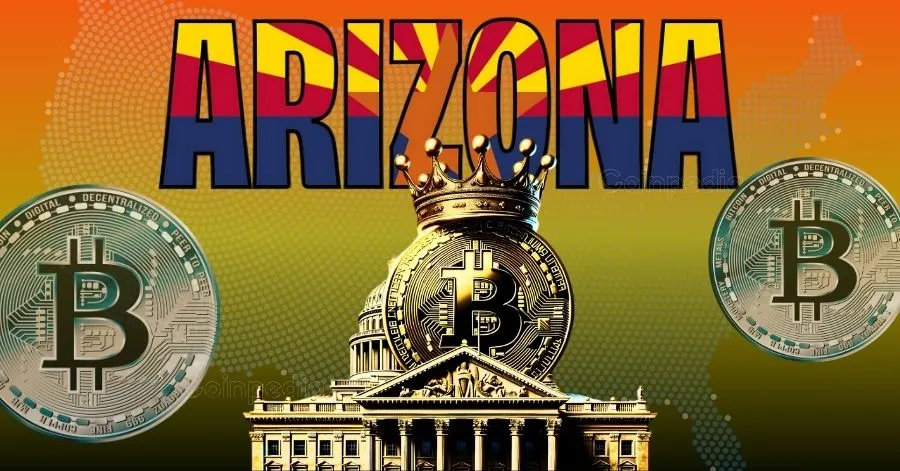
Arizona's legislative approval of bills allowing state investment in cryptocurrencies and the creation of a digital asset fund signals increasing institutional acceptance and potential for new capital inflows into the crypto market. New Hampshire's plan for Bitcoin-backed municipal bonds, with a provisional Ba2 rating and no taxpayer risk, demonstrates innovative financial structuring that could pave the way for similar state-level initiatives and broaden Bitcoin's utility. These state-level regulatory advancements, particularly regarding public fund investment and bond issuance, suggest a growing trend of integrating digital assets into traditional financial frameworks, potentially influencing broader market sentiment and adoption.

Ethereum is consolidating above a critical $2,000 support level, with increasing buyer accumulation and fading selling pressure suggesting a potential breakout is building. Institutional accumulation, exemplified by Bitmine's $340 million ETH stake and staking, is reducing liquid supply and providing a supportive base for potential upside. A confirmed break above the $2,200 resistance zone could trigger a rapid ascent towards $2,600-$2,700 and potentially the $3,000 target, while failure to hold support risks a retreat to $1,900.

Cardano's transition to an execution-driven phase, marked by scalability upgrades and privacy features like Midnight, positions it to compete more effectively in DeFi and enterprise applications. Current on-chain metrics, including a negative MVRV ratio and steady development activity, suggest an accumulation phase for ADA, potentially preceding a significant price expansion. Price predictions for ADA range from $2.75-$5.00 by 2026 and up to $350 by 2050, contingent on sustained adoption, network growth, and favorable market conditions. Near-term price action for ADA is constrained by the $0.30-$0.35 resistance, with a decisive breakout needed to confirm a trend reversal and target higher zones.
Strategy's continued weekly Bitcoin accumulation signals sustained institutional conviction, potentially providing a foundational support for the broader market. The shift in investor preference towards direct revenue-generating tokens like HYPE, which has surpassed ADA in market cap, indicates a rotation away from research-focused chains towards more immediate utility. Pepeto's presale success, driven by its focus on verified tools and a Pepe co-founder's involvement, suggests a market appetite for utility-focused meme-adjacent projects with clear upcoming catalysts like a Binance listing. The article highlights a growing concern around AI-powered scams and crypto ATM fraud, emphasizing the increasing importance of security and verification tools for capital protection.
Signal context only. Validate with price action, liquidity, and risk limits before taking a position.
