
Navigating Crypto News

CoinFeather
Navigating Crypto News
Quick market read from this story
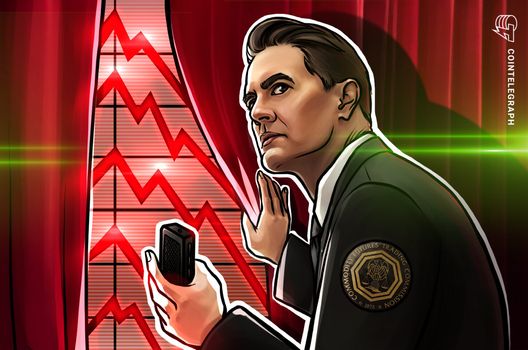
CFTC enforcement director David Miller has explicitly stated that insider trading laws apply to prediction markets, classifying event contracts as swaps and signaling increased regulatory scrutiny.
The CFTC's focus on "misappropriated information" and "market abuse" in prediction markets suggests a heightened risk for participants engaging in non-compliant trading activities.
Recent legislative proposals and platform self-regulation indicate a growing effort to address insider trading concerns in prediction markets, potentially impacting platform operations and user behavior.
Deep Dive
The U.S. commodities regulator's chief enforcement director, David Miller, issued a stern warning to insider traders on prediction markets, stating that the Commodity Futures Trading Commission (CFTC) is actively monitoring such activities and will pursue enforcement actions against violators. Miller clarified that the notion that insider trading laws do not apply to prediction markets is a misconception, emphasizing that such trading is indeed prohibited.
Miller, who was appointed to his role on March 2, indicated that the CFTC will exercise prosecutorial discretion, focusing resources on cases involving the misuse of non-public information rather than pursuing minor infractions. He stated, "We will only be prosecuting cases against those who tip or trade with misappropriated information." The CFTC's position is that event contracts offered on these platforms are considered swaps, not gaming, and therefore fall under existing insider trading regulations.
Insider trading on prediction markets has become a significant concern for U.S. lawmakers, potentially impacting the credibility of an industry that recently surpassed $20 billion in monthly volume, according to TRM Labs. The CFTC also plans to concentrate on core enforcement areas such as market abuse and anti-money laundering violations.
Concerns over insider trading intensified following well-timed trades preceding major U.S. political announcements. Past incidents include a trader profiting over $400,000 on a bet regarding the capture of Venezuelan leader Nicolás Maduro. More recently, suspicious trades related to geopolitical events like the invasion of Iran and the death of Ayatollah Khamenei have raised national security alarms.
In response to these issues, leading prediction market platforms, Kalshi and Polymarket, have implemented new insider trading rules. Concurrently, U.S. lawmakers have introduced bipartisan legislation, including the Public Integrity in Financial Prediction Markets Act of 2026 and the Preventing Real-time Exploitation and Deceptive Insider Congressional Trading Act (PREDICT Act), aimed at curbing insider trading, particularly by government officials.
Democratic lawmakers have also urged the CFTC to formally warn federal employees against using inside knowledge for prediction market trades.
Source, catalyst, and sector overlap from the latest feed.
Fidelity's analysis suggests Bitcoin's current cycle drawdown is significantly shallower than historical cycles, indicating market maturation and increased institutional confidence which could support a more stable store of value narrative. The observed 'diminishing returns' and reduced volatility across cycles, as highlighted by Fidelity, imply a potential shift in Bitcoin's market dynamics away from pure speculation towards a more established asset class. While historical patterns suggest a potential bottom in late September or early October 2026, Bitcoin's current position below key daily moving averages (50-day and 200-day EMA) and near the 200-week EMA indicates near-term technical headwinds.
Jack Dorsey's vision of AI replacing middle management at Block signals a potential paradigm shift in corporate structure, impacting operational efficiency and workforce dynamics. The company's recent 40% staff reduction, attributed to AI acceleration, highlights a trend of tech firms leveraging AI for restructuring and cost optimization. Block's transition towards an 'intelligence' model, where AI handles coordination and task assignment, suggests a move away from traditional hierarchical management structures. While AI is central to the new model, the continued emphasis on human involvement in key business and ethical decisions indicates a hybrid approach to future operations.
Mercado Libre's decision to sunset its Mercado Coin loyalty token, while continuing with its MUSD stablecoin, signals a strategic pivot away from proprietary reward tokens towards more established stablecoin models. The failure of Mercado Coin, following Nubank's Nucoin, highlights the challenges of launching and sustaining in-house utility tokens in Latin America, potentially impacting investor confidence in similar initiatives. Mercado Libre's continued substantial holdings of Bitcoin (BTC) as a treasury asset, with significant unrealized gains, contrasts with its withdrawal from its own loyalty token, underscoring a preference for established cryptocurrencies over experimental ones.
Moody's Ba2 rating for New Hampshire's Bitcoin-backed bond, placing it below investment grade, highlights the market's ongoing caution regarding Bitcoin's inherent volatility despite its declining trend. The speculative grade rating may limit institutional investor participation, as some funds have mandates restricting investments to higher-rated assets, potentially impacting the bond's market reception and liquidity. This development represents a novel use case for Bitcoin as collateral in municipal finance, signaling a potential, albeit cautious, step towards integrating digital assets into traditional financial instruments.
New research suggests functional quantum computers could be feasible by 2030 with significantly fewer qubits than previously estimated, potentially accelerating the timeline for quantum threats to cryptography. The development of ultra-efficient error correction in neutral-atom quantum systems could drastically reduce the resources needed for fault-tolerant quantum computing, impacting the urgency for blockchain migration to post-quantum cryptography. While theoretical, this advancement highlights the accelerating pace of quantum computing research, prompting a re-evaluation of long-term security strategies for digital assets and blockchain infrastructure.
US authorities have charged ten individuals from four crypto market making firms for alleged market manipulation, signaling increased regulatory scrutiny on trading practices. The charges, including wash trading allegations, aim to curb artificial market activity and protect investors, potentially impacting the operations of firms involved and setting a precedent for future enforcement. The arrests and charges highlight the DOJ's commitment to regulating the crypto space, suggesting a heightened risk environment for market participants engaging in potentially manipulative strategies.
Sam Bankman-Fried's motion for Judge Kaplan's recusal introduces procedural uncertainty into the FTX legal proceedings, potentially delaying any resolution on his retrial request. The judge's scrutiny of SBF's filing procedures and the involvement of his mother raises questions about the validity of the new evidence presented for a retrial, suggesting a low probability of success for the motion. This legal maneuvering by SBF, while unlikely to alter the fundamental outcome of his conviction, serves as a distraction and highlights ongoing legal complexities surrounding the FTX collapse.
Bitcoin is being integrated into traditional public finance through a new Ba2 rated bond issued by a New Hampshire state authority, marking a significant step for crypto collateralization in public markets. The bond's structure relies on Bitcoin as collateral, with liquidation mechanisms in place if loan-to-value ratios deteriorate, indicating a developing framework for assessing crypto-backed debt despite Bitcoin's volatility. This development, alongside potential regulatory shifts for retirement portfolios, suggests a growing institutional acceptance and exploration of Bitcoin's utility beyond trading, potentially influencing broader market sentiment and adoption.
Texas Lieutenant Governor Dan Patrick has directed state lawmakers to study prediction markets and crypto, signaling potential regulatory scrutiny and a need for market participants to monitor legislative developments in the state. The inclusion of crypto and blockchain in legislative interim charges suggests a growing focus on digital assets within Texas politics, potentially impacting the state's approach to innovation and regulation. The directive to examine "gambling loopholes" in prediction markets indicates a potential regulatory push against platforms perceived as circumventing existing gambling laws, which could affect related digital asset services.
Russia's new crypto bill, mandating licensed intermediaries and capping retail purchases, signals a move towards state control and visibility rather than outright prohibition. Dubai's VARA framework for crypto derivatives, allowing retail participation with leverage limits and strict safeguards, positions the jurisdiction to attract institutional capital seeking regulated markets. The contrasting regulatory approaches between Russia and Dubai suggest that restrictive measures may redirect crypto activity rather than diminish it, potentially benefiting jurisdictions with clearer frameworks. The development highlights a growing divergence in global crypto regulation, with some nations tightening controls while others, like Dubai, aim to foster sophisticated market participation.
Morgan Stanley's approval for a low-fee Bitcoin ETF, priced at 14 basis points, unlocks a significant $6.2 trillion advisory channel, potentially driving new capital inflows into BTC. The potential resolution of the Iran conflict, coupled with the Morgan Stanley ETF, presents a dual catalyst for Bitcoin in Q2, suggesting a possible shift from its recent sideways trading range. Despite geopolitical optimism and ETF developments, Bitcoin's muted reaction relative to equities highlights a persistent divergence, indicating that traditional risk-on sentiment is not fully translating to crypto assets.
Mastercard's Global Crypto Partner Program, including Solana and Circle, signals growing institutional infrastructure adoption, potentially benefiting established Layer 1s like SOL and ETH. While SOL and ETH gain validation from institutional partnerships, their large market caps suggest limited upside compared to early-stage presale projects like Pepeto, which is positioned for potentially higher returns. Pepeto's presale success, highlighted by $8 million raised during a 'fear' phase and upcoming Binance listing, suggests strong early-stage investor confidence and potential for significant price appreciation upon public trading. The article frames Pepeto's unique features like zero-cost swaps and risk scoring as differentiators in a crowded market, aiming to capture value from the broader institutional adoption wave driven by initiatives like Mastercard's program.
Geopolitical de-escalation signals are driving broad market rallies, including Bitcoin, as investors anticipate reduced global instability and potential economic improvements. Despite positive market sentiment from geopolitical news, on-chain data and trader skepticism suggest Bitcoin may struggle to sustain gains without renewed spot demand or a clear break above key technical levels. The market's reaction to potential US-Iran conflict resolution highlights the sensitivity of risk assets like Bitcoin to macroeconomic and geopolitical events, even if underlying spot demand remains subdued.
Live Feed
Loading the broader stream in the same flow as the homepage feed.

Google's research highlights a potential quantum computing threat to current blockchain cryptography, specifically mentioning 'on-spend' attacks on Bitcoin's 10-minute block confirmation window. Binance founder CZ downplays immediate panic, stating the crypto industry can adapt by transitioning to quantum-resistant algorithms, though acknowledges the significant challenge of decentralized implementation and upgrades. The core market implication is a long-term security concern that necessitates proactive development and adoption of post-quantum cryptography, rather than an immediate threat to current market participants.

Render's transition to Solana and increasing demand for decentralized GPU infrastructure, particularly for AI workloads, position it as a key player in the evolving compute marketplace. The article presents a bullish long-term outlook for RNDR, projecting significant price appreciation by 2026 and 2030, contingent on sustained adoption and network utilization. On-chain analysis indicates stable network usage and development activity, suggesting a fundamental growth cycle rather than pure speculation, which could support future price expansion. While the article forecasts substantial long-term growth, near-term price action in April 2026 is expected to be in a consolidation phase between $2 and $5, awaiting a breakout above $3 resistance.
Bitcoin's return above $69,000 is a psychologically significant event, but on-chain data suggests potential sell pressure from increasing exchange inflows, indicating a cautious outlook. Geopolitical developments, specifically Iran's peace signal, have unwound prior 'fear trade' sentiment, creating a more favorable macro mood that is currently ahead of confirmed on-chain indicators. While price action shows a push towards new highs and improving chart structure, the on-chain data points towards a supply absorption phase rather than a confirmed trend resumption, suggesting consolidation or a modest bounce as a base case. The current market environment is heavily influenced by unpredictable geopolitical events, making traditional on-chain analysis a directional guide rather than a definitive predictor of short-term price movements.
The deployment of an RPC server on Pi Testnet enables direct developer interaction with the blockchain, significantly advancing the network's readiness for smart contract deployment and complex application development. This technical upgrade, part of the (Protocols 21-23) roadmap, is a crucial step towards Pi Network's open mainnet phase, aiming to ensure robust infrastructure for future decentralized applications and services. While the RPC server enhances long-term utility and developer tooling, potential near-term price pressure may arise from a substantial token unlock of approximately 210.91 million tokens this month, potentially capping immediate upside.

Google's quantum computing update has triggered a market rotation towards quantum-resistant cryptocurrencies, indicating a proactive pricing of long-term technological security risks by traders. While theoretical, the potential for quantum computers to break current cryptography is driving significant short-term gains in specific altcoins, highlighting a speculative appetite for 'future-proof' assets. The market's reaction suggests that even distant technological threats can influence near-term price action, potentially impacting the perceived value of established cryptocurrencies like BTC and ETH if defenses are not adequately addressed.
The 13th anniversary of Bitcoin first surpassing $100 serves as a historical marker, highlighting its significant evolution from a nascent asset to a recognized financial instrument. Bitcoin's initial surge past $100 was influenced by external financial stress and the Cyprus banking crisis, underscoring its early role as a perceived hedge against traditional financial instability. The milestone signifies Bitcoin's growing adoption and market presence, transitioning from a niche experiment to an emerging asset class driven by increased exchange activity and media attention.

Rising whale accumulation of LINK, evidenced by significant outflows from Binance, suggests potential future price appreciation despite current weak altcoin market conditions. Increased average daily outflows from top whale transactions indicate a gradual building of positions by large holders, signaling sustained interest in Chainlink. While whale activity is a bullish signal, analysts caution that past accumulation phases did not immediately reverse market trends, suggesting a need for careful observation before decisive action. A 46% jump in LINK trading volume alongside price consolidation around $8.82 indicates market anticipation, with key resistance at $9.55 that could trigger further price discovery if breached.
The scheduled monthly release of 1 billion XRP from Ripple's escrow is a predictable event, designed to manage supply and prevent market shocks. While the unlock increases circulating supply, Ripple's strategic use of a fraction for ODL and institutional sales limits immediate sell pressure on the open market. Speculation regarding escrow burning is unlikely to be a significant catalyst, as demonstrated by historical examples like Stellar (XLM) where token burns did not guarantee sustained price appreciation.
The Pi Network's new Launchpad model incentivizes active participation by rewarding users with higher token allocations and potential discounts based on staking and engagement levels. This development signals a shift towards more structured token distribution mechanisms within the Pi ecosystem, aiming to foster stronger community involvement post-launch. Users who do not participate in the Pi Launchpad will miss out on initial listing prices and potential early advantages, necessitating secondary market purchases at potentially higher costs.

XRP is experiencing significant supply reduction with 7.03 billion tokens leaving exchanges in February, indicating potential accumulation, yet price action remains capped, creating an unresolved setup. Despite tightening supply, XRP's failure to break above the $1.34-$1.35 resistance zone suggests persistent selling pressure, implying that the current price compression could resolve in a sharp move. Analysts highlight that the current market dynamic for XRP, characterized by shrinking supply and stalled price action, typically precedes a significant directional move, with key support at $1.31-$1.32 and resistance at $1.42.

Hong Kong's missed March deadline for HKD stablecoin licenses indicates potential implementation delays, raising questions about the pace of regulatory rollout and its impact on the city's ambition to become a stablecoin hub. The delay in stablecoin licensing, despite earlier public commitments, suggests potential hurdles in the approval process, which could temper market expectations for rapid adoption of regulated stablecoins in the region. The HKMA's cautious approach to licensing, emphasizing novel use cases and robust compliance, implies a focus on quality over speed, potentially leading to a more stable and integrated stablecoin ecosystem in the long run.
Signal context only. Validate with price action, liquidity, and risk limits before taking a position.
