
Navigating Crypto News

CoinFeather
Navigating Crypto News

Quick market read from this story
US authorities have charged ten individuals from four crypto market making firms for alleged market manipulation, signaling increased regulatory scrutiny on trading practices.
The charges, including wash trading allegations, aim to curb artificial market activity and protect investors, potentially impacting the operations of firms involved and setting a precedent for future enforcement.
The arrests and charges highlight the DOJ's commitment to regulating the crypto space, suggesting a heightened risk environment for market participants engaging in potentially manipulative strategies.
Deep Dive
Ten executives and employees from four cryptocurrency market making firms – Gotbit, Vortex, Antier, and Contrarian – have been charged by the U.S. Department of Justice. The charges stem from allegations of manipulating token prices and trading volumes through wash trading, a scheme designed to mislead investors and create artificial market activity.
As part of the crackdown, three of the accused individuals, including two company leaders, were arrested in Singapore. They have since been brought to the United States to face trial. This action highlights the government's continued focus on regulating the cryptocurrency industry and prosecuting illicit activities within it.
Source, catalyst, and sector overlap from the latest feed.
Cartesi (CTSI) has experienced an 80% price surge on significant volume, breaking a prolonged downtrend and reclaiming the $0.04 zone. The immediate price action indicates a potential short-term momentum shift, but the broader trend remains bearish until CTSI decisively breaks and holds above the critical $0.05 resistance level. A sustained move above $0.05 could trigger further upside towards $0.06 and potentially $0.10, while failure to hold this level may lead to a sharp correction back to $0.035. The weekly RSI showing bullish divergence alongside the price breakout from a falling wedge pattern suggests a possible trend reversal, contingent on overcoming key resistance.
Live Feed
Loading the broader stream in the same flow as the homepage feed.

Bitcoin is functioning as a continuous price discovery mechanism for geopolitical risk over the Easter holiday weekend, while traditional markets are closed, highlighting its availability as a key market structure component. The current geopolitical tensions and oil price surge are transmitting macro stress through Bitcoin, linking it to inflation, yields, and liquidity conditions, which will be tested by traditional market reopenings and upcoming economic data. While Bitcoin's availability provides an immediate venue for price expression during market closures, its signal requires validation from traditional markets and cross-asset confirmation on Monday to determine durability.

SWIFT's former Chief Innovation Officer is leaving to build infrastructure at the intersection of AI, scientific discovery, and institutional finance, signaling a potential new wave of institutional adoption driven by trust layer solutions. The executive's departure, previously a critic of XRP and public blockchains, highlights a perceived "trust gap" in connecting AI and tokenization to real-world assets and trusted data, suggesting a significant market opportunity. This move by a high-profile TradFi executive into a new venture focused on AI and institutional finance infrastructure could attract significant talent and capital, potentially impacting the RWA and AI sectors.

January saw the largest attack against a DeFi protocol of the quarter, the $40 million private key compromise of portfolio management platform Step Finance.

The success of free-to-play social casinos, with a dual-coin model mirroring crypto tokenomics, highlights effective user acquisition and retention strategies applicable to blockchain projects. The social casino market's projected growth to $14.23 billion by 2030, driven by low-friction browser access and reward systems, offers a blueprint for crypto platforms struggling with user adoption. The convergence of sweepstakes gaming and crypto payments, with platforms accepting BTC and ETH, signals a growing demand for flexible, borderless transaction methods and a potential area for market expansion. Regulatory parallels between the evolving sweepstakes casino landscape and crypto markets suggest that compliance and transparency are key differentiators for building durable user trust and long-term business viability.
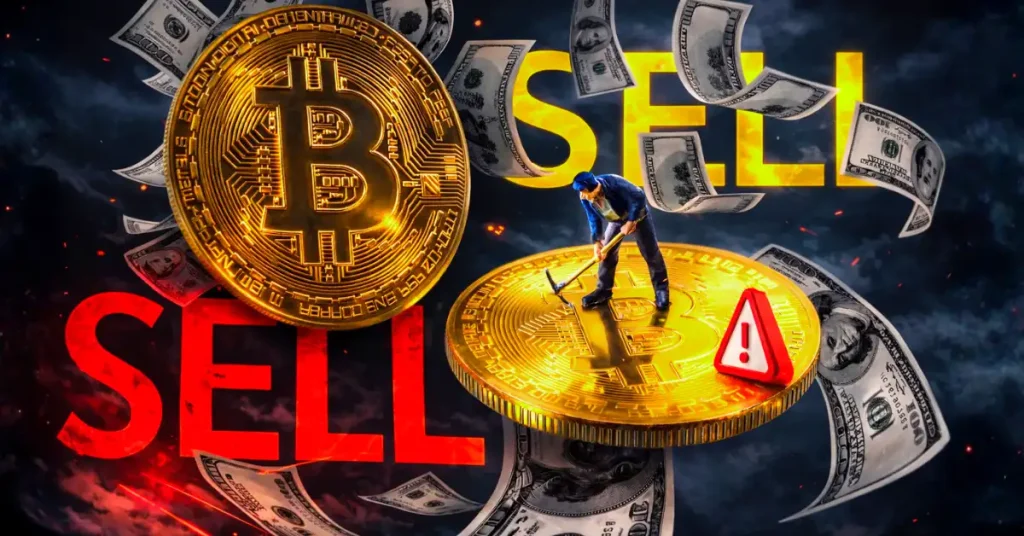
Publicly traded companies, particularly Bitcoin miners, are offloading significant BTC holdings to improve liquidity amidst prolonged price weakness around $66K. While some miners are selling to cover debt or fund operations like AI expansion, others like Metaplanet and Strategy continue aggressive accumulation, creating a divergence in corporate BTC strategies. The collective selling pressure from miners could introduce near-term headwinds for Bitcoin's price, especially if sustained, but the ongoing accumulation by other entities suggests underlying demand remains.

Vitalik Buterin's warning on AI privacy risks highlights a critical intersection with Ethereum's strategic pivot towards becoming a 'Private World Computer'. Ethereum's 2026 roadmap, emphasizing ZK proofs and stealth addresses, directly addresses the privacy concerns raised by centralized AI, positioning the network as a privacy-first platform. The article suggests that while local AI hardware is improving, the gap in complex reasoning with frontier models remains, with hybrid approaches and ZK proofs offering a path to privacy-preserving AI integration. Buterin's emphasis on mathematical trust over institutional trust in AI and blockchain infrastructure implies a long-term structural shift favoring decentralized, privacy-preserving technologies.

The Drift Protocol exploit, initially costing $285 million, has now exposed 20 other Solana-based protocols, highlighting significant interconnectedness and fragility within the Solana DeFi ecosystem. The cascading impact of the Drift exploit underscores the systemic risk inherent in DeFi, where the failure of one deeply integrated protocol can trigger a chain reaction across multiple projects. While teams are acting to limit further losses, the widespread exposure indicates potential for continued negative price action across affected Solana DeFi tokens as the full extent of damage is assessed. The incident serves as a critical reminder of the counterparty and integration risks present in DeFi, prompting traders to re-evaluate the security and diversification of protocols within interconnected ecosystems.
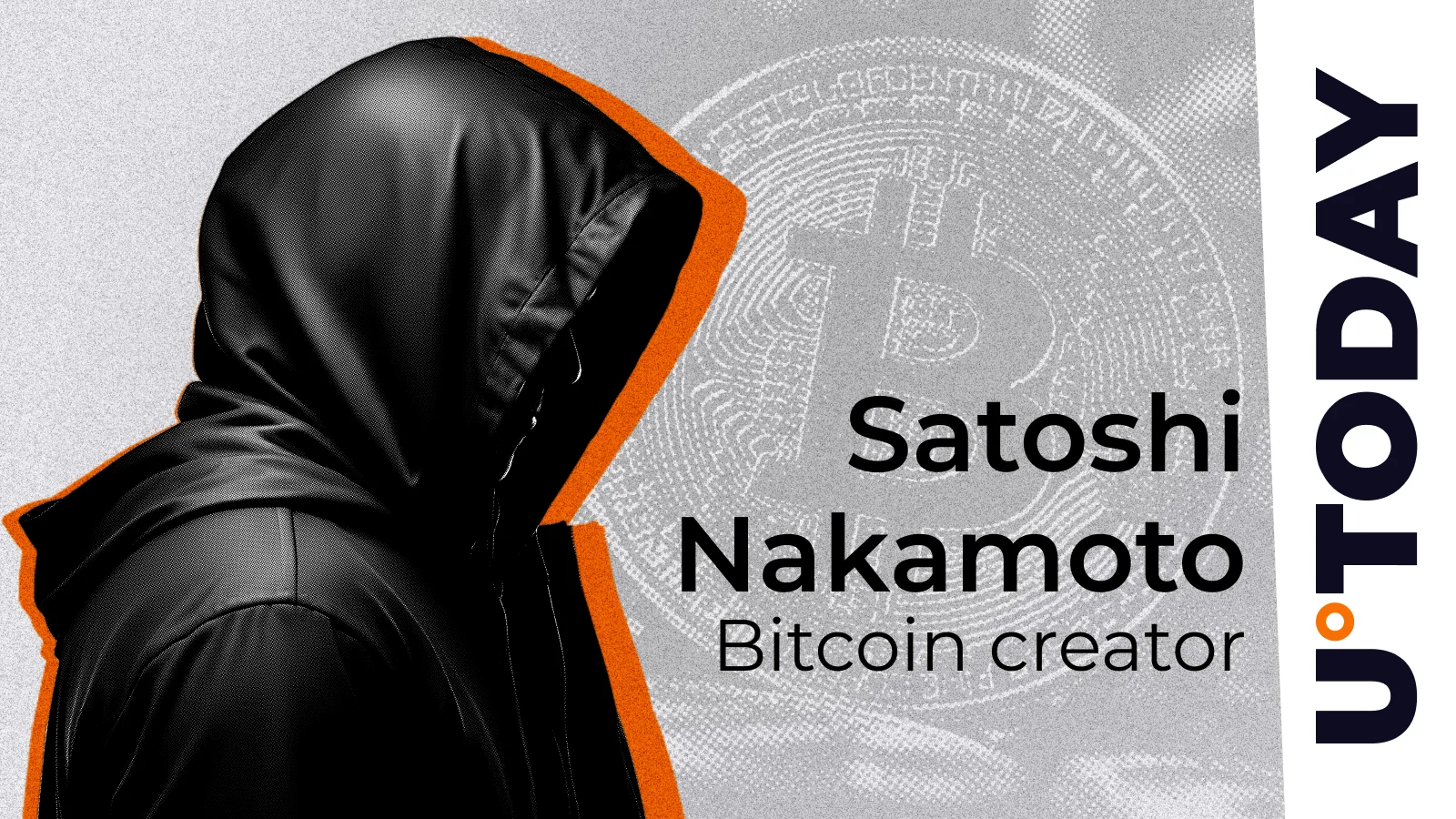
The potential threat of quantum computing to Satoshi Nakamoto's dormant Bitcoin holdings represents a significant long-term risk to network security and market stability. A successful breach of Satoshi's 1.1 million BTC by quantum hackers could trigger a catastrophic supply shock, leading to an unprecedented price collapse due to the sheer volume of tokens potentially entering the market. The Bitcoin network's eventual need for a quantum-proof upgrade highlights a critical infrastructure challenge, with potential forks or other solutions facing significant technical and governance hurdles. Recent advancements in quantum algorithm optimization by Google Quantum AI have accelerated the timeline for this threat, suggesting the industry must prioritize migration to Post-Quantum Cryptography (PQC).
The potential threat of quantum computing to Satoshi Nakamoto's dormant Bitcoin holdings represents a significant long-term risk to Bitcoin's supply dynamics and market stability. A successful exploit of Satoshi's coins could trigger an unprecedented supply shock, leading to a catastrophic price collapse due to the sheer volume of BTC potentially entering the market. The development highlights the urgent need for the Bitcoin network to upgrade to quantum-resistant cryptography to safeguard against future threats to its foundational security.

Bitcoin supply in profit is approaching levels seen in previous bear markets, with 8.2 million BTC currently at a loss, suggesting potential undervaluation according to one analyst. Contrasting views suggest current data indicates market stress rather than undervaluation, with some analysts pointing to deeper capitulation levels in prior bear cycles. External factors like a strengthening US dollar and weakening Chinese yuan are identified as headwinds for Bitcoin recovery, potentially delaying a full market reset until late 2026 or 2027.
Signal context only. Validate with price action, liquidity, and risk limits before taking a position.
Render's derivatives market shows a significant surge in trading volume and open interest, indicating increased trader participation and positioning ahead of a potential price move. RNDR price is consolidating near key support levels, with a decisive breakout anticipated upon breaching the $2.10 resistance, potentially targeting $2.60 if momentum sustains. The current market setup for RNDR suggests a period of accumulation, with derivatives data pointing towards growing interest and a balanced long/short ratio hinting at a non-overcrowded bullish sentiment.
