
Navigating Crypto News

CoinFeather
Navigating Crypto News
Source, catalyst, and sector overlap from the latest feed.
SWIFT's former Chief Innovation Officer is leaving to build infrastructure at the intersection of AI, scientific discovery, and institutional finance, signaling a potential new wave of institutional adoption driven by trust layer solutions. The executive's departure, previously a critic of XRP and public blockchains, highlights a perceived "trust gap" in connecting AI and tokenization to real-world assets and trusted data, suggesting a significant market opportunity. This move by a high-profile TradFi executive into a new venture focused on AI and institutional finance infrastructure could attract significant talent and capital, potentially impacting the RWA and AI sectors.
Live Feed
Loading the broader stream in the same flow as the homepage feed.

January saw the largest attack against a DeFi protocol of the quarter, the $40 million private key compromise of portfolio management platform Step Finance.

The success of free-to-play social casinos, with a dual-coin model mirroring crypto tokenomics, highlights effective user acquisition and retention strategies applicable to blockchain projects. The social casino market's projected growth to $14.23 billion by 2030, driven by low-friction browser access and reward systems, offers a blueprint for crypto platforms struggling with user adoption. The convergence of sweepstakes gaming and crypto payments, with platforms accepting BTC and ETH, signals a growing demand for flexible, borderless transaction methods and a potential area for market expansion. Regulatory parallels between the evolving sweepstakes casino landscape and crypto markets suggest that compliance and transparency are key differentiators for building durable user trust and long-term business viability.

The Drift Protocol exploit, initially costing $285 million, has now exposed 20 other Solana-based protocols, highlighting significant interconnectedness and fragility within the Solana DeFi ecosystem. The cascading impact of the Drift exploit underscores the systemic risk inherent in DeFi, where the failure of one deeply integrated protocol can trigger a chain reaction across multiple projects. While teams are acting to limit further losses, the widespread exposure indicates potential for continued negative price action across affected Solana DeFi tokens as the full extent of damage is assessed. The incident serves as a critical reminder of the counterparty and integration risks present in DeFi, prompting traders to re-evaluate the security and diversification of protocols within interconnected ecosystems.

Bitcoin supply in profit is approaching levels seen in previous bear markets, with 8.2 million BTC currently at a loss, suggesting potential undervaluation according to one analyst. Contrasting views suggest current data indicates market stress rather than undervaluation, with some analysts pointing to deeper capitulation levels in prior bear cycles. External factors like a strengthening US dollar and weakening Chinese yuan are identified as headwinds for Bitcoin recovery, potentially delaying a full market reset until late 2026 or 2027.
Coinbase's conditional federal banking charter approval signifies a major step towards regulatory integration for crypto exchanges, potentially reducing operational friction for institutional clients and solidifying its custody business. The charter, while not a full bank license, allows Coinbase to operate a national trust company focused on custody and institutional services, enhancing its competitive position against other regulated entities and traditional finance players. Despite the positive development for Coinbase, traditional banking groups express concerns about regulatory arbitrage, indicating potential ongoing friction and scrutiny that could impact future crypto-banking initiatives. This regulatory milestone, alongside similar approvals for other crypto firms, suggests a maturing regulatory landscape in the US for digital assets, which could encourage further institutional adoption and capital inflows.

The upcoming holiday weekend will remove key institutional demand from CME futures and ETFs, potentially exacerbating selling pressure in a market already showing weak spot demand and distribution from large holders. Despite increased ETF inflows recently, overall Bitcoin demand remains negative due to selling from other participants, indicating that institutional accumulation is not fully offsetting broader market distribution. Weakening rate-cut expectations, driven by rising inflation data, are testing Bitcoin's price floor, which is partly underwritten by macro-sensitive positioning rather than pure spot accumulation. The absence of CME and ETF activity over the holiday weekend leaves Bitcoin vulnerable to persistent selling pressure in spot markets, with potential resistance levels identified between $71,500 and $81,200.

The IMF's report highlights that while tokenization offers efficiency gains and potential for financial inclusion, it introduces new risks like faster stress event unfoldment and potential erosion of monetary sovereignty, suggesting a complex risk-reward profile for market participants. The increasing adoption of tokenization by major financial institutions like BlackRock and the NYSE, alongside growing RWA market value, indicates a significant structural shift towards on-chain asset management, despite regulatory and technical hurdles. The IMF's caution regarding the 'uncertain' net effect of tokenization on financial stability implies that regulators will likely maintain a close watch, potentially leading to future regulatory actions that could impact the sector's growth trajectory.

Stablecoin transaction volume surpassing the ACH network signifies a major shift in payment infrastructure, indicating growing adoption and potential disruption of traditional financial systems. The sustained growth in stablecoin volume and market share suggests increasing institutional interest and a potential precursor to broader crypto market integration. This development highlights stablecoins' increasing role as foundational infrastructure for global payments, challenging traditional banking models with their 24/7, borderless capabilities. With stablecoin supply surging and accounting for a significant portion of crypto trading volume, the sector is poised for continued expansion, potentially attracting further regulatory attention and institutional capital.

Circle's entry into the wrapped Bitcoin market with cirBTC intensifies competition with established players like BitGo and Coinbase, potentially impacting market share and driving innovation in DeFi accessibility for institutions. The launch of cirBTC on Ethereum and Circle's own Arc blockchain signals a strategic move to leverage its stablecoin expertise for broader Bitcoin utility, aiming to capture institutional demand for secure and neutral wrapped assets. While Circle's established reputation may attract institutional interest, cirBTC faces significant competition from dominant players WBTC and cbBTC, suggesting a period of market share consolidation and potential price pressure for existing wrapped Bitcoin solutions.

Bitcoin miners like Riot are selling significant BTC holdings to cover rising operational costs, driven by increased energy prices and geopolitical factors. The wave of miner selling, including MARA and Genius Group, suggests potential capitulation among less efficient operations, which could lead to a hashrate drop and increased profitability for remaining miners. While current miner sales indicate pressure, a potential decrease in energy costs or a rise in Bitcoin's price could incentivize less efficient miners to return or more efficient ones to expand, impacting network hashrate and difficulty.

The establishment of the x402 Foundation under the Linux Foundation, backed by major tech and financial firms, signals a significant push towards standardizing agentic AI payments on blockchain infrastructure. The involvement of companies like Google, Microsoft, AWS, Visa, Mastercard, and Coinbase suggests a growing institutional interest in leveraging crypto rails for future AI-driven transactions, potentially driving adoption. Despite past transaction volume spikes, the protocol's recent decline indicates that widespread adoption for AI agents is still nascent, making the foundation's standardization efforts a crucial step for future growth.

The appointment of Todd Blanche, who previously ordered the disbanding of the DOJ's National Cryptocurrency Enforcement Team and advised against pursuing regulatory violation cases in crypto, to interim AG signals a potential continuation of a less aggressive regulatory stance towards the crypto industry under his leadership. Blanche's past actions, including a memo to prosecutors not to pursue regulatory violation cases in crypto and his personal holdings of various cryptocurrencies (BTC, SOL, ADA, ETH, MATIC, DOT, QNT) which he allegedly failed to divest according to ethics rules, introduce a layer of complexity and potential scrutiny to future DOJ crypto enforcement actions. While Blanche's past directives suggest a potentially more lenient approach to crypto regulation, his personal history with crypto assets and alleged ethics violations could lead to increased scrutiny or calls for recusal in future cases, creating uncertainty for market participants.
Signal context only. Validate with price action, liquidity, and risk limits before taking a position.
Quick market read from this story
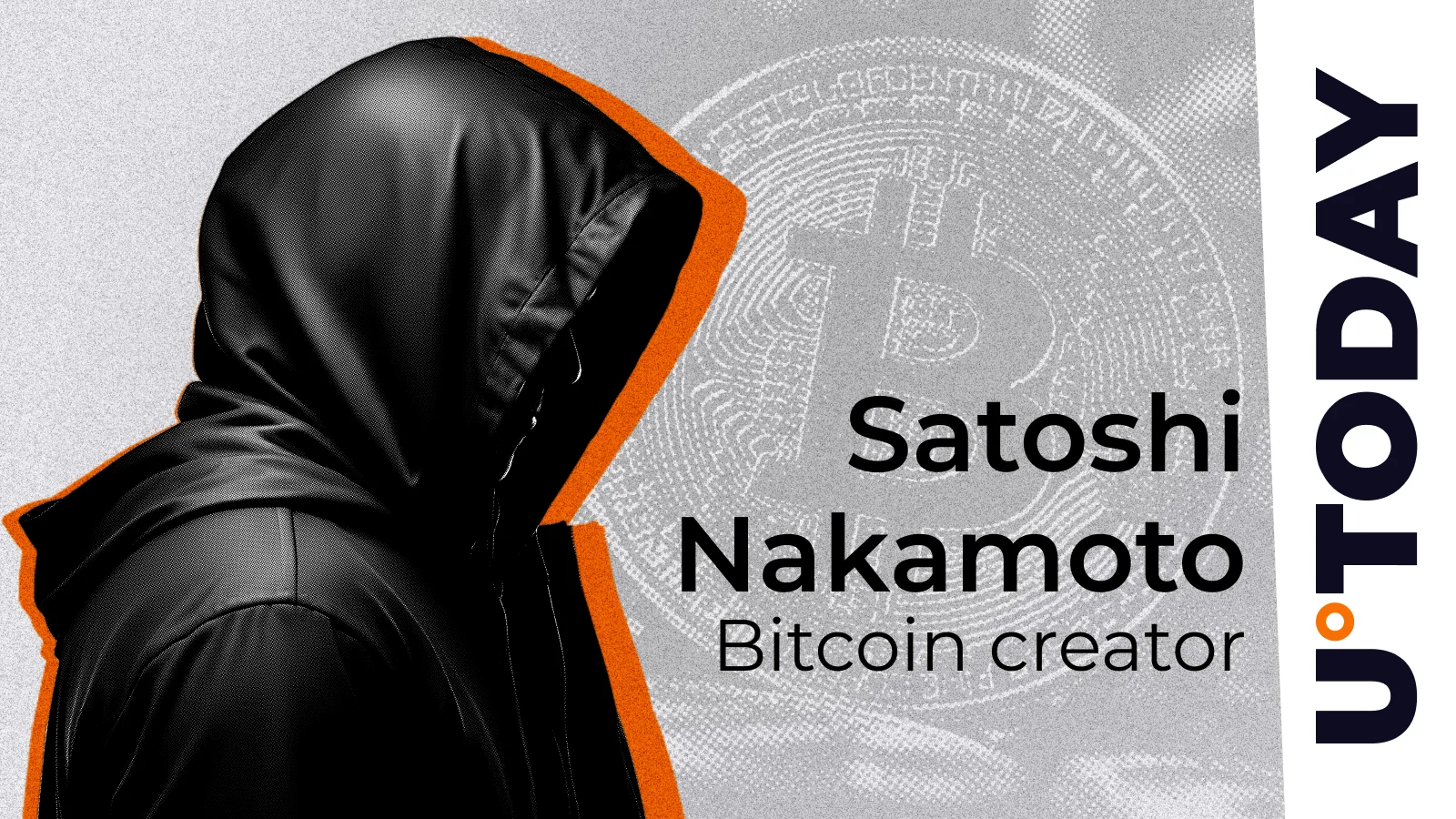
The potential threat of quantum computing to Satoshi Nakamoto's dormant Bitcoin holdings represents a significant long-term risk to Bitcoin's supply dynamics and market stability.
A successful exploit of Satoshi's coins could trigger an unprecedented supply shock, leading to a catastrophic price collapse due to the sheer volume of BTC potentially entering the market.
The development highlights the urgent need for the Bitcoin network to upgrade to quantum-resistant cryptography to safeguard against future threats to its foundational security.
Deep Dive
A recent report highlights a growing concern within the cryptocurrency community: the potential threat posed by quantum computing to the dormant Bitcoin wallets of Satoshi Nakamoto. Previously assumed to be inaccessible, these wallets, holding approximately 1.1 million BTC, could become targets for future hackers leveraging advanced quantum technology.
The heightened anxiety stems from a whitepaper released in late March 2026 by Google Quantum AI. Researchers detailed new algorithm optimizations that significantly reduce the hardware requirements for breaking cryptographic codes, by a factor of 20. This advancement brings the possibility of quantum computers successfully accessing long-dormant wallets closer to reality.
Should quantum hackers gain access to Nakamoto's wallets, the economic impact on the crypto market could be catastrophic. The sudden influx of over 2 million recovered tokens (including Nakamoto's 1.1 million BTC and an estimated 2.3 million from other early adopters) onto the market would create an unprecedented supply shock, likely leading to a severe price collapse. For context, the German government's liquidation of 50,000 BTC in 2024 caused a significant sell-off.
The Bitcoin network will eventually require an upgrade to become "quantum-proof." However, determining how to manage the dormant coins presents a significant challenge. Options range from doing nothing to burning the coins, with proposals for creating a Bitcoin fork being highly controversial due to the network's decentralized nature. The broader blockchain industry faces the imperative to migrate to Post-Quantum Cryptography (PQC) to safeguard against future threats.
The potential threat of quantum computing to Satoshi Nakamoto's dormant Bitcoin holdings represents a significant long-term risk to network security and market stability. A successful breach of Satoshi's 1.1 million BTC by quantum hackers could trigger a catastrophic supply shock, leading to an unprecedented price collapse due to the sheer volume of tokens potentially entering the market. The Bitcoin network's eventual need for a quantum-proof upgrade highlights a critical infrastructure challenge, with potential forks or other solutions facing significant technical and governance hurdles. Recent advancements in quantum algorithm optimization by Google Quantum AI have accelerated the timeline for this threat, suggesting the industry must prioritize migration to Post-Quantum Cryptography (PQC).
