
Navigating Crypto News

CoinFeather
Navigating Crypto News
Quick market read from this story
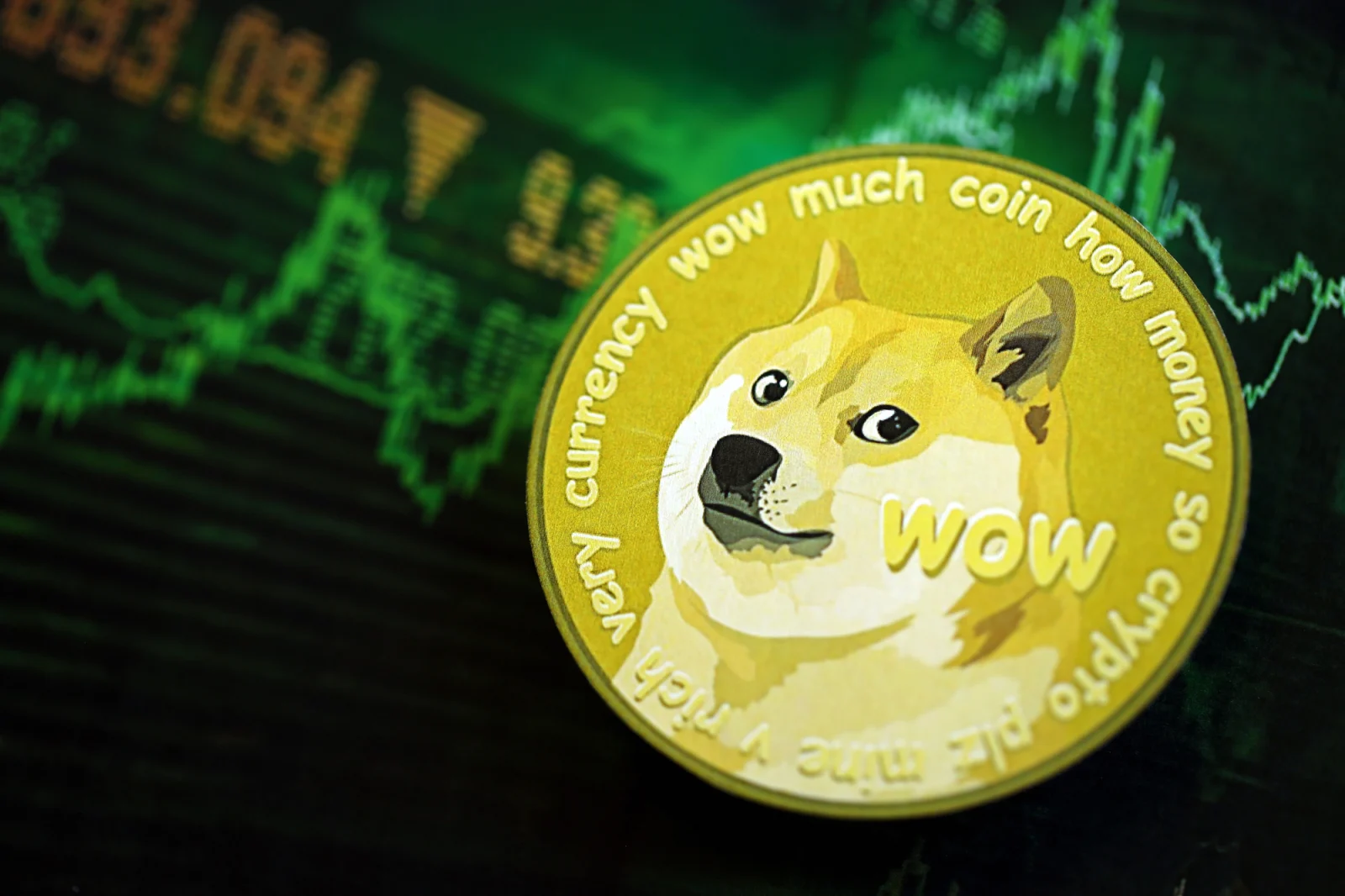
Despite a high long/short ratio on derivatives exchanges suggesting bullish sentiment, Dogecoin's price action remains weak due to larger, more impactful short positions and declining trading volume.
The current market structure for DOGE is still bearish, with the price below key moving averages and facing downward-sloping trends, indicating that a sustained rally is unlikely without reclaiming significant resistance levels.
The disconnect between derivatives positioning and actual price movement highlights a lack of conviction and spot demand, suggesting that short-term bullish signals are likely to fade without fundamental support.
Deep Dive
Dogecoin (DOGE) is currently consolidating around the $0.09 mark following a period of decline. Despite a significant shift in derivatives positioning showing a strong preference for long positions, the overall market structure remains bearish, with the asset trading below key moving averages that continue to trend downwards.
Data reveals a notable imbalance in trader sentiment, with long/short ratios on some exchanges reaching as high as 4:1. This indicates that a large majority of traders are betting on an upward price movement for DOGE.
However, this bullish positioning is not reflected in price action. Analysts suggest that while more traders are in long positions, the actual order sizes and market impact of short positions are likely larger and more strategically placed. This allows larger players to sustain selling pressure and suppress the price, especially in a low-momentum environment, explaining why DOGE is not reacting to the apparent overwhelming bullish sentiment in derivatives.
Trading volume across major exchanges has decreased, with some platforms experiencing double-digit declines. This lack of participation limits the market's ability to generate significant long-term price movements, even with skewed positioning.
Liquidation data does not indicate a substantial squeeze in either direction, suggesting a state of equilibrium rather than market expansion. While there have been sporadic inflows, particularly in futures markets, these have not translated into sustained price increases. The continued irregularity of spot flow further undermines the case for a prolonged rally, as derivatives-driven moves tend to fade quickly without strong spot demand.
Despite the long-heavy positioning suggesting optimism, price behavior points to underlying weakness. The path of least resistance for Dogecoin appears to be sideways to slightly downward until it can reclaim important resistance levels and break free from its descending structure.
Source, catalyst, and sector overlap from the latest feed.
Long traders have suffered more losses as the crypto market liquidation almost hit $300 million.
Shiba Inu community trashes Shytoshi Kusama as he goes deeper into religion and further from SHIB.
SWIFT's former Chief Innovation Officer is leaving to build infrastructure at the intersection of AI, scientific discovery, and institutional finance, signaling a potential new wave of institutional adoption driven by trust layer solutions. The executive's departure, previously a critic of XRP and public blockchains, highlights a perceived "trust gap" in connecting AI and tokenization to real-world assets and trusted data, suggesting a significant market opportunity. This move by a high-profile TradFi executive into a new venture focused on AI and institutional finance infrastructure could attract significant talent and capital, potentially impacting the RWA and AI sectors.
The potential threat of quantum computing to Satoshi Nakamoto's dormant Bitcoin holdings represents a significant long-term risk to network security and market stability. A successful breach of Satoshi's 1.1 million BTC by quantum hackers could trigger a catastrophic supply shock, leading to an unprecedented price collapse due to the sheer volume of tokens potentially entering the market. The Bitcoin network's eventual need for a quantum-proof upgrade highlights a critical infrastructure challenge, with potential forks or other solutions facing significant technical and governance hurdles. Recent advancements in quantum algorithm optimization by Google Quantum AI have accelerated the timeline for this threat, suggesting the industry must prioritize migration to Post-Quantum Cryptography (PQC).
The potential threat of quantum computing to Satoshi Nakamoto's dormant Bitcoin holdings represents a significant long-term risk to Bitcoin's supply dynamics and market stability. A successful exploit of Satoshi's coins could trigger an unprecedented supply shock, leading to a catastrophic price collapse due to the sheer volume of BTC potentially entering the market. The development highlights the urgent need for the Bitcoin network to upgrade to quantum-resistant cryptography to safeguard against future threats to its foundational security.
Bitcoin's price is currently range-bound due to a 'higher-for-longer' Fed policy and persistent inflation risks, limiting aggressive risk-on rallies. Renewed Bitcoin ETF inflows in March, totaling $1.3 billion after months of outflows, suggest institutional accumulation in the $65K-$70K range, signaling a potential shift in sentiment despite some lingering hesitation. Short-term volatility is being driven by derivatives market activity, including a large options expiry and liquidations, which are expected to clear, allowing fundamentals like ETF flows and macro conditions to reassert influence. Geopolitical tensions, while causing short-term risk-off reactions, also reinforce Bitcoin's long-term narrative as an alternative store of value, creating a dual effect on its price action.
Significant outflows from US spot Bitcoin ETFs signal waning institutional confidence, potentially pressuring BTC price downwards. Technical analysis suggests Bitcoin faces strong resistance around $69,000-$70,000, with a critical support level at $65,000-$66,000 that, if broken, could lead to a drop towards $60,000. Geopolitical tensions and rising oil prices are contributing to a broader risk-off sentiment in financial markets, negatively impacting Bitcoin alongside traditional assets like gold. Prediction market data indicates a prevailing bearish short-term outlook, with traders assigning a higher probability to a price dip to $60,000 before a potential recovery.
Changpeng Zhao's explanation highlights that BNB Chain's conservative approach to memecoins was driven by regulatory pressures and risk management, contrasting with Solana's more speculative surge which benefited from a different market timing post-FTX collapse. The differing memecoin strategies between BNB Chain and Solana underscore how regulatory environments and specific market conditions influence blockchain ecosystem development and asset focus. While BNB Chain prioritized utility and avoided early memecoin risks, it is now seeing increased memecoin activity, indicating a potential shift in ecosystem focus or a response to market trends.
The upcoming holiday weekend will remove key institutional demand from CME futures and ETFs, potentially exacerbating selling pressure in a market already showing weak spot demand and distribution from large holders. Despite increased ETF inflows recently, overall Bitcoin demand remains negative due to selling from other participants, indicating that institutional accumulation is not fully offsetting broader market distribution. Weakening rate-cut expectations, driven by rising inflation data, are testing Bitcoin's price floor, which is partly underwritten by macro-sensitive positioning rather than pure spot accumulation. The absence of CME and ETF activity over the holiday weekend leaves Bitcoin vulnerable to persistent selling pressure in spot markets, with potential resistance levels identified between $71,500 and $81,200.
Google DeepMind's research highlights significant security vulnerabilities in autonomous AI agents, detailing six categories of 'traps' that can manipulate or hijack their operations. The identified AI agent traps, including content injection and semantic manipulation, pose a direct threat to AI-driven financial transactions and data integrity, with some attacks achieving over 80% success rates in tests. The lack of a legal framework for AI-induced financial crimes creates an 'accountability gap,' suggesting a critical need for regulatory clarity before widespread deployment in sensitive sectors. The systemic trap category, which could trigger coordinated sell-offs among AI trading agents, presents a novel risk to market stability, drawing parallels to historical flash crashes.
Live Feed
Loading the broader stream in the same flow as the homepage feed.

Polymarket's strategic expansion into traditional sports, exemplified by its new LaLiga partnership, signals a growing trend of crypto platforms seeking mainstream adoption and revenue streams beyond core crypto markets. The deal with LaLiga, a major European soccer league, enhances Polymarket's credibility and reach in North America, potentially attracting new user demographics to prediction markets and indirectly benefiting the broader DeFi ecosystem. Despite regulatory headwinds and past insider trading incidents, Polymarket's continued high-profile partnerships and significant funding ($1.6B from ICE) suggest underlying confidence in the prediction market model's viability and growth potential.

Ripple's integration of its Treasury platform into SWIFT's Certified Partner Program, following the GTreasury acquisition, enhances its ability to bridge traditional finance and digital assets, potentially improving cross-border payment efficiency. While the move signifies deeper integration with traditional banking infrastructure, analysts caution that 'SWIFT compatibility' does not imply direct SWIFT network usage or XRP's adoption by SWIFT itself, tempering immediate price speculation. The development allows companies to manage both fiat and digital assets like XRP and RLUSD from a single dashboard, offering a dual payment system that can leverage traditional SWIFT rails or faster blockchain settlement when needed.

Naoris Protocol's mainnet launch introduces quantum-resistant cryptography, addressing the long-term threat of quantum computing to existing blockchains like Bitcoin and Ethereum. The protocol's focus on post-quantum cryptography, utilizing NIST-approved algorithms, positions it as a potential infrastructure solution for future security needs across various crypto sectors. While the immediate impact on current market prices is limited, the development signals a proactive approach to a systemic risk, potentially influencing future development and investment in blockchain security.

Ripple CTO David Schwartz argues that a truly freeze-proof stablecoin cannot exist due to the fundamental legal obligation of redemption, suggesting that attempts to achieve this may undermine the core value proposition of stablecoins. Recent events, including Circle's freezing of wallets and the Drift protocol hack, highlight the practical challenges and controversies surrounding stablecoin control mechanisms, raising questions about issuer accountability and operational processes. The GENIUS Act mandates stablecoin issuers to have the technical capability to freeze funds when legally required, indicating that 'neutral' stablecoins, as proposed by some, are not currently viable in the U.S. regulatory landscape.
Pi Network's planned cross-chain bridge and KYB integration signal a strategic push towards enhanced utility and business adoption, aiming to move beyond its current ecosystem limitations. Despite significant infrastructure upgrades like the cross-chain bridge and smart contract development, Pi Coin's price action remains weak, indicating a market disconnect between development progress and investor demand. The upcoming token unlocks and current low trading volume suggest potential downward price pressure for Pi Coin, especially if user growth and real-world business activity do not materialize to absorb increased supply.

The reported acquisition talks come as South Korea is considering a 20% cap on major crypto exchange shareholders, which would force major platforms to restructure ownership.

Bitcoin is functioning as a continuous price discovery mechanism for geopolitical risk over the Easter holiday weekend, while traditional markets are closed, highlighting its availability as a key market structure component. The current geopolitical tensions and oil price surge are transmitting macro stress through Bitcoin, linking it to inflation, yields, and liquidity conditions, which will be tested by traditional market reopenings and upcoming economic data. While Bitcoin's availability provides an immediate venue for price expression during market closures, its signal requires validation from traditional markets and cross-asset confirmation on Monday to determine durability.

Cartesi (CTSI) has experienced an 80% price surge on significant volume, breaking a prolonged downtrend and reclaiming the $0.04 zone. The immediate price action indicates a potential short-term momentum shift, but the broader trend remains bearish until CTSI decisively breaks and holds above the critical $0.05 resistance level. A sustained move above $0.05 could trigger further upside towards $0.06 and potentially $0.10, while failure to hold this level may lead to a sharp correction back to $0.035. The weekly RSI showing bullish divergence alongside the price breakout from a falling wedge pattern suggests a possible trend reversal, contingent on overcoming key resistance.

Render's derivatives market shows a significant surge in trading volume and open interest, indicating increased trader participation and positioning ahead of a potential price move. RNDR price is consolidating near key support levels, with a decisive breakout anticipated upon breaching the $2.10 resistance, potentially targeting $2.60 if momentum sustains. The current market setup for RNDR suggests a period of accumulation, with derivatives data pointing towards growing interest and a balanced long/short ratio hinting at a non-overcrowded bullish sentiment.

Geopolitical tensions and a global risk-off sentiment are driving significant price drops in Bitcoin and Ethereum, pushing BTC below $69,000 and indicating potential further downside targets at $60,000 and below. The upcoming Good Friday weekend liquidity gap, coupled with paused ETF flows, exacerbates crypto market vulnerability to sharp price movements, suggesting a cautious outlook for the short term. Ethereum and altcoins are showing weakness, with ETH forming a bear flag pattern and many altcoins testing critical support levels, signaling a lack of broad market recovery potential in the immediate future. Rising stablecoin dominance suggests capital is moving to safety amid market uncertainty, reinforcing the bearish sentiment for riskier crypto assets and indicating a potential continuation of the downtrend.

SBI Ripple Asia and DSRV are initiating a joint research project focused on leveraging the XRP Ledger for cross-border payments between Japan and South Korea, aiming for faster and cheaper transactions. The research is strategically timed with evolving regulatory landscapes in both countries concerning stablecoins and blockchain payments, suggesting a proactive approach to future compliance. This collaboration signals a potential pathway for increased XRP Ledger adoption in institutional payment systems, contingent on the research outcomes and upcoming regulatory clarity in Japan regarding XRP.

January saw the largest attack against a DeFi protocol of the quarter, the $40 million private key compromise of portfolio management platform Step Finance.

The success of free-to-play social casinos, with a dual-coin model mirroring crypto tokenomics, highlights effective user acquisition and retention strategies applicable to blockchain projects. The social casino market's projected growth to $14.23 billion by 2030, driven by low-friction browser access and reward systems, offers a blueprint for crypto platforms struggling with user adoption. The convergence of sweepstakes gaming and crypto payments, with platforms accepting BTC and ETH, signals a growing demand for flexible, borderless transaction methods and a potential area for market expansion. Regulatory parallels between the evolving sweepstakes casino landscape and crypto markets suggest that compliance and transparency are key differentiators for building durable user trust and long-term business viability.
Signal context only. Validate with price action, liquidity, and risk limits before taking a position.
