
Navigating Crypto News

CoinFeather
Navigating Crypto News
Quick market read from this story
The Pi Network's new Launchpad model incentivizes active participation by rewarding users with higher token allocations and potential discounts based on staking and engagement levels.
This development signals a shift towards more structured token distribution mechanisms within the Pi ecosystem, aiming to foster stronger community involvement post-launch.
Users who do not participate in the Pi Launchpad will miss out on initial listing prices and potential early advantages, necessitating secondary market purchases at potentially higher costs.
Deep Dive
The Pi ecosystem has launched a new token launchpad on its testnet, offering a structured and rewarding participation model that goes beyond simply holding Pi. This new system, detailed by crypto user Woody Lightyear, involves two distinct actions: staking Pi and committing Pi, which are often misunderstood but serve different critical functions in acquiring tokens during a launch.
Staking Pi grants users "PiPower," which determines their allocation limit – essentially, how many tokens they are permitted to buy. The more Pi a user stakes, the higher their potential purchase limit. However, staking alone does not secure the tokens.
Committing Pi is the actual payment mechanism used to purchase tokens at the initial listing price. Unlike staked Pi, which is returned after the participation window closes, committed Pi is spent and is not refunded. This distinction is crucial for understanding the participation process.
The Pi Launchpad model offers a significant advantage to users who actively engage with the applications they support. Users with higher engagement scores can receive discounts on the initial listing price, allowing them to acquire more tokens for the same amount of committed Pi compared to less engaged participants. For instance, a highly engaged user might receive more tokens for 5 Pi than a standard participant.
A key takeaway from the Pi Launchpad is that direct participation is necessary to purchase tokens at the initial listing price. Without engaging in the launchpad, users miss out on this opportunity and will likely need to acquire tokens on secondary markets at potentially higher prices. In essence, staking secures access, committing enables the purchase, and engagement determines the value of the deal.
Regarding user concerns, staked Pi is always returned after the participation window, irrespective of a token's performance. Only the committed Pi, used for purchasing tokens, is at risk. Higher user engagement is seen as a potential indicator of stronger community support, which could positively influence a token's demand and stability post-launch. Users who do not participate in the initial launch forfeit the advantages of initial pricing and allocation, facing higher costs on secondary markets. The model is designed to benefit active, long-term Pi users who engage with new projects early, offering them better pricing and a role in shaping the early community.
Source, catalyst, and sector overlap from the latest feed.
The SEC and CFTC's joint classification of Shiba Inu as a digital commodity, alongside established assets like Bitcoin and Ethereum, signals a potentially broader regulatory approach to tokens with utility features, despite its meme coin origins. An analyst's questioning of Shiba Inu's commodity classification highlights the evolving and potentially ambiguous nature of current regulatory frameworks, suggesting that assets may not fit neatly into predefined categories. The inclusion of SHIB as a digital commodity, rather than a digital collectible, could imply a shift in how regulators perceive meme coins that develop ecosystems, staking, or other functional aspects, potentially impacting future classifications and market expectations.
Ethereum is consolidating above a critical $2,000 support level, with increasing buyer accumulation and fading selling pressure suggesting a potential breakout is building. Institutional accumulation, exemplified by Bitmine's $340 million ETH stake and staking, is reducing liquid supply and providing a supportive base for potential upside. A confirmed break above the $2,200 resistance zone could trigger a rapid ascent towards $2,600-$2,700 and potentially the $3,000 target, while failure to hold support risks a retreat to $1,900.
Strategy's continued weekly Bitcoin accumulation signals sustained institutional conviction, potentially providing a foundational support for the broader market. The shift in investor preference towards direct revenue-generating tokens like HYPE, which has surpassed ADA in market cap, indicates a rotation away from research-focused chains towards more immediate utility. Pepeto's presale success, driven by its focus on verified tools and a Pepe co-founder's involvement, suggests a market appetite for utility-focused meme-adjacent projects with clear upcoming catalysts like a Binance listing. The article highlights a growing concern around AI-powered scams and crypto ATM fraud, emphasizing the increasing importance of security and verification tools for capital protection.
Render's transition to Solana and increasing demand for decentralized GPU infrastructure, particularly for AI workloads, position it as a key player in the evolving compute marketplace. The article presents a bullish long-term outlook for RNDR, projecting significant price appreciation by 2026 and 2030, contingent on sustained adoption and network utilization. On-chain analysis indicates stable network usage and development activity, suggesting a fundamental growth cycle rather than pure speculation, which could support future price expansion. While the article forecasts substantial long-term growth, near-term price action in April 2026 is expected to be in a consolidation phase between $2 and $5, awaiting a breakout above $3 resistance.
The deployment of an RPC server on Pi Testnet enables direct developer interaction with the blockchain, significantly advancing the network's readiness for smart contract deployment and complex application development. This technical upgrade, part of the (Protocols 21-23) roadmap, is a crucial step towards Pi Network's open mainnet phase, aiming to ensure robust infrastructure for future decentralized applications and services. While the RPC server enhances long-term utility and developer tooling, potential near-term price pressure may arise from a substantial token unlock of approximately 210.91 million tokens this month, potentially capping immediate upside.
The launch of Midnight's network on Cardano aims to address the significant gap between Cardano's market cap and its on-chain activity by introducing privacy-first infrastructure for regulated finance. Midnight's success hinges on its ability to attract institutional use cases, such as Monument Bank's tokenized deposits, by demonstrating compliance and solvency without revealing sensitive data. While competitors like Aztec and Namada also focus on privacy, Midnight's integration with Cardano's existing staking infrastructure and builder base provides a unique competitive advantage. The federated operator model, including major players like Google Cloud and MoneyGram, lowers the trust barrier for institutions but raises decentralization concerns that need to be addressed later in 2026.
Chainalysis is integrating AI agents into its platform to enhance investigations and compliance, mirroring a trend seen with competitors like TRM Labs. The introduction of 'blockchain intelligence agents' by Chainalysis aims to provide users with advanced analytical capabilities at machine speed, potentially improving the efficiency of crypto-related investigations. By leveraging AI for investigations and compliance, Chainalysis is responding to the increasing use of AI by malicious actors, signaling a new arms race in the cybersecurity and blockchain analytics space. The rollout of these AI agents over the summer targets critical areas like investigations and compliance, suggesting a near-term focus on improving existing workflows rather than introducing entirely new market functionalities.
Galaxy Digital's expansion of its GalaxyOne platform to include Solana staking offers retail investors access to an estimated 6.5% APY, potentially increasing demand for SOL by incentivizing long-term holding and reducing sell pressure. The integration of staking within a single interface alongside traditional assets on GalaxyOne could drive adoption for both the platform and the Solana ecosystem, particularly if ETH staking is introduced as planned. While SOL is currently consolidating between $80-$85, the introduction of a new, accessible staking yield by a reputable firm like Galaxy Digital may provide a catalyst for breaking through resistance levels, especially if broader market sentiment turns positive.
Cardano's Midnight Network launch introduces a privacy-focused sidechain, aiming to unlock enterprise adoption by enabling secure handling of sensitive data on-chain. The introduction of Midnight Network addresses a key barrier to blockchain adoption for real-world applications like private finance and real estate, potentially expanding Cardano's utility beyond current use cases. The NIGHT token has shown an immediate market reaction with a price increase, indicating early investor interest in the privacy-centric development and its potential for future network activity. Charles Hoskinson's vision for Midnight Network positions it as a crucial evolution beyond basic smart contracts and payments, specifically targeting the integration of private data into blockchain ecosystems.
Tether's USAT stablecoin expansion to Celo, an Ethereum L2, signifies a strategic move to broaden regulated digital dollar accessibility beyond Ethereum's mainnet. The integration with Google Cloud for infrastructure support and a privacy-preserving faucet highlights a focus on compliant and user-friendly distribution channels for USAT. USAT's potential role as a gas currency on Celo, coupled with Celo's mobile reach via Opera MiniPay, could drive adoption and utility for the stablecoin within a significant user base.
The proposed Ethereum Economic Zone (EEZ) framework aims to solve L2 fragmentation by enabling direct cross-rollup interoperability and shared liquidity, potentially improving user experience and capital efficiency across the Ethereum ecosystem. While the EEZ addresses a critical issue of over 20 L2s holding $40B in value but being fragmented, its success hinges on adoption by infrastructure providers and DeFi protocols, suggesting a 'WATCHLIST' approach for its development. The development of the EEZ highlights ongoing debates about Ethereum's scaling strategy and potential weaknesses in current L2 designs, such as centralized sequencers and trusted bridges, indicating a need for protocol evolution.
Solana's declining DEX volumes and network fees suggest potential near-term price pressure, with traders watching the $80 support level closely. Despite lower DEX activity, Solana's strong DApp revenue generation, outperforming Ethereum in high-earning applications, provides a fundamental cushion and developer incentive, mitigating bearish sentiment. The increasing market share of Ethereum Layer-2 solutions in DEX volumes poses a competitive challenge to Solana's dominance, indicating a shift in trading activity.
Live Feed
Loading the broader stream in the same flow as the homepage feed.

Google's research highlights a potential quantum computing threat to current blockchain cryptography, specifically mentioning 'on-spend' attacks on Bitcoin's 10-minute block confirmation window. Binance founder CZ downplays immediate panic, stating the crypto industry can adapt by transitioning to quantum-resistant algorithms, though acknowledges the significant challenge of decentralized implementation and upgrades. The core market implication is a long-term security concern that necessitates proactive development and adoption of post-quantum cryptography, rather than an immediate threat to current market participants.
Bitcoin's return above $69,000 is a psychologically significant event, but on-chain data suggests potential sell pressure from increasing exchange inflows, indicating a cautious outlook. Geopolitical developments, specifically Iran's peace signal, have unwound prior 'fear trade' sentiment, creating a more favorable macro mood that is currently ahead of confirmed on-chain indicators. While price action shows a push towards new highs and improving chart structure, the on-chain data points towards a supply absorption phase rather than a confirmed trend resumption, suggesting consolidation or a modest bounce as a base case. The current market environment is heavily influenced by unpredictable geopolitical events, making traditional on-chain analysis a directional guide rather than a definitive predictor of short-term price movements.

Fidelity's analysis suggests Bitcoin's current cycle drawdown is significantly shallower than historical cycles, indicating market maturation and increased institutional confidence which could support a more stable store of value narrative. The observed 'diminishing returns' and reduced volatility across cycles, as highlighted by Fidelity, imply a potential shift in Bitcoin's market dynamics away from pure speculation towards a more established asset class. While historical patterns suggest a potential bottom in late September or early October 2026, Bitcoin's current position below key daily moving averages (50-day and 200-day EMA) and near the 200-week EMA indicates near-term technical headwinds.

Jack Dorsey's vision of AI replacing middle management at Block signals a potential paradigm shift in corporate structure, impacting operational efficiency and workforce dynamics. The company's recent 40% staff reduction, attributed to AI acceleration, highlights a trend of tech firms leveraging AI for restructuring and cost optimization. Block's transition towards an 'intelligence' model, where AI handles coordination and task assignment, suggests a move away from traditional hierarchical management structures. While AI is central to the new model, the continued emphasis on human involvement in key business and ethical decisions indicates a hybrid approach to future operations.

Google's quantum computing update has triggered a market rotation towards quantum-resistant cryptocurrencies, indicating a proactive pricing of long-term technological security risks by traders. While theoretical, the potential for quantum computers to break current cryptography is driving significant short-term gains in specific altcoins, highlighting a speculative appetite for 'future-proof' assets. The market's reaction suggests that even distant technological threats can influence near-term price action, potentially impacting the perceived value of established cryptocurrencies like BTC and ETH if defenses are not adequately addressed.
The 13th anniversary of Bitcoin first surpassing $100 serves as a historical marker, highlighting its significant evolution from a nascent asset to a recognized financial instrument. Bitcoin's initial surge past $100 was influenced by external financial stress and the Cyprus banking crisis, underscoring its early role as a perceived hedge against traditional financial instability. The milestone signifies Bitcoin's growing adoption and market presence, transitioning from a niche experiment to an emerging asset class driven by increased exchange activity and media attention.

Rising whale accumulation of LINK, evidenced by significant outflows from Binance, suggests potential future price appreciation despite current weak altcoin market conditions. Increased average daily outflows from top whale transactions indicate a gradual building of positions by large holders, signaling sustained interest in Chainlink. While whale activity is a bullish signal, analysts caution that past accumulation phases did not immediately reverse market trends, suggesting a need for careful observation before decisive action. A 46% jump in LINK trading volume alongside price consolidation around $8.82 indicates market anticipation, with key resistance at $9.55 that could trigger further price discovery if breached.

US authorities have charged ten individuals from four crypto market making firms for alleged market manipulation, signaling increased regulatory scrutiny on trading practices. The charges, including wash trading allegations, aim to curb artificial market activity and protect investors, potentially impacting the operations of firms involved and setting a precedent for future enforcement. The arrests and charges highlight the DOJ's commitment to regulating the crypto space, suggesting a heightened risk environment for market participants engaging in potentially manipulative strategies.
The scheduled monthly release of 1 billion XRP from Ripple's escrow is a predictable event, designed to manage supply and prevent market shocks. While the unlock increases circulating supply, Ripple's strategic use of a fraction for ODL and institutional sales limits immediate sell pressure on the open market. Speculation regarding escrow burning is unlikely to be a significant catalyst, as demonstrated by historical examples like Stellar (XLM) where token burns did not guarantee sustained price appreciation.
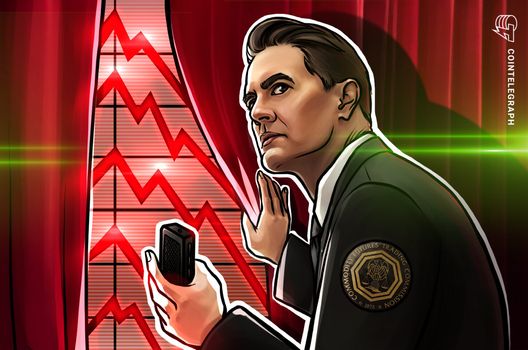
CFTC enforcement director David Miller has explicitly stated that insider trading laws apply to prediction markets, classifying event contracts as swaps and signaling increased regulatory scrutiny. The CFTC's focus on "misappropriated information" and "market abuse" in prediction markets suggests a heightened risk for participants engaging in non-compliant trading activities. Recent legislative proposals and platform self-regulation indicate a growing effort to address insider trading concerns in prediction markets, potentially impacting platform operations and user behavior.

Mercado Libre's decision to sunset its Mercado Coin loyalty token, while continuing with its MUSD stablecoin, signals a strategic pivot away from proprietary reward tokens towards more established stablecoin models. The failure of Mercado Coin, following Nubank's Nucoin, highlights the challenges of launching and sustaining in-house utility tokens in Latin America, potentially impacting investor confidence in similar initiatives. Mercado Libre's continued substantial holdings of Bitcoin (BTC) as a treasury asset, with significant unrealized gains, contrasts with its withdrawal from its own loyalty token, underscoring a preference for established cryptocurrencies over experimental ones.

Morgan Stanley's approval for a low-fee Bitcoin ETF, priced at 14 basis points, unlocks a significant $6.2 trillion advisory channel, potentially driving new capital inflows into BTC. The potential resolution of the Iran conflict, coupled with the Morgan Stanley ETF, presents a dual catalyst for Bitcoin in Q2, suggesting a possible shift from its recent sideways trading range. Despite geopolitical optimism and ETF developments, Bitcoin's muted reaction relative to equities highlights a persistent divergence, indicating that traditional risk-on sentiment is not fully translating to crypto assets.

XRP is experiencing significant supply reduction with 7.03 billion tokens leaving exchanges in February, indicating potential accumulation, yet price action remains capped, creating an unresolved setup. Despite tightening supply, XRP's failure to break above the $1.34-$1.35 resistance zone suggests persistent selling pressure, implying that the current price compression could resolve in a sharp move. Analysts highlight that the current market dynamic for XRP, characterized by shrinking supply and stalled price action, typically precedes a significant directional move, with key support at $1.31-$1.32 and resistance at $1.42.
Mastercard's Global Crypto Partner Program, including Solana and Circle, signals growing institutional infrastructure adoption, potentially benefiting established Layer 1s like SOL and ETH. While SOL and ETH gain validation from institutional partnerships, their large market caps suggest limited upside compared to early-stage presale projects like Pepeto, which is positioned for potentially higher returns. Pepeto's presale success, highlighted by $8 million raised during a 'fear' phase and upcoming Binance listing, suggests strong early-stage investor confidence and potential for significant price appreciation upon public trading. The article frames Pepeto's unique features like zero-cost swaps and risk scoring as differentiators in a crowded market, aiming to capture value from the broader institutional adoption wave driven by initiatives like Mastercard's program.
Signal context only. Validate with price action, liquidity, and risk limits before taking a position.
