
Navigating Crypto News

CoinFeather
Navigating Crypto News
Source, catalyst, and sector overlap from the latest feed.
Australia's passage of its first crypto law mandates exchanges and custodians to obtain AFSL licenses, integrating digital asset platforms into the traditional financial regulatory framework. The new regulation aims to enhance consumer protection and reduce risks from exchange failures by aligning crypto businesses with established financial rules and providing oversight by the Australian Securities and Investments Commission. This regulatory clarity in Australia could foster greater industry trust and potentially encourage institutional adoption, though it imposes compliance burdens on existing crypto businesses.
Live Feed
Loading the broader stream in the same flow as the homepage feed.
Significant XRP supply compression, with 7 billion tokens leaving exchanges, suggests a tightening sell-side that historically precedes price appreciation. Divergent flows show spot buyers accumulating XRP while perpetual traders build short positions, creating a setup ripe for a short squeeze if price breaks key resistance levels. Despite bullish supply and derivatives signals, XRP remains technically bearish, trading below major moving averages, making a Bitcoin-driven catalyst crucial for initiating a potential upward move. The high correlation (0.87) with Bitcoin indicates XRP's price action is heavily dependent on BTC's performance, with external factors like geopolitical events influencing Bitcoin's direction and, consequently, XRP's potential breakout.
U.S. authorities have charged ten foreign nationals with crypto market manipulation, signaling increased regulatory scrutiny on illicit market-making activities. The indictment involves wash trading and pump-and-dump schemes, highlighting the risks associated with artificial inflation of token prices and the potential for significant investor losses. The seizure of over $1 million in digital assets and the arrests of key individuals demonstrate the tangible consequences of such schemes and the government's commitment to enforcement. This coordinated global operation, involving multiple firms and international cooperation, suggests a broader trend of targeted enforcement against market manipulation in the crypto space.

Bitcoin has broken a five-month losing streak with a marginal 1.84% gain in March, marking its first green monthly candle since September 2025. Despite the positive monthly close, Bitcoin experienced significant volatility within March, trading near $76,000 before dropping below $65,000, indicating underlying weakness and uncertainty. The current market sentiment remains cautious as the small green candle resembles a doji or spinning top, suggesting indecision and the need for further confirmation before a sustained bullish trend can be established.

The SEC and CFTC's joint classification of Shiba Inu as a digital commodity, alongside established assets like Bitcoin and Ethereum, signals a potentially broader regulatory approach to tokens with utility features, despite its meme coin origins. An analyst's questioning of Shiba Inu's commodity classification highlights the evolving and potentially ambiguous nature of current regulatory frameworks, suggesting that assets may not fit neatly into predefined categories. The inclusion of SHIB as a digital commodity, rather than a digital collectible, could imply a shift in how regulators perceive meme coins that develop ecosystems, staking, or other functional aspects, potentially impacting future classifications and market expectations.

Google's research highlights a potential quantum computing threat to current blockchain cryptography, specifically mentioning 'on-spend' attacks on Bitcoin's 10-minute block confirmation window. Binance founder CZ downplays immediate panic, stating the crypto industry can adapt by transitioning to quantum-resistant algorithms, though acknowledges the significant challenge of decentralized implementation and upgrades. The core market implication is a long-term security concern that necessitates proactive development and adoption of post-quantum cryptography, rather than an immediate threat to current market participants.

Ethereum is consolidating above a critical $2,000 support level, with increasing buyer accumulation and fading selling pressure suggesting a potential breakout is building. Institutional accumulation, exemplified by Bitmine's $340 million ETH stake and staking, is reducing liquid supply and providing a supportive base for potential upside. A confirmed break above the $2,200 resistance zone could trigger a rapid ascent towards $2,600-$2,700 and potentially the $3,000 target, while failure to hold support risks a retreat to $1,900.

Cardano's transition to an execution-driven phase, marked by scalability upgrades and privacy features like Midnight, positions it to compete more effectively in DeFi and enterprise applications. Current on-chain metrics, including a negative MVRV ratio and steady development activity, suggest an accumulation phase for ADA, potentially preceding a significant price expansion. Price predictions for ADA range from $2.75-$5.00 by 2026 and up to $350 by 2050, contingent on sustained adoption, network growth, and favorable market conditions. Near-term price action for ADA is constrained by the $0.30-$0.35 resistance, with a decisive breakout needed to confirm a trend reversal and target higher zones.

Strategy's continued weekly Bitcoin accumulation signals sustained institutional conviction, potentially providing a foundational support for the broader market. The shift in investor preference towards direct revenue-generating tokens like HYPE, which has surpassed ADA in market cap, indicates a rotation away from research-focused chains towards more immediate utility. Pepeto's presale success, driven by its focus on verified tools and a Pepe co-founder's involvement, suggests a market appetite for utility-focused meme-adjacent projects with clear upcoming catalysts like a Binance listing. The article highlights a growing concern around AI-powered scams and crypto ATM fraud, emphasizing the increasing importance of security and verification tools for capital protection.

Render's transition to Solana and increasing demand for decentralized GPU infrastructure, particularly for AI workloads, position it as a key player in the evolving compute marketplace. The article presents a bullish long-term outlook for RNDR, projecting significant price appreciation by 2026 and 2030, contingent on sustained adoption and network utilization. On-chain analysis indicates stable network usage and development activity, suggesting a fundamental growth cycle rather than pure speculation, which could support future price expansion. While the article forecasts substantial long-term growth, near-term price action in April 2026 is expected to be in a consolidation phase between $2 and $5, awaiting a breakout above $3 resistance.
Signal context only. Validate with price action, liquidity, and risk limits before taking a position.
Quick market read from this story
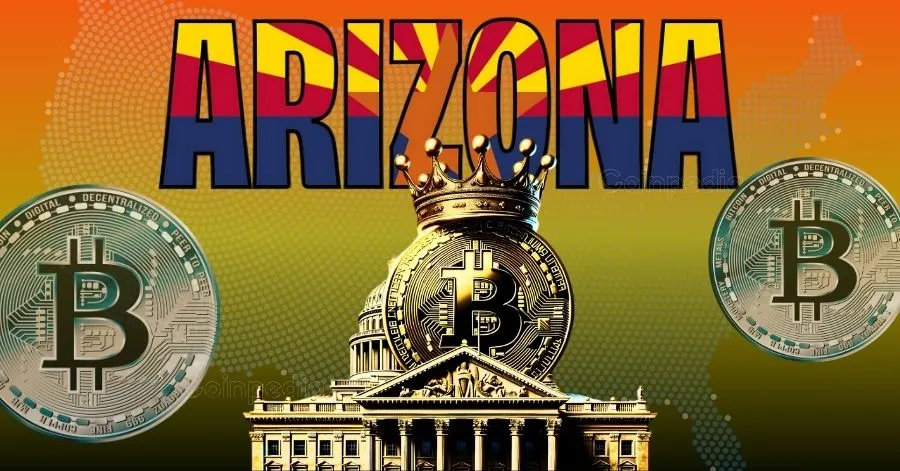
Arizona's legislative approval of bills allowing state investment in cryptocurrencies and the creation of a digital asset fund signals increasing institutional acceptance and potential for new capital inflows into the crypto market.
New Hampshire's plan for Bitcoin-backed municipal bonds, with a provisional Ba2 rating and no taxpayer risk, demonstrates innovative financial structuring that could pave the way for similar state-level initiatives and broaden Bitcoin's utility.
These state-level regulatory advancements, particularly regarding public fund investment and bond issuance, suggest a growing trend of integrating digital assets into traditional financial frameworks, potentially influencing broader market sentiment and adoption.
Deep Dive
Arizona is poised to become a leader in digital asset adoption as its legislature advances two key cryptocurrency bills. SB1042, if passed, would permit the state to allocate up to 10% of certain public funds into cryptocurrencies such as Bitcoin. Complementing this, SB1649 aims to establish a Digital Assets Reserve Fund, placing digital assets under state supervision.
In parallel, New Hampshire is making a significant move in the digital asset space. The New Hampshire Business Finance Authority is preparing to issue approximately $100 million in municipal bonds backed by Bitcoin. Moody's has assigned a provisional Ba2 rating to these bonds, notably stating there is no taxpayer risk involved, as the repayment is entirely dependent on the Bitcoin collateral.
These developments signal a growing acceptance and integration of cryptocurrencies within U.S. state-level financial strategies. Arizona's potential move to invest state funds directly into digital assets, alongside New Hampshire's innovative bond structure, highlights a trend towards exploring the utility and financial potential of cryptocurrencies beyond traditional markets.
The CLARITY Act's potential to classify XRP as a digital commodity under U.S. law could permanently resolve legal ambiguity, paving the way for increased institutional adoption and capital inflows. A clear regulatory framework for stablecoins and digital assets, as proposed by the CLARITY Act, is expected to foster greater integration with traditional finance and encourage broader adoption of XRP in payments and settlements. The U.S. establishing clear digital asset regulations through the CLARITY Act could set a global standard, influencing international regulatory approaches and accelerating worldwide adoption of assets like XRP.
