
Navigating Crypto News

CoinFeather
Navigating Crypto News
Quick market read from this story
Shiba Inu's hourly golden cross, coupled with a 4% price increase and a 43.8% jump in trading volume, signals potential short-term upside momentum driven by renewed investor interest.
The 410% surge in XRP Ledger payment transactions to over 624 million indicates significant on-chain activity growth, potentially preceding a price rebound despite current price stagnation around $1.30.
A Bitcoin whale depositing 1,102 BTC ($74 million) to Binance suggests capitulation, potentially indicating selling pressure as the whale exits a position acquired at a higher price point.
Deep Dive
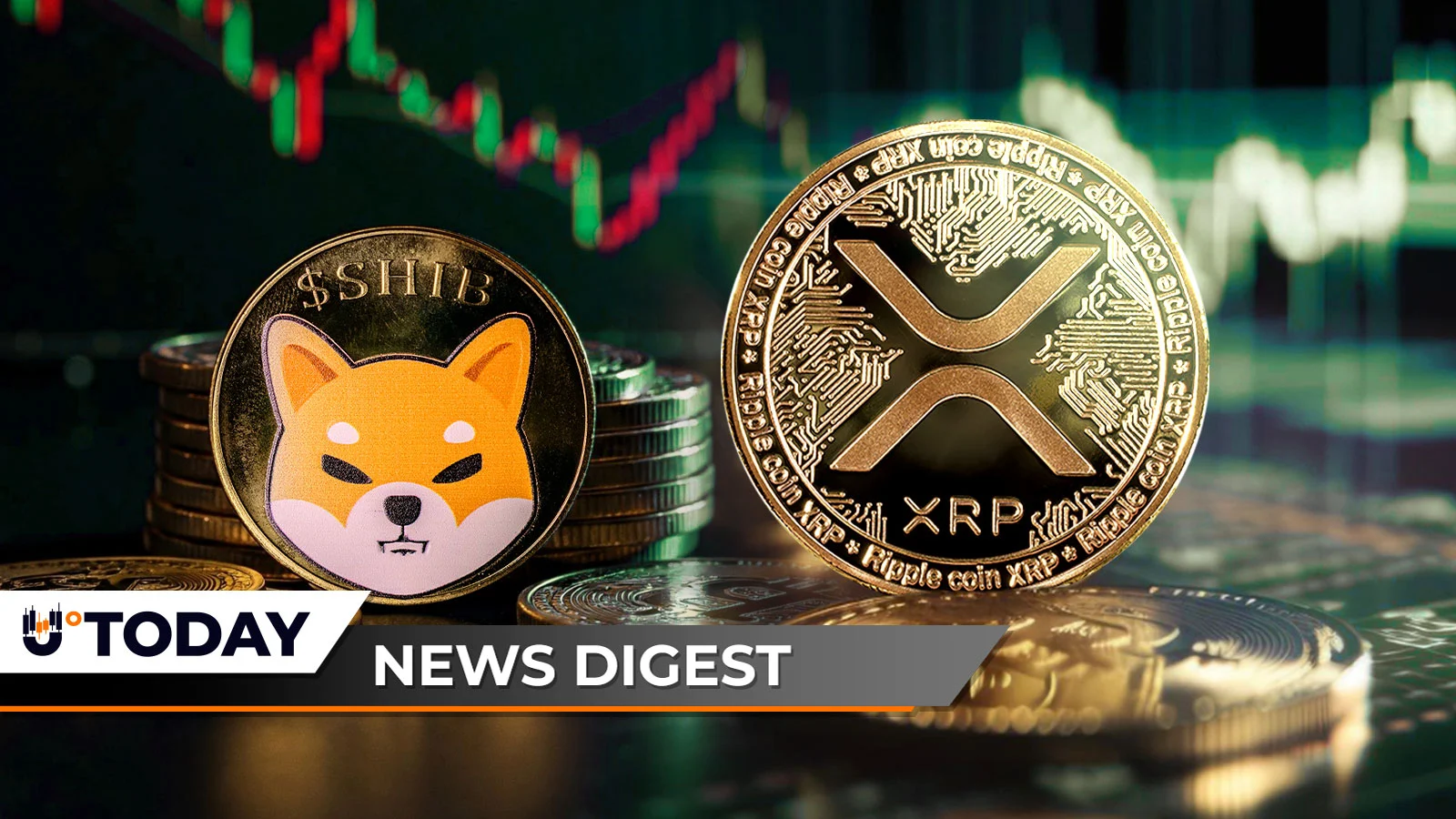
Shiba Inu has reversed its negative price trend, completing a golden cross on the hourly chart, which signals potential for continued upside. The cryptocurrency is currently trading at $0.0000060, marking a 4.7% increase in price within 24 hours. This rebound is further supported by a 43.8% increase in daily trading volume, indicating renewed investor commitment. The golden cross, a bullish indicator, appeared during a 4% price pump, suggesting strong buying pressure and market participation. Historically, this combination has preceded some of Shiba Inu’s stronger short-term price rebounds.
XRP has experienced a dramatic surge in network activity, with payments on the XRP Ledger increasing by over 410% in a single day. As of March 30, the number of daily payment transactions reached 624,637,585, a significant jump from the 122 million payments recorded the previous day. This surge in network activity occurs while XRP's price shows stability around the $1.30 level, despite mixed investor sentiment. The substantial increase in on-chain activity has sparked optimism about a potential price breakout for XRP.
A significant Bitcoin whale has deposited 1,102 BTC, valued at over $74 million, to the Binance crypto exchange, a move interpreted as capitulation. The whale had originally purchased these Bitcoins eight months prior (estimated July 2025) at approximately $117,770 per BTC, anticipating further price increases. Although the whale witnessed Bitcoin reach all-time highs above $126,000 in October 2025, they chose to hold rather than sell. The deposit to an exchange suggests an intention to sell, marking a potential end to the whale's long-term holding strategy.
Source, catalyst, and sector overlap from the latest feed.
The substantial burn of nearly 180 million RLUSD tokens, representing a $340 million market cap reduction, signals a significant liquidity withdrawal by major players like Gemini. While a token burn is a standard operational mechanism, the scale of this event has caused RLUSD to slip in stablecoin rankings, highlighting increased competition and potential shifts in market share. The event underscores the dynamic nature of stablecoin markets, where large redemptions can rapidly alter circulating supply and relative market positioning.
Arizona's legislative progress on establishing a state-level cryptocurrency reserve, including potential investment of public funds, signals growing institutional interest in digital assets. Despite previous vetoes by Governor Hobbs citing financial and operational concerns, the bill's advancement suggests a potential shift in regulatory sentiment towards integrating crypto into state treasury management. The inclusion of seized cryptocurrencies like Bitcoin and XRP into a state reserve, alongside potential investment of up to 10% of public funds, could set a precedent for other states and impact demand for these assets. While the bill is nearing a vote, past vetoes and the cautious approach of other states like New Hampshire and Texas indicate that widespread adoption of such policies may still face hurdles, warranting a 'watchlist' approach.
Solana's SOL/ETH ratio has fallen to a two-year low, with analysts predicting a potential further 25%-30% decline before a possible reversal. The current oversold conditions on the daily RSI suggest a potential short-term bounce, but confirmation is needed to avoid further downside risk. Broader market sentiment is cautious due to reassessment of Federal Reserve interest rate outlook, impacting crypto asset performance.
Ripple's new partnership with Convera leverages stablecoins for corporate cross-border payments, aiming to improve speed and liquidity by integrating traditional finance with blockchain infrastructure. The collaboration focuses on a 'stablecoin sandwich' model, where fiat payments begin and end with regulated stablecoins like RLUSD used for intermediate settlement, mitigating volatility risks. This strategic move by Ripple signifies continued efforts to drive enterprise adoption of blockchain technology for practical financial use cases, potentially increasing demand for its payment solutions and associated stablecoins.
Franklin Templeton's director forecasts Bitcoin potentially reaching new all-time highs in 2026, driven by continued institutional adoption and the growing utility of stablecoins and RWA tokenization. The forecast is tempered by a warning of potential regulatory headwinds, particularly around the US midterm elections in late 2026, which could create volatility and temporarily dampen institutional interest. The analysis suggests a shift towards valuing network fundamentals and regulatory clarity over short-term hype, indicating a maturing crypto market where tangible utility drives value.
Oracle's reported layoffs amidst rising AI spending suggest a strategic cost-management effort, potentially impacting margins and investor confidence as the company balances growth with operational efficiency. The stock's recent price action shows ORCL testing key support around $140 after falling from $155, indicating market uncertainty about the sustainability of its AI infrastructure buildout versus its cost control measures. Traders will monitor Oracle's ability to improve cash flow through workforce reductions while maintaining cloud growth; failure to do so could prolong stock pressure, as the market awaits clearer signals of profitability.
Mercado Libre's discontinuation of its Mercado Coin loyalty token, following a similar failure with Nubank's Nucoin, signals a broader market skepticism towards utility-based reward tokens in favor of stable value propositions. The pivot to a USD-pegged stablecoin (MUSD) by Mercado Libre highlights a strategic shift towards providing genuine utility and a hedge against local currency devaluation, indicating a more mature approach to crypto integration in e-commerce. While the specific loyalty token failed, Mercado Libre's continued involvement with crypto, including holding Bitcoin and offering stablecoin transfers, suggests ongoing commitment to the underlying infrastructure rather than a complete exit from the digital asset space.
WhiteBIT Coin (WBT) has achieved a $15 billion market cap, a 50% increase driven by its deflationary tokenomics, including buyback-and-burn mechanisms and strategic token unlocks. The recent Kraken listing and inclusion in S&P crypto indices signal growing institutional recognition and improved liquidity for WBT, potentially attracting further investment. WhiteBIT's global expansion into markets like Ghana, coupled with WBT's utility for trading fee discounts and ecosystem access, reinforces its value proposition and integration within the broader financial infrastructure.
The World Foundation's significant offloading of 226 million WLD tokens has driven the price to historic lows, indicating a potential capitulation event for retail investors. Despite the large sell-off, accumulation by funds like DACM, Kenetic Capital, CoinFund, and Hashed suggests smart money is positioning for a potential recovery. With the foundation locking a portion of proceeds and weaker hands exiting, the WLD coin may be at a turning point, with technical indicators suggesting a possible rebound if key resistance levels are breached. The narrative of "smart money" accumulating WLD while retail panic-sells, coupled with the foundation's stated need for operational funds, presents a complex dynamic for traders to assess near-term price action.
Nakamoto Holdings' decision to sell $20 million in BTC, coupled with its significant unrealized losses on remaining holdings, signals ongoing balance sheet pressure and a potential need for further asset liquidation to improve financial flexibility. The firm's stock reaching an all-time low, down nearly 80% in six months, reflects severe market skepticism regarding its strategy and financial health, despite stated long-term commitments to Bitcoin accumulation. CEO David Bailey's encouragement for short-term investors to exit suggests a strategic shift or a recognition of the difficulty in achieving near-term profitability, potentially impacting investor sentiment and confidence.
Bitcoin is being integrated into traditional public finance through a new Ba2 rated bond issued by a New Hampshire state authority, marking a significant step for crypto collateralization in public markets. The bond's structure relies on Bitcoin as collateral, with liquidation mechanisms in place if loan-to-value ratios deteriorate, indicating a developing framework for assessing crypto-backed debt despite Bitcoin's volatility. This development, alongside potential regulatory shifts for retirement portfolios, suggests a growing institutional acceptance and exploration of Bitcoin's utility beyond trading, potentially influencing broader market sentiment and adoption.
Solana is consolidating between $80 and $95, with key horizontal levels dictating price action and suggesting a potential breakout is being watched by traders. Derivatives data indicates a rise in open interest and net long positions following a recent price dip, signaling renewed bullish sentiment and positioning around the $80 support level. While increased long positioning can support upside momentum, it also heightens liquidation risk if price fails to break higher, creating a watchlist scenario for potential volatility.
Despite the Crypto Fear and Greed Index indicating 'extreme fear' for an extended period, on-chain data suggests a potential accumulation phase as short-term holder activity decreases and long-term holders increase dominance. The divergence between elevated investor fear driven by geopolitical and macroeconomic concerns, and the lack of increased Bitcoin selling pressure, presents a contrarian signal for potential dip-buying opportunities. Bitcoin's weakening correlation with the S&P 500 and underperformance against equities suggest it's being treated as a higher-risk asset, but this could also imply a decoupling opportunity if underlying accumulation trends persist.
Ripple's monthly RLUSD attestation enhances transparency and trust, potentially driving further adoption for its stablecoin in institutional use cases. The XRPL upgrade introducing confidential MPTs addresses privacy concerns, making the ledger more appealing for regulated financial applications and institutional capital. The expanded Hyperliquid integration for Ripple Prime traders offers access to traditional asset derivatives on-chain, bridging TradFi and DeFi for institutional participants. These combined developments signal Ripple's strategic focus on enhancing its stablecoin utility, improving XRPL's institutional appeal through privacy features, and expanding its derivatives trading offerings.
Ethereum's RSI momentum has broken its uptrend, suggesting a potential precursor to price weakness and a breakdown from its current rising wedge pattern. A significant liquidation cluster near $2,100 presents a key price magnet and potential volatility trigger, indicating that a move into this zone could accelerate price action. The confluence of weakening momentum and a major liquidation zone near $2,100 creates a high-risk environment for ETH, with potential downside targets around $1,900 if support breaks.
Live Feed
Loading the broader stream in the same flow as the homepage feed.
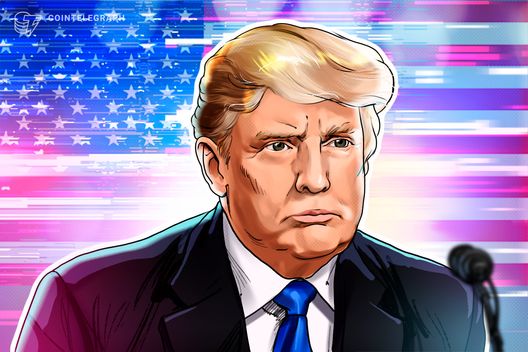
President Trump's statement on a potential US withdrawal from Iran within weeks suggests a de-escalation of geopolitical tensions. A reduction in Middle Eastern conflict could lead to decreased oil price volatility, potentially benefiting global markets and reducing inflation concerns. While the article mentions Bitcoin price drops in relation to US/Israeli strikes on Iran, the core news is geopolitical and not directly tied to crypto market mechanics.

Texas Lieutenant Governor Dan Patrick has directed state lawmakers to study prediction markets and crypto, signaling potential regulatory scrutiny and a need for market participants to monitor legislative developments in the state. The inclusion of crypto and blockchain in legislative interim charges suggests a growing focus on digital assets within Texas politics, potentially impacting the state's approach to innovation and regulation. The directive to examine "gambling loopholes" in prediction markets indicates a potential regulatory push against platforms perceived as circumventing existing gambling laws, which could affect related digital asset services.

S&P Dow Jones Indices tokenizing its iBoxx US Treasuries Index on the Canton Network signifies a growing institutional adoption of blockchain for financial data infrastructure. The move integrates a key fixed-income benchmark directly into blockchain systems, potentially streamlining data access for institutions building digital products and reducing reliance on traditional feeds. This development highlights the increasing role of US Treasurys as collateral in onchain markets and suggests a broader trend of traditional finance benchmarks moving onto distributed ledgers.
The 3-day SMA cross pattern suggests that Bitcoin may experience a final significant price drop before entering a new bull cycle, a historical indicator seen in previous bear market bottoms. Short-term analysis indicates the current Bitcoin rebound could be corrective, facing resistance around the $68,300-$70,300 region, with $64,974 acting as a critical support level to watch. Traders should interpret the SMA cross not as an exact bottom signal, but as a warning of potential further downside volatility, implying a cautious approach to new long positions until a clearer trend emerges.

Russia's new crypto bill, mandating licensed intermediaries and capping retail purchases, signals a move towards state control and visibility rather than outright prohibition. Dubai's VARA framework for crypto derivatives, allowing retail participation with leverage limits and strict safeguards, positions the jurisdiction to attract institutional capital seeking regulated markets. The contrasting regulatory approaches between Russia and Dubai suggest that restrictive measures may redirect crypto activity rather than diminish it, potentially benefiting jurisdictions with clearer frameworks. The development highlights a growing divergence in global crypto regulation, with some nations tightening controls while others, like Dubai, aim to foster sophisticated market participation.

P2P.me's speculative betting on its own fundraise via Polymarket has damaged investor trust, despite generating minimal profits, signaling potential reputational risk for the stablecoin startup. The incident highlights the growing concerns around insider trading and market manipulation on prediction platforms, even at the company level, potentially leading to increased scrutiny from regulators and platforms like Polymarket. While P2P.me's backers were unaware of the wagers, the situation underscores a lack of transparency and could impact future investment decisions, despite the company's apology and commitment to establishing new policies. The controversy surrounding P2P.me's actions on Polymarket, occurring shortly after the platform updated its insider trading rules, suggests a potential for regulatory action or platform-level sanctions.

Magic Eden is sunsetting its multi-chain crypto wallet, forcing users to migrate assets by May 1st to avoid potential loss, indicating a strategic pivot away from wallet services. The closure of the Magic Eden wallet, particularly its Solana support, may prompt users to seek alternative wallet solutions, potentially impacting Solana's ecosystem user experience. Magic Eden's shift towards a crypto casino and sportsbook, coupled with the wallet shutdown and reduced NFT support on other chains, signals a significant strategic reorientation impacting its legacy user base and token (ME).

The launch of Midnight's network on Cardano aims to address the significant gap between Cardano's market cap and its on-chain activity by introducing privacy-first infrastructure for regulated finance. Midnight's success hinges on its ability to attract institutional use cases, such as Monument Bank's tokenized deposits, by demonstrating compliance and solvency without revealing sensitive data. While competitors like Aztec and Namada also focus on privacy, Midnight's integration with Cardano's existing staking infrastructure and builder base provides a unique competitive advantage. The federated operator model, including major players like Google Cloud and MoneyGram, lowers the trust barrier for institutions but raises decentralization concerns that need to be addressed later in 2026.
Shiba Inu's burn rate has collapsed to near zero, with only 906.4 SHIB burned on March 31, indicating a significant drop in community participation and potentially impacting future supply reduction efforts. Despite the recent slowdown in burn activity, Shiba Inu has achieved the milestone of burning half of its total supply, a long-term cumulative achievement that may still provide underlying support. Shibarium is entering a 'clean stabilization phase' following a backend overhaul and reindexing, which has temporarily reduced transaction volume, suggesting a period of consolidation before potential recovery.

Elon Musk's commentary suggests quantum computing could offer a novel utility for Bitcoin by enabling the recovery of lost private keys, potentially unlocking a significant portion of dormant BTC supply. While quantum computing poses a long-term threat to current cryptography, the immediate focus is on its potential to recover lost Bitcoin, shifting the narrative from pure risk to a dual-edged sword. The development highlights ongoing efforts by other blockchains like Ethereum and Cardano to implement quantum-resistant cryptography, underscoring Bitcoin's relative lag in addressing this future threat. The potential benefits of quantum computing, such as enhanced security and scalability, are presented as future possibilities in a post-quantum era, but the immediate market implication centers on the recovery of lost assets.
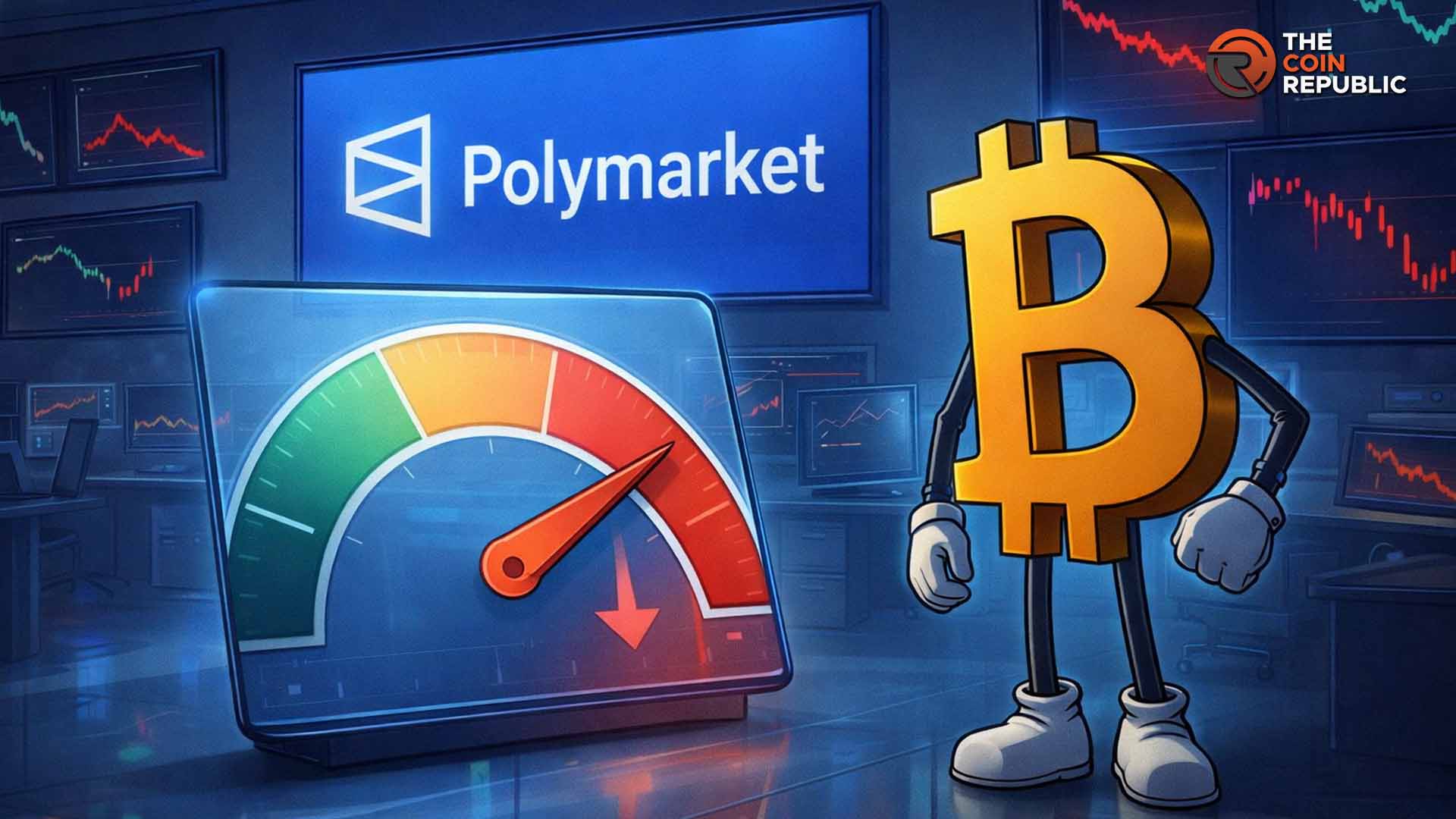
Polymarket odds indicate a significant trader sentiment leaning towards a Bitcoin price crash below $45,000 by 2026, suggesting a bearish outlook despite current price levels. Despite bearish sentiment from prediction markets, recent inflows into Bitcoin ETFs signal continued institutional interest, creating a divergence in market signals. The article highlights mixed signals from prediction markets, technical indicators (RSI at 50), and on-chain metrics (declining active addresses), suggesting a period of uncertainty and potential volatility for Bitcoin. Traders are pricing in a higher probability of Bitcoin dropping below $50,000 and $55,000 than reaching $80,000 or $90,000, indicating a cautious near-term outlook.

California's new executive order mandating stronger safeguards for AI companies seeking state contracts introduces a significant regulatory hurdle, potentially influencing AI development and procurement practices. This state-level action directly conflicts with the Trump administration's push for national AI standards, highlighting a growing tension over regulatory authority that could impact the broader AI landscape. The move by California, a major technology market, could set a precedent for other states and influence how AI companies approach compliance and risk management, especially concerning bias and civil rights. While not directly impacting crypto assets, the regulatory focus on AI safeguards and potential misuse could indirectly affect AI-focused blockchain projects or infrastructure providers that rely on AI integration.

Bitcoin has experienced an unprecedented six-month period of underperformance against U.S. equities, raising questions about its role as a risk asset rather than a hedge. Despite a weak first quarter with a 22% decline, Bitcoin showed relative stability in March, outperforming gold amidst geopolitical tensions and market volatility. The prolonged underperformance against stocks may precede a reversal, suggesting potential for renewed demand if historical patterns hold and macro pressures persist. Geopolitical events, particularly the trajectory of the Iran conflict and its impact on energy markets and risk appetite, could be a key determinant for Bitcoin's sentiment shift.
Signal context only. Validate with price action, liquidity, and risk limits before taking a position.
