
Navigating Crypto News

CoinFeather
Navigating Crypto News

Source, catalyst, and sector overlap from the latest feed.
The substantial burn of nearly 180 million RLUSD tokens, representing a $340 million market cap reduction, signals a significant liquidity withdrawal by major players like Gemini. While a token burn is a standard operational mechanism, the scale of this event has caused RLUSD to slip in stablecoin rankings, highlighting increased competition and potential shifts in market share. The event underscores the dynamic nature of stablecoin markets, where large redemptions can rapidly alter circulating supply and relative market positioning.
Solana's SOL/ETH ratio has fallen to a two-year low, with analysts predicting a potential further 25%-30% decline before a possible reversal. The current oversold conditions on the daily RSI suggest a potential short-term bounce, but confirmation is needed to avoid further downside risk. Broader market sentiment is cautious due to reassessment of Federal Reserve interest rate outlook, impacting crypto asset performance.
Live Feed
Loading the broader stream in the same flow as the homepage feed.

Magic Eden is sunsetting its multi-chain crypto wallet, forcing users to migrate assets by May 1st to avoid potential loss, indicating a strategic pivot away from wallet services. The closure of the Magic Eden wallet, particularly its Solana support, may prompt users to seek alternative wallet solutions, potentially impacting Solana's ecosystem user experience. Magic Eden's shift towards a crypto casino and sportsbook, coupled with the wallet shutdown and reduced NFT support on other chains, signals a significant strategic reorientation impacting its legacy user base and token (ME).
Shiba Inu's burn rate has collapsed to near zero, with only 906.4 SHIB burned on March 31, indicating a significant drop in community participation and potentially impacting future supply reduction efforts. Despite the recent slowdown in burn activity, Shiba Inu has achieved the milestone of burning half of its total supply, a long-term cumulative achievement that may still provide underlying support. Shibarium is entering a 'clean stabilization phase' following a backend overhaul and reindexing, which has temporarily reduced transaction volume, suggesting a period of consolidation before potential recovery.

Elon Musk's commentary suggests quantum computing could offer a novel utility for Bitcoin by enabling the recovery of lost private keys, potentially unlocking a significant portion of dormant BTC supply. While quantum computing poses a long-term threat to current cryptography, the immediate focus is on its potential to recover lost Bitcoin, shifting the narrative from pure risk to a dual-edged sword. The development highlights ongoing efforts by other blockchains like Ethereum and Cardano to implement quantum-resistant cryptography, underscoring Bitcoin's relative lag in addressing this future threat. The potential benefits of quantum computing, such as enhanced security and scalability, are presented as future possibilities in a post-quantum era, but the immediate market implication centers on the recovery of lost assets.
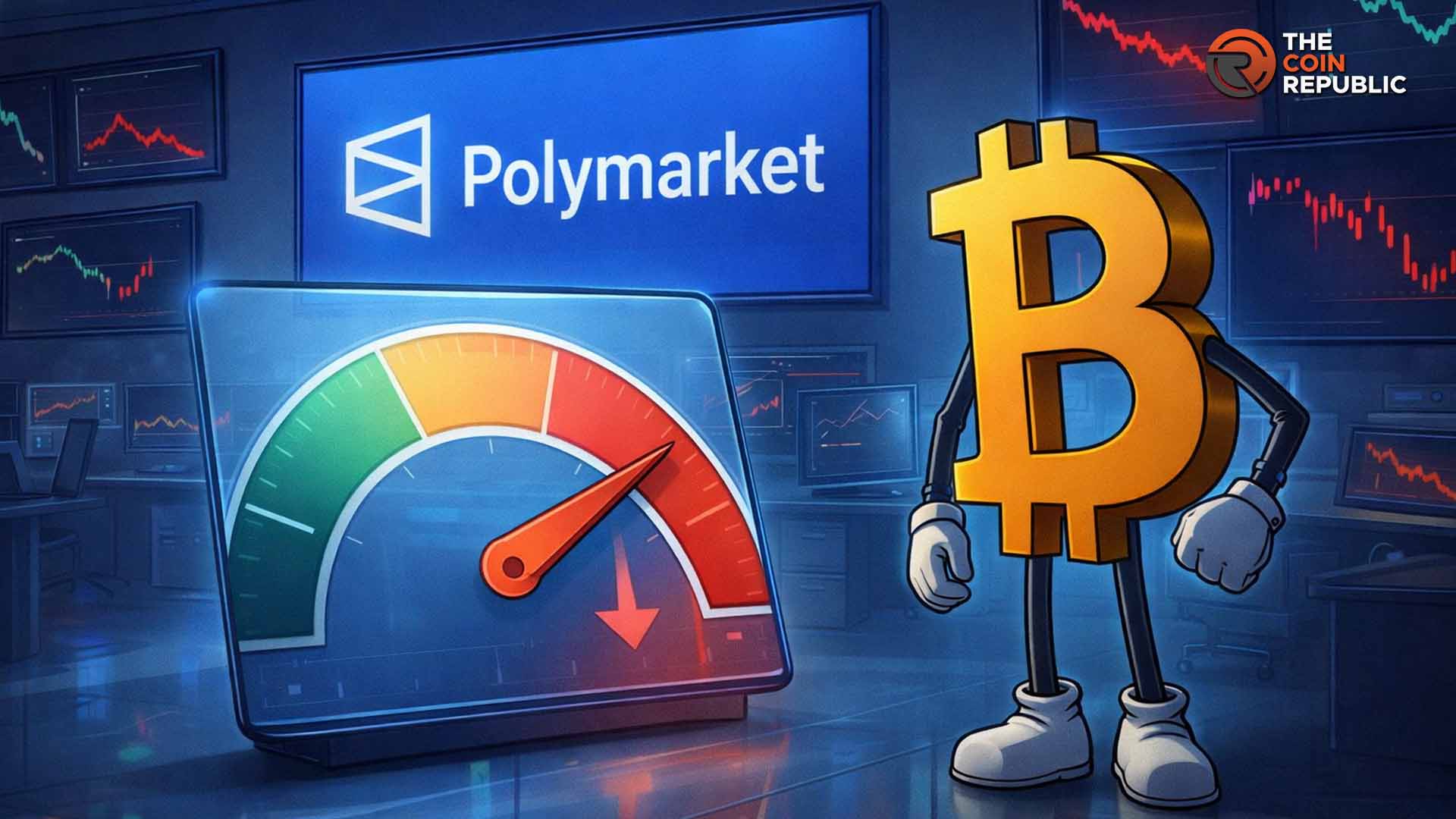
Polymarket odds indicate a significant trader sentiment leaning towards a Bitcoin price crash below $45,000 by 2026, suggesting a bearish outlook despite current price levels. Despite bearish sentiment from prediction markets, recent inflows into Bitcoin ETFs signal continued institutional interest, creating a divergence in market signals. The article highlights mixed signals from prediction markets, technical indicators (RSI at 50), and on-chain metrics (declining active addresses), suggesting a period of uncertainty and potential volatility for Bitcoin. Traders are pricing in a higher probability of Bitcoin dropping below $50,000 and $55,000 than reaching $80,000 or $90,000, indicating a cautious near-term outlook.

Bitcoin has experienced an unprecedented six-month period of underperformance against U.S. equities, raising questions about its role as a risk asset rather than a hedge. Despite a weak first quarter with a 22% decline, Bitcoin showed relative stability in March, outperforming gold amidst geopolitical tensions and market volatility. The prolonged underperformance against stocks may precede a reversal, suggesting potential for renewed demand if historical patterns hold and macro pressures persist. Geopolitical events, particularly the trajectory of the Iran conflict and its impact on energy markets and risk appetite, could be a key determinant for Bitcoin's sentiment shift.

Chainalysis is integrating AI agents into its platform to enhance investigations and compliance, mirroring a trend seen with competitors like TRM Labs. The introduction of 'blockchain intelligence agents' by Chainalysis aims to provide users with advanced analytical capabilities at machine speed, potentially improving the efficiency of crypto-related investigations. By leveraging AI for investigations and compliance, Chainalysis is responding to the increasing use of AI by malicious actors, signaling a new arms race in the cybersecurity and blockchain analytics space. The rollout of these AI agents over the summer targets critical areas like investigations and compliance, suggesting a near-term focus on improving existing workflows rather than introducing entirely new market functionalities.
A critical vulnerability in Zcash's deprecated Sprout shielded pool has been fixed, preventing potential loss of approximately $6.5 million in ZEC. The rapid patching by major mining pools within three days of disclosure highlights network resilience and effective coordination in addressing security threats. Despite the vulnerability, Zcash's 'turnstile' mechanism would have prevented broader supply inflation, mitigating systemic risk to the network's tokenomics. The successful remediation of this bug, discovered with AI assistance, reinforces confidence in Zcash's privacy features and development team's response capabilities.
Easing geopolitical tensions between the U.S. and Iran have triggered a significant market rally, particularly in tech stocks, as investors reduce risk premiums and anticipate potential de-escalation. Despite the broad market surge, persistent oil price volatility and ongoing supply concerns in the Strait of Hormuz present a key risk factor, potentially reigniting inflation fears and capping the rally's sustainability. The market's sharp upward move, led by tech, suggests a rotation back into growth assets, but the underlying weakness and broader risks indicate this could be a short-term bounce rather than a sustained trend reversal.

Despite Bitcoin's rally to $68,000 driven by geopolitical de-escalation hopes, derivatives data reveals persistent bearish sentiment among futures traders, indicating a lack of conviction in sustained price increases. The premium on Bitcoin put options at 17% suggests significant fear of price drops among market makers and whales, despite the dismissal of quantum computing threats. Reduced expectations for Federal Reserve rate cuts due to rising inflation from oil prices create a less favorable macro environment for risk assets like Bitcoin, contributing to the bearish derivatives outlook. The market views Bitcoin as a risk asset rather than a safe haven, explaining the bearish derivatives sentiment and suggesting that traders are not anticipating a significant price surge without further fundamental catalysts.
Galaxy Digital's expansion of its GalaxyOne platform to include Solana staking offers retail investors access to an estimated 6.5% APY, potentially increasing demand for SOL by incentivizing long-term holding and reducing sell pressure. The integration of staking within a single interface alongside traditional assets on GalaxyOne could drive adoption for both the platform and the Solana ecosystem, particularly if ETH staking is introduced as planned. While SOL is currently consolidating between $80-$85, the introduction of a new, accessible staking yield by a reputable firm like Galaxy Digital may provide a catalyst for breaking through resistance levels, especially if broader market sentiment turns positive.

Interactive Brokers' expansion of crypto trading to retail investors in the EEA signifies growing institutional adoption and integration of digital assets into traditional brokerage platforms. The move by a major brokerage like Interactive Brokers to offer spot crypto trading, including BTC and ETH, to a broader European retail audience increases accessibility and potential demand for these assets. This development aligns with a broader trend of traditional financial institutions entering the crypto space, potentially signaling increased competition and further mainstreaming of digital assets.
Geopolitical de-escalation signals from Iran have triggered a risk-on sentiment, leading to a Bitcoin price rally above $68,000, indicating a potential shift away from recent war-driven volatility. The broader market reaction, including gains in equities and lower bond yields, suggests investors are pricing out geopolitical risk premiums, benefiting Bitcoin as a risk asset. While diplomatic overtures are positive, the conditional nature of Iran's peace offer and upcoming US political uncertainty introduce lingering risks that could impact future market sentiment.
Signal context only. Validate with price action, liquidity, and risk limits before taking a position.
Quick market read from this story
Arizona's legislative progress on establishing a state-level cryptocurrency reserve, including potential investment of public funds, signals growing institutional interest in digital assets.
Despite previous vetoes by Governor Hobbs citing financial and operational concerns, the bill's advancement suggests a potential shift in regulatory sentiment towards integrating crypto into state treasury management.
The inclusion of seized cryptocurrencies like Bitcoin and XRP into a state reserve, alongside potential investment of up to 10% of public funds, could set a precedent for other states and impact demand for these assets.
While the bill is nearing a vote, past vetoes and the cautious approach of other states like New Hampshire and Texas indicate that widespread adoption of such policies may still face hurdles, warranting a 'watchlist' approach.
Deep Dive
Arizona is nearing a final vote on a significant bill that would establish a state-level Bitcoin reserve, aiming to diversify the state's treasury by holding cryptocurrencies seized by law enforcement instead of auctioning them. The legislation also permits the Treasurer to invest up to 10% of state public funds into digital assets and potentially loan them for returns.
This initiative follows Governor Katie Hobbs' previous vetoes of similar legislation. In 2025, she rejected a bill (SB 1025) that would have allowed state retirement funds to invest in crypto, citing financial and operational concerns and stating that Arizonans' retirement funds should not be exposed to digital asset risks. She also vetoed a digital asset forfeiture bill (HB 2324) in July 2025, which would have transferred seized assets to the state reserve, arguing it could disincentivize local law enforcement cooperation.
The U.S. government currently holds the largest known sovereign Bitcoin stockpile, accumulating approximately 325,000 BTC primarily through law enforcement seizures. On the state level, New Hampshire was the first to pass a law allowing up to 5% of certain public funds to be held in crypto. Texas has already established and funded its own Strategic Bitcoin Reserve. While states like Florida and Arizona are advancing related bills, their progress has been described as underwhelming.
