
Navigating Crypto News

CoinFeather
Navigating Crypto News
Quick market read from this story
Geopolitical de-escalation signals from Iran have triggered a risk-on sentiment, leading to a Bitcoin price rally above $68,000, indicating a potential shift away from recent war-driven volatility.
The broader market reaction, including gains in equities and lower bond yields, suggests investors are pricing out geopolitical risk premiums, benefiting Bitcoin as a risk asset.
While diplomatic overtures are positive, the conditional nature of Iran's peace offer and upcoming US political uncertainty introduce lingering risks that could impact future market sentiment.
Deep Dive
Bitcoin's price surged past $68,000 on Tuesday, reaching an intraday high near $68,400. This rally was triggered by statements from Iranian President Masoud Pezeshkian indicating readiness to end the war in exchange for security guarantees against further attacks. The development boosted broader market sentiment, lifting the largest cryptocurrency.
The cryptocurrency experienced a rebound after trading below $66,000 earlier in the session. At press time, BTC was trading at $67,754, up over 1.44% from its intraday low. This market reaction followed broader investor responses to what appeared to be a significant diplomatic signal from Tehran. Pezeshkian stated that Iran did not seek war and was prepared to cease fighting, provided formal guarantees against renewed attacks were received. He also noted that Iran had engaged in prior diplomatic talks in good faith before military actions by the United States and Israel. While these comments were interpreted as a potential opening for de-escalation, the demand for guarantees presented a clear condition for any settlement.
Market sentiment was also influenced by earlier remarks from US President Donald Trump, who suggested the conflict could conclude soon. Reports indicated Trump had informed aides of his willingness to wind down military operations, even if the Strait of Hormuz remained partially closed, prioritizing diplomacy and deferring wider efforts to reopen the waterway to allies.
The positive shift was not confined to Bitcoin. Equity markets also saw significant gains, with the S&P 500 rising 162 points, the Nasdaq increasing by 675 points, and the Dow Jones Industrial Average adding over 1,000 points. Treasury yields declined, with the 10-year yield falling to 4.292% and the two-year yield dropping to 3.768%. This combination of higher equities and lower bond yields suggested investors were reducing the geopolitical risk premium that had accumulated during the conflict. Bitcoin appeared to benefit from this trend, particularly as traders who had been closely monitoring the war and oil prices shifted back towards risk assets.
The recent developments followed days of volatility linked to the Strait of Hormuz and energy markets. The conflict had previously driven up oil prices and fueled inflation concerns, impacting both equities and crypto. Any indication of a potential slowdown in hostilities helped to reverse some of these negative movements.
Market participants also highlighted ongoing institutional demand as a key support factor for Bitcoin. Tony Pecore, a director at Franklin Templeton, noted that institutional buying remained strong even when Bitcoin's price fell from $126,000 to $60,000, suggesting the market is preparing for further upward movement. However, Pecore also identified the upcoming US midterm elections as a significant variable. Political uncertainty and potential changes to the regulatory framework could negatively impact investor sentiment in the fourth quarter.
This creates a dual dynamic for Bitcoin, supported by consistent demand from large investors while simultaneously facing risks from political and regulatory developments in the latter half of the year.
In addition to geopolitical news, on-chain market signals are also providing insights into Bitcoin's outlook. Recent analysis indicates a decline in the Spent Output Profit Ratio (SOPR) for long-term holders below 1. This metric suggests that even long-term investors are selling at a loss, a behavior often seen as a sign of broader market capitulation. Historically, periods of widespread losses among both short-term and long-term holders have often coincided with major market bottoms or long-term low zones. While this does not confirm a definitive bottom has been reached, it indicates that selling pressure may be nearing exhaustion.
Bitcoin's recent jump to $68,400 demonstrates the rapid shift in sentiment when war-related headlines soften. The cryptocurrency's future trajectory will likely depend on whether diplomatic signals translate into concrete agreements and whether traders perceive recent on-chain stress as a final phase of fear or the beginning of a further downturn.
Source, catalyst, and sector overlap from the latest feed.
Shiba Inu's burn rate has collapsed to near zero, with only 906.4 SHIB burned on March 31, indicating a significant drop in community participation and potentially impacting future supply reduction efforts. Despite the recent slowdown in burn activity, Shiba Inu has achieved the milestone of burning half of its total supply, a long-term cumulative achievement that may still provide underlying support. Shibarium is entering a 'clean stabilization phase' following a backend overhaul and reindexing, which has temporarily reduced transaction volume, suggesting a period of consolidation before potential recovery.
Easing geopolitical tensions between the U.S. and Iran have triggered a significant market rally, particularly in tech stocks, as investors reduce risk premiums and anticipate potential de-escalation. Despite the broad market surge, persistent oil price volatility and ongoing supply concerns in the Strait of Hormuz present a key risk factor, potentially reigniting inflation fears and capping the rally's sustainability. The market's sharp upward move, led by tech, suggests a rotation back into growth assets, but the underlying weakness and broader risks indicate this could be a short-term bounce rather than a sustained trend reversal.
Galaxy Digital's expansion of its GalaxyOne platform to include Solana staking offers retail investors access to an estimated 6.5% APY, potentially increasing demand for SOL by incentivizing long-term holding and reducing sell pressure. The integration of staking within a single interface alongside traditional assets on GalaxyOne could drive adoption for both the platform and the Solana ecosystem, particularly if ETH staking is introduced as planned. While SOL is currently consolidating between $80-$85, the introduction of a new, accessible staking yield by a reputable firm like Galaxy Digital may provide a catalyst for breaking through resistance levels, especially if broader market sentiment turns positive.
Ripple's partnership with Convera integrates stablecoin settlement into a global payment network processing over $190 billion annually, signaling a significant step towards mainstream adoption of blockchain for enterprise cross-border transactions. The 'stablecoin sandwich' model, where fiat enters and exits while stablecoins settle on-chain, demonstrates a practical approach to leveraging blockchain for speed and efficiency without requiring direct crypto handling by all end-users. This development validates the XRP Ledger's utility for real-world enterprise payments and enhances its liquidity connections to traditional finance, potentially increasing on-chain activity and demand for related services. With Ripple nearing regulatory milestones and expanding institutional offerings, this partnership reinforces its strategic positioning to bridge traditional finance and digital assets, suggesting a positive outlook for its ecosystem.
The XRP Ledger's integration as a core payment engine for Bitget Wallet signifies a strategic shift towards real-world utility, moving beyond speculative trading. With payments now comprising 53% of XRP Ledger activity, driven by assets like RLUSD, the network is demonstrating tangible adoption for cross-border and everyday transactions. This partnership elevates the XRP Ledger's infrastructure role, positioning it as a foundational layer for secure, scalable digital payments, enhanced by quantum-resistant and AI security measures. The development suggests a potential for increased demand and usage of XRP and RLUSD as Bitget Wallet aims to facilitate peer-to-peer transfers and everyday purchases via its platform.
The launch of Midnight's network on Cardano aims to address the significant gap between Cardano's market cap and its on-chain activity by introducing privacy-first infrastructure for regulated finance. Midnight's success hinges on its ability to attract institutional use cases, such as Monument Bank's tokenized deposits, by demonstrating compliance and solvency without revealing sensitive data. While competitors like Aztec and Namada also focus on privacy, Midnight's integration with Cardano's existing staking infrastructure and builder base provides a unique competitive advantage. The federated operator model, including major players like Google Cloud and MoneyGram, lowers the trust barrier for institutions but raises decentralization concerns that need to be addressed later in 2026.
Elon Musk's commentary suggests quantum computing could offer a novel utility for Bitcoin by enabling the recovery of lost private keys, potentially unlocking a significant portion of dormant BTC supply. While quantum computing poses a long-term threat to current cryptography, the immediate focus is on its potential to recover lost Bitcoin, shifting the narrative from pure risk to a dual-edged sword. The development highlights ongoing efforts by other blockchains like Ethereum and Cardano to implement quantum-resistant cryptography, underscoring Bitcoin's relative lag in addressing this future threat. The potential benefits of quantum computing, such as enhanced security and scalability, are presented as future possibilities in a post-quantum era, but the immediate market implication centers on the recovery of lost assets.
Polymarket odds indicate a significant trader sentiment leaning towards a Bitcoin price crash below $45,000 by 2026, suggesting a bearish outlook despite current price levels. Despite bearish sentiment from prediction markets, recent inflows into Bitcoin ETFs signal continued institutional interest, creating a divergence in market signals. The article highlights mixed signals from prediction markets, technical indicators (RSI at 50), and on-chain metrics (declining active addresses), suggesting a period of uncertainty and potential volatility for Bitcoin. Traders are pricing in a higher probability of Bitcoin dropping below $50,000 and $55,000 than reaching $80,000 or $90,000, indicating a cautious near-term outlook.
Bitcoin has experienced an unprecedented six-month period of underperformance against U.S. equities, raising questions about its role as a risk asset rather than a hedge. Despite a weak first quarter with a 22% decline, Bitcoin showed relative stability in March, outperforming gold amidst geopolitical tensions and market volatility. The prolonged underperformance against stocks may precede a reversal, suggesting potential for renewed demand if historical patterns hold and macro pressures persist. Geopolitical events, particularly the trajectory of the Iran conflict and its impact on energy markets and risk appetite, could be a key determinant for Bitcoin's sentiment shift.
A critical vulnerability in Zcash's deprecated Sprout shielded pool has been fixed, preventing potential loss of approximately $6.5 million in ZEC. The rapid patching by major mining pools within three days of disclosure highlights network resilience and effective coordination in addressing security threats. Despite the vulnerability, Zcash's 'turnstile' mechanism would have prevented broader supply inflation, mitigating systemic risk to the network's tokenomics. The successful remediation of this bug, discovered with AI assistance, reinforces confidence in Zcash's privacy features and development team's response capabilities.
Live Feed
Loading the broader stream in the same flow as the homepage feed.

P2P.me's speculative betting on its own fundraise via Polymarket has damaged investor trust, despite generating minimal profits, signaling potential reputational risk for the stablecoin startup. The incident highlights the growing concerns around insider trading and market manipulation on prediction platforms, even at the company level, potentially leading to increased scrutiny from regulators and platforms like Polymarket. While P2P.me's backers were unaware of the wagers, the situation underscores a lack of transparency and could impact future investment decisions, despite the company's apology and commitment to establishing new policies. The controversy surrounding P2P.me's actions on Polymarket, occurring shortly after the platform updated its insider trading rules, suggests a potential for regulatory action or platform-level sanctions.

Magic Eden is sunsetting its multi-chain crypto wallet, forcing users to migrate assets by May 1st to avoid potential loss, indicating a strategic pivot away from wallet services. The closure of the Magic Eden wallet, particularly its Solana support, may prompt users to seek alternative wallet solutions, potentially impacting Solana's ecosystem user experience. Magic Eden's shift towards a crypto casino and sportsbook, coupled with the wallet shutdown and reduced NFT support on other chains, signals a significant strategic reorientation impacting its legacy user base and token (ME).

California's new executive order mandating stronger safeguards for AI companies seeking state contracts introduces a significant regulatory hurdle, potentially influencing AI development and procurement practices. This state-level action directly conflicts with the Trump administration's push for national AI standards, highlighting a growing tension over regulatory authority that could impact the broader AI landscape. The move by California, a major technology market, could set a precedent for other states and influence how AI companies approach compliance and risk management, especially concerning bias and civil rights. While not directly impacting crypto assets, the regulatory focus on AI safeguards and potential misuse could indirectly affect AI-focused blockchain projects or infrastructure providers that rely on AI integration.

Chainalysis is integrating AI agents into its platform to enhance investigations and compliance, mirroring a trend seen with competitors like TRM Labs. The introduction of 'blockchain intelligence agents' by Chainalysis aims to provide users with advanced analytical capabilities at machine speed, potentially improving the efficiency of crypto-related investigations. By leveraging AI for investigations and compliance, Chainalysis is responding to the increasing use of AI by malicious actors, signaling a new arms race in the cybersecurity and blockchain analytics space. The rollout of these AI agents over the summer targets critical areas like investigations and compliance, suggesting a near-term focus on improving existing workflows rather than introducing entirely new market functionalities.

Mercado Libre's discontinuation of its Mercado Coin loyalty token, following a similar failure with Nubank's Nucoin, signals a broader market skepticism towards utility-based reward tokens in favor of stable value propositions. The pivot to a USD-pegged stablecoin (MUSD) by Mercado Libre highlights a strategic shift towards providing genuine utility and a hedge against local currency devaluation, indicating a more mature approach to crypto integration in e-commerce. While the specific loyalty token failed, Mercado Libre's continued involvement with crypto, including holding Bitcoin and offering stablecoin transfers, suggests ongoing commitment to the underlying infrastructure rather than a complete exit from the digital asset space.
Despite Bitcoin's rally to $68,000 driven by geopolitical de-escalation hopes, derivatives data reveals persistent bearish sentiment among futures traders, indicating a lack of conviction in sustained price increases. The premium on Bitcoin put options at 17% suggests significant fear of price drops among market makers and whales, despite the dismissal of quantum computing threats. Reduced expectations for Federal Reserve rate cuts due to rising inflation from oil prices create a less favorable macro environment for risk assets like Bitcoin, contributing to the bearish derivatives outlook. The market views Bitcoin as a risk asset rather than a safe haven, explaining the bearish derivatives sentiment and suggesting that traders are not anticipating a significant price surge without further fundamental catalysts.

The substantial burn of nearly 180 million RLUSD tokens, representing a $340 million market cap reduction, signals a significant liquidity withdrawal by major players like Gemini. While a token burn is a standard operational mechanism, the scale of this event has caused RLUSD to slip in stablecoin rankings, highlighting increased competition and potential shifts in market share. The event underscores the dynamic nature of stablecoin markets, where large redemptions can rapidly alter circulating supply and relative market positioning.

Interactive Brokers' expansion of crypto trading to retail investors in the EEA signifies growing institutional adoption and integration of digital assets into traditional brokerage platforms. The move by a major brokerage like Interactive Brokers to offer spot crypto trading, including BTC and ETH, to a broader European retail audience increases accessibility and potential demand for these assets. This development aligns with a broader trend of traditional financial institutions entering the crypto space, potentially signaling increased competition and further mainstreaming of digital assets.

Arizona's legislative progress on establishing a state-level cryptocurrency reserve, including potential investment of public funds, signals growing institutional interest in digital assets. Despite previous vetoes by Governor Hobbs citing financial and operational concerns, the bill's advancement suggests a potential shift in regulatory sentiment towards integrating crypto into state treasury management. The inclusion of seized cryptocurrencies like Bitcoin and XRP into a state reserve, alongside potential investment of up to 10% of public funds, could set a precedent for other states and impact demand for these assets. While the bill is nearing a vote, past vetoes and the cautious approach of other states like New Hampshire and Texas indicate that widespread adoption of such policies may still face hurdles, warranting a 'watchlist' approach.
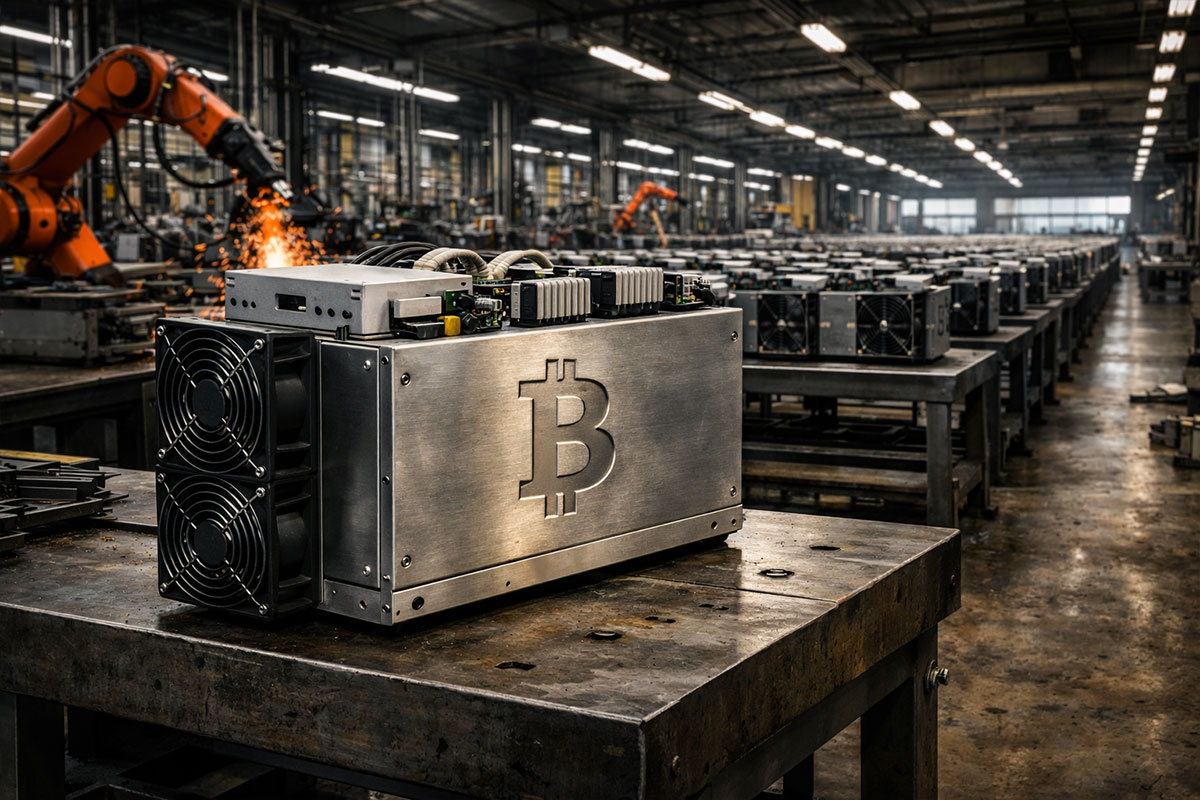
The introduction of the 'Mined in America Act' signals a significant shift in US industrial policy, framing Bitcoin mining hardware as a national security concern akin to semiconductors and critical minerals. This legislative push aims to reduce US reliance on Chinese-manufactured mining hardware, potentially creating opportunities for domestic manufacturers and impacting the supply chain dynamics for Bitcoin miners. While the bill proposes domestic manufacturing support and certification, its success hinges on market adoption and the ability of US-based suppliers to compete on cost and performance against established Chinese vendors. The codification of a Strategic Bitcoin Reserve alongside hardware policy suggests a more integrated federal approach to digital assets, moving beyond market speculation to infrastructure control.
Signal context only. Validate with price action, liquidity, and risk limits before taking a position.
