
Navigating Crypto News

CoinFeather
Navigating Crypto News

Quick market read from this story
Bitcoin's spot price premium over realized price has compressed significantly from 120% to 21% in 15 months, indicating a rapid approach to historical accumulation zone levels.
Despite the closing gap, on-chain data suggests that true capitulation, a prerequisite for historical cycle bottoms, has not yet occurred, implying current price levels may not represent a definitive buy signal.
Weakening institutional demand, as indicated by the negative Coinbase Premium Index, contrasts with continued ETF inflows, creating a mixed signal for near-term price action.
The rapid compression of the spot-to-realized price gap, even without full capitulation, suggests that the market is pricing in potential future accumulation, warranting a watchlist approach.
Deep Dive
Bitcoin, currently trading around $67,500, is approaching levels that historically signal cycle bottoms, yet crucial on-chain data indicates that the typical capitulation phase has not yet occurred. The gap between Bitcoin's spot price and its realized price, which represents the average cost basis of all coins, is compressing significantly.
According to CryptoQuant data, Bitcoin's realized price stands at approximately $54,286, with the spot price at $68,774. This leaves a gap of about $14,500, or a 21% premium to the realized price. Historically, true market bottoms have been marked when the spot price falls below the realized price. This occurred during the 2022 bear market, when Bitcoin traded under its aggregate cost basis for several months, and again during the early 2020 COVID crash. These periods represented genuine accumulation zones as the entire network was collectively at a loss.
The current 21% premium signifies that the average holder is still in profit, providing a substantial buffer. For the spot price to reach the realized price from current levels, Bitcoin would need to decline by another 20% to approximately $54,000.
Despite the lack of a full capitulation, the gap between spot and realized price has compressed rapidly. In late 2024, when Bitcoin was trading above $119,000, the premium was around 120%. This has shrunk to 21% in roughly 15 months, marking one of the fastest approaches to the realized price line outside of sharp crashes.
While some analysts, like Oinonen from CryptoQuant, have drawn comparisons to the 2022 bottom and suggested an
Source, catalyst, and sector overlap from the latest feed.
Hong Kong's missed March deadline for HKD stablecoin licenses indicates potential implementation delays, raising questions about the pace of regulatory rollout and its impact on the city's ambition to become a stablecoin hub. The delay in stablecoin licensing, despite earlier public commitments, suggests potential hurdles in the approval process, which could temper market expectations for rapid adoption of regulated stablecoins in the region. The HKMA's cautious approach to licensing, emphasizing novel use cases and robust compliance, implies a focus on quality over speed, potentially leading to a more stable and integrated stablecoin ecosystem in the long run.
Bitcoin is being integrated into traditional public finance through a new Ba2 rated bond issued by a New Hampshire state authority, marking a significant step for crypto collateralization in public markets. The bond's structure relies on Bitcoin as collateral, with liquidation mechanisms in place if loan-to-value ratios deteriorate, indicating a developing framework for assessing crypto-backed debt despite Bitcoin's volatility. This development, alongside potential regulatory shifts for retirement portfolios, suggests a growing institutional acceptance and exploration of Bitcoin's utility beyond trading, potentially influencing broader market sentiment and adoption.
Bitcoin has experienced an unprecedented six-month period of underperformance against U.S. equities, raising questions about its role as a risk asset rather than a hedge. Despite a weak first quarter with a 22% decline, Bitcoin showed relative stability in March, outperforming gold amidst geopolitical tensions and market volatility. The prolonged underperformance against stocks may precede a reversal, suggesting potential for renewed demand if historical patterns hold and macro pressures persist. Geopolitical events, particularly the trajectory of the Iran conflict and its impact on energy markets and risk appetite, could be a key determinant for Bitcoin's sentiment shift.
WisdomTree's head of digital assets views the Clarity Act as non-inhibitive to innovation, suggesting existing SEC tools are sufficient for developing tokenized security and fund markets. The firm's focus on tokenized real-world assets, exemplified by their continuously trading money market fund, highlights a practical application of blockchain for traditional finance products. WisdomTree's ongoing development in crypto and tokenization, irrespective of market volatility, signals sustained institutional interest and operational momentum. While acknowledging the Clarity Act's potential constructiveness, WisdomTree emphasizes that progress is being driven by firms leveraging existing regulatory pathways rather than waiting for new legislation.
Google's quantum computing research indicates a significantly accelerated timeline for breaking Bitcoin's elliptic-curve cryptography, potentially enabling theft of live transactions within minutes of broadcast. The findings suggest that the industry's prior assumptions about quantum threats being a decade away are now untenable, necessitating an urgent, coordinated upgrade effort to post-quantum cryptography. The rapid progress across multiple quantum computing architectures (superconducting and neutral-atom) highlights a compounding feedback loop, making the threat less a single 'moonshot' and more an inevitable engineering reality. Migrating Bitcoin to post-quantum cryptography will require a hard fork and extensive community consensus, a process that could take months and is politically fraught, making proactive migration essential before Q-Day.
The proposed Ethereum Economic Zone (EEZ) framework aims to solve L2 fragmentation by enabling direct cross-rollup interoperability and shared liquidity, potentially improving user experience and capital efficiency across the Ethereum ecosystem. While the EEZ addresses a critical issue of over 20 L2s holding $40B in value but being fragmented, its success hinges on adoption by infrastructure providers and DeFi protocols, suggesting a 'WATCHLIST' approach for its development. The development of the EEZ highlights ongoing debates about Ethereum's scaling strategy and potential weaknesses in current L2 designs, such as centralized sequencers and trusted bridges, indicating a need for protocol evolution.
Solana's declining DEX volumes and network fees suggest potential near-term price pressure, with traders watching the $80 support level closely. Despite lower DEX activity, Solana's strong DApp revenue generation, outperforming Ethereum in high-earning applications, provides a fundamental cushion and developer incentive, mitigating bearish sentiment. The increasing market share of Ethereum Layer-2 solutions in DEX volumes poses a competitive challenge to Solana's dominance, indicating a shift in trading activity.
New research suggests quantum computers capable of breaking current cryptography may require significantly fewer qubits (10,000-20,000) than previously estimated, accelerating the timeline for potential threats to Bitcoin and Ethereum. The development highlights a critical long-term risk to blockchain security, prompting increased urgency for the adoption of quantum-resistant cryptography across the digital infrastructure. While practical fault-tolerant quantum computers are still complex to build, the reduced qubit requirement and ongoing advancements signal a growing need for proactive security measures rather than reactive responses.
Midnight (NIGHT) faces its first major technical resistance test between $0.053-$0.055, a crucial level that will determine if it can break out of its post-launch consolidation or continue a downtrend. Shiba Inu (SHIB) is coiling in a tightening structure with rising support, potentially setting up for a 16% short-term squeeze if it breaks above immediate resistance, though a downside resolution remains possible without increased volume. Ethereum (ETH) is nearing a 'mini-death cross' with short-term moving averages converging downwards, signaling negative short-term momentum within a larger downtrend, with a break below its support trendline potentially leading to a retest of the $1,800-$1,900 range.
Google's updated research suggests quantum computers could break Bitcoin's encryption in as little as 9 minutes, significantly reducing the previously estimated timeline and highlighting an urgent need for post-quantum cryptography adoption. While Google indicates no immediate threat and notes Bitcoin's current resilience, the potential for quantum attacks by 2029 necessitates proactive development and implementation of quantum-resistant solutions by crypto projects. The report specifically flags dormant wallets as potentially vulnerable, raising concerns about the recovery or confiscation of lost assets and underscoring the importance of upgrading security for older addresses. Google's call to action for developers to implement post-quantum cryptography (PQC) is a critical signal for the entire blockchain ecosystem, particularly for Proof-of-Stake networks and the tokenization industry.
Live Feed
Loading the broader stream in the same flow as the homepage feed.

New research suggests functional quantum computers could be feasible by 2030 with significantly fewer qubits than previously estimated, potentially accelerating the timeline for quantum threats to cryptography. The development of ultra-efficient error correction in neutral-atom quantum systems could drastically reduce the resources needed for fault-tolerant quantum computing, impacting the urgency for blockchain migration to post-quantum cryptography. While theoretical, this advancement highlights the accelerating pace of quantum computing research, prompting a re-evaluation of long-term security strategies for digital assets and blockchain infrastructure.

Bitfarms reported a significant net loss for 2025, primarily due to declining Bitcoin prices and high operational costs, underscoring the challenges faced by traditional Bitcoin miners. The company's strategic pivot towards High-Performance Computing (HPC) and Artificial Intelligence (AI) infrastructure is a key development, aiming to leverage demand in a higher-margin sector despite its ongoing Bitcoin mining legacy. Despite the reported losses, Bitfarms' shares saw a notable increase, suggesting market optimism around its strategic shift and potential future revenue streams in the AI sector, overshadowing current financial performance. The company's transition, including a planned rebranding to Keel Infrastructure and relocation to the US, signals a fundamental restructuring to capture growth in the AI compute market, moving away from its core Bitcoin mining operations.

Sam Bankman-Fried's motion for Judge Kaplan's recusal introduces procedural uncertainty into the FTX legal proceedings, potentially delaying any resolution on his retrial request. The judge's scrutiny of SBF's filing procedures and the involvement of his mother raises questions about the validity of the new evidence presented for a retrial, suggesting a low probability of success for the motion. This legal maneuvering by SBF, while unlikely to alter the fundamental outcome of his conviction, serves as a distraction and highlights ongoing legal complexities surrounding the FTX collapse.
Geopolitical de-escalation signals are driving broad market rallies, including Bitcoin, as investors anticipate reduced global instability and potential economic improvements. Despite positive market sentiment from geopolitical news, on-chain data and trader skepticism suggest Bitcoin may struggle to sustain gains without renewed spot demand or a clear break above key technical levels. The market's reaction to potential US-Iran conflict resolution highlights the sensitivity of risk assets like Bitcoin to macroeconomic and geopolitical events, even if underlying spot demand remains subdued.
President Trump's statement on a potential US withdrawal from Iran within weeks suggests a de-escalation of geopolitical tensions. A reduction in Middle Eastern conflict could lead to decreased oil price volatility, potentially benefiting global markets and reducing inflation concerns. While the article mentions Bitcoin price drops in relation to US/Israeli strikes on Iran, the core news is geopolitical and not directly tied to crypto market mechanics.
Solana is consolidating between $80 and $95, with key horizontal levels dictating price action and suggesting a potential breakout is being watched by traders. Derivatives data indicates a rise in open interest and net long positions following a recent price dip, signaling renewed bullish sentiment and positioning around the $80 support level. While increased long positioning can support upside momentum, it also heightens liquidation risk if price fails to break higher, creating a watchlist scenario for potential volatility.

Despite the Crypto Fear and Greed Index indicating 'extreme fear' for an extended period, on-chain data suggests a potential accumulation phase as short-term holder activity decreases and long-term holders increase dominance. The divergence between elevated investor fear driven by geopolitical and macroeconomic concerns, and the lack of increased Bitcoin selling pressure, presents a contrarian signal for potential dip-buying opportunities. Bitcoin's weakening correlation with the S&P 500 and underperformance against equities suggest it's being treated as a higher-risk asset, but this could also imply a decoupling opportunity if underlying accumulation trends persist.

Ripple's monthly RLUSD attestation enhances transparency and trust, potentially driving further adoption for its stablecoin in institutional use cases. The XRPL upgrade introducing confidential MPTs addresses privacy concerns, making the ledger more appealing for regulated financial applications and institutional capital. The expanded Hyperliquid integration for Ripple Prime traders offers access to traditional asset derivatives on-chain, bridging TradFi and DeFi for institutional participants. These combined developments signal Ripple's strategic focus on enhancing its stablecoin utility, improving XRPL's institutional appeal through privacy features, and expanding its derivatives trading offerings.
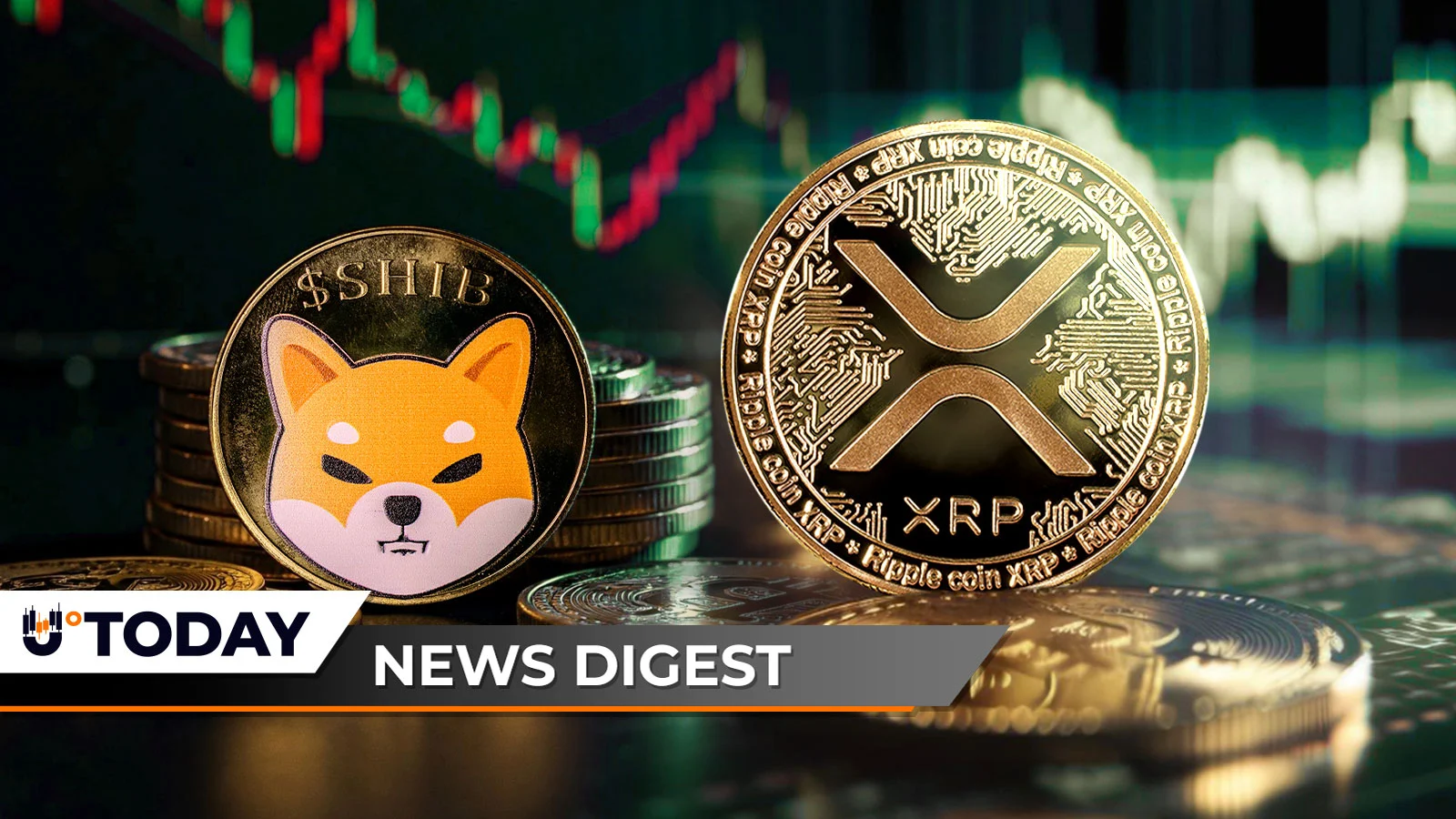
Shiba Inu's hourly golden cross, coupled with a 4% price increase and a 43.8% jump in trading volume, signals potential short-term upside momentum driven by renewed investor interest. The 410% surge in XRP Ledger payment transactions to over 624 million indicates significant on-chain activity growth, potentially preceding a price rebound despite current price stagnation around $1.30. A Bitcoin whale depositing 1,102 BTC ($74 million) to Binance suggests capitulation, potentially indicating selling pressure as the whale exits a position acquired at a higher price point.
Oracle's reported layoffs amidst rising AI spending suggest a strategic cost-management effort, potentially impacting margins and investor confidence as the company balances growth with operational efficiency. The stock's recent price action shows ORCL testing key support around $140 after falling from $155, indicating market uncertainty about the sustainability of its AI infrastructure buildout versus its cost control measures. Traders will monitor Oracle's ability to improve cash flow through workforce reductions while maintaining cloud growth; failure to do so could prolong stock pressure, as the market awaits clearer signals of profitability.

Texas Lieutenant Governor Dan Patrick has directed state lawmakers to study prediction markets and crypto, signaling potential regulatory scrutiny and a need for market participants to monitor legislative developments in the state. The inclusion of crypto and blockchain in legislative interim charges suggests a growing focus on digital assets within Texas politics, potentially impacting the state's approach to innovation and regulation. The directive to examine "gambling loopholes" in prediction markets indicates a potential regulatory push against platforms perceived as circumventing existing gambling laws, which could affect related digital asset services.
Ethereum's RSI momentum has broken its uptrend, suggesting a potential precursor to price weakness and a breakdown from its current rising wedge pattern. A significant liquidation cluster near $2,100 presents a key price magnet and potential volatility trigger, indicating that a move into this zone could accelerate price action. The confluence of weakening momentum and a major liquidation zone near $2,100 creates a high-risk environment for ETH, with potential downside targets around $1,900 if support breaks.
Signal context only. Validate with price action, liquidity, and risk limits before taking a position.
