
Navigating Crypto News

CoinFeather
Navigating Crypto News

Quick market read from this story
Google's quantum computing research indicates a significantly accelerated timeline for breaking Bitcoin's elliptic-curve cryptography, potentially enabling theft of live transactions within minutes of broadcast.
The findings suggest that the industry's prior assumptions about quantum threats being a decade away are now untenable, necessitating an urgent, coordinated upgrade effort to post-quantum cryptography.
The rapid progress across multiple quantum computing architectures (superconducting and neutral-atom) highlights a compounding feedback loop, making the threat less a single 'moonshot' and more an inevitable engineering reality.
Migrating Bitcoin to post-quantum cryptography will require a hard fork and extensive community consensus, a process that could take months and is politically fraught, making proactive migration essential before Q-Day.
Deep Dive
A new whitepaper from Google Quantum AI reveals that a quantum computer could derive a Bitcoin private key from an exposed public key in approximately nine minutes, a timeframe that poses an immediate threat to live transactions given Bitcoin's 10-minute block settlement time. This development drastically shortens the previously estimated timeline for quantum computers to pose a significant risk to the cryptocurrency, suggesting that the entire supply of Bitcoin, not just dormant assets, is now at risk.
Historically, it was believed that millions of physical qubits and trillions of error-corrected operations would be needed to threaten Bitcoin, based on older algorithms like RSA-2048. However, Google's research demonstrates an architecture capable of breaking the 256-bit Elliptic Curve Discrete Logarithm Problem (ECDLP) used by Bitcoin. This new architecture requires fewer than half a million qubits and significantly fewer operations, utilizing just 1,200 logical qubits with a 0.1% error rate. Google has reportedly advanced its own quantum timelines to 2029, and the fast clock speeds of their superconducting architecture mean active transactions are vulnerable to being intercepted from the mempool.
Google's findings are corroborated by a parallel breakthrough from Oratomic, which demonstrated Shor's algorithm execution at cryptographically relevant scales using approximately 10,000 to 22,000 neutral-atom qubits. These advancements across different technological tracks (superconducting and neutral-atom) have compressed the required qubit counts by orders of magnitude in a short period. This progress is driven by compounding iterative improvements in physical fidelity, error correction, control architectures, and algorithm design, creating a feedback loop that accelerates development non-linearly.
The rapid acceleration of quantum computing capabilities necessitates an urgent upgrade of decentralized networks like Bitcoin. Migrating such networks requires a foundational cryptographic upgrade, which is complicated by the fact that Post-Quantum Cryptography (PQC) solutions demand significantly larger digital signatures, increasing bandwidth and storage needs. Implementing these changes requires a hard fork and achieving community consensus, a process expected to be arduous and politically challenging. The sheer logistics of migrating assets on a network like Bitcoin, even under ideal conditions, would take several months. Waiting until a cryptographically relevant quantum computer is confirmed publicly would be too late, potentially leading to intense financial volatility, competing forks, and a crisis of trust for trillions of dollars in assets.
The current situation demands realism and proactive migration strategies rather than panic. Executives, institutions, stablecoin issuers, and major protocol teams must acknowledge the fundamentally changed risk profile. The quantum threat is now an engineering reality. The industry needs to coordinate an upgrade today, developing proactive migration strategies, tools for post-quantum ownership registration, and an industry-wide mandate to upgrade before the first silent theft occurs, ensuring the survival of digital trust into the quantum era.
Source, catalyst, and sector overlap from the latest feed.
Bitcoin has experienced an unprecedented six-month period of underperformance against U.S. equities, raising questions about its role as a risk asset rather than a hedge. Despite a weak first quarter with a 22% decline, Bitcoin showed relative stability in March, outperforming gold amidst geopolitical tensions and market volatility. The prolonged underperformance against stocks may precede a reversal, suggesting potential for renewed demand if historical patterns hold and macro pressures persist. Geopolitical events, particularly the trajectory of the Iran conflict and its impact on energy markets and risk appetite, could be a key determinant for Bitcoin's sentiment shift.
WisdomTree's head of digital assets views the Clarity Act as non-inhibitive to innovation, suggesting existing SEC tools are sufficient for developing tokenized security and fund markets. The firm's focus on tokenized real-world assets, exemplified by their continuously trading money market fund, highlights a practical application of blockchain for traditional finance products. WisdomTree's ongoing development in crypto and tokenization, irrespective of market volatility, signals sustained institutional interest and operational momentum. While acknowledging the Clarity Act's potential constructiveness, WisdomTree emphasizes that progress is being driven by firms leveraging existing regulatory pathways rather than waiting for new legislation.
Geopolitical de-escalation signals from Iran are driving a positive market reaction, lifting Bitcoin and stocks while easing oil prices. The potential for reduced regional conflict is a key driver for risk assets like Bitcoin, suggesting a short-term bullish sentiment based on macro factors. While Bitcoin shows gains, the broader market impact is tempered by ongoing concerns about inflation and energy prices, indicating a nuanced trading environment.
Charles Hoskinson criticizes the proposed CLARITY Act, warning that its lengthy implementation and potential for political 'weaponization' could stifle innovation and disadvantage new crypto projects. The Cardano founder argues the legislation, influenced by the FTX collapse, unfairly favors established cryptocurrencies like ADA, XRP, and ETH by treating new projects as securities by default, hindering their growth and liquidity. Hoskinson suggests the current U.S. legislative focus is misplaced, prioritizing minor issues like stablecoin yields over fundamental design flaws and the need for global regulatory alignment. The commentary highlights a perceived lack of technical expertise among U.S. policymakers and a failure to coordinate with international regulatory frameworks, potentially creating an incompatible domestic standard.
European banks are launching a consortium-backed stablecoin, Qivalis, to counter dollar dominance in crypto markets and preserve financial sovereignty. The initiative aims to create a liquid, MiCA-compliant euro stablecoin to compete with USDT and USDC, addressing the euro's minimal on-chain presence. This development highlights a strategic push by traditional finance to integrate with blockchain, positioning Qivalis as infrastructure for euro-denominated on-chain activity. The project is distinct from the ECB's digital euro, focusing on a private, regulated stablecoin to enhance the existing financial stack and prevent 'dollarization' of European finance.
A critical vulnerability in Zcash's deprecated Sprout shielded pool has been fixed, preventing potential loss of approximately $6.5 million in ZEC. The rapid patching by major mining pools within three days of disclosure highlights network resilience and effective coordination in addressing security threats. Despite the vulnerability, Zcash's 'turnstile' mechanism would have prevented broader supply inflation, mitigating systemic risk to the network's tokenomics. The successful remediation of this bug, discovered with AI assistance, reinforces confidence in Zcash's privacy features and development team's response capabilities.
Galaxy Digital's expansion of its GalaxyOne platform to include Solana staking offers retail investors access to an estimated 6.5% APY, potentially increasing demand for SOL by incentivizing long-term holding and reducing sell pressure. The integration of staking within a single interface alongside traditional assets on GalaxyOne could drive adoption for both the platform and the Solana ecosystem, particularly if ETH staking is introduced as planned. While SOL is currently consolidating between $80-$85, the introduction of a new, accessible staking yield by a reputable firm like Galaxy Digital may provide a catalyst for breaking through resistance levels, especially if broader market sentiment turns positive.
Ripple's partnership with Convera integrates stablecoin settlement into a global payment network processing over $190 billion annually, signaling a significant step towards mainstream adoption of blockchain for enterprise cross-border transactions. The 'stablecoin sandwich' model, where fiat enters and exits while stablecoins settle on-chain, demonstrates a practical approach to leveraging blockchain for speed and efficiency without requiring direct crypto handling by all end-users. This development validates the XRP Ledger's utility for real-world enterprise payments and enhances its liquidity connections to traditional finance, potentially increasing on-chain activity and demand for related services. With Ripple nearing regulatory milestones and expanding institutional offerings, this partnership reinforces its strategic positioning to bridge traditional finance and digital assets, suggesting a positive outlook for its ecosystem.
Geopolitical de-escalation signals from Iran have triggered a risk-on sentiment, leading to a Bitcoin price rally above $68,000, indicating a potential shift away from recent war-driven volatility. The broader market reaction, including gains in equities and lower bond yields, suggests investors are pricing out geopolitical risk premiums, benefiting Bitcoin as a risk asset. While diplomatic overtures are positive, the conditional nature of Iran's peace offer and upcoming US political uncertainty introduce lingering risks that could impact future market sentiment.
Live Feed
Loading the broader stream in the same flow as the homepage feed.

California's new executive order mandating stronger safeguards for AI companies seeking state contracts introduces a significant regulatory hurdle, potentially influencing AI development and procurement practices. This state-level action directly conflicts with the Trump administration's push for national AI standards, highlighting a growing tension over regulatory authority that could impact the broader AI landscape. The move by California, a major technology market, could set a precedent for other states and influence how AI companies approach compliance and risk management, especially concerning bias and civil rights. While not directly impacting crypto assets, the regulatory focus on AI safeguards and potential misuse could indirectly affect AI-focused blockchain projects or infrastructure providers that rely on AI integration.

Mercado Libre's discontinuation of its Mercado Coin loyalty token, following a similar failure with Nubank's Nucoin, signals a broader market skepticism towards utility-based reward tokens in favor of stable value propositions. The pivot to a USD-pegged stablecoin (MUSD) by Mercado Libre highlights a strategic shift towards providing genuine utility and a hedge against local currency devaluation, indicating a more mature approach to crypto integration in e-commerce. While the specific loyalty token failed, Mercado Libre's continued involvement with crypto, including holding Bitcoin and offering stablecoin transfers, suggests ongoing commitment to the underlying infrastructure rather than a complete exit from the digital asset space.
Easing geopolitical tensions between the U.S. and Iran have triggered a significant market rally, particularly in tech stocks, as investors reduce risk premiums and anticipate potential de-escalation. Despite the broad market surge, persistent oil price volatility and ongoing supply concerns in the Strait of Hormuz present a key risk factor, potentially reigniting inflation fears and capping the rally's sustainability. The market's sharp upward move, led by tech, suggests a rotation back into growth assets, but the underlying weakness and broader risks indicate this could be a short-term bounce rather than a sustained trend reversal.

The substantial burn of nearly 180 million RLUSD tokens, representing a $340 million market cap reduction, signals a significant liquidity withdrawal by major players like Gemini. While a token burn is a standard operational mechanism, the scale of this event has caused RLUSD to slip in stablecoin rankings, highlighting increased competition and potential shifts in market share. The event underscores the dynamic nature of stablecoin markets, where large redemptions can rapidly alter circulating supply and relative market positioning.

Interactive Brokers' expansion of crypto trading to retail investors in the EEA signifies growing institutional adoption and integration of digital assets into traditional brokerage platforms. The move by a major brokerage like Interactive Brokers to offer spot crypto trading, including BTC and ETH, to a broader European retail audience increases accessibility and potential demand for these assets. This development aligns with a broader trend of traditional financial institutions entering the crypto space, potentially signaling increased competition and further mainstreaming of digital assets.

Arizona's legislative progress on establishing a state-level cryptocurrency reserve, including potential investment of public funds, signals growing institutional interest in digital assets. Despite previous vetoes by Governor Hobbs citing financial and operational concerns, the bill's advancement suggests a potential shift in regulatory sentiment towards integrating crypto into state treasury management. The inclusion of seized cryptocurrencies like Bitcoin and XRP into a state reserve, alongside potential investment of up to 10% of public funds, could set a precedent for other states and impact demand for these assets. While the bill is nearing a vote, past vetoes and the cautious approach of other states like New Hampshire and Texas indicate that widespread adoption of such policies may still face hurdles, warranting a 'watchlist' approach.
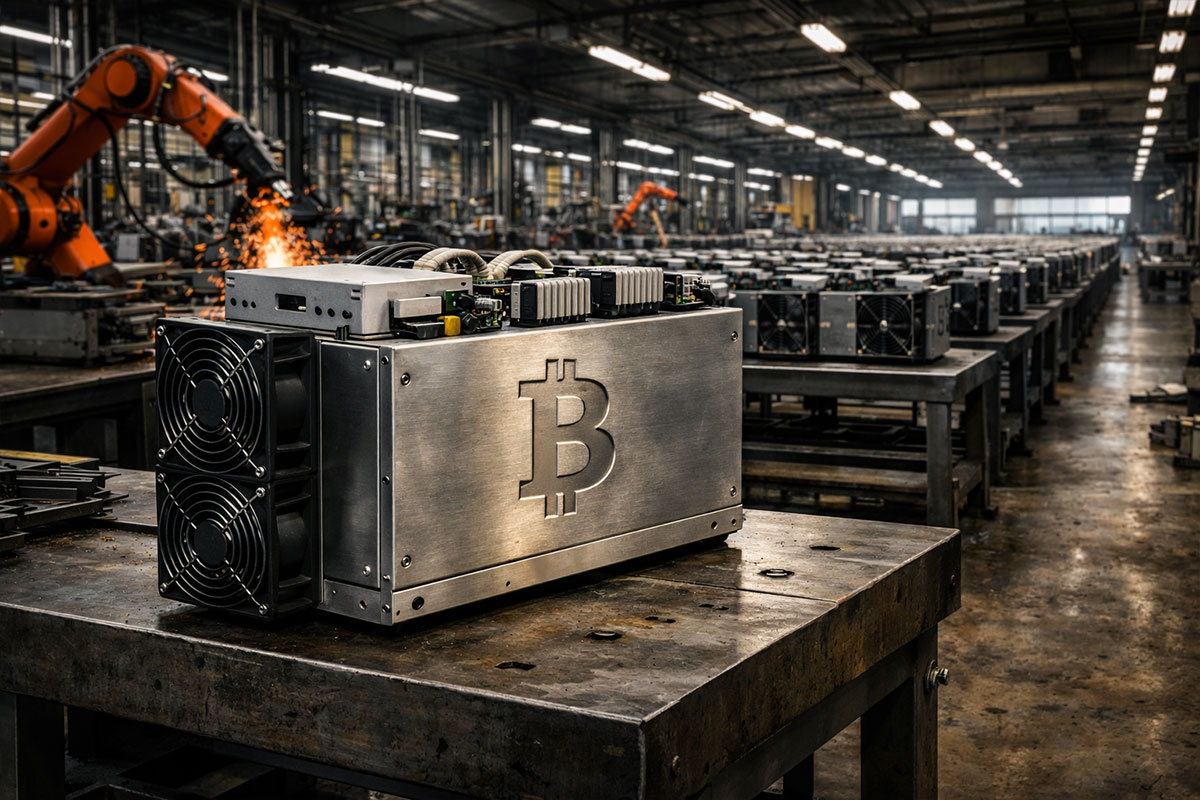
The introduction of the 'Mined in America Act' signals a significant shift in US industrial policy, framing Bitcoin mining hardware as a national security concern akin to semiconductors and critical minerals. This legislative push aims to reduce US reliance on Chinese-manufactured mining hardware, potentially creating opportunities for domestic manufacturers and impacting the supply chain dynamics for Bitcoin miners. While the bill proposes domestic manufacturing support and certification, its success hinges on market adoption and the ability of US-based suppliers to compete on cost and performance against established Chinese vendors. The codification of a Strategic Bitcoin Reserve alongside hardware policy suggests a more integrated federal approach to digital assets, moving beyond market speculation to infrastructure control.
Geopolitical de-escalation signals a potential shift to risk-on sentiment, benefiting Bitcoin and crypto equities as investors seek higher yields. While immediate price action shows gains for Bitcoin and related stocks, sustained rallies depend on broader institutional flows and regulatory clarity, not just geopolitical events. The market's positive reaction to potential de-escalation highlights crypto's sensitivity to global stability, suggesting a correlation with traditional risk assets.
The XRP Ledger's integration as a core payment engine for Bitget Wallet signifies a strategic shift towards real-world utility, moving beyond speculative trading. With payments now comprising 53% of XRP Ledger activity, driven by assets like RLUSD, the network is demonstrating tangible adoption for cross-border and everyday transactions. This partnership elevates the XRP Ledger's infrastructure role, positioning it as a foundational layer for secure, scalable digital payments, enhanced by quantum-resistant and AI security measures. The development suggests a potential for increased demand and usage of XRP and RLUSD as Bitget Wallet aims to facilitate peer-to-peer transfers and everyday purchases via its platform.

Bitcoin's price is currently range-bound between $60,000 and $70,000 due to a market dominated by leveraged futures trading rather than strong spot demand, indicating a lack of conviction among traders. Low stablecoin inflows and consistent losses for short-term holders, evidenced by a prolonged negative STH SOPR and YOY realized price, suggest limited new capital entering the market and increased selling pressure on minor rallies. The current market structure is fragile, with price action heavily influenced by futures positioning and indecisive short-term leverage flows, which limits upside potential and keeps BTC volatile within its established range.

Cardano's Midnight Network launch introduces a privacy-focused sidechain, aiming to unlock enterprise adoption by enabling secure handling of sensitive data on-chain. The introduction of Midnight Network addresses a key barrier to blockchain adoption for real-world applications like private finance and real estate, potentially expanding Cardano's utility beyond current use cases. The NIGHT token has shown an immediate market reaction with a price increase, indicating early investor interest in the privacy-centric development and its potential for future network activity. Charles Hoskinson's vision for Midnight Network positions it as a crucial evolution beyond basic smart contracts and payments, specifically targeting the integration of private data into blockchain ecosystems.

Tether's USAT stablecoin expansion to Celo, an Ethereum L2, signifies a strategic move to broaden regulated digital dollar accessibility beyond Ethereum's mainnet. The integration with Google Cloud for infrastructure support and a privacy-preserving faucet highlights a focus on compliant and user-friendly distribution channels for USAT. USAT's potential role as a gas currency on Celo, coupled with Celo's mobile reach via Opera MiniPay, could drive adoption and utility for the stablecoin within a significant user base.

Geopolitical de-escalation signals from Iran have triggered a broad market rally, lifting Bitcoin above $68,000 and adding $40 billion to the crypto market cap as investors rotate back into risk assets. The market's rapid repricing of geopolitical risk highlights Bitcoin's sensitivity to macro events, particularly its correlation with traditional risk assets like stocks and its inverse relationship with oil prices and the US Dollar Index. The potential for reduced Middle East tensions could alleviate inflationary pressures and improve the outlook for central bank policy easing, creating a more favorable macro environment for risk assets.
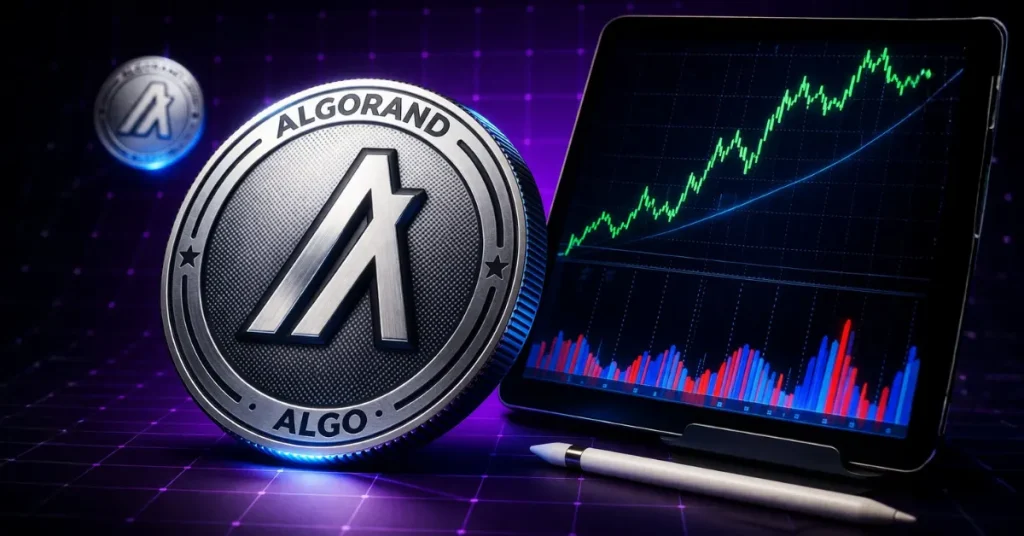
Algorand's price surge of over 10% appears to be driven by technical factors and broader market stabilization rather than new fundamental catalysts, suggesting a potentially fragile rally. The current price action tests a critical descending trendline resistance, making it a make-or-break level for ALGO's short-term direction, with a breakout needed to confirm a trend reversal. Traders should exercise caution and await a decisive breakout above $0.095-$0.105 or a clear rejection from the trendline before establishing significant positions, as premature entries risk falling into traps.
Signal context only. Validate with price action, liquidity, and risk limits before taking a position.
