
Navigating Crypto News

CoinFeather
Navigating Crypto News

Quick market read from this story
European banks are launching a consortium-backed stablecoin, Qivalis, to counter dollar dominance in crypto markets and preserve financial sovereignty.
The initiative aims to create a liquid, MiCA-compliant euro stablecoin to compete with USDT and USDC, addressing the euro's minimal on-chain presence.
This development highlights a strategic push by traditional finance to integrate with blockchain, positioning Qivalis as infrastructure for euro-denominated on-chain activity.
The project is distinct from the ECB's digital euro, focusing on a private, regulated stablecoin to enhance the existing financial stack and prevent 'dollarization' of European finance.
Deep Dive
Twelve major European banks, including ING, UniCredit, and BBVA, are collaborating on a new stablecoin project named Qivalis. The initiative aims to bring the euro onto blockchain rails to prevent the U.S. dollar from dominating global crypto markets and safeguard Europe's financial sovereignty. CEO Jan-Oliver Sell of Qivalis warned that without a robust euro presence onchain, Europe risks losing control of its financial future to dollar-pegged stablecoins.
While the euro represents approximately 20% to 25% of global traditional finance activity, its presence in the blockchain space is minimal, accounting for only about 0.2% of transactions. This significant disconnect highlights the urgent need for a euro-native digital asset to compete with dominant dollar stablecoins like Tether (USDT) and Circle (USDC). Analysts project the stablecoin market to grow substantially, potentially reaching $1.15 trillion in the next five years, underscoring the importance of this development.
Qivalis, backed by the consortium of 12 European banks, is developing a euro stablecoin compliant with the Markets in Crypto-Assets (MiCA) regulation. The project targets a launch in the second half of 2026, pending regulatory approval from the Dutch central bank. Qivalis aims to become the primary issuer of euro stablecoins globally, positioning itself as essential infrastructure that bridges traditional finance and blockchain technology. By uniting multiple institutions, the project seeks to overcome the fragmentation that has hindered previous euro stablecoin efforts and build the necessary liquidity and distribution.
Qivalis's initiative is distinct from the European Central Bank's (ECB) digital euro project, which is expected no earlier than 2029. While the ECB's digital euro focuses on a public, centralized digital payment method, Qivalis will issue a private, MiCA-regulated stablecoin. Sell views these efforts as complementary rather than competitive, aiming to enhance the overall financial ecosystem by providing a euro-native asset for blockchain-based use cases like cross-border payments and settlements, which currently necessitate the use of dollar-based assets.
The urgency stems from the rapid shift of financial activity onto blockchain rails. Qivalis believes a regulated, bank-backed approach can challenge incumbent dollar stablecoins by fostering liquidity and integration across exchanges, custodians, and decentralized finance (DeFi) platforms. The project also aims to mitigate currency risk for European users by offering a euro-denominated alternative, preventing exchange rate fluctuations from eroding yields. Ultimately, Qivalis seeks to establish European digital autonomy and ensure the euro maintains its position as a major global reserve currency in the evolving digital financial landscape.
Source, catalyst, and sector overlap from the latest feed.
Geopolitical de-escalation signals from Iran are driving a positive market reaction, lifting Bitcoin and stocks while easing oil prices. The potential for reduced regional conflict is a key driver for risk assets like Bitcoin, suggesting a short-term bullish sentiment based on macro factors. While Bitcoin shows gains, the broader market impact is tempered by ongoing concerns about inflation and energy prices, indicating a nuanced trading environment.
Charles Hoskinson criticizes the proposed CLARITY Act, warning that its lengthy implementation and potential for political 'weaponization' could stifle innovation and disadvantage new crypto projects. The Cardano founder argues the legislation, influenced by the FTX collapse, unfairly favors established cryptocurrencies like ADA, XRP, and ETH by treating new projects as securities by default, hindering their growth and liquidity. Hoskinson suggests the current U.S. legislative focus is misplaced, prioritizing minor issues like stablecoin yields over fundamental design flaws and the need for global regulatory alignment. The commentary highlights a perceived lack of technical expertise among U.S. policymakers and a failure to coordinate with international regulatory frameworks, potentially creating an incompatible domestic standard.
The article argues for the urgent need for clear financial privacy regulations in the U.S. crypto space, highlighting how current regulatory fragmentation creates uncertainty for businesses and consumers. Recent MOUs and joint guidance between the SEC and CFTC signal improved regulatory coordination, but the author emphasizes that financial privacy remains a critical unresolved issue. The author posits that outdated financial surveillance regimes, stemming from the Bank Secrecy Act, stifle innovation and economic activity by forcing a choice between full disclosure and non-participation, suggesting modern cryptography can offer solutions. A lack of clear legal frameworks for digital-era financial privacy is identified as a key reason for the persistence of inefficient legacy systems, with potential for private transactions on public blockchains if regulatory clarity is achieved.
Mercado Libre's decision to shut down Mercado Coin signals a broader trend of large tech firms re-evaluating branded digital assets, potentially impacting investor confidence in similar loyalty-based tokens. The discontinuation of Mercado Coin, while not directly affecting major cryptocurrencies, highlights the challenges in sustaining utility for project-specific tokens outside of core blockchain ecosystems. Despite ending its Mercado Coin experiment, Mercado Libre's continued support for stablecoin transfers and its significant Bitcoin holdings indicate an ongoing, albeit more cautious, engagement with the broader digital asset space.
Bitfarms is strategically divesting its Bitcoin holdings to fund a pivot towards AI infrastructure, signaling a significant shift in its business model away from traditional mining. The company's plan to eventually hold zero Bitcoin on its balance sheet indicates a long-term strategy to capitalize on the growing AI data center market, potentially impacting its correlation with BTC price action. The transition to AI infrastructure and rebranding to Keel Infrastructure (KEEL) suggests a move towards a more diversified tech-focused business, aiming to capture value beyond the volatile crypto mining sector. While Bitfarms is selling BTC 'opportunistically into strength,' the gradual wind-down implies a focus on maximizing cash flow before a full transition, suggesting a measured approach to asset liquidation.
BitGo's new portfolio-based lending platform for institutions allows borrowing and lending against a diverse range of digital assets, including staked and locked tokens, enhancing capital efficiency for institutional clients. The platform's integration of borrowing, lending, and collateral management into a single workflow streamlines institutional operations and reduces reliance on multiple counterparties. By enabling institutions to leverage staked and locked assets as collateral without unwinding positions, BitGo unlocks new avenues for yield generation and liquidity management within custody accounts. This development signals a growing trend in institutional finance towards more integrated and flexible collateral management solutions for digital assets, potentially increasing demand for custody services.
The official launch of Ripple's RLUSD stablecoin in Japan via SBI VC Trade signifies a major step towards institutional adoption of regulated digital assets. This development is expected to unlock significant institutional liquidity in Japan, potentially boosting XRP's utility and driving broader stablecoin adoption in Asia. The integration of RLUSD with SBI's established financial infrastructure positions Japan as a leader in crypto-enabled financial innovation, impacting cross-border transaction efficiency.
Galaxy Digital's expansion of its GalaxyOne platform to include Solana staking offers retail users access to yield-generating opportunities, reflecting a broader industry trend of integrating passive income products into trading apps. The introduction of SOL staking with a target yield of up to 6.5% and temporary zero-fee incentives positions Galaxy against competitors like Coinbase and Robinhood, signaling a focus on user acquisition in a competitive retail crypto market. Despite Solana's price decline, continued demand for staking, evidenced by institutional interest and ETF inflows, suggests that participants are increasingly viewing SOL as a yield-generating asset rather than purely speculative.
Bitcoin Everlight introduces a new transaction layer aiming to improve Bitcoin's scalability and transaction fee distribution through a shard participation model. The project offers tiered participation levels (shards) with rewards transitioning from BTCL to real BTC, promising up to 28% APY on BTC rewards, which could attract capital seeking yield on Bitcoin. With over $2 million raised in its presale and endorsements from crypto influencers, Bitcoin Everlight is positioning itself as a significant infrastructure play for the next market cycle.
Benchmark initiated coverage of Securitize with a 'Buy' rating and a $16 price target, signaling strong conviction in its tokenization platform and potential to disrupt traditional finance. The firm's projected $178 million in sales by 2027, driven by blue-chip partnerships and increasing Wall Street adoption of tokenization, suggests significant revenue growth potential. Securitize's role in tokenizing real-world assets, including BlackRock's BUIDL fund, positions it as a key player in the evolving capital markets infrastructure, potentially impacting legacy systems.
Standard Chartered's reaffirmation of a $2 trillion stablecoin market cap forecast for 2028, despite doubled velocity, suggests that increased transaction efficiency is being offset by new, additive use cases rather than cannibalizing existing demand. The divergence in stablecoin velocity between USDC (driven by TradFi displacement and AI payments on Base/Solana) and USDT (driven by emerging market savings) highlights distinct market segments and potential competitive dynamics within the stablecoin ecosystem. The surge in USDC velocity on Solana and Base, linked to early AI agent payments via Coinbase's x402 protocol, indicates emerging demand for stablecoins in decentralized AI applications, though the transient nature of this initial surge warrants close monitoring.
Geopolitical tensions involving Iran and U.S. firms are creating market uncertainty, impacting major tech stocks like Microsoft, Nvidia, and Tesla, which could spill over into broader market sentiment. While specific tech stocks saw gains, the underlying threat of targeted attacks on U.S. companies in the Middle East introduces a risk premium for companies with significant regional operations, potentially affecting investor confidence and continuity planning. The escalation of rhetoric from both U.S. and Iranian officials, coupled with threats to critical infrastructure and trade routes like the Strait of Hormuz, highlights systemic risks that could impact energy prices and global supply chains.
The US Department of Labor's proposed rule to allow digital assets in 401(k) plans signals a shift towards regulatory neutrality, potentially increasing institutional interest in crypto as a retirement investment option. Senator Lummis's support for the proposal highlights a bipartisan effort to reduce regulatory friction for digital assets, suggesting a more favorable environment for crypto integration into traditional finance. Despite the regulatory shift, adoption within 401(k) plans may remain slow due to fiduciary concerns regarding legal risks and compliance standards, indicating a cautious approach from plan sponsors. The move, driven by a presidential directive, aims to reduce retirement plan sponsor burdens and litigation risks, which could indirectly benefit the broader digital asset market by fostering greater acceptance.
Warren Buffett's commentary reinforces Apple's status as Berkshire Hathaway's largest holding, signaling long-term confidence despite recent trimming, which suggests a potential for sustained institutional interest. Despite strong fundamentals like record services revenue and a large active device base, Apple faces near-term headwinds from legal issues and AI strategy questions, creating a neutral outlook for immediate price action. Technical indicators show AAPL in a weak short-term range below key resistance levels, suggesting that while Buffett's endorsement provides a floor, significant upside may be capped until broader market sentiment or technicals improve.
Live Feed
Loading the broader stream in the same flow as the homepage feed.

Despite some analysts forecasting short-term downside for Bitcoin toward $60,000, technical indicators and liquidation heatmap data suggest a potential rally to $82,000 if key resistance at $68,879 is overcome. The market structure for Bitcoin remains bearish according to some analysts, but recent price action and institutional interest present a conflicting narrative that traders should monitor closely. Key resistance levels for Bitcoin are identified at the 50-day moving average around $68.8K and short liquidity clusters between $68,500-$70,000 and $72,000-$74,000, which could fuel a liquidation rally if breached.

Geopolitical de-escalation signals from Iran have triggered a 'risk-on' sentiment in crypto markets, leading to broad gains across major altcoins and Bitcoin. The market's positive reaction is primarily driven by a reduction in perceived geopolitical risk, causing a reversal of 'war premium' fear trades and a rotation into higher-beta assets. Despite the immediate price surge, the sustainability of the rally is uncertain, hinging on the US response to Iran's conditional peace proposal, with potential for gains to reverse if negotiations falter. The current market movement reflects a speculative reaction to the possibility of de-escalation rather than confirmed progress, highlighting the sensitivity of crypto assets to geopolitical events.

Local regulatory actions against crypto ATMs, such as the proposed ban in Haverhill, highlight ongoing concerns about financial fraud and money laundering, potentially impacting ATM operators and user access. The trend of cities and states enacting bans or restrictions on crypto ATMs suggests a growing regulatory challenge for the sector, which could lead to reduced accessibility and increased operational costs for ATM providers. Bitcoin Depot's stock performance and leadership changes, coupled with regulatory scrutiny from multiple states, indicate significant headwinds for major crypto ATM operators, signaling potential consolidation or distress within the industry.

Ripple's new partnership with Convera focuses on stablecoin settlement for cross-border payments, notably omitting any direct mention of XRP, which may raise concerns among XRP holders about its role in future institutional adoption. The 'stablecoin sandwich' model described suggests a strategic shift by Ripple towards utilizing regulated stablecoins for settlement, potentially de-emphasizing XRP's direct involvement in these specific payment flows. While the partnership expands Ripple's reach in commercial payments, the absence of XRP in the announcement creates uncertainty regarding its utility and market perception, warranting a cautious outlook for the asset in the short term.
Solana's price is consolidating within a descending channel, with key support at $80 and resistance near $95, indicating a potential bearish continuation if support breaks. Declining TVL, active addresses, and revenue on Solana suggest weakening underlying demand and network activity, which could pressure the SOL price lower. Traders should monitor the $80 support and $86-$90 resistance levels for confirmation of the next significant price move, as current on-chain data points to a slowdown. Despite the bearish on-chain signals, a reclaim of the $86-$90 resistance could trigger a short-term rebound, but a decisive breach is needed to shift sentiment.
TRON's integration with Zero Hash provides regulated access to TRX and TRC-20 USDT for enterprise and fintech platforms, removing significant compliance hurdles for institutional adoption. The recent SEC settlement dismissing charges against Justin Sun and the TRON Foundation, coupled with Anchorage Digital offering TRX custody, significantly de-risks TRON for U.S. institutional investors. TRX technical indicators show continued bullish momentum with RSI and MACD signaling strength, suggesting potential upside towards $0.32 resistance, though a break is needed for further gains.

The upcoming Senate Banking markup of the CLARITY Act in April presents a critical deadline that could reshape stablecoin economics by restricting passive yield, potentially redirecting capital towards Bitcoin as a preferred commodity asset. A compromise on stablecoin yield, allowing activity-based rewards but barring passive holding yields, is nearing resolution, indicating a move towards defining stablecoins primarily for payment utility. Passage of the CLARITY Act is anticipated to provide regulatory clarity, strengthening Bitcoin's position as a commodity and potentially increasing institutional demand, while altcoins may face stricter compliance standards. The market has already begun pricing in these developments, as evidenced by Circle's selloff following news of stablecoin reward restrictions, highlighting the direct impact on business models reliant on yield generation.
WhiteBIT Coin (WBT) has achieved a $15 billion market cap, a 50% increase driven by its deflationary tokenomics, including buyback-and-burn mechanisms and strategic token unlocks. The recent Kraken listing and inclusion in S&P crypto indices signal growing institutional recognition and improved liquidity for WBT, potentially attracting further investment. WhiteBIT's global expansion into markets like Ghana, coupled with WBT's utility for trading fee discounts and ecosystem access, reinforces its value proposition and integration within the broader financial infrastructure.

Ethereum's realized volatility has fallen to multi-month lows, historically preceding significant price swings and suggesting a potential breakout from current consolidation. Bulls must defend the $2,000 support level, as a break below could accelerate losses towards the $1,750-$1,800 accumulation zone. A sustained move above the $2,100-$2,200 resistance zone, where the 50-day SMA resides, is required for ETH to initiate a recovery rally.
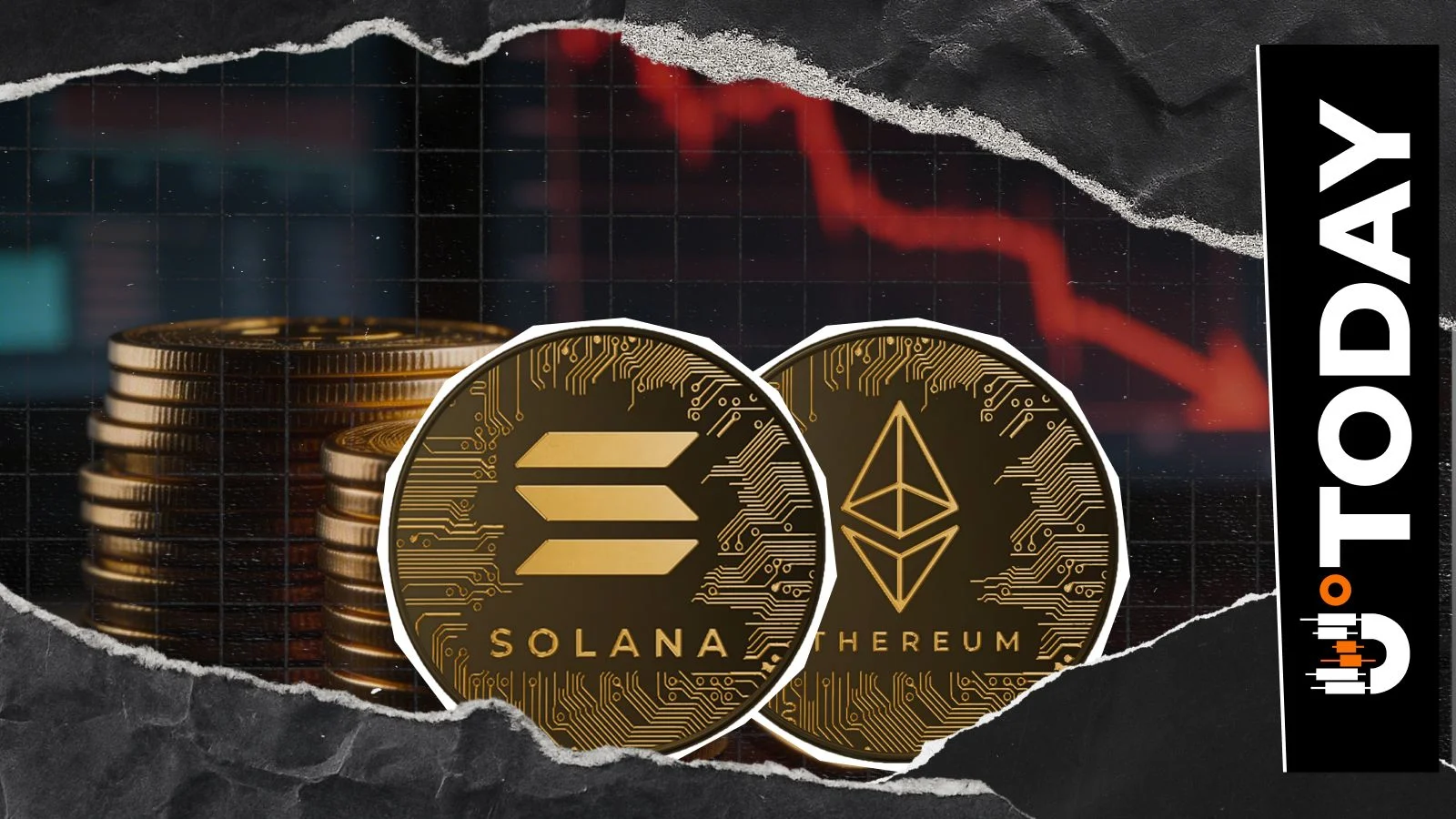
Solana's SOL/ETH ratio has fallen to a two-year low, with analysts predicting a potential further 25%-30% decline before a possible reversal. The current oversold conditions on the daily RSI suggest a potential short-term bounce, but confirmation is needed to avoid further downside risk. Broader market sentiment is cautious due to reassessment of Federal Reserve interest rate outlook, impacting crypto asset performance.

A significant $20 million leveraged short position on Ethereum has been opened by a new whale wallet, creating a direct conflict with rising spot demand signals and introducing uncertainty into ETH's near-term price direction. While on-chain taker buy pressure is exhibiting a pattern historically preceding rallies, a negative Sharpe ratio indicates that recent risk-adjusted returns for ETH have been poor, suggesting a market in transition with potential for either a sharp move or further consolidation. The divergence between the whale's bearish bet and the bullish taker demand, coupled with macro uncertainties, suggests that external factors will likely be the primary driver for ETH's price resolution in the short term.
Signal context only. Validate with price action, liquidity, and risk limits before taking a position.
