
Navigating Crypto News

CoinFeather
Navigating Crypto News

Source, catalyst, and sector overlap from the latest feed.
Charles Hoskinson criticizes the proposed CLARITY Act, warning that its lengthy implementation and potential for political 'weaponization' could stifle innovation and disadvantage new crypto projects. The Cardano founder argues the legislation, influenced by the FTX collapse, unfairly favors established cryptocurrencies like ADA, XRP, and ETH by treating new projects as securities by default, hindering their growth and liquidity. Hoskinson suggests the current U.S. legislative focus is misplaced, prioritizing minor issues like stablecoin yields over fundamental design flaws and the need for global regulatory alignment. The commentary highlights a perceived lack of technical expertise among U.S. policymakers and a failure to coordinate with international regulatory frameworks, potentially creating an incompatible domestic standard.
Live Feed
Loading the broader stream in the same flow as the homepage feed.
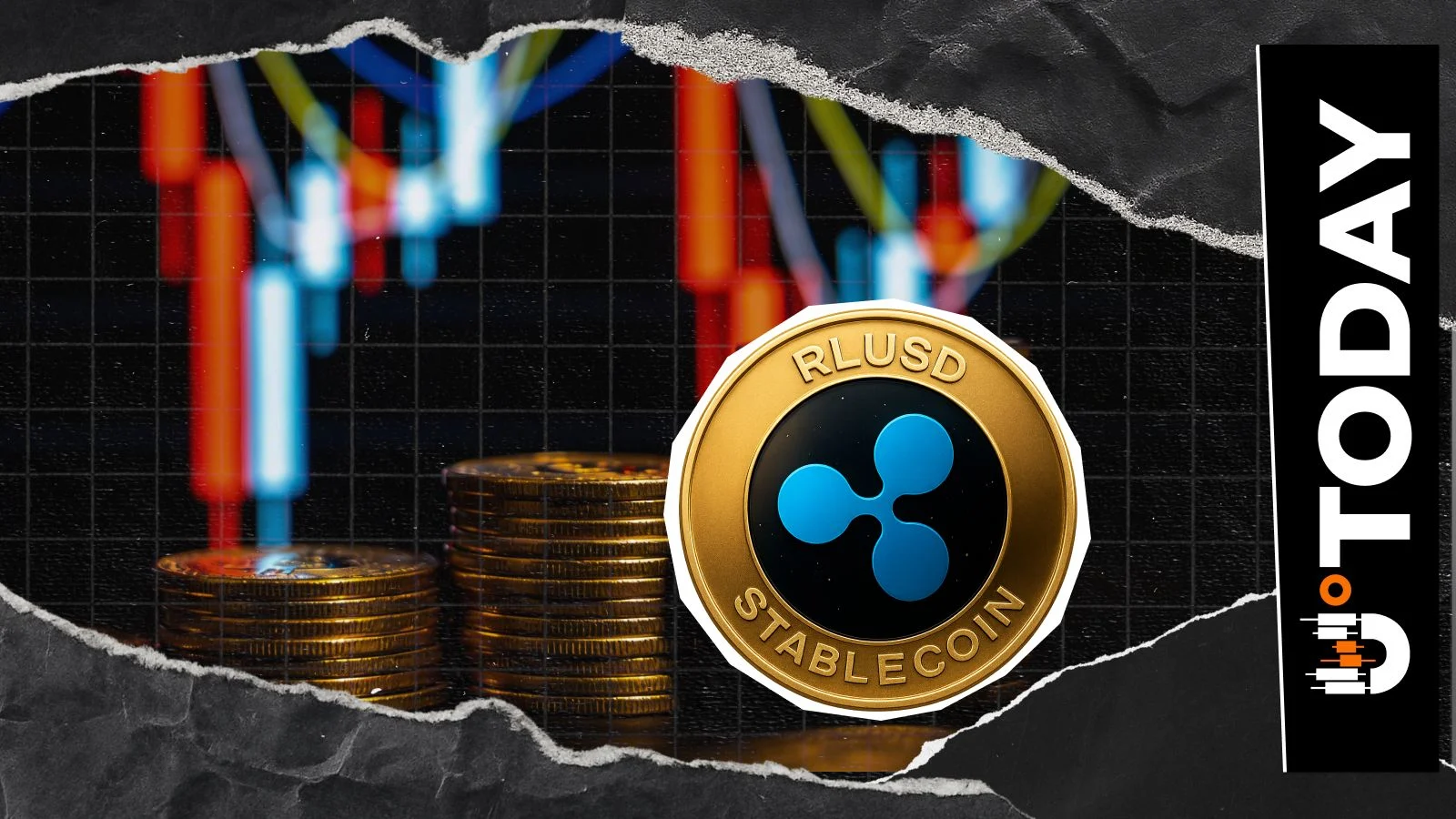
Ripple's RLUSD experienced a significant $128 million token burn at the end of Q1 2026, primarily driven by institutional redemptions for reporting purposes. The substantial token burn, while reducing market cap, signals operational maturity and reserve reliability for RLUSD, rather than a crisis. This event highlights the active redemption mechanism of RLUSD, reinforcing its position as a regulated stablecoin alternative and demonstrating Ripple's ability to manage large-scale fiat conversions.
Dogecoin's failure to break key Ichimoku cloud resistance at $0.09564 signals continued short-term bearish pressure, with the Kijun-sen at $0.09354 acting as the immediate hurdle for any recovery. The technical rejection from the Ichimoku cloud reinforces a bearish structure, suggesting that current market sentiment is weak and sellers are in control of short-term price action. Traders should monitor the $0.09354 and $0.09564 levels as critical indicators for potential shifts in momentum, with a sustained break above these zones required to invalidate the bearish outlook.

Peter Schiff's criticism of Strategy's STRC ad highlights potential legal risks stemming from misleading promotional content, suggesting a bearish outlook for the stock if lawsuits materialize. The ad's focus on aspirational wealth and high dividends, contrasted with a buried legal disclaimer, raises concerns about investor protection and could lead to significant downside for STRC if claims are pursued. Despite Schiff's critique, Strategy's stock (STRC) is presented as having engineered volatility profiles relative to Bitcoin, indicating a complex risk-reward scenario for traders that warrants close monitoring.

Dogecoin's active addresses have surged 28% to 73,000 in the past week, indicating increased user engagement despite recent price dips. While a rise in active addresses can signal renewed interest, it does not guarantee a price rally and could also be driven by bearish trading activity, suggesting potential for increased volatility. The current price action shows DOGE trading down 1.64% in the last 24 hours, indicating that the network activity surge has not yet translated into positive price momentum.
Ripple Prime's expansion to include gold, silver, and oil perpetuals on Hyperliquid signifies a significant step in bridging traditional finance commodities with DeFi, potentially attracting institutional capital seeking diversified on-chain exposure. The integration leverages Ripple's acquisition of Hidden Road, enhancing its infrastructure to offer seamless access to DeFi commodity markets, which could increase XRP's utility as it underpins these expanding institutional services. This development positions Ripple Prime as a key player in the evolving financial landscape, facilitating faster settlements and greater efficiency by connecting traditional markets with decentralized opportunities, aligning with broader tokenization trends.
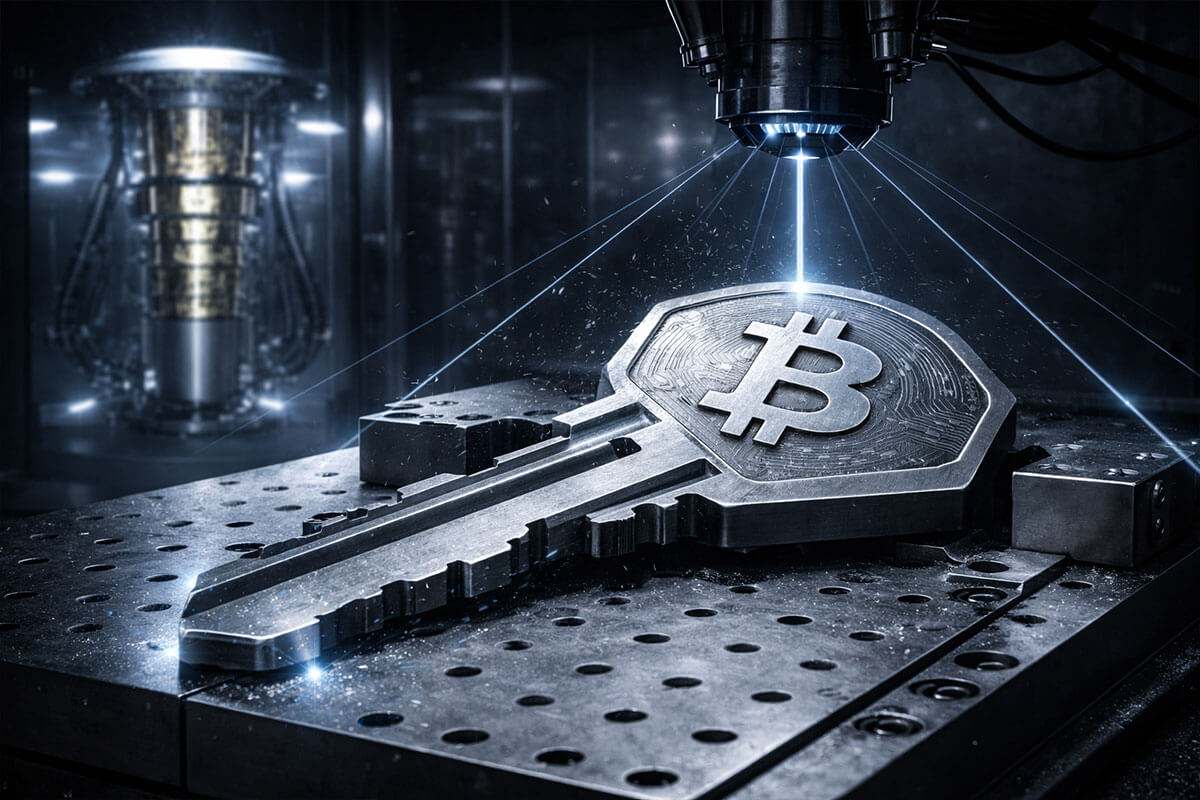
Google's revised quantum computing estimates significantly reduce the projected hardware needed to break current cryptography, implying a more imminent threat to Bitcoin and Ethereum's security. The reduced timeline for quantum cracking, particularly the 'on-spend' attack window for Bitcoin and at-rest attacks on Ethereum accounts, necessitates urgent migration to post-quantum cryptography. The potential impact on over $600 billion in Bitcoin, Ethereum, and stablecoins highlights a systemic risk that could trigger significant market repricing if defenses are not rapidly implemented. While a direct attack on Bitcoin's proof-of-work is distant, the vulnerability of existing UTXOs and Ethereum's smart contract infrastructure presents immediate concerns for asset security and the broader DeFi ecosystem.

Stablecoins have transitioned from a novel technology to invisible financial infrastructure, with transaction volumes exceeding $33 trillion in 2025, indicating a significant increase in their utility and adoption. The focus is shifting from market capitalization to transaction velocity as a key metric for stablecoins, highlighting their role as essential working capital and settlement tools rather than purely speculative assets. While issuers like Tether are highly profitable, the article suggests that the "rent" generated from stablecoin velocity should ideally be returned to users, aligning incentives and rewarding those driving economic activity. Latin America serves as a primary example of stablecoin utility for survival against inflation and currency volatility, demonstrating a blueprint for broader global adoption under similar economic conditions.

While Google's quantum research paper has raised concerns about Bitcoin's cryptography, Elon Musk's commentary highlights a potential, albeit unusual, benefit of such advancements: the recovery of lost private keys. Industry figures like CZ and Ledger's CEO downplay immediate quantum threats, suggesting current hardware limitations and ongoing efforts to develop quantum-resistant solutions, implying that panic is premature but long-term adaptation is necessary. The discussion around quantum computing's impact on Bitcoin, particularly concerning Satoshi's coins, introduces a speculative element that could influence market sentiment if perceived as a future vulnerability.
Oobit's launch in Chile, backed by Tether, signifies a strategic expansion into a growing LATAM crypto market with favorable regulatory conditions. The move leverages Chile's high crypto adoption rate and regulatory clarity from its Fintech Law, aiming to convert crypto holdings into everyday payment instruments. This expansion by Oobit, a Tether-backed entity, highlights the increasing momentum of crypto payment solutions in Latin America, potentially driving further adoption and utility for digital assets in the region.
Rec Room's shutdown highlights the persistent challenge of monetizing large user bases in the gaming and VR sectors, indicating that high engagement alone does not guarantee a sustainable business model. The company's decision to wind down operations due to escalating costs and market shifts, despite attracting over 150 million users, suggests a critical failure in aligning revenue with operational expenses, a key risk for many digital platforms. The phased reduction in platform functionality and monetization features ahead of the June 1, 2026 closure serves as a case study for orderly digital asset ecosystem wind-downs, impacting user sentiment and asset utility.
Signal context only. Validate with price action, liquidity, and risk limits before taking a position.
Quick market read from this story
Bitfarms is strategically divesting its Bitcoin holdings to fund a pivot towards AI infrastructure, signaling a significant shift in its business model away from traditional mining.
The company's plan to eventually hold zero Bitcoin on its balance sheet indicates a long-term strategy to capitalize on the growing AI data center market, potentially impacting its correlation with BTC price action.
The transition to AI infrastructure and rebranding to Keel Infrastructure (KEEL) suggests a move towards a more diversified tech-focused business, aiming to capture value beyond the volatile crypto mining sector.
While Bitfarms is selling BTC 'opportunistically into strength,' the gradual wind-down implies a focus on maximizing cash flow before a full transition, suggesting a measured approach to asset liquidation.
Deep Dive
Bitcoin miner Bitfarms (BITF) is actively divesting its bitcoin holdings as part of a strategic pivot towards AI infrastructure. The company generated $28.2 million in realized gains from bitcoin sales in 2025 and plans further disposals, aiming to eventually hold zero bitcoin on its balance sheet.
CEO Ben Gagnon stated on the company's fourth-quarter earnings call that Bitfarms will sell bitcoin "opportunistically into strength" while continuing mining operations to "maximize free cash flow before selling the miners." This approach indicates a gradual wind-down of its bitcoin mining activities.
The company is developing a 2.2 gigawatt pipeline for AI and High-Performance Computing (HPC) data centers across North America, with targeted AI-driven revenue expected to begin in 2027. This strategic shift aligns with a broader trend in the bitcoin mining sector, where companies are repurposing energy infrastructure for AI workloads.
In conjunction with its operational pivot, Bitfarms is undergoing a significant corporate restructuring. Shareholders have approved a U.S. re-domiciliation and a rebrand to Keel Infrastructure (KEEL). This change is expected to be finalized around April 1, 2026, with shares slated to trade under the new ticker symbol KEEL.
Bitfarms currently holds an estimated 1,827 BTC, according to BitcoinTreasuries.net. The company's stock (BITF) saw a 4.6% increase on Tuesday, mirroring a general rally in AI infrastructure stocks.
European banks are launching a consortium-backed stablecoin, Qivalis, to counter dollar dominance in crypto markets and preserve financial sovereignty. The initiative aims to create a liquid, MiCA-compliant euro stablecoin to compete with USDT and USDC, addressing the euro's minimal on-chain presence. This development highlights a strategic push by traditional finance to integrate with blockchain, positioning Qivalis as infrastructure for euro-denominated on-chain activity. The project is distinct from the ECB's digital euro, focusing on a private, regulated stablecoin to enhance the existing financial stack and prevent 'dollarization' of European finance.
