
Navigating Crypto News

CoinFeather
Navigating Crypto News
Quick market read from this story
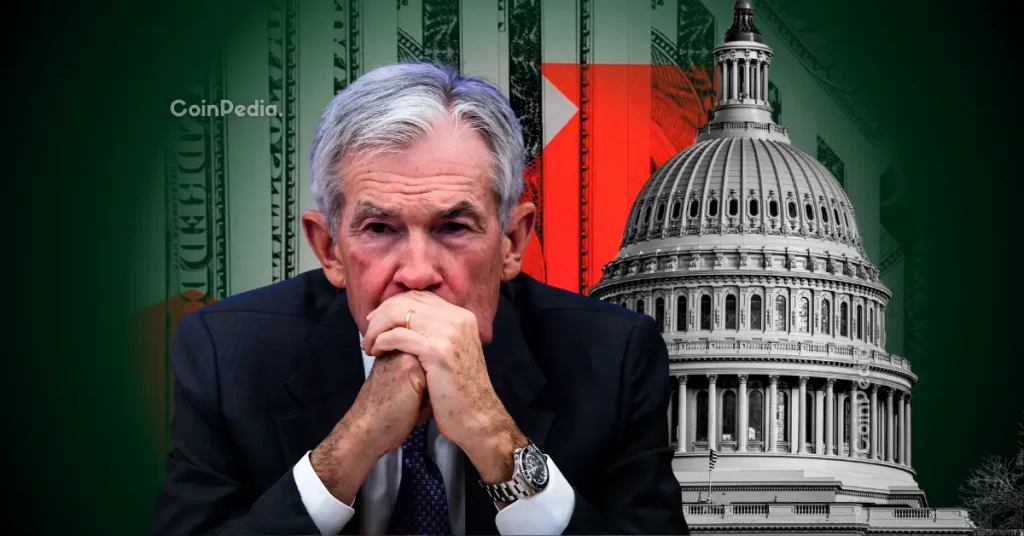
Jerome Powell's emphasis on the Federal Reserve's core mandate and independence, particularly in the face of geopolitical and economic uncertainty, signals a cautious approach to monetary policy that could influence market expectations for interest rates.
The upcoming Senate confirmation hearing for Kevin Warsh, coupled with the advancing CLARITY Act for crypto regulation, suggests a period of heightened scrutiny and potential policy shifts in both traditional finance and the digital asset space.
Powell's advice to students to 'master new technologies' like AI, while acknowledging the uncertainty of their impact on the labor market, indicates a forward-looking perspective on economic evolution that may indirectly affect innovation in the tech and crypto sectors.
Source, catalyst, and sector overlap from the latest feed.
Ripple's new partnership with Convera focuses on stablecoin settlement for cross-border payments, notably omitting any direct mention of XRP, which may raise concerns among XRP holders about its role in future institutional adoption. The 'stablecoin sandwich' model described suggests a strategic shift by Ripple towards utilizing regulated stablecoins for settlement, potentially de-emphasizing XRP's direct involvement in these specific payment flows. While the partnership expands Ripple's reach in commercial payments, the absence of XRP in the announcement creates uncertainty regarding its utility and market perception, warranting a cautious outlook for the asset in the short term.
Live Feed
Loading the broader stream in the same flow as the homepage feed.

Despite some analysts forecasting short-term downside for Bitcoin toward $60,000, technical indicators and liquidation heatmap data suggest a potential rally to $82,000 if key resistance at $68,879 is overcome. The market structure for Bitcoin remains bearish according to some analysts, but recent price action and institutional interest present a conflicting narrative that traders should monitor closely. Key resistance levels for Bitcoin are identified at the 50-day moving average around $68.8K and short liquidity clusters between $68,500-$70,000 and $72,000-$74,000, which could fuel a liquidation rally if breached.

BitGo's new portfolio-based lending platform for institutions allows borrowing and lending against a diverse range of digital assets, including staked and locked tokens, enhancing capital efficiency for institutional clients. The platform's integration of borrowing, lending, and collateral management into a single workflow streamlines institutional operations and reduces reliance on multiple counterparties. By enabling institutions to leverage staked and locked assets as collateral without unwinding positions, BitGo unlocks new avenues for yield generation and liquidity management within custody accounts. This development signals a growing trend in institutional finance towards more integrated and flexible collateral management solutions for digital assets, potentially increasing demand for custody services.

Geopolitical de-escalation signals from Iran have triggered a 'risk-on' sentiment in crypto markets, leading to broad gains across major altcoins and Bitcoin. The market's positive reaction is primarily driven by a reduction in perceived geopolitical risk, causing a reversal of 'war premium' fear trades and a rotation into higher-beta assets. Despite the immediate price surge, the sustainability of the rally is uncertain, hinging on the US response to Iran's conditional peace proposal, with potential for gains to reverse if negotiations falter. The current market movement reflects a speculative reaction to the possibility of de-escalation rather than confirmed progress, highlighting the sensitivity of crypto assets to geopolitical events.
The official launch of Ripple's RLUSD stablecoin in Japan via SBI VC Trade signifies a major step towards institutional adoption of regulated digital assets. This development is expected to unlock significant institutional liquidity in Japan, potentially boosting XRP's utility and driving broader stablecoin adoption in Asia. The integration of RLUSD with SBI's established financial infrastructure positions Japan as a leader in crypto-enabled financial innovation, impacting cross-border transaction efficiency.

Geopolitical de-escalation signals from Iran are driving a positive market reaction, lifting Bitcoin and stocks while easing oil prices. The potential for reduced regional conflict is a key driver for risk assets like Bitcoin, suggesting a short-term bullish sentiment based on macro factors. While Bitcoin shows gains, the broader market impact is tempered by ongoing concerns about inflation and energy prices, indicating a nuanced trading environment.

Galaxy Digital's expansion of its GalaxyOne platform to include Solana staking offers retail users access to yield-generating opportunities, reflecting a broader industry trend of integrating passive income products into trading apps. The introduction of SOL staking with a target yield of up to 6.5% and temporary zero-fee incentives positions Galaxy against competitors like Coinbase and Robinhood, signaling a focus on user acquisition in a competitive retail crypto market. Despite Solana's price decline, continued demand for staking, evidenced by institutional interest and ETF inflows, suggests that participants are increasingly viewing SOL as a yield-generating asset rather than purely speculative.

Ethereum's realized volatility has fallen to multi-month lows, historically preceding significant price swings and suggesting a potential breakout from current consolidation. Bulls must defend the $2,000 support level, as a break below could accelerate losses towards the $1,750-$1,800 accumulation zone. A sustained move above the $2,100-$2,200 resistance zone, where the 50-day SMA resides, is required for ETH to initiate a recovery rally.
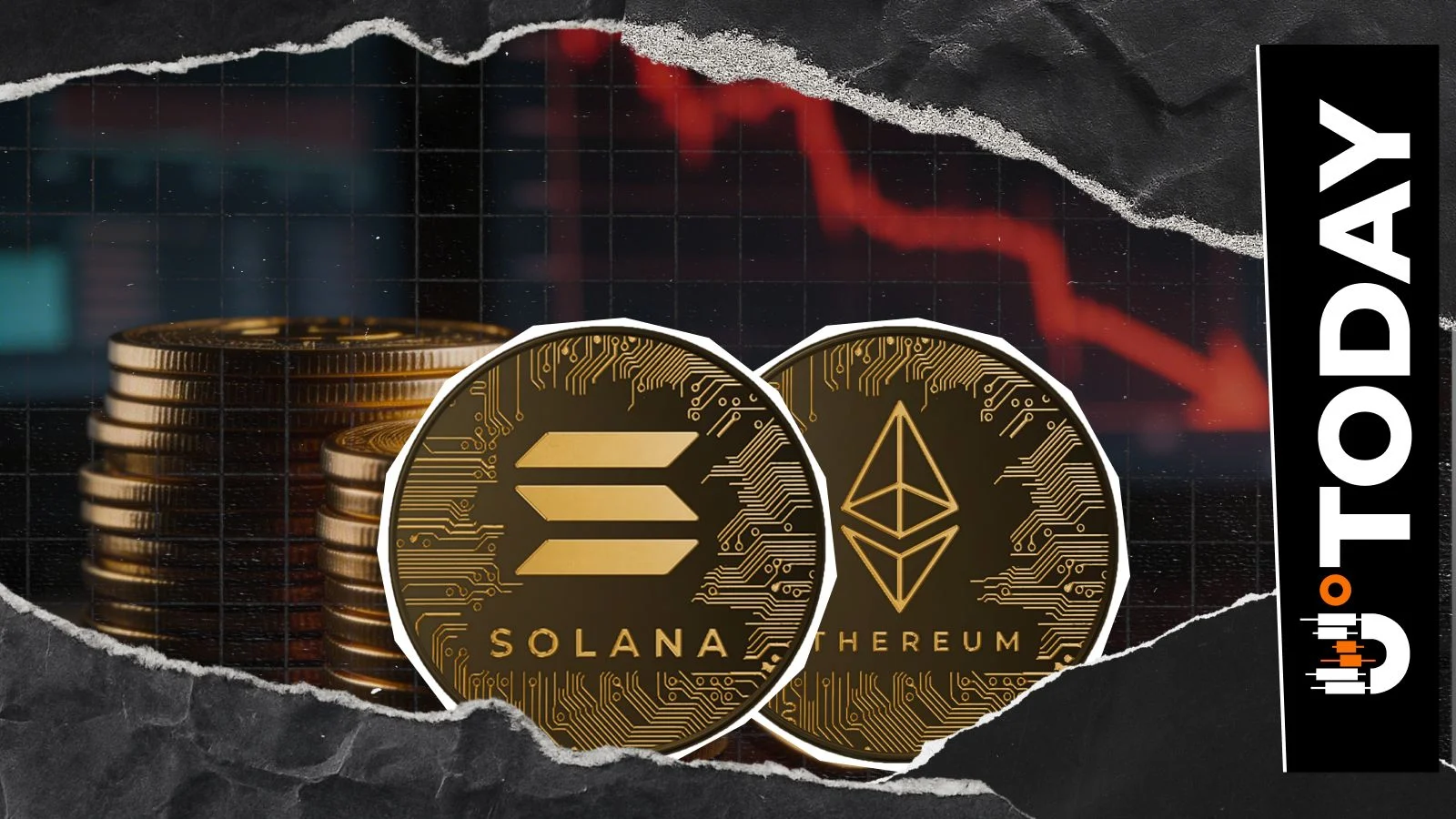
Solana's SOL/ETH ratio has fallen to a two-year low, with analysts predicting a potential further 25%-30% decline before a possible reversal. The current oversold conditions on the daily RSI suggest a potential short-term bounce, but confirmation is needed to avoid further downside risk. Broader market sentiment is cautious due to reassessment of Federal Reserve interest rate outlook, impacting crypto asset performance.
A significant $20 million leveraged short position on Ethereum has been opened by a new whale wallet, creating a direct conflict with rising spot demand signals and introducing uncertainty into ETH's near-term price direction. While on-chain taker buy pressure is exhibiting a pattern historically preceding rallies, a negative Sharpe ratio indicates that recent risk-adjusted returns for ETH have been poor, suggesting a market in transition with potential for either a sharp move or further consolidation. The divergence between the whale's bearish bet and the bullish taker demand, coupled with macro uncertainties, suggests that external factors will likely be the primary driver for ETH's price resolution in the short term.
Signal context only. Validate with price action, liquidity, and risk limits before taking a position.
Solana's price is consolidating within a descending channel, with key support at $80 and resistance near $95, indicating a potential bearish continuation if support breaks. Declining TVL, active addresses, and revenue on Solana suggest weakening underlying demand and network activity, which could pressure the SOL price lower. Traders should monitor the $80 support and $86-$90 resistance levels for confirmation of the next significant price move, as current on-chain data points to a slowdown. Despite the bearish on-chain signals, a reclaim of the $86-$90 resistance could trigger a short-term rebound, but a decisive breach is needed to shift sentiment.
