
Navigating Crypto News

CoinFeather
Navigating Crypto News
Quick market read from this story
The XRP Ledger's proactive implementation of quantum-resistant cryptography, specifically ML-DSA signatures, positions it as a leader in future-proofing blockchain security against advanced computational threats.
While other major blockchains like Bitcoin and Ethereum are noted as exposed, XRPL's early adoption of Dilithium cryptography sets a practical standard for quantum-proof infrastructure, potentially influencing future adoption and long-term stability.
This development enhances XRPL's security posture, aiming to bolster trust among institutional and retail participants concerned with emerging technological risks, though immediate threats are downplayed by some industry figures.
Source, catalyst, and sector overlap from the latest feed.
Geopolitical tensions involving Iran and U.S. firms are creating market uncertainty, impacting major tech stocks like Microsoft, Nvidia, and Tesla, which could spill over into broader market sentiment. While specific tech stocks saw gains, the underlying threat of targeted attacks on U.S. companies in the Middle East introduces a risk premium for companies with significant regional operations, potentially affecting investor confidence and continuity planning. The escalation of rhetoric from both U.S. and Iranian officials, coupled with threats to critical infrastructure and trade routes like the Strait of Hormuz, highlights systemic risks that could impact energy prices and global supply chains.
Live Feed
Loading the broader stream in the same flow as the homepage feed.

The US Department of Labor's proposed rule to allow digital assets in 401(k) plans signals a shift towards regulatory neutrality, potentially increasing institutional interest in crypto as a retirement investment option. Senator Lummis's support for the proposal highlights a bipartisan effort to reduce regulatory friction for digital assets, suggesting a more favorable environment for crypto integration into traditional finance. Despite the regulatory shift, adoption within 401(k) plans may remain slow due to fiduciary concerns regarding legal risks and compliance standards, indicating a cautious approach from plan sponsors. The move, driven by a presidential directive, aims to reduce retirement plan sponsor burdens and litigation risks, which could indirectly benefit the broader digital asset market by fostering greater acceptance.

Local regulatory actions against crypto ATMs, such as the proposed ban in Haverhill, highlight ongoing concerns about financial fraud and money laundering, potentially impacting ATM operators and user access. The trend of cities and states enacting bans or restrictions on crypto ATMs suggests a growing regulatory challenge for the sector, which could lead to reduced accessibility and increased operational costs for ATM providers. Bitcoin Depot's stock performance and leadership changes, coupled with regulatory scrutiny from multiple states, indicate significant headwinds for major crypto ATM operators, signaling potential consolidation or distress within the industry.

Ripple's new partnership with Convera focuses on stablecoin settlement for cross-border payments, notably omitting any direct mention of XRP, which may raise concerns among XRP holders about its role in future institutional adoption. The 'stablecoin sandwich' model described suggests a strategic shift by Ripple towards utilizing regulated stablecoins for settlement, potentially de-emphasizing XRP's direct involvement in these specific payment flows. While the partnership expands Ripple's reach in commercial payments, the absence of XRP in the announcement creates uncertainty regarding its utility and market perception, warranting a cautious outlook for the asset in the short term.
Solana's price is consolidating within a descending channel, with key support at $80 and resistance near $95, indicating a potential bearish continuation if support breaks. Declining TVL, active addresses, and revenue on Solana suggest weakening underlying demand and network activity, which could pressure the SOL price lower. Traders should monitor the $80 support and $86-$90 resistance levels for confirmation of the next significant price move, as current on-chain data points to a slowdown. Despite the bearish on-chain signals, a reclaim of the $86-$90 resistance could trigger a short-term rebound, but a decisive breach is needed to shift sentiment.
TRON's integration with Zero Hash provides regulated access to TRX and TRC-20 USDT for enterprise and fintech platforms, removing significant compliance hurdles for institutional adoption. The recent SEC settlement dismissing charges against Justin Sun and the TRON Foundation, coupled with Anchorage Digital offering TRX custody, significantly de-risks TRON for U.S. institutional investors. TRX technical indicators show continued bullish momentum with RSI and MACD signaling strength, suggesting potential upside towards $0.32 resistance, though a break is needed for further gains.

The upcoming Senate Banking markup of the CLARITY Act in April presents a critical deadline that could reshape stablecoin economics by restricting passive yield, potentially redirecting capital towards Bitcoin as a preferred commodity asset. A compromise on stablecoin yield, allowing activity-based rewards but barring passive holding yields, is nearing resolution, indicating a move towards defining stablecoins primarily for payment utility. Passage of the CLARITY Act is anticipated to provide regulatory clarity, strengthening Bitcoin's position as a commodity and potentially increasing institutional demand, while altcoins may face stricter compliance standards. The market has already begun pricing in these developments, as evidenced by Circle's selloff following news of stablecoin reward restrictions, highlighting the direct impact on business models reliant on yield generation.

Geopolitical de-escalation signals from Iran are driving a positive market reaction, lifting Bitcoin and stocks while easing oil prices. The potential for reduced regional conflict is a key driver for risk assets like Bitcoin, suggesting a short-term bullish sentiment based on macro factors. While Bitcoin shows gains, the broader market impact is tempered by ongoing concerns about inflation and energy prices, indicating a nuanced trading environment.

WhiteBIT Coin (WBT) has achieved a $15 billion market cap, a 50% increase driven by its deflationary tokenomics, including buyback-and-burn mechanisms and strategic token unlocks. The recent Kraken listing and inclusion in S&P crypto indices signal growing institutional recognition and improved liquidity for WBT, potentially attracting further investment. WhiteBIT's global expansion into markets like Ghana, coupled with WBT's utility for trading fee discounts and ecosystem access, reinforces its value proposition and integration within the broader financial infrastructure.

Galaxy Digital's expansion of its GalaxyOne platform to include Solana staking offers retail users access to yield-generating opportunities, reflecting a broader industry trend of integrating passive income products into trading apps. The introduction of SOL staking with a target yield of up to 6.5% and temporary zero-fee incentives positions Galaxy against competitors like Coinbase and Robinhood, signaling a focus on user acquisition in a competitive retail crypto market. Despite Solana's price decline, continued demand for staking, evidenced by institutional interest and ETF inflows, suggests that participants are increasingly viewing SOL as a yield-generating asset rather than purely speculative.

Ethereum's realized volatility has fallen to multi-month lows, historically preceding significant price swings and suggesting a potential breakout from current consolidation. Bulls must defend the $2,000 support level, as a break below could accelerate losses towards the $1,750-$1,800 accumulation zone. A sustained move above the $2,100-$2,200 resistance zone, where the 50-day SMA resides, is required for ETH to initiate a recovery rally.
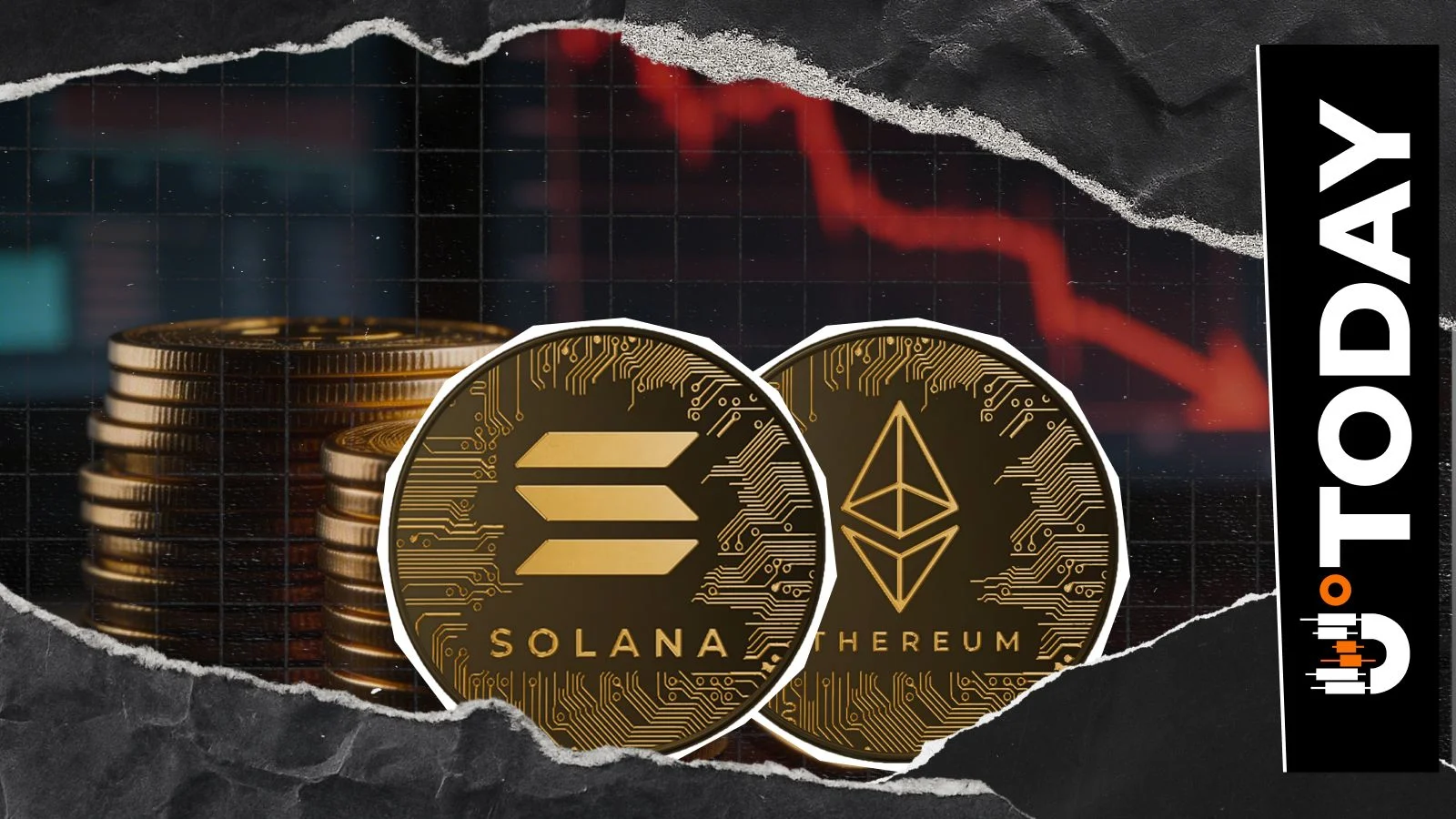
Solana's SOL/ETH ratio has fallen to a two-year low, with analysts predicting a potential further 25%-30% decline before a possible reversal. The current oversold conditions on the daily RSI suggest a potential short-term bounce, but confirmation is needed to avoid further downside risk. Broader market sentiment is cautious due to reassessment of Federal Reserve interest rate outlook, impacting crypto asset performance.

Bitcoin Everlight introduces a new transaction layer aiming to improve Bitcoin's scalability and transaction fee distribution through a shard participation model. The project offers tiered participation levels (shards) with rewards transitioning from BTCL to real BTC, promising up to 28% APY on BTC rewards, which could attract capital seeking yield on Bitcoin. With over $2 million raised in its presale and endorsements from crypto influencers, Bitcoin Everlight is positioning itself as a significant infrastructure play for the next market cycle.

A significant $20 million leveraged short position on Ethereum has been opened by a new whale wallet, creating a direct conflict with rising spot demand signals and introducing uncertainty into ETH's near-term price direction. While on-chain taker buy pressure is exhibiting a pattern historically preceding rallies, a negative Sharpe ratio indicates that recent risk-adjusted returns for ETH have been poor, suggesting a market in transition with potential for either a sharp move or further consolidation. The divergence between the whale's bearish bet and the bullish taker demand, coupled with macro uncertainties, suggests that external factors will likely be the primary driver for ETH's price resolution in the short term.
Signal context only. Validate with price action, liquidity, and risk limits before taking a position.
Warren Buffett's commentary reinforces Apple's status as Berkshire Hathaway's largest holding, signaling long-term confidence despite recent trimming, which suggests a potential for sustained institutional interest. Despite strong fundamentals like record services revenue and a large active device base, Apple faces near-term headwinds from legal issues and AI strategy questions, creating a neutral outlook for immediate price action. Technical indicators show AAPL in a weak short-term range below key resistance levels, suggesting that while Buffett's endorsement provides a floor, significant upside may be capped until broader market sentiment or technicals improve.
