
Navigating Crypto News

CoinFeather
Navigating Crypto News

Source, catalyst, and sector overlap from the latest feed.
New research suggests quantum computers could break Bitcoin and Ethereum encryption with significantly fewer qubits than previously estimated, raising concerns about the long-term security of these foundational blockchains. The theoretical threat of quantum computing attacks, potentially requiring network upgrades by 2029, introduces a new risk factor for Bitcoin, coinciding with existing macro headwinds and weak demand-side conditions. Quantum Resistant Ledger (QRL) has seen a significant price surge as investors seek protection against potential quantum threats, highlighting a niche market opportunity for quantum-safe blockchain solutions. While the quantum threat remains theoretical, it underscores the need for proactive development and adoption of quantum-resistant cryptography within the blockchain space to maintain long-term trust and security.
Live Feed
Loading the broader stream in the same flow as the homepage feed.
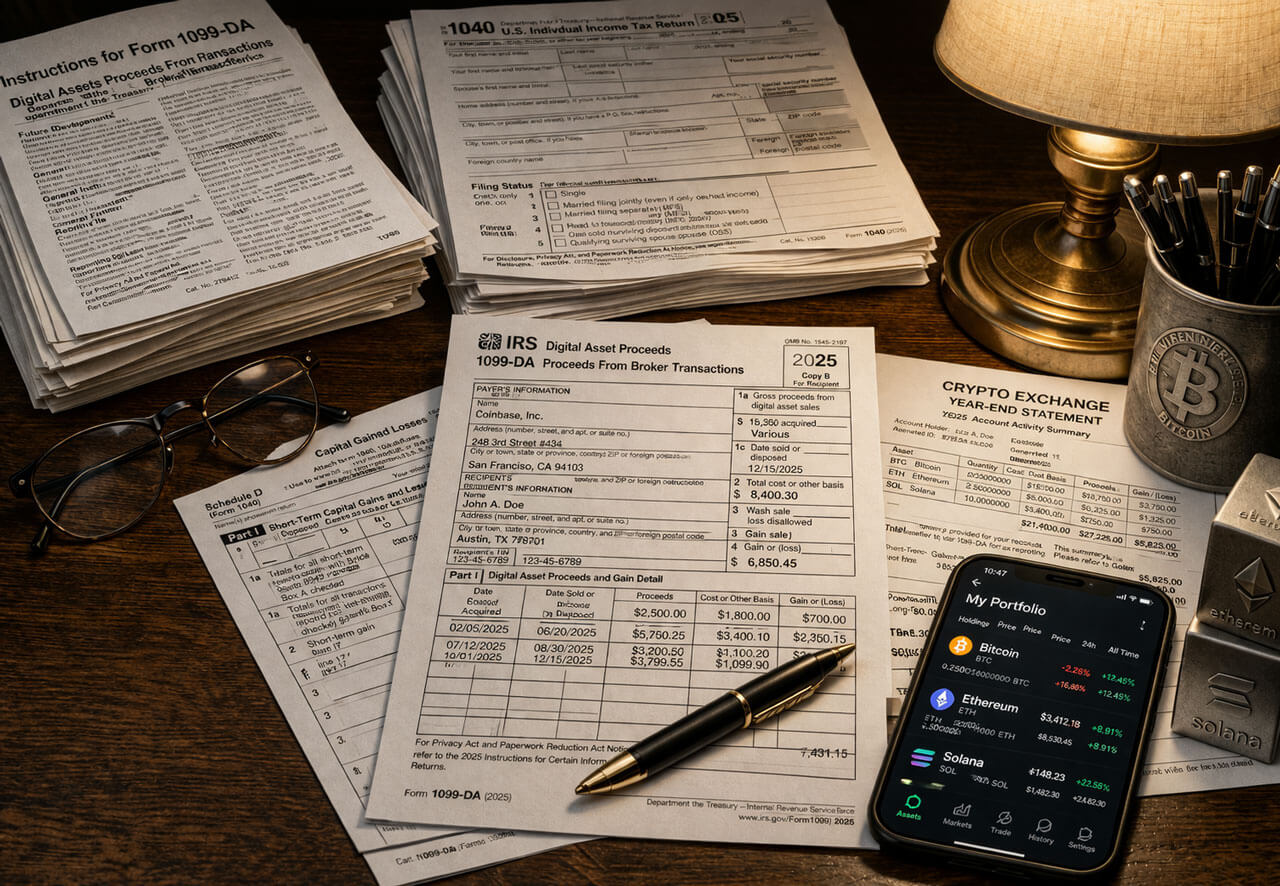
The new IRS Form 1099-DA introduces reporting for crypto sales, but its initial lack of basis information creates a compliance challenge for investors who must still calculate their own gains and losses. A significant portion of US crypto users remain unaware of new 2025 IRS reporting rules, indicating potential widespread confusion and non-compliance issues as the tax season approaches. The IRS's focus on gross proceeds via Form 1099-DA, without immediate basis reporting, necessitates investors maintaining meticulous personal records to accurately report taxable events and avoid discrepancies. Increased IRS scrutiny and reporting requirements are likely to influence investor behavior, potentially driving a shift towards more diligent tax planning and preference for regulated exchanges.
Shiba Inu is consolidating above a key support level, indicating potential for a significant upward move if resistance is broken. A confirmed breakout above the $0.00000614-$0.00000640 resistance zone could trigger a 50% rally, targeting approximately $0.00000890. Despite recent price dips, the sustained hold above the $0.0000056 demand zone and a confirmed counter-trendline breakout suggest building bullish momentum for SHIB.
Traders are rotating into the Pepeto presale, anticipating a 100x return driven by an upcoming Binance listing, while established assets like SOL and LINK face downward pressure. Coinbase's legal battle over prediction market jurisdiction is framed as a positive for presale projects like Pepeto, suggesting a path towards regulatory clarity that could benefit new entrants. The article highlights Pepeto's utility features, including zero-fee swaps, fee-less cross-network transfers, and a SolidProof audit, positioning it as a strong contender for significant growth post-Binance listing. While Solana (SOL) and Chainlink (LINK) are experiencing price slides with specific downside targets, the narrative suggests their growth potential is capped compared to the projected 100x for Pepeto.

Dubai's Virtual Assets Regulatory Authority (VARA) has updated its rulebook, granting itself the power to compel Virtual Asset Service Providers (VASPs) to act immediately without prior notice to mitigate market disruption. The new regulations permit limited retail access to crypto derivatives, including futures, options, and perpetual contracts, but impose strict leverage limits, margin requirements, and collateral rules to manage risk. By enhancing regulatory oversight and controlling derivatives trading, Dubai aims to foster a more mature digital asset ecosystem and strengthen its position as a global crypto hub while prioritizing investor protection.
Ripple Prime's expanded Hyperliquid integration enables institutional traders to access gold, silver, and oil perpetuals 24/7, establishing a significant TradFi exposure on DeFi rails. The development addresses a critical market gap for real-time commodity hedging, particularly during geopolitical events like the Iran war, by leveraging Hyperliquid's continuous pricing infrastructure. With substantial daily volume and open interest in commodity markets on Hyperliquid, this integration presents a concrete institutional entry point for RWA tokenization, potentially driving demand for both HYPE and XRP. The cross-margining capability between commodity positions and XRP exposures via Ripple Prime's prime brokerage framework offers enhanced capital efficiency for institutional participants.

The article provides a comprehensive overview of crypto and CASP licenses, highlighting their importance for regulatory compliance and market credibility. Obtaining these licenses is presented as a strategic advantage for crypto businesses, enabling access to banking services and facilitating market expansion. The increasing adoption of CASP frameworks, particularly in Europe with MiCA, signals a trend towards more standardized and stringent crypto regulation globally.

Russia's new crypto bill mandates licensed intermediaries for all domestic trading, significantly restricting retail access to $3,700 annually. The regulatory framework aims to formalize crypto operations by requiring licenses for exchanges and custodians, while allowing banks and brokers to participate under specific conditions. Despite the move to domesticate crypto trading, critics suggest the stringent rules could inadvertently push activity into unregulated offshore or underground channels, potentially hindering oversight goals. The legislation signals a move towards securities-like regulation for digital assets in Russia, potentially impacting the accessibility and operational landscape for crypto participants within the country.
Geopolitical tensions in the Strait of Hormuz and Red Sea are escalating, with Iran-backed Houthi forces targeting shipping, creating significant supply chain risks and driving Brent crude prices near multi-year highs. Egypt's President warns of oil prices potentially exceeding $200 per barrel if conflicts persist, highlighting the fragility of global energy markets and the potential for severe economic repercussions, particularly for developing nations. The article discusses potential disruptions to critical shipping routes like the Strait of Hormuz and the Red Sea, which could lead to substantial increases in oil prices and broader global trade impacts, but does not mention any specific crypto assets or their direct involvement.

XRP is consolidating within a tight $1.30-$1.50 range, indicating building pressure for a significant breakout or breakdown. On-chain data shows steady retail accumulation with increasing exchange outflows, suggesting growing investor confidence despite flat price action. Cautious institutional behavior, reflected in inconsistent ETF flows, is preventing a clear directional move, highlighting the need for broader market alignment. The current price structure suggests that April 2026 could be a critical month for XRP, potentially resolving the consolidation with a move towards $1.70-$1.80 on a breakout.

Bitcoin's failure to sustain levels above $68,000 indicates a potential bull trap, suggesting that recent buyers may be underwater and facing downside risk. Weak US demand, evidenced by a negative Coinbase Premium and subdued trading during US sessions, signals caution for BTC price action despite broader market volatility. Geopolitical tensions and oil price fluctuations are contributing to market uncertainty, potentially pressuring Bitcoin as traders anticipate further price drops before a potential rebound. Technical indicators and analyst commentary suggest a downward trend for Bitcoin, with expectations of liquidity sweeps at lower levels before any significant upward movement.
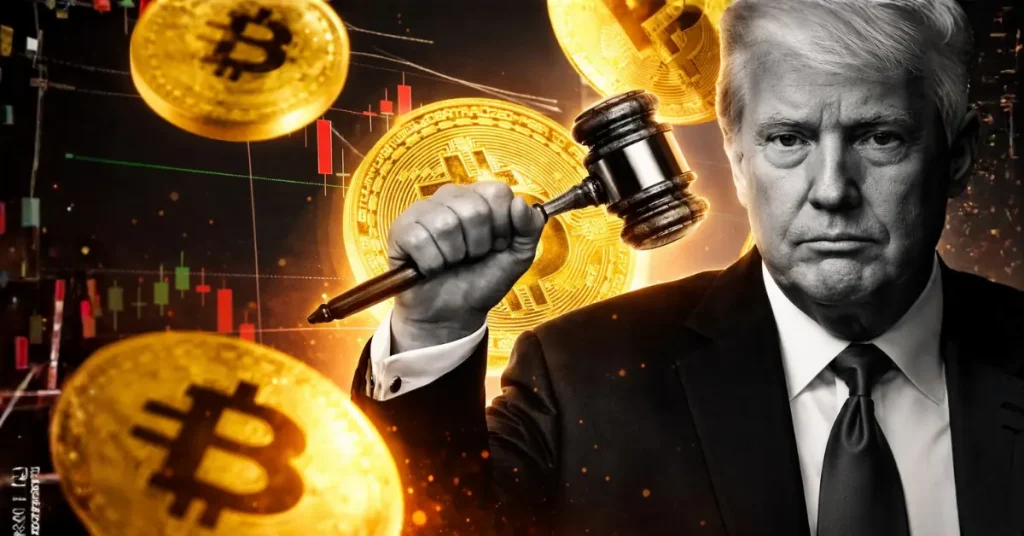
Geopolitical developments surrounding Iran and the Strait of Hormuz are acting as a significant, albeit volatile, driver for Bitcoin price action, with peace signals leading to short-term rallies and escalation causing pullbacks. The 'reverse indicator' theory, popularized by Iran's Parliament Speaker, suggests that market reactions to 'news' or 'Truth Social' posts regarding Iran may be counter-intuitive, implying traders should consider the opposite of the immediate price movement. While diplomatic optimism can temporarily boost Bitcoin and risk assets, the underlying tension of the Strait of Hormuz remaining closed poses a persistent risk to oil prices and inflation, complicating the outlook for potential Fed rate cuts. The market is in a 'wait-and-see mode' with Trump's evolving stance on Iran as the primary volatility trigger, indicating that future statements will continue to dictate short-term price direction for crypto assets.
Bharti Airtel's Nxtra subsidiary securing $1 billion in funding, primarily for AI data center expansion, signals significant investment in AI infrastructure growth within India. The funding round, involving major private equity firms, indicates strong investor confidence in the AI data center sector despite Bharti Airtel's recent stock price decline. Nxtra's strategic goal to scale to 1 GW capacity and target ~25% market share highlights aggressive expansion plans, potentially impacting the competitive landscape for data center services. The partnership with Google for a gigawatt-scale AI data center campus underscores the increasing demand for advanced AI computing infrastructure and its integration with major tech players.
US prosecutors have charged an individual in connection with the 2021 Uranium Finance hacks, signaling continued enforcement action on past DeFi exploits. The revival of this case, spurred by a significant $31 million crypto seizure, highlights the long-term investigative capabilities of authorities in tracing and recovering stolen digital assets. This development underscores the risks associated with DeFi exploits and the potential for delayed but impactful legal repercussions for perpetrators, even years after the event.

Keyrock's Series C funding round, led by SC Ventures and including participation from Ripple, signals continued institutional confidence in crypto market infrastructure providers. The $1.1 billion valuation achieved by Keyrock underscores the growth and perceived importance of market makers in facilitating liquidity for an expanding tokenized asset ecosystem. This funding will enable Keyrock to enhance its product offerings, pursue strategic acquisitions, and expand its global presence, potentially increasing its market share and influence. The investment by SC Ventures, Standard Chartered's venture arm, highlights a broader trend of traditional finance entities increasing their engagement with and investment in the digital asset space.
Signal context only. Validate with price action, liquidity, and risk limits before taking a position.
Quick market read from this story
Nakamoto Holdings' sale of 284 BTC for $20 million, despite its treasury strategy, signals potential liquidity pressures exacerbated by its recent acquisitions and existing loan obligations.
The company's significant stock decline of 99% from its peak and a widening pre-tax loss highlight underlying financial challenges, suggesting further asset sales may be necessary.
This development indicates a potential shift in corporate treasury strategies, where companies holding significant Bitcoin reserves might face pressure to liquidate assets to manage operational costs and debt.
Deep Dive
Nakamoto Holdings, a bitcoin firm founded by David Bailey, has sold approximately 284 BTC for $20 million in March. This sale represents about 5% of the company's bitcoin holdings and occurred as the company continues its pivot to a bitcoin treasury strategy. The average sale price was approximately $70,422 per bitcoin.
The proceeds from the sale are designated for supporting working capital and funding operations. This comes after Nakamoto's acquisitions of BTC Inc. and UTXO, businesses crucial to its transition into a bitcoin-focused platform. The company, which went public in May 2025 by merging with KindlyMD, raised $710 million to support this treasury strategy.
The sale underscores growing liquidity pressures for Nakamoto. The company has an 8%, $210 million USDT loan from Kraken, secured by a significant portion of its bitcoin holdings. This loan limits financial flexibility and potentially necessitates further asset sales to cover interest payments. Nakamoto reported a pre-tax loss of $52.2 million for the year ended December 31, 2025, an increase from the previous year's $3.6 million loss. This wider loss was largely due to a $166.1 million slump in the value of its digital assets following a late-2025 bitcoin price decline. Consequently, the company's shares have fallen approximately 99% from their all-time high in May 2025.
New research suggests quantum computers may require as few as 10,000 qubits to break Bitcoin and Ethereum wallet encryption, significantly compressing previous timelines and highlighting the urgent need for post-quantum cryptography adoption. The reduced qubit requirement for breaking ECC-256, compared to RSA-2048, indicates that cryptocurrencies with smaller key sizes are more immediately vulnerable to quantum threats, potentially impacting older or less secure wallet addresses. While the research is from a startup with vested interests, the convergence of findings with other recent studies underscores a growing consensus on the accelerating quantum threat, prompting a re-evaluation of migration strategies for blockchain security. The findings imply a heightened focus on developing and implementing quantum-resistant algorithms across the crypto ecosystem, as the theoretical window for exploitation narrows, potentially affecting long-term asset security.
