
Navigating Crypto News

CoinFeather
Navigating Crypto News

Quick market read from this story
Bitcoin's current drawdown of 43.26% from its all-time high positions it as a relative strength benchmark, outperforming most non-stablecoins in the market.
Only nine non-stable tokens, including LEO, TRON, and Hyperliquid, are currently closer to their all-time highs than Bitcoin, indicating pockets of resilience but highlighting Bitcoin's role as a market baseline.
The market is at a critical juncture where the relative performance of these nine tokens against Bitcoin's drawdown will determine if the exception list expands or contracts, signaling broader market health.
Traders should monitor the performance spread between Bitcoin and these top-performing altcoins, as shifts in this hierarchy can provide early indicators of market sentiment and potential rotation.
Deep Dive
Despite trading 43.26% below its all-time high of $126,198, Bitcoin (BTC) demonstrates relative strength compared to the majority of the cryptocurrency market. As of the latest snapshot, only nine non-stable tokens are closer to their peak prices than Bitcoin, indicating that the market's damage is concentrated elsewhere.
Excluding stablecoins and gold-backed tokens, the assets performing better than Bitcoin in terms of drawdown from their all-time highs include UNUS SED LEO (LEO), Sky, Kite, Canton Network, TRON (TRX), Hyperliquid, MemeCore, Siren, and Stable. This narrow list highlights Bitcoin's comparatively resilient position amidst a market still experiencing significant price depreciation from previous peaks.
The performance hierarchy among these top performers shows LEO leading, followed by Sky and Kite in the mid-20% range. Canton Network, TRON, and Hyperliquid form the next tier, with drawdowns in the high-20s to low-30s. MemeCore, Siren, and Stable exhibit a slimmer advantage over Bitcoin, with drawdowns in the high-30s.
Among the more established cryptocurrencies, LEO, TRON, and Hyperliquid stand out as credible exceptions due to their scale, liquidity, and market relevance. LEO has an $8.71 billion market cap and is 5.53% below its ATH. TRON boasts a $29.33 billion market cap and is 29.77% below its ATH, while Hyperliquid has a $10.5 billion market cap and is 31.10% below its ATH.
Bitcoin's position at 43.26% below its ATH serves as a crucial baseline for the market. The current dynamic suggests a threshold where the top nine performers are being watched to see if they can maintain their lead over Bitcoin's drawdown, or if more assets will fall behind as Bitcoin stabilizes.
Bitcoin continues to function as the market's baseline asset, with its price movements often signaling trends for the broader market. While Bitcoin is in absolute terms deep in retracement territory, its relative resilience indicates areas where capital has remained more durable and structural demand has stayed firmer. The leaderboard is expected to remain dynamic, with potential shifts as market conditions evolve.
Source, catalyst, and sector overlap from the latest feed.
Easing geopolitical tensions between the US and Iran are reducing inflation fears tied to oil supply disruptions, which could allow for a return of rate-cut expectations and improve liquidity for risk assets like Bitcoin. Bitcoin's recent price action above $70,000 appears driven by macro liquidity conditions and stabilization in broader markets rather than crypto-native catalysts, suggesting its correlation with traditional risk assets remains strong. A sustained de-escalation in the Middle East, leading to lower oil prices and a less hawkish central bank stance, presents a clearer path for Bitcoin to potentially retest and surpass recent highs. The market is sensitive to oil supply dynamics, with any breakdown in diplomatic efforts potentially reversing the positive sentiment and reintroducing stagflationary concerns that would pressure risk assets.
Cardano's ADA faces extreme bearish sentiment with record short positions and a 71% price crash, suggesting a potential capitulation point that could precede a short squeeze if the Midnight privacy network launch acts as a catalyst. The launch of the Midnight privacy network, targeting institutional compliance with zero-knowledge proofs, aims to attract new capital to Cardano's ecosystem, despite its native token ADA not directly benefiting from transaction fees paid in the DUST token. While ADA's on-chain metrics remain low, the successful rollout of Midnight and recent integrations like LayerZero and USDCx present Cardano with its most significant growth experiment in years, potentially revitalizing its ecosystem if adoption materializes.
BlackRock's Bitcoin ETF (IBIT) has surpassed $100 billion in AUM, achieving this milestone five times faster than any previous ETF, indicating strong institutional and retail demand for regulated Bitcoin exposure. The firm's crypto ETF complex, including IBIT and ETHA, has generated approximately $241.4 million in cumulative fees, positioning BlackRock to potentially reach $500 million in annual revenue from these products if assets under management reach $200 billion. While BlackRock's crypto ETF revenue is growing rapidly, it currently represents a small fraction of the firm's overall revenue, suggesting that while significant for the crypto sector, it does not yet shift BlackRock's financial center of gravity. The projected timeline for BlackRock's crypto ETFs to reach $500 million in cumulative fees is mid-2027 under base-case scenarios, with potential acceleration to early 2027 if assets grow by 40-50%, highlighting a medium-term growth trajectory for crypto-related TradFi products.
The recent two-block reorg on Bitcoin highlights how increased miner concentration, particularly with Foundry holding ~31% of hash rate, elevates the risk associated with the traditional six-confirmation rule. The six-confirmation heuristic, rooted in a 2008 model assuming 10% attacker hashpower, now faces a reversal risk near 18.9% under current concentration levels, suggesting a potential need for revised finality standards for high-value transactions. While exchanges like Coinbase and Kraken use lower confirmation thresholds (2-3), the gap between these operational standards and the cultural six-confirmation norm underscores that the latter is more a convention than a strict security guarantee. The event serves as a catalyst for reassessing Bitcoin's finality mechanisms, potentially leading exchanges and merchants to adopt dynamic confirmation requirements based on real-time hash rate distribution and transaction value.
US regulators, particularly the CFTC and SEC, are establishing a more permanent regulatory infrastructure for crypto through MOUs, task forces, and interpretive guidance, signaling a shift from enforcement-only to structured oversight. The creation of dedicated task forces and interagency agreements indicates a proactive regulatory approach, aiming to clarify jurisdictional boundaries and streamline pathways for new crypto products, potentially reducing future regulatory uncertainty. While Congress remains deadlocked on comprehensive legislation, agency actions are building a de facto operating system for crypto regulation, creating a more durable framework that is harder to dismantle than individual guidance documents. The focus on prediction markets highlights the growing mainstream integration of crypto, prompting regulatory bodies to assert jurisdiction and coordinate with entities like MLB to ensure market integrity, reflecting broader concerns about the asset class's reach.
McLaren Racing's entry into the Hedera Council signifies a growing trend of mainstream enterprises leveraging enterprise blockchains for fan engagement and digital asset initiatives. The partnership, which includes the launch of free-to-mint digital collectibles tied to F1 races, aims to onboard new users to Web3, potentially increasing adoption for Hedera and its ecosystem. As a governing member with voting rights, McLaren's involvement suggests a deeper commitment to Hedera's development, which could lead to further integration and innovation within the network.
Bitcoin faces critical resistance at $72,000, with a sustained break above this level needed to target $80,000 and beyond. Exchange outflow data suggests ongoing investor accumulation, indicating a belief in Bitcoin's current value despite price consolidation. Several major altcoins like ETH, BNB, XRP, SOL, DOGE, ADA, BCH, and LINK are at key technical junctures, with their next price movements dependent on breaking immediate resistance or support levels. The article provides technical analysis and price predictions for top cryptocurrencies, suggesting a neutral short-term outlook pending decisive price action above key resistance levels.
TRON DAO's expansion of its AI fund to $1 billion signals a strategic pivot towards becoming a primary payment layer for the burgeoning agent economy. The network's focus on low-fee, high-frequency transactions positions it as a competitor to slower blockchains like Ethereum for machine-to-machine payments. TRON's investment in agent identity, stablecoin rails, and tokenized RWAs indicates a move towards foundational infrastructure rather than speculative assets. This development highlights a growing trend of blockchains competing to provide the necessary infrastructure for AI-driven financial systems and autonomous agents.
Solana's network is demonstrating significant utility as a payment rail for AI agents, processing millions of transactions with sub-cent fees, indicating a potential shift towards machine-to-machine commerce infrastructure. The upcoming SIMD-0266 token standard, promising a 95% reduction in token transfer compute costs, directly addresses the scalability needs for high-frequency AI transactions, positioning Solana for future AI-driven network growth. Despite recent price stagnation, Solana's underlying ecosystem shows strength with $337.5 billion in tokenized assets and stable ETF capital, suggesting underlying investor conviction and a robust foundation for future price appreciation. Solana's price action shows early signs of recovery, crossing the 50-day moving average and exhibiting building momentum, with key technical levels at $95 and $102 indicating potential near-term upside if market conditions permit.
Bitmine's launch of the MAVAN platform signifies a growing trend of institutional-grade infrastructure development in Ethereum staking, catering to increasing demand for yield and compliance. The expansion of Bitmine's staking operations to external clients, leveraging its significant ETH holdings, suggests a potential increase in staked ETH and associated rewards, impacting network economics. With backing from major investors and a stated goal to acquire 5% of total ETH supply, Bitmine's move could attract substantial institutional capital into ETH staking, reinforcing its position as a yield-generating asset.
Live Feed
Loading the broader stream in the same flow as the homepage feed.
Coinbase's integration with Chainlink to publish exchange data on-chain signifies a crucial step in bridging TradFi and DeFi, potentially enhancing pricing, risk management, and product development within decentralized finance. The availability of Coinbase's order book, spot, and derivatives data on-chain via Chainlink DataLink empowers DeFi developers to build more sophisticated financial instruments and applications, potentially attracting greater institutional interest. This development establishes a new standard for programmable market infrastructure, accelerating the convergence of traditional and decentralized finance by providing institutional-grade data directly to blockchain networks.
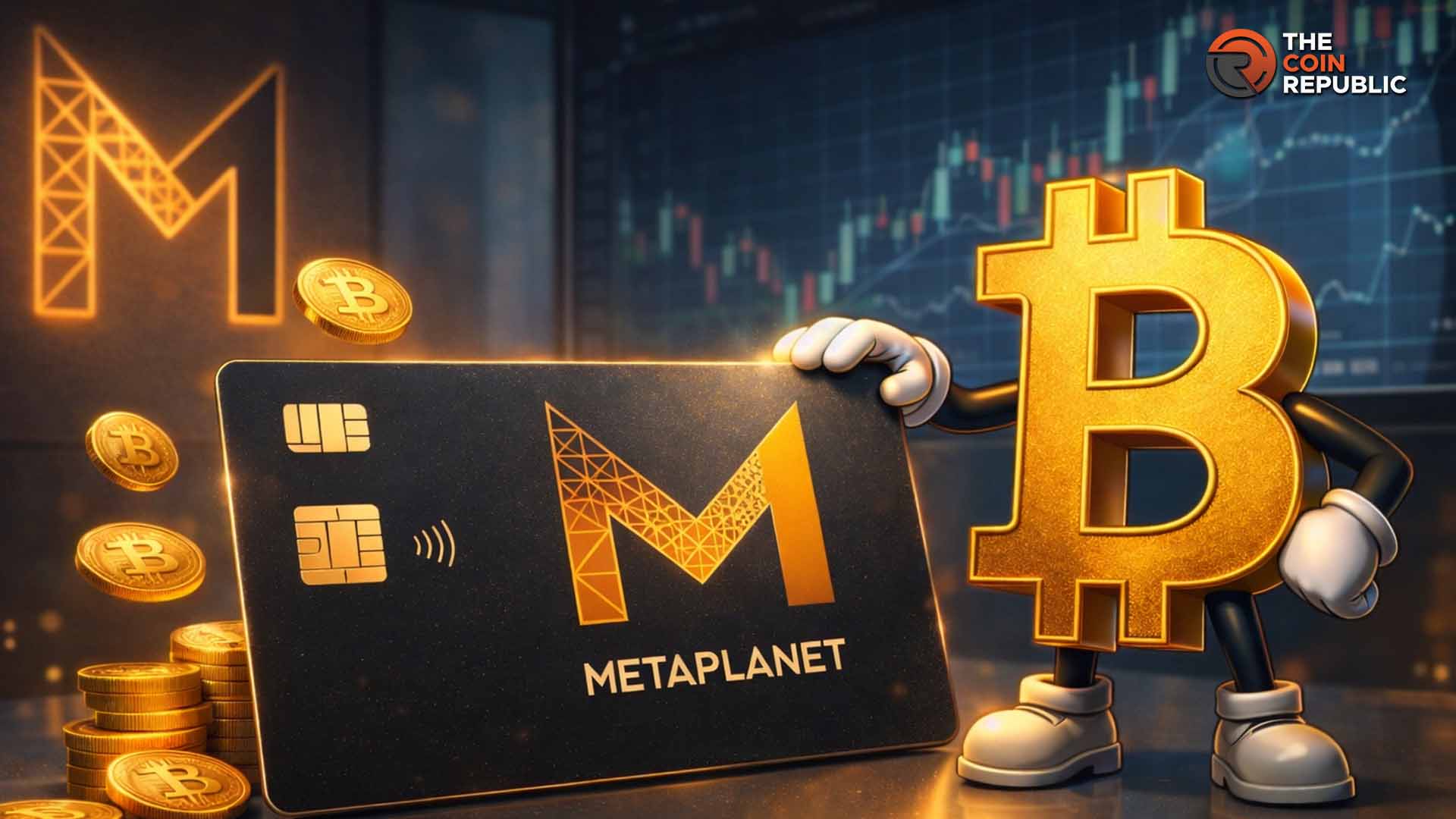
Metaplanet's launch of a Bitcoin rewards card for shareholders signals a strategic move to integrate BTC into everyday spending, potentially driving adoption and rewarding loyal investors. The positive market reaction to Metaplanet's crypto payment initiative, evidenced by stock price uptrends, suggests investor confidence in the company's strategy to leverage Bitcoin for growth. Metaplanet's continued aggressive Bitcoin accumulation, supported by recent funding rounds, positions it as a significant public holder and aligns with broader institutional interest in BTC treasuries. The exclusive offering of the Bitcoin card to shareholders creates a unique incentive structure, potentially attracting new investors interested in tangible Bitcoin-earning benefits tied to stock ownership.
Franklin Templeton's partnership with Ondo Finance to launch tokenized ETFs signifies a major TradFi institution actively integrating with blockchain technology, potentially driving significant capital into the RWA sector. The collaboration aims to enhance accessibility, liquidity, and settlement efficiency for ETFs, demonstrating a clear pathway for traditional financial products to leverage decentralized finance infrastructure. While the pilot is launching in select regions, the pending US regulatory approval highlights the ongoing challenges and opportunities in bridging traditional finance with the crypto ecosystem. The ONDO token's price action, despite a reported 4.17% gain, faces scrutiny regarding its direct correlation to the partnership's success, underscoring the speculative nature of RWA-related tokens.

Analysts suggest Circle's recent share selloff is overdone, as regulatory concerns regarding stablecoin yield prohibitions are unlikely to impact its core revenue model derived from U.S. Treasury investments. Cathie Wood's Ark Invest buying Circle shares on the dip indicates institutional conviction despite short-term regulatory headwinds, potentially signaling a bottom for the stock. Despite potential yield restrictions on platforms, the strategic demand for USDC remains intact, suggesting Circle's market position as a compliant stablecoin alternative is secure. Bernstein reiterates an 'Outperform' rating on Circle and Coinbase, highlighting that yield bans primarily affect distributors, not issuers like Circle, and that Coinbase may adapt to new reward models.
The appointment of key crypto figures like David Sacks and Fred Ehrsam to President Trump's Council of Advisors on Science and Technology signifies a major shift, moving digital assets from the periphery to the core of US tech policy discussions. This inclusion suggests a potential for more favorable regulatory clarity and a reduced adversarial stance from policymakers, which could foster greater innovation and institutional adoption within the crypto space. The convergence of political influence, regulatory openness, and increasing institutional capital, as evidenced by bank exposures to major cryptocurrencies, indicates a maturing crypto market poised for deeper integration into the global financial system.
Coinbase's reported rejection of the latest stablecoin yield compromise signals continued legislative hurdles for U.S. crypto market structure reform. The exchange's stance, despite being described as less severe than previous opposition, indicates that significant disagreements persist, potentially delaying regulatory clarity for stablecoins and related yield products. This development introduces uncertainty for market participants anticipating a finalized stablecoin framework, impacting sentiment around stablecoin issuers and platforms that rely on yield generation.

Crypto prediction markets, while capable of aggregating information, risk incentivizing manipulation and amplifying misinformation by financializing real-world instability. The global reach and low-friction settlement of crypto-based prediction markets create significant social risks, potentially distorting behavior around underlying events rather than merely forecasting them. Bad actors can exploit crypto prediction markets not only through privileged information but also by influencing the information environment, turning market odds into viral narratives that reshape probabilities. Treating all liquid crypto markets as legitimate due to price discovery is a mistake; building rails for speculating on instability is not financial innovation but moral hazard at internet scale.

TRM Labs' integration of AI agents into its forensic tools aims to significantly enhance law enforcement's ability to track illicit crypto activity by simplifying complex blockchain analysis through natural language queries. The introduction of AI assistants addresses the growing challenge of increasing caseloads and the complexity of cross-chain investigations, potentially improving efficiency for regulatory and investigative bodies. With illicit crypto volume reaching $158 billion and AI-enabled fraud surging 500%, this development highlights the escalating arms race between criminals leveraging AI and the tools being developed to counter them.
CoinShares' filing for Bitcoin volatility ETFs introduces novel derivative products, potentially offering new hedging and speculative strategies for traders beyond direct BTC exposure. The introduction of leveraged and inverse volatility ETFs could increase market activity and provide tools for managing risk associated with Bitcoin's price swings. This move by CoinShares, following their acquisition of Valkyrie, signals a strategic expansion into U.S. ETF offerings, leveraging existing infrastructure for new product launches. The potential early June launch date for these ETFs, tracking the CME CF Bitcoin Volatility Index (BVX), presents a near-term catalyst for market participants interested in volatility-based trading.

Franklin Templeton's partnership with Ondo Finance to tokenize ETFs signifies a growing trend of traditional finance integrating with blockchain technology, potentially increasing on-chain asset diversity. The offering of 24/7 trading for tokenized ETFs via Ondo's platform, though restricted to non-U.S. users, highlights a move towards broader accessibility for traditional investment products within digital asset ecosystems. This development, alongside similar initiatives from NYSE and Nasdaq, suggests a maturing market for tokenized securities, potentially driving institutional adoption and creating new avenues for capital flow into crypto-related infrastructure.

US lawmakers are broadly agreeing that tokenized securities require the same regulatory oversight as traditional securities, signaling a move towards clearer policy frameworks. The hearing highlighted a consensus on the inevitability of tokenization, despite concerns raised about anonymous wallets and DeFi oversight, suggesting a proactive regulatory approach is likely. Significant industry players like BlackRock and Franklin Templeton are actively building tokenization platforms, indicating strong institutional conviction in this market segment. Concerns regarding potential conflicts of interest due to political figures' family ties to the crypto industry could introduce delays or complexities in the legislative process for tokenized securities.
A significant influx of over 350 billion SHIB tokens to exchanges indicates increased selling pressure, suggesting potential downside risk for the token's price in the short term. The sharp 6.23% spike in exchange netflow, following a recent price rally, highlights the typical behavior of meme coin holders locking in profits, which can lead to rapid reversals. Traders should monitor SHIB's price action closely as the substantial exchange inflow suggests that recent upward momentum may be unsustainable and could lead to a price correction.

The appointment of prominent tech and crypto leaders, including Coinbase co-founder Fred Ehrsam, to a US presidential advisory council signals potential future policy influence on digital assets. While the council's formation is a positive signal for crypto's integration into mainstream policy discussions, the lack of progress on market structure legislation in the US Senate indicates continued regulatory uncertainty. The inclusion of figures like Fred Ehrsam suggests a growing recognition of the crypto industry's importance by political bodies, potentially leading to more informed regulatory approaches.

The increasing partnerships between traditional asset managers like Franklin Templeton and crypto firms such as Ondo Finance signal a significant acceleration in the tokenization of real-world assets, potentially unlocking substantial new capital flows into the digital asset space. Bitpanda's development of a MiCA-compliant Ethereum L2 solution, Vision Chain, indicates a strategic move to capture institutional demand for regulated tokenized asset trading in Europe, highlighting the growing importance of regulatory clarity for market infrastructure. The projected $13.5 trillion market for tokenized assets by 2030 underscores a major competitive landscape shift, where control over trading and access platforms will be as crucial as the assets themselves. Startale Group's substantial $63 million funding round, backed by major players like SBI Group and Sony Innovation Fund, demonstrates continued investor confidence in the underlying infrastructure required for the expansion of tokenized finance.

The post Best Crypto to Invest in as Bitcoin Bounces 5% to $71,000 on Iran Pause and Pepeto Presale Keeps Growing appeared first on Coinpedia Fintech News Bitcoin jumped above $71,000 after Trump postponed strikes on Iran, and the entire crypto market followed with a relief rally that pushed altcoins up 5% across the board. When the market sells off on fear and bounces the moment tension eases, that tells you demand never left. The best crypto to invest in right now …
Signal context only. Validate with price action, liquidity, and risk limits before taking a position.
