
Navigating Crypto News

CoinFeather
Navigating Crypto News

Quick market read from this story
The recent two-block reorg on Bitcoin highlights how increased miner concentration, particularly with Foundry holding ~31% of hash rate, elevates the risk associated with the traditional six-confirmation rule.
The six-confirmation heuristic, rooted in a 2008 model assuming 10% attacker hashpower, now faces a reversal risk near 18.9% under current concentration levels, suggesting a potential need for revised finality standards for high-value transactions.
While exchanges like Coinbase and Kraken use lower confirmation thresholds (2-3), the gap between these operational standards and the cultural six-confirmation norm underscores that the latter is more a convention than a strict security guarantee.
The event serves as a catalyst for reassessing Bitcoin's finality mechanisms, potentially leading exchanges and merchants to adopt dynamic confirmation requirements based on real-time hash rate distribution and transaction value.
Source, catalyst, and sector overlap from the latest feed.
BlackRock's Bitcoin ETF (IBIT) has surpassed $100 billion in AUM, achieving this milestone five times faster than any previous ETF, indicating strong institutional and retail demand for regulated Bitcoin exposure. The firm's crypto ETF complex, including IBIT and ETHA, has generated approximately $241.4 million in cumulative fees, positioning BlackRock to potentially reach $500 million in annual revenue from these products if assets under management reach $200 billion. While BlackRock's crypto ETF revenue is growing rapidly, it currently represents a small fraction of the firm's overall revenue, suggesting that while significant for the crypto sector, it does not yet shift BlackRock's financial center of gravity. The projected timeline for BlackRock's crypto ETFs to reach $500 million in cumulative fees is mid-2027 under base-case scenarios, with potential acceleration to early 2027 if assets grow by 40-50%, highlighting a medium-term growth trajectory for crypto-related TradFi products.
Live Feed
Loading the broader stream in the same flow as the homepage feed.

The UK government's immediate ban on cryptocurrency political donations, driven by concerns over foreign interference and democratic transparency, signals a heightened regulatory scrutiny on digital assets in political financing. This regulatory action, stemming from the Rycroft review and now being codified in Parliament, introduces a significant compliance hurdle for political parties and could set a precedent for future digital asset regulations in the UK. While framed as a moratorium, the inclusion of the ban in the Representation of the People Bill suggests a strong likelihood of a permanent policy shift, impacting the flow of funds into political campaigns and potentially influencing broader crypto adoption narratives.
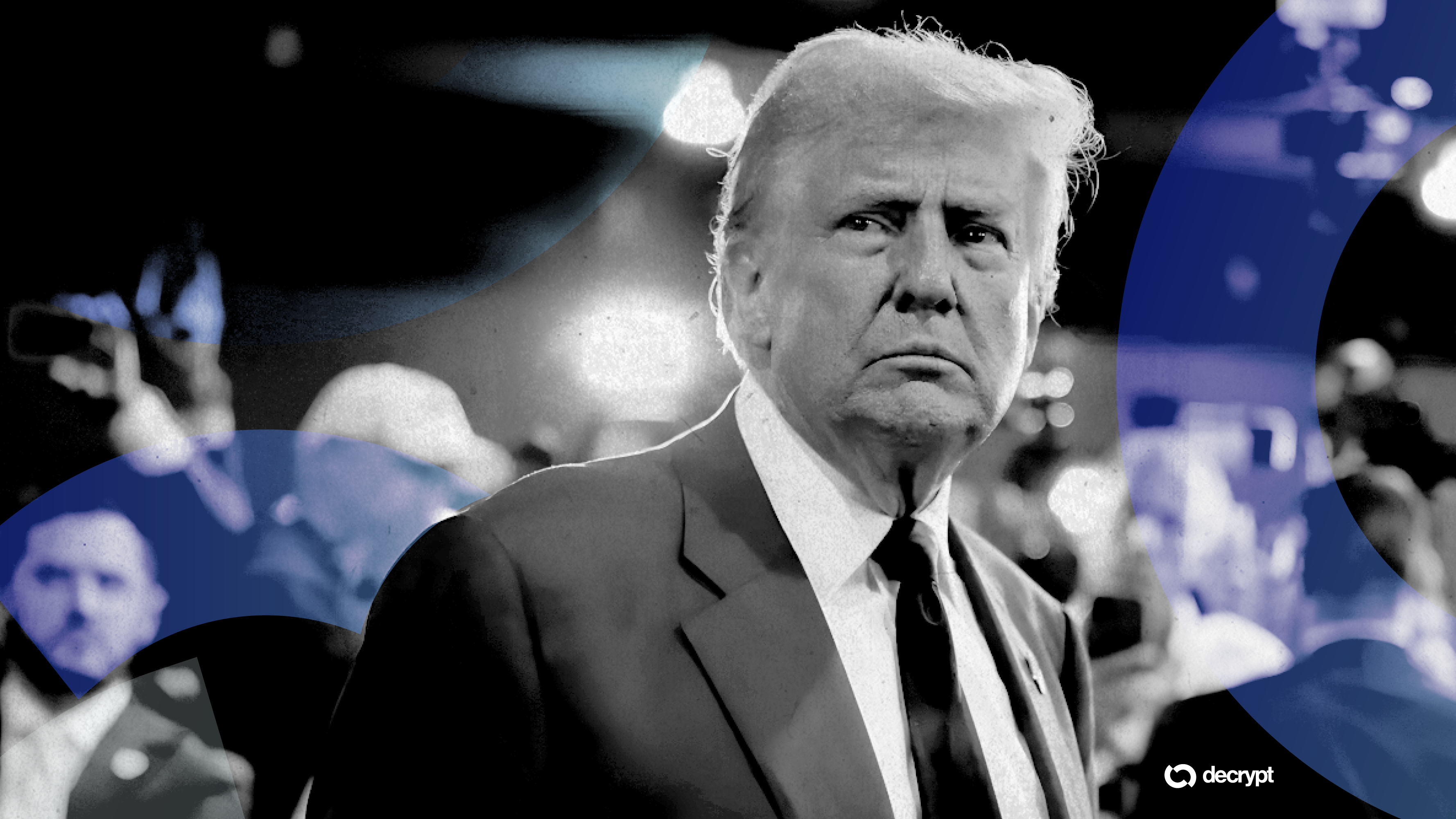
The appointment of tech leaders like Meta's Zuckerberg and Nvidia's Huang to a White House council signals potential future policy directions impacting the AI sector. Inclusion of Coinbase's Fred Ehrsam and VC Marc Andreessen on the PCAST council suggests a White House willingness to engage with the broader technology landscape, including crypto, though direct policy impact is not yet defined. The council's focus on emerging technologies and their impact on the workforce indicates a strategic interest from the administration in understanding and potentially shaping the future of technology development and adoption.

The launch of M1X Global with $3 million in angel funding, backed by crypto executives, signals growing institutional interest in tokenized sovereign debt and UBI programs. Despite IMF warnings about risks and infrastructure limitations, the Marshall Islands is proceeding with its USDM1 digital sovereign bond, aiming for institutional market expansion and collateral use. The involvement of former Coinbase CTO Balaji Srinivasan and Cumberland Labs CEO Tama Churchouse in M1X Global's funding round lends credibility to the project and highlights potential for broader adoption of digital sovereign instruments.

A UK review recommends a temporary moratorium on crypto political donations, citing risks of foreign interference and incomplete regulation. The proposed pause aims to implement stronger safeguards and statutory guidance, suggesting a potential future framework for regulated crypto donations. This development highlights ongoing regulatory scrutiny of crypto assets in political finance, potentially impacting sentiment around transparency and compliance.

Despite a significant drop in miner selling pressure, Bitcoin's price continues to decline, indicating that the primary driver of the downturn is a lack of demand rather than supply-side issues. The current market weakness suggests that broader macroeconomic factors and a general demand vacuum are overshadowing the reduced supply from miners, who are increasingly operating at or below cost post-halving. With technical analysis pointing to further downside and market sentiment leaning towards continued price drops, buyers need to emerge with substantial capital to reverse the trend, as current demand is insufficient to absorb even reduced supply.

STS Digital's launch of a structured products platform, with Kraken as a distribution partner, signals a growing trend of institutionalizing complex derivatives strategies within crypto. The integration of STS Digital's platform into Kraken's Dual Investment product indicates a move towards offering more sophisticated yield-generating and risk-management tools beyond basic staking or lending. This development, coupled with recent funding and similar product launches from other firms, suggests an increasing institutional demand for regulated and packaged crypto investment solutions.
Ethereum's MVRV ratio dropping below 0.8 at the $1,800 ascending triangle support, combined with a weekly SuperTrend indicator flip to bullish, suggests a potential trend shift from bearish to bullish conditions. An all-time high staking rate of 31% and multi-year lows in circulating ETH on Binance indicate a significant tightening of liquid supply, which could amplify price movements if demand increases. Despite positive technical and supply-side signals, persistent negative ETF flows and Coinbase Premium suggest institutional demand has not yet confirmed the bullish setup, creating a potential divergence. While technical indicators and supply dynamics present a compelling case for a potential Ethereum recovery, the proximity to realized price resistance and lack of confirmed institutional demand temper immediate upside expectations.

The NYSE's partnership with Securitize to build a system for trading tokenized securities signals a significant integration of traditional finance with blockchain technology. This collaboration aims to establish regulatory and technical standards for institutional tokenized markets, potentially paving the way for broader adoption and increased liquidity in RWA tokenization. While tokenized equities are gaining traction, the NYSE's focus on 'native tokenization' with Securitize suggests a move beyond derivatives or price trackers, addressing criticisms of current offerings. The NYSE's initiative, alongside Nasdaq's similar efforts, indicates a growing institutional race to develop infrastructure for tokenized assets, potentially impacting market access and trading paradigms.

SIREN coin experienced a significant 116% surge in 24 hours, recovering from a sharp decline attributed to potential price manipulation, indicating high volatility and speculative interest within the memecoin sector. Despite the price surge, declining trading volume and open interest, coupled with negative funding rates, suggest a lack of sustained conviction from leveraged traders and potential for a bearish reversal, despite short-term bullish technical indicators. The current price action for SIREN coin is at a critical juncture, needing a strong close above $2.37 resistance to maintain upward momentum, while a failure to do so could lead to a significant drop towards $1.00.

Aave (AAVE), up 5.8% from Tuesday, joined Stellar (XLM) as a top performer.

Bitcoin's recent outperformance of gold during the Iran conflict is challenged by its continued correlation with risk assets, suggesting its safe haven narrative remains unproven due to sensitivity to global liquidity conditions. The article posits that Bitcoin's price is primarily driven by global liquidity rather than geopolitical events, indicating that tighter financial conditions, such as higher real yields, suppress its price despite inflation concerns. While on-chain data shows accumulation, Bitcoin's short-term behavior as a risk asset, reacting negatively to inflation-driven policy tightening, complicates its role as a direct inflation hedge.

SUI is experiencing a significant surge in user activity, with new user sign-ups approaching 800K, indicating strong network interest that has yet to be reflected in its price action. Despite user growth, SUI's price is consolidating within a critical demand zone ($0.80-$1.00), suggesting a divergence between on-chain fundamentals and market valuation that warrants close observation. The sustainability of SUI's user growth is questionable due to a gap between new and active user retention, implying that a breakout above resistance levels like $1.50 is needed to confirm a trend reversal. The current SUI price action presents a 'wait-and-watch' scenario, as momentum indicators show weakening downside pressure but lack a confirmed bullish trend change, making the $0.80 support level crucial for potential recovery.

A significant influx of over 350 billion SHIB tokens into exchanges indicates increased selling pressure from holders, suggesting a bearish short-term outlook for the asset. Despite the bearish exchange netflow, the growing number of SHIB holders to over 1.55 million suggests underlying community growth, which could provide support if selling pressure subsides. The recent surge in SHIB exchange netflow, coupled with a mild price drawdown, points to potential near-term downside risk as traders liquidate positions.
Ripple's participation in Singapore's MAS BLOOM Initiative, leveraging the XRP Ledger and RLUSD for trade finance, signals a strategic push into tokenized real-world assets and programmable settlements. The pilot use case with Unloq aims to automate cross-border trade payments, directly increasing the utility of XRPL and the RLUSD stablecoin within a regulated sandbox environment. This development, following Ripple's recent expansion of its stablecoin infrastructure and acquisition of an Australian license, highlights its growing focus on institutional adoption and regulatory compliance in the APAC region. The integration of RLUSD into trade finance workflows, coupled with its recent listing on Coinone, suggests a broader strategy to establish the stablecoin as a key settlement asset in various financial applications.
Signal context only. Validate with price action, liquidity, and risk limits before taking a position.
No explicit catalyst tagged.
US regulators, particularly the CFTC and SEC, are establishing a more permanent regulatory infrastructure for crypto through MOUs, task forces, and interpretive guidance, signaling a shift from enforcement-only to structured oversight. The creation of dedicated task forces and interagency agreements indicates a proactive regulatory approach, aiming to clarify jurisdictional boundaries and streamline pathways for new crypto products, potentially reducing future regulatory uncertainty. While Congress remains deadlocked on comprehensive legislation, agency actions are building a de facto operating system for crypto regulation, creating a more durable framework that is harder to dismantle than individual guidance documents. The focus on prediction markets highlights the growing mainstream integration of crypto, prompting regulatory bodies to assert jurisdiction and coordinate with entities like MLB to ensure market integrity, reflecting broader concerns about the asset class's reach.
