
Navigating Crypto News

CoinFeather
Navigating Crypto News

Quick market read from this story
The NYSE's partnership with Securitize to build a system for trading tokenized securities signals a significant integration of traditional finance with blockchain technology.
This collaboration aims to establish regulatory and technical standards for institutional tokenized markets, potentially paving the way for broader adoption and increased liquidity in RWA tokenization.
While tokenized equities are gaining traction, the NYSE's focus on 'native tokenization' with Securitize suggests a move beyond derivatives or price trackers, addressing criticisms of current offerings.
The NYSE's initiative, alongside Nasdaq's similar efforts, indicates a growing institutional race to develop infrastructure for tokenized assets, potentially impacting market access and trading paradigms.
Deep Dive
The New York Stock Exchange (NYSE) has announced a significant partnership with blockchain firm Securitize to develop a system for trading tokenized securities. Securitize will serve as the inaugural digital transfer agent on the proposed platform, marking a crucial step in integrating tokenization into traditional financial infrastructure.
The collaboration aims to establish comprehensive industry standards for digital transfer agents and tokenization service providers. This initiative will focus on setting regulatory, operational, and technical benchmarks necessary to support institutional-grade infrastructure for tokenized markets. NYSE President Lynn Martin emphasized the NYSE's commitment to responsible innovation, stating that new systems should not compromise market integrity. She highlighted Securitize's extensive experience in digital asset infrastructure as vital for designing next-generation market systems.
This partnership emerges as tokenized equities gain global traction. While various crypto platforms have introduced tokenized versions of U.S. stocks and ETFs to international investors, these products have faced scrutiny. Analysts note that current offerings often vary in their connection to underlying share values and may not confer the same ownership rights as traditional equities. Securitize CEO Carlos Domingo clarified that many existing efforts are creating derivatives or price trackers rather than truly tokenizing the equity itself. The NYSE's alliance with Securitize aims for genuine native tokenization by working directly with issuers.
The move aligns with the broader trend of traditional financial institutions embracing blockchain technology. Intercontinental Exchange, the parent company of the NYSE, has previously signaled its intention to expand into blockchain-based trading. Notably, the NYSE launched 24×7 trading for its tokenized stocks in January 2026. This evolution, as described by former NYSE COO Michael Blaugrund, represents a shift from trading floors to electronic order books and now to blockchain. Blaugrund also pointed out that tokenization can enhance market access for retail investors, particularly those using stablecoin funding. The competitive landscape is also heating up, with Nasdaq securing licenses for tokenized securities trading and collaborating with Talos to develop tools for managing tokenized collateral, addressing integration challenges with existing risk management systems.
Source, catalyst, and sector overlap from the latest feed.
Key Insights: Circle stock price posted its worst day since its IPO after a leaked CLARITY Act draft moved to kill passive stablecoin yield. But the chart says the real damage may just be starting, and it could send the CRCL price towards the $50 zone. CLARITY Act Draft Bans Passive Stablecoin Yield Circle’s stock, […] The post $50 Next? CLARITY Act Ban Puts Circle Stock Price in Freefall Territory appeared first on The Coin Republic.
Circle is advocating for regulatory adjustments in the EU's Market Integration Package, arguing that current rules hinder stablecoin adoption and institutional access, particularly for its euro-backed stablecoin EURC. The company's feedback highlights how restrictive thresholds and fragmented implementation of regulations like MiCA create operational friction and limit liquidity, impacting the growth potential of stablecoins within European markets. Circle's proposals aim to foster broader participation by suggesting more flexible criteria and supervisory assessments, which could lead to increased integration of stablecoins into traditional finance and settlement systems.
The Ethereum Foundation's updated L1/L2 classification clarifies L1's role as the core settlement and DeFi hub, while L2s are now positioned for specialized services and customized features, signaling a maturation of the ecosystem's architecture. The announcement of the public post-quantum resource website and the ongoing discussion around EIP-8141 highlight Ethereum's proactive approach to long-term security, particularly against quantum computing threats, which could impact future network upgrades and asset security. The potential inclusion of EIP-8141 in the Hegota upgrade, aimed at migrating execution layer signatures to quantum-resistant methods, is a critical step for Ethereum's post-quantum readiness, addressing a key vulnerability for user transactions.
U.S. spot Bitcoin ETFs resumed net inflows of $167 million, breaking a three-day outflow streak, signaling renewed investor interest after a period of caution. The rebound in ETF inflows coincided with a Bitcoin price recovery above $71,000, suggesting that positive geopolitical commentary may be easing risk-off sentiment in the short term. While Bitcoin ETFs show strength, Ethereum ETFs experienced net withdrawals, highlighting a divergence in institutional demand between the two largest cryptocurrencies. Analyst commentary suggests Bitcoin's higher lows are a positive technical signal, but caution remains regarding liquidity triggers, with potential upside targets around $77-80K if current levels hold.
Cardano's ADA price is showing potential turnaround signals as most wallets are deep in loss (approx. 43%), indicating a possible buy zone based on MVRV data. Elevated short positions on Binance suggest a contrarian bullish setup, as extreme bearish sentiment has historically preceded ADA price reversals. Cardano's unique transaction predictability, reducing failed trades and front-running risks, offers a structural advantage for reliability-focused applications, though this is not yet reflected in ADA's price. Historical price action shows ADA has experienced significant rebounds (85%-200%) from similar price levels, suggesting potential for a swift recovery if selling pressure subsides.
Franklin Templeton's partnership with Ondo to tokenize traditional assets signifies a major institutional embrace of RWA on-chain, potentially unlocking significant capital flows. The collaboration aims to provide 24/7 access to U.S. markets via tokenized securities, addressing investor demand for greater liquidity and accessibility beyond traditional trading hours. This move by a $1.7 trillion asset manager highlights the growing trend of TradFi integration with crypto infrastructure, challenging traditional gatekeepers like banks and brokers. While regulatory clarity remains a hurdle for cross-border tokenized securities, this partnership signals a strong market push towards bridging traditional and digital asset ecosystems.
Cipher Digital's strategic pivot from Bitcoin mining to AI-focused data centers is gaining traction, evidenced by a significant 15-year lease agreement and a substantial $200 million credit facility, signaling a fundamental business model shift. The company's stock performance, rising over 8%, suggests positive market reception to its diversification strategy, which leverages its existing infrastructure expertise for high-performance computing workloads. This move by Cipher Digital, alongside other mining firms, highlights a broader industry trend of adapting to the burgeoning AI sector, potentially creating new revenue streams and reducing reliance on volatile cryptocurrency markets.
Dogecoin is showing signs of a rebound, breaking a five-month bearish streak and outperforming Bitcoin, driven by anticipation of network utility upgrades and historical patterns suggesting the worst may be over. The upcoming Qubic integration on April 1st presents a potential catalyst for Dogecoin, with a successful breakout above $0.098 potentially leading to a retest of the $0.10 zone. Strategic accumulation by traders, such as the recent large purchase on Kraken during a dip, indicates bullish sentiment and a potential for further price appreciation if positive momentum is sustained. Despite positive short-term signals and a high short ratio favoring long positions, Dogecoin's price action remains sensitive to trading volume and the ability to sustain levels above $0.098, with a retreat to $0.093-$0.097 possible if momentum falters.
The launch of M1X Global with $3 million in angel funding, backed by crypto executives, signals growing institutional interest in tokenized sovereign debt and UBI programs. Despite IMF warnings about risks and infrastructure limitations, the Marshall Islands is proceeding with its USDM1 digital sovereign bond, aiming for institutional market expansion and collateral use. The involvement of former Coinbase CTO Balaji Srinivasan and Cumberland Labs CEO Tama Churchouse in M1X Global's funding round lends credibility to the project and highlights potential for broader adoption of digital sovereign instruments.
STS Digital's launch of a structured products platform, with Kraken as a distribution partner, signals a growing trend of institutionalizing complex derivatives strategies within crypto. The integration of STS Digital's platform into Kraken's Dual Investment product indicates a move towards offering more sophisticated yield-generating and risk-management tools beyond basic staking or lending. This development, coupled with recent funding and similar product launches from other firms, suggests an increasing institutional demand for regulated and packaged crypto investment solutions.
Binance is delisting 10 spot trading pairs, citing poor liquidity and trading volume as reasons, which may lead to reduced trading opportunities for affected assets. The delisting of multiple trading pairs against BTC and ETH suggests a strategic shift by Binance to streamline offerings and focus on higher-volume assets. Concurrently, Binance Futures is launching new equity perpetual contracts for META, NVDA, and GOOGL, indicating an expansion of derivative offerings and a focus on traditional market-linked assets. Binance is also upgrading its Stop Orders to Conditional Orders on USD Margined Futures, a technical enhancement aimed at improving system performance and user experience for derivative traders.
The ECB's defined timeline for digital euro standards by summer 2026 and a pilot in late 2027 signals a significant regulatory push, potentially impacting traditional payment providers and laying groundwork for future CBDC integration. Australia's projection of $16.7 billion in annual efficiency gains from tokenization highlights a growing global trend towards blockchain adoption in financial markets, suggesting increased institutional interest in RWA and stablecoin infrastructure. The ECB's strategy to position central bank money as the settlement anchor for tokenized assets and stablecoins indicates a move to maintain monetary sovereignty, which could influence the development and adoption of private digital currencies.
Bitpanda's launch of Vision Chain, an Ethereum L2 focused on tokenized assets for European banks, signals a strategic move to capture institutional demand under MiCA and MiFID II compliance. The platform leverages Optimism's OP Stack with integrated custody and compliance, aiming to simplify on-chain asset issuance for regulated financial entities and potentially drive adoption of RWAs. By positioning Vision Chain as an institutional-grade solution, Bitpanda enters a competitive landscape with established players like Nasdaq and NYSE, highlighting the growing institutional interest in asset tokenization. The projected growth of the asset tokenization market to $13.55 trillion by 2030 underscores the significant potential for L2 solutions like Vision Chain to facilitate the migration of traditional assets onto the blockchain.
Live Feed
Loading the broader stream in the same flow as the homepage feed.

The UK's immediate moratorium on cryptocurrency donations to political parties signals a growing regulatory caution towards the digital asset space, potentially impacting sentiment for projects seeking political advocacy. While the ban is framed as a temporary measure pending regulatory clarity, the 30-day window for returning existing donations and the threat of criminal penalties create near-term compliance risks for parties and donors. The development, driven by concerns over foreign interference, highlights the intersection of geopolitical risk and crypto adoption, suggesting that regulatory scrutiny will likely increase globally.
PEPE has broken above a descending trendline and successfully retested the breakout zone, indicating strengthening short-term momentum and a potential for further upside. Technical indicators suggest a shift from bearish momentum towards a bullish crossover, with RSI showing increasing buying pressure, supporting the potential for a short-term rally. Analysts suggest a potential 10-20% short-term move for PEPE if current momentum continues, with key resistance levels identified at $0.00000433 and $0.00000574.

Despite a 20% drop in trading volume, Shiba Inu's price has seen a modest increase, suggesting potential underlying demand or reduced selling pressure despite lower short-term interest. A significant whale accumulation of 120 billion SHIB, coupled with steady holder growth, indicates accumulating confidence from larger players and an expanding retail base, potentially signaling a bottoming formation. While a liquidity crunch is mentioned as a concern due to decreased exchange reserves, the net effect of token withdrawals and whale accumulation points towards a bullish sentiment for SHIB in the near term.
SEC Chair Paul Atkins says the sky is the limit for crypto, stating that digital assets are poised to evolve along a similar trajectory to the internet.

BitMine's significant ETH purchase of $145 million, adding 67,111 ETH to its treasury, signals continued conviction in Ethereum's long-term value despite current market volatility. The acquisition brings BitMine closer to holding 4% of Ethereum's total supply, a substantial concentration that could influence market dynamics if the company decides to alter its holdings. While the purchase itself is a bullish signal for ETH demand from a major holder, the timing amidst weak market momentum suggests a strategy of accumulating at perceived lower prices, rather than reacting to immediate price action.

The UK government's immediate ban on cryptocurrency political donations, driven by concerns over foreign interference and democratic transparency, signals a heightened regulatory scrutiny on digital assets in political financing. This regulatory action, stemming from the Rycroft review and now being codified in Parliament, introduces a significant compliance hurdle for political parties and could set a precedent for future digital asset regulations in the UK. While framed as a moratorium, the inclusion of the ban in the Representation of the People Bill suggests a strong likelihood of a permanent policy shift, impacting the flow of funds into political campaigns and potentially influencing broader crypto adoption narratives.
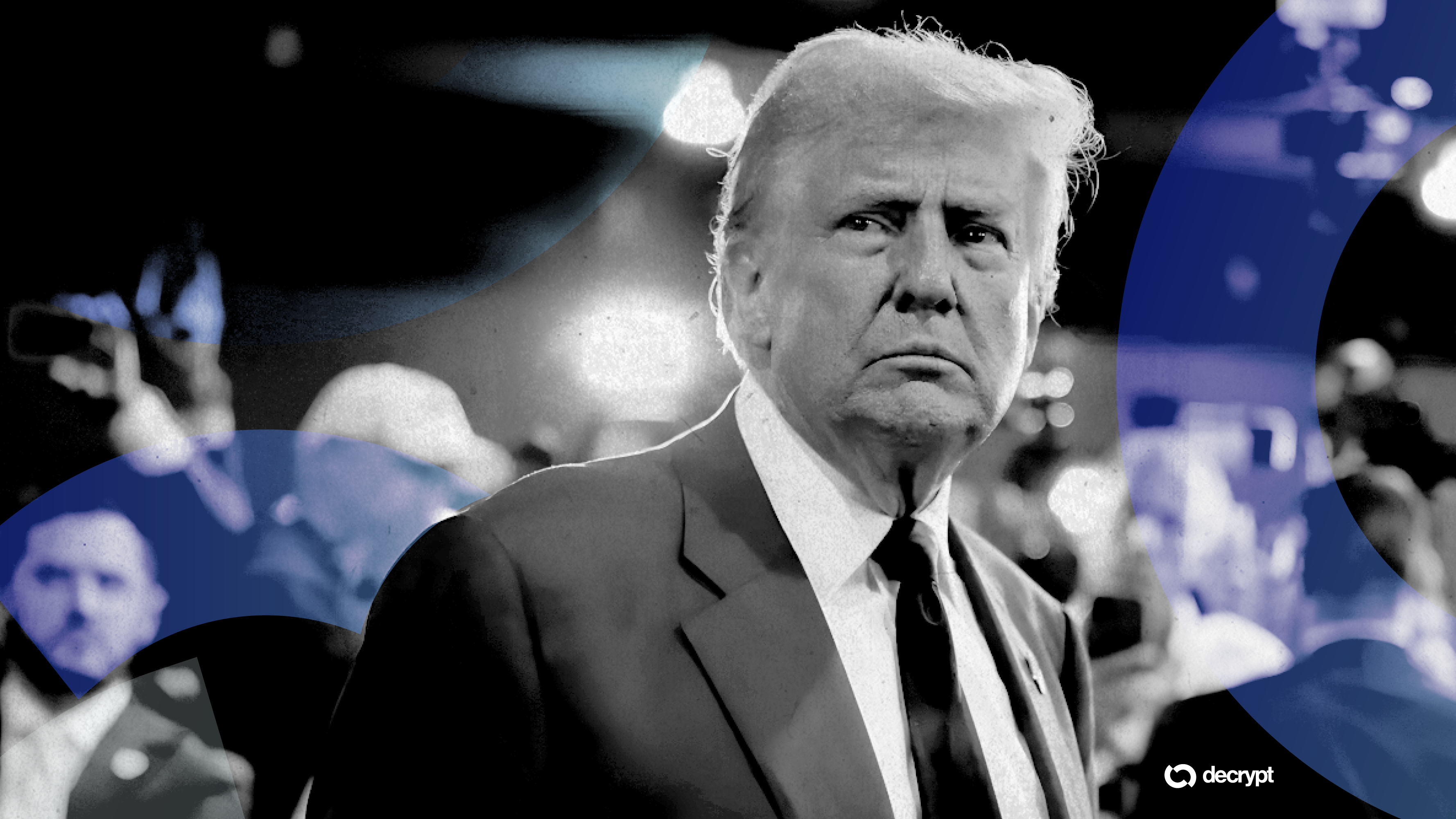
The appointment of tech leaders like Meta's Zuckerberg and Nvidia's Huang to a White House council signals potential future policy directions impacting the AI sector. Inclusion of Coinbase's Fred Ehrsam and VC Marc Andreessen on the PCAST council suggests a White House willingness to engage with the broader technology landscape, including crypto, though direct policy impact is not yet defined. The council's focus on emerging technologies and their impact on the workforce indicates a strategic interest from the administration in understanding and potentially shaping the future of technology development and adoption.
Stellar (XLM) has completed a double golden cross on its short-term hourly and two-hour charts, indicating a potential shift in momentum from bearish to bullish after a recent price drop. The price surge of nearly 9% to $0.178, surpassing the 50-day moving average, suggests renewed buying interest and could signal further upside if resistance at $0.181 is broken. Stellar's growing market cap in the RWA sector, competing with Solana, highlights its increasing relevance in tokenized asset markets, despite its smaller overall market cap.

BlackRock's Bitcoin ETF (IBIT) has surpassed $100 billion in AUM, achieving this milestone five times faster than any previous ETF, indicating strong institutional and retail demand for regulated Bitcoin exposure. The firm's crypto ETF complex, including IBIT and ETHA, has generated approximately $241.4 million in cumulative fees, positioning BlackRock to potentially reach $500 million in annual revenue from these products if assets under management reach $200 billion. While BlackRock's crypto ETF revenue is growing rapidly, it currently represents a small fraction of the firm's overall revenue, suggesting that while significant for the crypto sector, it does not yet shift BlackRock's financial center of gravity. The projected timeline for BlackRock's crypto ETFs to reach $500 million in cumulative fees is mid-2027 under base-case scenarios, with potential acceleration to early 2027 if assets grow by 40-50%, highlighting a medium-term growth trajectory for crypto-related TradFi products.
A significant 233% surge in XRP spot flows within an hour indicates potential whale activity, shifting short-term market sentiment from bearish to bullish. While increased spot flows suggest capital entering the market, the ultimate interpretation hinges on price action; accumulation would signal accumulation, whereas absorption without price appreciation implies distribution. XRP faces conflicting signals with a broader bearish trend on its price chart against a developing short-term ascending structure, making the current resistance test critical for directional confirmation. Traders should view the spot flow spike as a signal of increased probability for a move, but await price confirmation before making directional bets, as structural weakness persists without it.
Bittensor's supply-based halving mechanism, which reduces TAO issuance by 50% upon reaching specific supply thresholds, introduces scarcity akin to Bitcoin but with dynamic, AI-driven triggers. The completed first halving on December 14, 2025, cut daily TAO issuance in half, signaling a shift towards reduced inflation and potentially supporting long-term value if demand persists. Bittensor's unique dual halving system, affecting both the base TAO token and subnet-specific Alpha tokens, adds complexity and flexibility to its AI-centric economy. While inspired by Bitcoin's scarcity model, Bittensor's supply-based, dynamic halving and AI-driven incentive structure differentiate it significantly, impacting how participants are rewarded.

MicroStrategy's hiring of a Bitcoin Security Director signals a long-term commitment to safeguarding its substantial BTC holdings and establishing institutional custody standards. The role's focus on direct engagement with Bitcoin Core developers indicates MicroStrategy's intent to influence and contribute to the underlying Bitcoin protocol's security infrastructure. This strategic move positions MicroStrategy beyond a mere BTC holder, transforming it into a significant player in the cryptocurrency's security and development ecosystem.
Signal context only. Validate with price action, liquidity, and risk limits before taking a position.
