
Navigating Crypto News

CoinFeather
Navigating Crypto News

Quick market read from this story
BlackRock's Bitcoin ETF (IBIT) has surpassed $100 billion in AUM, achieving this milestone five times faster than any previous ETF, indicating strong institutional and retail demand for regulated Bitcoin exposure.
The firm's crypto ETF complex, including IBIT and ETHA, has generated approximately $241.4 million in cumulative fees, positioning BlackRock to potentially reach $500 million in annual revenue from these products if assets under management reach $200 billion.
While BlackRock's crypto ETF revenue is growing rapidly, it currently represents a small fraction of the firm's overall revenue, suggesting that while significant for the crypto sector, it does not yet shift BlackRock's financial center of gravity.
The projected timeline for BlackRock's crypto ETFs to reach $500 million in cumulative fees is mid-2027 under base-case scenarios, with potential acceleration to early 2027 if assets grow by 40-50%, highlighting a medium-term growth trajectory for crypto-related TradFi products.
Deep Dive
BlackRock CEO Larry Fink has projected that digital assets, alongside private markets, insurance, and active ETFs, could each generate $500 million in revenue for the firm within five years. The company's crypto ETF business, particularly the iShares Bitcoin Trust ETF (IBIT), has shown remarkable early success, potentially shortening the timeline for achieving this revenue target.
The iShares Bitcoin Trust ETF (IBIT) has become BlackRock's most profitable fund within its extensive lineup of over 1,000 ETFs globally. IBIT achieved $100 billion in assets at an unprecedented pace, significantly faster than any previous ETF. This rapid growth was fueled by institutional and retail investor interest, aided by the rise in Bitcoin's price following Donald Trump's 2024 election victory.
Despite a recent pullback in Bitcoin prices, IBIT's fee-generating capacity remains strong. In its 2024 launch year, IBIT collected approximately $47.5 million in net sponsor fees, followed by about $174.6 million in 2025. The iShares Ethereum Trust ETF (ETHA) added about $0.9 million in 2024 and $18.4 million in 2025. Cumulatively, these two funds generated roughly $241.4 million in net sponsor-fee revenue over their first two calendar years.
To achieve an annual revenue of $500 million from its crypto ETF complex, BlackRock would need approximately $200 billion in fee-bearing assets, assuming a 0.25% sponsor fee. Currently, the complex holds about $61.6 billion, with IBIT at $54.64 billion, ETHA at $6.70 billion, and the iShares Staked Ethereum Trust ETF (ETHB) at $261.8 million. This indicates an annualized revenue of about $153.7 million at present.
Reaching the $200 billion asset threshold will likely require a combination of price appreciation and new inflows. Even with optimistic price forecasts, such as Standard Chartered's call for Bitcoin at $100,000 and ETH at $4,000 by the end of 2026, the current holdings alone would not reach the target. Bernstein's forecast of $150,000 for Bitcoin and $4,000 for ETH would still leave BlackRock about $68.9 billion short, necessitating significant new investor capital.
Data from SoSoValue indicates cumulative net inflows of approximately $63.4 billion for IBIT, $11.87 billion for ETHA, and $163 million for ETHB. If the current creation pace of roughly $34 billion per year continues and prices remain stable, BlackRock could reach the required asset level in just over four years.
BlackRock's crypto ETF complex is projected to reach $500 million in cumulative fees as early as mid-2027, assuming current asset levels and fee streams remain consistent. With IBIT holding $55.6 billion and ETHA $6.85 billion, their combined annualized revenue run rate is approximately $156 million. Adding this to the $241.4 million already generated, the $500 million mark is within reach.
A higher asset scenario, with a 40% to 50% increase, could push this crossover to early 2027. Even a moderate market downturn of 30% in assets would likely see the firm reach the target by late 2027 or early 2028. A severe downturn, where assets are halved and remain low, would significantly delay this timeline.
The scale of this revenue stream, while significant for BlackRock's fund business, would represent about 2.1% of its total revenue and 2.6% of its fee-based income, based on 2025 figures. This places crypto ETFs as an established revenue line rather than a company-defining segment.
Source, catalyst, and sector overlap from the latest feed.
Cardano's ADA faces extreme bearish sentiment with record short positions and a 71% price crash, suggesting a potential capitulation point that could precede a short squeeze if the Midnight privacy network launch acts as a catalyst. The launch of the Midnight privacy network, targeting institutional compliance with zero-knowledge proofs, aims to attract new capital to Cardano's ecosystem, despite its native token ADA not directly benefiting from transaction fees paid in the DUST token. While ADA's on-chain metrics remain low, the successful rollout of Midnight and recent integrations like LayerZero and USDCx present Cardano with its most significant growth experiment in years, potentially revitalizing its ecosystem if adoption materializes.
The recent two-block reorg on Bitcoin highlights how increased miner concentration, particularly with Foundry holding ~31% of hash rate, elevates the risk associated with the traditional six-confirmation rule. The six-confirmation heuristic, rooted in a 2008 model assuming 10% attacker hashpower, now faces a reversal risk near 18.9% under current concentration levels, suggesting a potential need for revised finality standards for high-value transactions. While exchanges like Coinbase and Kraken use lower confirmation thresholds (2-3), the gap between these operational standards and the cultural six-confirmation norm underscores that the latter is more a convention than a strict security guarantee. The event serves as a catalyst for reassessing Bitcoin's finality mechanisms, potentially leading exchanges and merchants to adopt dynamic confirmation requirements based on real-time hash rate distribution and transaction value.
US regulators, particularly the CFTC and SEC, are establishing a more permanent regulatory infrastructure for crypto through MOUs, task forces, and interpretive guidance, signaling a shift from enforcement-only to structured oversight. The creation of dedicated task forces and interagency agreements indicates a proactive regulatory approach, aiming to clarify jurisdictional boundaries and streamline pathways for new crypto products, potentially reducing future regulatory uncertainty. While Congress remains deadlocked on comprehensive legislation, agency actions are building a de facto operating system for crypto regulation, creating a more durable framework that is harder to dismantle than individual guidance documents. The focus on prediction markets highlights the growing mainstream integration of crypto, prompting regulatory bodies to assert jurisdiction and coordinate with entities like MLB to ensure market integrity, reflecting broader concerns about the asset class's reach.
Tether's engagement of a Big Four firm for a full audit addresses a long-standing criticism and aims to enhance institutional trust as market infrastructure evolves towards 24/7 operations. The move signals Tether's strategic intent to qualify for integration into emerging tokenized financial ecosystems, where reserve quality and auditability are becoming critical differentiators. While the audit is a positive step, its successful completion and transparency will be key to USDT's relevance in a market increasingly demanding robust due diligence for settlement-grade stablecoins. The development suggests a potential shift for USDT from a crypto-native liquidity tool towards a more regulated financial instrument, driven by institutional demand and evolving market plumbing.
US PMI data indicates slowing economic growth alongside rising inflation, creating a stagflationary environment that typically pressures risk assets like Bitcoin. The divergence between manufacturing and services in the PMI report suggests underlying economic strain, as companies build inventories due to supply concerns rather than strong consumer demand. The report implies the Federal Reserve may keep interest rates higher for longer due to persistent inflation, dampening expectations for rate cuts and negatively impacting Bitcoin's macro trading environment. Bitcoin's immediate reaction to the PMI data was a dip below $70,000, reflecting market sensitivity to macroeconomic indicators that suggest a less favorable monetary policy outlook.
A significant whale accumulation of 120 billion SHIB suggests potential Trader DonAlt indicates Bitcoin's price action around $71,000 is critical, with a weekly close below this level potentially signaling a significant correction. Jim Cramer questions the safe-haven status of gold and crypto during crises, despite Bitcoin outperforming gold in recent volatile periods. The crypto market faces a "Friday storm" with a large options expiry and an SEC deadline for multiple ETF applications, creating potential for heightened volatility.
Sustained $2.5 billion in monthly Bitcoin ETF inflows demonstrate significant institutional demand, absorbing price drawdowns and signaling a potential shift towards Bitcoin as a core portfolio diversifier. The resilience of Bitcoin ETF inflows, even amidst a 40% price drop, contrasts sharply with traditional assets like gold, suggesting Bitcoin is increasingly valued as a forward-looking liquidity asset rather than being solely driven by short-term macro factors. The strong performance of Bitcoin ETFs, with some already erasing year-to-date losses, coupled with broader ETF market dominance, indicates a potential for an extended recovery rally in Bitcoin and the wider crypto market if macro conditions stabilize. Institutional investors are actively repositioning via ETFs, with flows rotating from gold into Bitcoin ETFs, implying a tightening supply dynamic for Bitcoin and reinforcing its role as a hedge against macroeconomic and geopolitical uncertainty.
Bitcoin whale activity has fallen to multi-year lows, indicating a market-wide pause where large holders are neither accumulating nor distributing, suggesting a lack of conviction and reliance on external triggers for the next major move. Deteriorating on-chain supply-demand dynamics and negative Bitcoin ETF flows signal caution, suggesting that short-term price rebounds may act as bull traps rather than genuine reversals until liquidity conditions improve. A historical cross-asset analysis comparing Bitcoin to silver's price cycles suggests a potential for significant upside (414%) if Bitcoin holds above the $70,000 level, presenting a bullish macro signal against current cautious on-chain data. The $70,000 price level for Bitcoin is identified as a critical juncture where conflicting signals from on-chain data, ETF flows, and historical cross-asset patterns will be tested, determining whether the bullish macro setup is confirmed or delayed.
Polkadot's Layer-0 architecture and interoperability focus position it as a long-term infrastructure play, with potential for significant upside by 2030 driven by adoption of Polkadot 2.0 and tokenomic changes. The launch of the first Polkadot U.S. ETF on Nasdaq provides a regulated investment avenue, potentially increasing institutional interest and liquidity for DOT, though current active addresses show a struggle for retail momentum. Despite recent price lows and accumulation phases, the article presents optimistic long-term price predictions for DOT, ranging from $25-$60 by 2030, contingent on successful ecosystem growth and market recovery.
U.S. spot Bitcoin ETFs resumed net inflows of $167 million, breaking a three-day outflow streak, signaling renewed investor interest after a period of caution. The rebound in ETF inflows coincided with a Bitcoin price recovery above $71,000, suggesting that positive geopolitical commentary may be easing risk-off sentiment in the short term. While Bitcoin ETFs show strength, Ethereum ETFs experienced net withdrawals, highlighting a divergence in institutional demand between the two largest cryptocurrencies. Analyst commentary suggests Bitcoin's higher lows are a positive technical signal, but caution remains regarding liquidity triggers, with potential upside targets around $77-80K if current levels hold.
The partnership between Monument Bank and the Midnight Foundation signifies a significant step in tokenizing retail deposits, potentially bringing substantial Total Value Locked (TVL) to the Midnight ecosystem and demonstrating a tangible use case for blockchain in traditional finance. This initiative moves beyond simple tokenization by planning future access to tokenized investment products and enabling borrowing against tokenized assets, which could democratize access to alternative investments and unlock liquidity for retail users. The focus on privacy-preserving blockchain technology addresses key regulatory concerns, suggesting a pathway for broader institutional and retail adoption of blockchain-based banking solutions by balancing transparency with data protection.
Bitcoin exchange reserves have fallen to an eight-year low, indicating a significant shift of assets into cold storage, which historically precedes substantial price appreciation. The sustained outflow of Bitcoin from exchanges, coupled with prevailing market fear, mirrors accumulation patterns observed before the 2020 and 2024 bull runs, suggesting a potential bullish setup. Strategy's aggressive Bitcoin accumulation, supported by a $42B capital plan and a preferred stock funding mechanism, signals strong conviction from a major institutional player despite current unrealized losses. Bernstein's 'bottom' call and 200%+ upside projection for Strategy shares, combined with the declining exchange supply, suggest a potential shift in market sentiment and a catalyst for price discovery.
Analysts suggest the market overreacted to the CLARITY Act's impact on stablecoin yield, potentially creating a buying opportunity for Circle. The CLARITY Act's potential restriction on stablecoin yield could shift bargaining power from Coinbase's distribution model to Circle's issuer infrastructure, improving Circle's long-term economics. Despite regulatory headwinds on yield, the core utility of stablecoins for cross-border payments and blockchain access remains intact, supporting Circle's growth potential towards a $75 billion valuation.
Franklin Templeton's partnership with Ondo to tokenize traditional assets signifies a major institutional embrace of RWA on-chain, potentially unlocking significant capital flows. The collaboration aims to provide 24/7 access to U.S. markets via tokenized securities, addressing investor demand for greater liquidity and accessibility beyond traditional trading hours. This move by a $1.7 trillion asset manager highlights the growing trend of TradFi integration with crypto infrastructure, challenging traditional gatekeepers like banks and brokers. While regulatory clarity remains a hurdle for cross-border tokenized securities, this partnership signals a strong market push towards bridging traditional and digital asset ecosystems.
Binance is delisting 10 spot trading pairs, citing poor liquidity and trading volume as reasons, which may lead to reduced trading opportunities for affected assets. The delisting of multiple trading pairs against BTC and ETH suggests a strategic shift by Binance to streamline offerings and focus on higher-volume assets. Concurrently, Binance Futures is launching new equity perpetual contracts for META, NVDA, and GOOGL, indicating an expansion of derivative offerings and a focus on traditional market-linked assets. Binance is also upgrading its Stop Orders to Conditional Orders on USD Margined Futures, a technical enhancement aimed at improving system performance and user experience for derivative traders.
Live Feed
Loading the broader stream in the same flow as the homepage feed.
Sandisk's $1 billion investment in Nanya Technology signals a strategic shift towards securing memory chip supply, aiming to mitigate risks from market shortages and protect margins. Despite a 6% stock drop, Sandisk's strong Q2 FY2026 performance and positive analyst outlook suggest underlying fundamentals remain robust, with the Nanya deal introducing execution risk and uncertainty. The market reaction is divided, with bulls viewing the dip as a buying opportunity driven by growth and supply chain control, while bears express concerns over geopolitical exposure and long-term returns from the foreign investment. The AI-driven storage market's demand is a key growth driver for Sandisk's data center segment, making supply chain security a critical factor for future expansion and competitive positioning.
Dogecoin is showing signs of a potential trend reversal, aiming for its first monthly gain in six months, driven by broader market recovery and anticipation of the Qubic integration. Trader accumulation and a bullish derivatives market sentiment suggest increasing confidence in DOGE's near-term upside, despite a history of underperformance since October 2025. The upcoming Qubic integration on April 1, 2026, is a key catalyst that could drive further price appreciation for DOGE, building on current momentum and trader positioning.

The confirmation of a daily golden cross on XRP's chart, with the 23-day moving average crossing above the 50-day, signals a potential bullish momentum shift and a target of 37% price increase. A successful breakout and consolidation above the 200-day moving average near $1.92 could confirm XRP's exit from a prolonged sideways trend, setting a path towards the $2.50 psychological level. The technical bullish signals are reinforced by the narrative of XRP being confirmed as a 'digital commodity' by March 2026, suggesting potential for sustained positive price action if key support levels are maintained.

Bitcoin is consolidating around $70K, facing significant overhead resistance from short-term holders and negative gamma exposure in options markets, suggesting a lack of immediate breakout potential. On-chain data indicates that while support is building between $65K-$70K, the concentration of supply above $75K and negative funding rates point to cautious sentiment and limited upside momentum. The current market structure suggests Bitcoin is in a transition phase, requiring sustained spot inflows to overcome resistance or a catalyst to break its range-bound consolidation.

BitMine's launch of its US-based Ethereum staking platform, MAVAN, signals a strategic move to capture institutional demand for staking services. The company's substantial ETH holdings of 4.6 million ETH position MAVAN to potentially become the world's largest staking platform, impacting ETH staking dynamics. MAVAN's US-based infrastructure caters to regulatory and security preferences of institutional investors, potentially driving further adoption of staking services. Future expansion plans to support other proof-of-stake networks and explore DeFi yield strategies indicate BitMine's broader ambition in on-chain infrastructure.

Plus: Solana developer platform, Balancer Labs to shut down and Bitcoin mining concentration triggers small reorg.
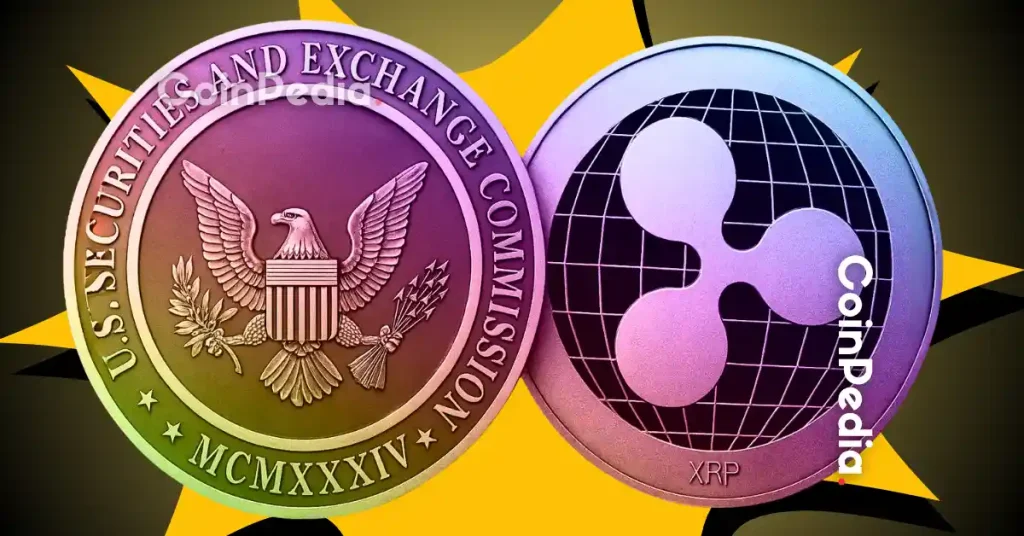
An analyst suggests the XRP lawsuit may have been a strategic move to suppress retail speculation and allow Ripple to secure institutional partnerships. The ongoing debate around the XRP lawsuit's true intent highlights persistent uncertainty regarding regulatory actions and their impact on market perception. Despite speculation of a coordinated plan, new revelations have introduced doubt, suggesting the lawsuit might have been a more direct regulatory action against XRP.
Solana is consolidating near a critical $95 resistance level, with a confirmed breakout potentially triggering a rally towards $102, indicating short-term bullish momentum. The price action is forming a bullish ascending channel, with support at $87 and resistance at $102, suggesting controlled accumulation and potential for further upside if the $95 pivot is cleared. Despite positive technicals, traders are closely monitoring the $95 resistance zone, as failure to break through could lead to a pullback towards $87 or $88, highlighting the importance of this key level for trend continuation.

A significant reduction in RLUSD supply, potentially the largest in a year, raises questions about Ripple's liquidity management strategy for its stablecoin. The substantial burning of RLUSD in March, totaling over $50 million across multiple transactions, indicates active supply reduction efforts by the issuer. While the RLUSD burn is a notable event, its direct market impact is currently unclear, prompting a 'watchlist' approach pending further developments in its utility and adoption.
The Ethereum Foundation's proactive development of post-quantum cryptography, integrated into upcoming hard forks, addresses a fundamental long-term security threat to the network. This multi-year effort, now producing working code and devnets, signals a commitment to network resilience, potentially mitigating future risks associated with quantum computing advancements. The migration strategy, touching execution, consensus, and data layers with specific upgrades like leanXMSS signatures and vector math precompiles, aims for a smooth transition without a disruptive 'flag day'. While not an immediate catalyst, the successful implementation of these quantum-resistant measures will be crucial for maintaining Ethereum's security and value proposition against future technological shifts.

The UK's immediate ban on political parties accepting cryptocurrency donations signals a heightened regulatory scrutiny on digital assets within political financing. This regulatory move, driven by concerns over illicit finance and foreign influence, could set a precedent for other jurisdictions considering similar measures. While the ban directly impacts political fundraising, it may indirectly affect market sentiment towards cryptocurrencies by highlighting perceived risks of misuse.

Litecoin's futures market open interest surged 8%, indicating increased speculative activity and capital inflow, coinciding with a validated golden cross technical signal. The 8% OI jump, driven by top traders on exchanges like Binance, suggests growing trader conviction in a potential upward price movement for LTC. The integration of LitVM, enabling EVM compatibility and DeFi on Litecoin's Layer 2, alongside positive technicals, positions LTC for potential broader ecosystem adoption and price appreciation.

Michael Saylor's assertion that MicroStrategy (MSTR) intentionally engineers volatility suggests a strategic approach to Bitcoin exposure, positioning MSTR as a high-beta play for investors seeking amplified price movements. The comparison of MSTR's 71% volatility against Bitcoin's 52% and tech stocks highlights its unique role as a proxy for BTC exposure, potentially attracting traders looking for leveraged, albeit riskier, access to the cryptocurrency's price action. Saylor's strategy to offer varying volatility profiles through different company assets, like STRC at 2% volatility, indicates a sophisticated market segmentation aimed at catering to diverse risk appetites within the Bitcoin investment landscape.

The UK's immediate moratorium on cryptocurrency donations to political parties signals a growing regulatory caution towards the digital asset space, potentially impacting sentiment for projects seeking political advocacy. While the ban is framed as a temporary measure pending regulatory clarity, the 30-day window for returning existing donations and the threat of criminal penalties create near-term compliance risks for parties and donors. The development, driven by concerns over foreign interference, highlights the intersection of geopolitical risk and crypto adoption, suggesting that regulatory scrutiny will likely increase globally.
Signal context only. Validate with price action, liquidity, and risk limits before taking a position.
