
Navigating Crypto News

CoinFeather
Navigating Crypto News
Source, catalyst, and sector overlap from the latest feed.
The post Best Crypto to Invest in as Bitcoin Bounces 5% to $71,000 on Iran Pause and Pepeto Presale Keeps Growing appeared first on Coinpedia Fintech News Bitcoin jumped above $71,000 after Trump postponed strikes on Iran, and the entire crypto market followed with a relief rally that pushed altcoins up 5% across the board. When the market sells off on fear and bounces the moment tension eases, that tells you demand never left. The best crypto to invest in right now …
The post Bitcoin Price Prediction: Can BTC Break $73K or Drop Again? appeared first on Coinpedia Fintech News Bitcoin is showing signs of a short-term recovery, with price action attempting to push higher toward the $73,500 level. However, analysts warn that the current move may not mean a full bullish reversal, but rather a temporary rebound within a broader corrective structure. Recent market activity shows that Bitcoin climbed steadily before encountering resistance near …
Live Feed
Loading the broader stream in the same flow as the homepage feed.
A significant influx of over 350 billion SHIB tokens to exchanges indicates increased selling pressure, suggesting potential downside risk for the token's price in the short term. The sharp 6.23% spike in exchange netflow, following a recent price rally, highlights the typical behavior of meme coin holders locking in profits, which can lead to rapid reversals. Traders should monitor SHIB's price action closely as the substantial exchange inflow suggests that recent upward momentum may be unsustainable and could lead to a price correction.

The increasing partnerships between traditional asset managers like Franklin Templeton and crypto firms such as Ondo Finance signal a significant acceleration in the tokenization of real-world assets, potentially unlocking substantial new capital flows into the digital asset space. Bitpanda's development of a MiCA-compliant Ethereum L2 solution, Vision Chain, indicates a strategic move to capture institutional demand for regulated tokenized asset trading in Europe, highlighting the growing importance of regulatory clarity for market infrastructure. The projected $13.5 trillion market for tokenized assets by 2030 underscores a major competitive landscape shift, where control over trading and access platforms will be as crucial as the assets themselves. Startale Group's substantial $63 million funding round, backed by major players like SBI Group and Sony Innovation Fund, demonstrates continued investor confidence in the underlying infrastructure required for the expansion of tokenized finance.

Startale Group secured a significant $50 million investment from SBI, completing a $63 million Series A, which signals strong institutional confidence in their tokenized securities, stablecoin, and consumer onchain product development in Japan. The substantial funding will accelerate Startale's vertically integrated strategy, focusing on scaling their Strium blockchain for RWAs and tokenized equities, expanding stablecoin adoption (JPYSC, USDSC), and enhancing their consumer SuperApp. This development reinforces the growing trend of institutional players like SBI backing blockchain infrastructure for traditional asset tokenization and stablecoin use cases within regulated markets like Japan.

Startale Group secured a significant $63 million Series A funding round, indicating strong investor confidence in their strategy to build comprehensive blockchain tools for financial firms and retail users. The funding will accelerate the expansion of Strium for tokenized securities and RWA trading, alongside the adoption of their stablecoins JPYSC and USDSC, positioning Startale as a key player in Japan's evolving tokenized finance landscape. With backing from SBI Group and Sony Innovation Fund, Startale is poised to develop its consumer app into a 'SuperApp' for asset management and payments, potentially driving broader adoption of onchain services in Japan. The development aligns with Japan's regulatory push towards integrating crypto and blockchain into its financial infrastructure, suggesting a favorable environment for tokenized assets and stablecoins.

Obex's deployment of $1 billion to integrate tangible assets like AI hardware, energy, and housing into the Sky ecosystem signals a strategic pivot beyond purely crypto-native yield sources. This initiative aims to expand the utility and supply of the USDS stablecoin by diversifying its backing with real-world asset income, potentially attracting more institutional capital into tokenized markets. The move aligns with the broader market trend of RWA tokenization, which has seen significant growth, suggesting increased demand for stable and predictable returns compared to speculative crypto strategies. By targeting structured credit, fintech, energy, AI, and real estate, Obex is positioning Sky to capture yield from productive sectors, enhancing its resilience and appeal to a wider investor base.

Key Insights: MicroStrategy is preparing for another mega Bitcoin purchase spree courtesy of its latest announcement. The company just announced two equity offering programs collectively aimed at raising $42 billion, which will reportedly be invested in Bitcoin. MicroStrategy confirmed that the two equity offerings will feature a $21 billion MSTR stock offering and a $21 […] The post MicroStrategy Announces Plan to Raise $42 Billion for Mega Bitcoin Acquisition appeared first on The Coin Republic.

Bitcoin's price is facing headwinds as on-chain metrics indicate a shift from accumulation to distribution among investors, suggesting a lack of organic demand to sustain current price levels. Reduced whale activity and declining network usage, coupled with macroeconomic uncertainties and geopolitical tensions, point to a cautious market sentiment where significant upside is unlikely without external catalysts. The sharp drop in Bitcoin's hash rate due to rising energy costs and compressed profitability for miners increases the risk of miner capitulation, potentially leading to intensified sell pressure on the spot market.
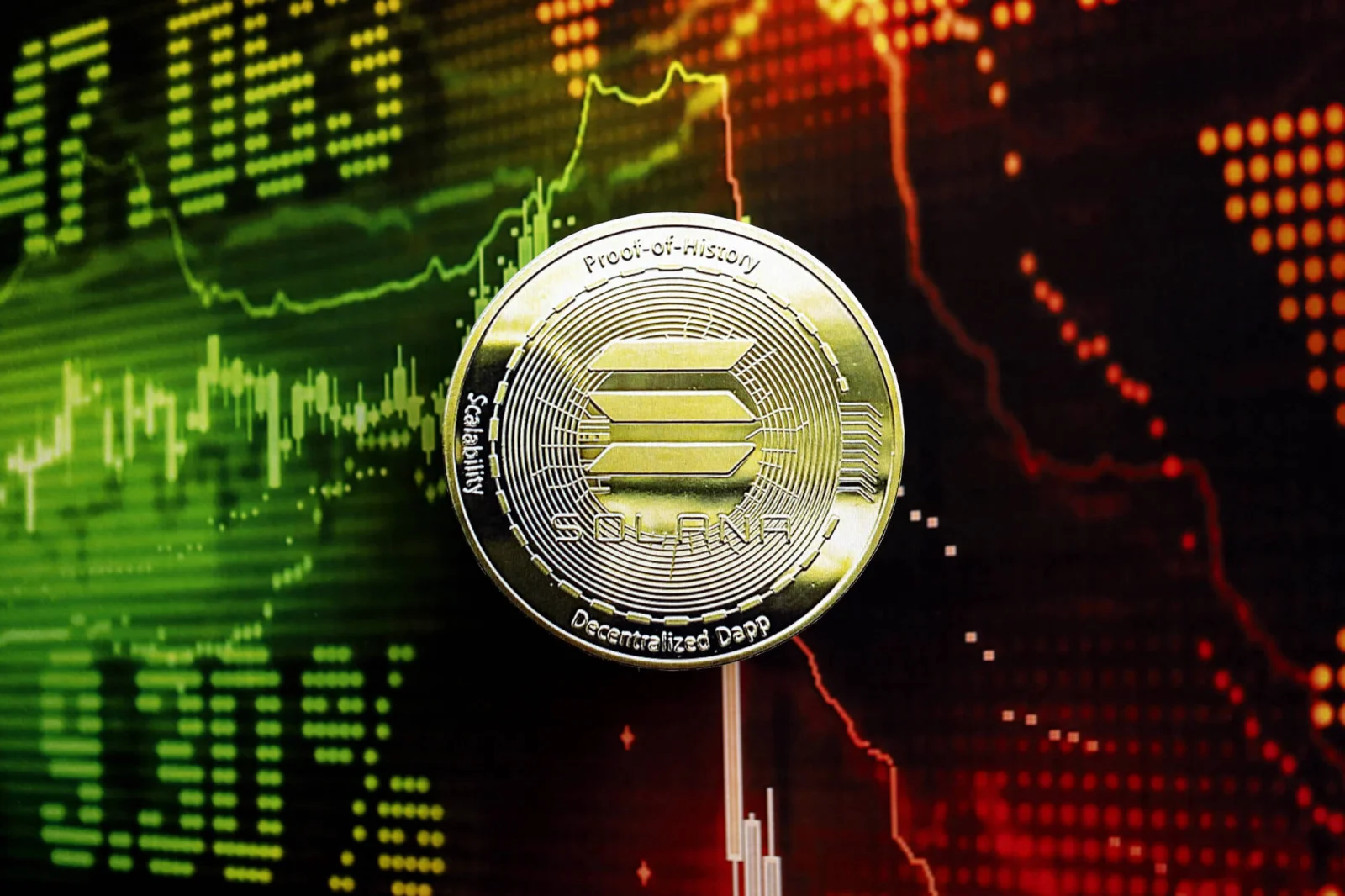
The significant long/short ratio skew on Solana derivatives, exceeding 3:1, indicates overwhelming trader bias towards upside, yet the lack of corresponding open interest growth suggests an unstable setup prone to liquidation. Despite a bullish trader sentiment indicated by the long/short ratio, the absence of increasing open interest on Solana derivatives signals a lack of new capital commitment, raising the probability of a volatile price swing rather than a sustained recovery. Solana's current market positioning, characterized by a high long/short ratio without increased open interest, functions as a pressure gauge, implying that a price move could be amplified by liquidations in either direction, making it a potential catalyst for volatility.
Sandisk's $1 billion investment in Nanya Technology signals a strategic shift towards securing memory chip supply, aiming to mitigate risks from market shortages and protect margins. Despite a 6% stock drop, Sandisk's strong Q2 FY2026 performance and positive analyst outlook suggest underlying fundamentals remain robust, with the Nanya deal introducing execution risk and uncertainty. The market reaction is divided, with bulls viewing the dip as a buying opportunity driven by growth and supply chain control, while bears express concerns over geopolitical exposure and long-term returns from the foreign investment. The AI-driven storage market's demand is a key growth driver for Sandisk's data center segment, making supply chain security a critical factor for future expansion and competitive positioning.
Signal context only. Validate with price action, liquidity, and risk limits before taking a position.
Quick market read from this story
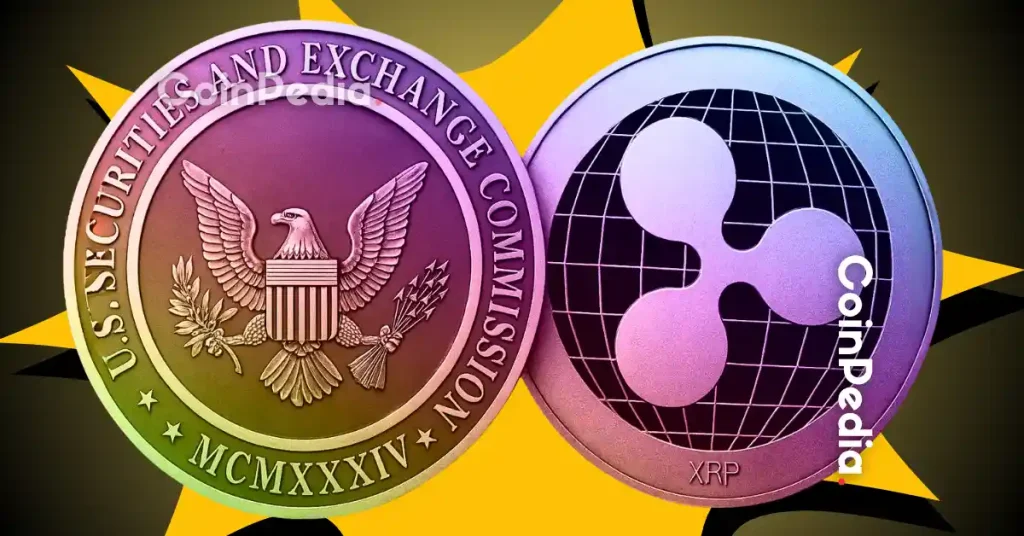
An analyst suggests the XRP lawsuit may have been a strategic move to suppress retail speculation and allow Ripple to secure institutional partnerships.
The ongoing debate around the XRP lawsuit's true intent highlights persistent uncertainty regarding regulatory actions and their impact on market perception.
Despite speculation of a coordinated plan, new revelations have introduced doubt, suggesting the lawsuit might have been a more direct regulatory action against XRP.
Deep Dive
Analyst Jesse from Apex Crypto Insights has proposed a theory that the lawsuit involving Ripple Labs and the SEC might have been a strategic maneuver rather than a straightforward regulatory action. Jesse suggests the lawsuit could have been orchestrated to deter retail investors and maintain a lower XRP price, allowing Ripple time to foster institutional partnerships and ecosystem development without excessive speculation.
Initially, Jesse believed the XRP lawsuit was a coordinated plan, a "teeter" to justify a low price and provide space for incentivizing partners. However, his perspective evolved after reviewing newly surfaced documents that suggested a more direct attempt to target XRP. Despite this shift, he estimates only a 20% chance that the lawsuit was a genuine regulatory enforcement action, leaning towards it being a calculated move.
The ongoing XRP lawsuit has significantly influenced the cryptocurrency's price, adoption, and regulatory standing. Even as parts of the case progress toward resolution, discussions like Jesse's highlight persistent questions about the lawsuit's true intent, fairness, and broader implications for the crypto market. The case continues to be a focal point in shaping how regulators and investors perceive the cryptocurrency landscape.
