
Navigating Crypto News

CoinFeather
Navigating Crypto News
Source, catalyst, and sector overlap from the latest feed.
The significant long/short ratio skew on Solana derivatives, exceeding 3:1, indicates overwhelming trader bias towards upside, yet the lack of corresponding open interest growth suggests an unstable setup prone to liquidation. Despite a bullish trader sentiment indicated by the long/short ratio, the absence of increasing open interest on Solana derivatives signals a lack of new capital commitment, raising the probability of a volatile price swing rather than a sustained recovery. Solana's current market positioning, characterized by a high long/short ratio without increased open interest, functions as a pressure gauge, implying that a price move could be amplified by liquidations in either direction, making it a potential catalyst for volatility.
Live Feed
Loading the broader stream in the same flow as the homepage feed.
Sandisk's $1 billion investment in Nanya Technology signals a strategic shift towards securing memory chip supply, aiming to mitigate risks from market shortages and protect margins. Despite a 6% stock drop, Sandisk's strong Q2 FY2026 performance and positive analyst outlook suggest underlying fundamentals remain robust, with the Nanya deal introducing execution risk and uncertainty. The market reaction is divided, with bulls viewing the dip as a buying opportunity driven by growth and supply chain control, while bears express concerns over geopolitical exposure and long-term returns from the foreign investment. The AI-driven storage market's demand is a key growth driver for Sandisk's data center segment, making supply chain security a critical factor for future expansion and competitive positioning.
Dogecoin is showing signs of a potential trend reversal, aiming for its first monthly gain in six months, driven by broader market recovery and anticipation of the Qubic integration. Trader accumulation and a bullish derivatives market sentiment suggest increasing confidence in DOGE's near-term upside, despite a history of underperformance since October 2025. The upcoming Qubic integration on April 1, 2026, is a key catalyst that could drive further price appreciation for DOGE, building on current momentum and trader positioning.

The partnership between Monument Bank and the Midnight Foundation signifies a significant step in tokenizing retail deposits, potentially bringing substantial Total Value Locked (TVL) to the Midnight ecosystem and demonstrating a tangible use case for blockchain in traditional finance. This initiative moves beyond simple tokenization by planning future access to tokenized investment products and enabling borrowing against tokenized assets, which could democratize access to alternative investments and unlock liquidity for retail users. The focus on privacy-preserving blockchain technology addresses key regulatory concerns, suggesting a pathway for broader institutional and retail adoption of blockchain-based banking solutions by balancing transparency with data protection.

BitMine's launch of its US-based Ethereum staking platform, MAVAN, signals a strategic move to capture institutional demand for staking services. The company's substantial ETH holdings of 4.6 million ETH position MAVAN to potentially become the world's largest staking platform, impacting ETH staking dynamics. MAVAN's US-based infrastructure caters to regulatory and security preferences of institutional investors, potentially driving further adoption of staking services. Future expansion plans to support other proof-of-stake networks and explore DeFi yield strategies indicate BitMine's broader ambition in on-chain infrastructure.

Plus: Solana developer platform, Balancer Labs to shut down and Bitcoin mining concentration triggers small reorg.
An analyst suggests the XRP lawsuit may have been a strategic move to suppress retail speculation and allow Ripple to secure institutional partnerships. The ongoing debate around the XRP lawsuit's true intent highlights persistent uncertainty regarding regulatory actions and their impact on market perception. Despite speculation of a coordinated plan, new revelations have introduced doubt, suggesting the lawsuit might have been a more direct regulatory action against XRP.
Solana is consolidating near a critical $95 resistance level, with a confirmed breakout potentially triggering a rally towards $102, indicating short-term bullish momentum. The price action is forming a bullish ascending channel, with support at $87 and resistance at $102, suggesting controlled accumulation and potential for further upside if the $95 pivot is cleared. Despite positive technicals, traders are closely monitoring the $95 resistance zone, as failure to break through could lead to a pullback towards $87 or $88, highlighting the importance of this key level for trend continuation.

Analysts suggest the market overreacted to the CLARITY Act's impact on stablecoin yield, potentially creating a buying opportunity for Circle. The CLARITY Act's potential restriction on stablecoin yield could shift bargaining power from Coinbase's distribution model to Circle's issuer infrastructure, improving Circle's long-term economics. Despite regulatory headwinds on yield, the core utility of stablecoins for cross-border payments and blockchain access remains intact, supporting Circle's growth potential towards a $75 billion valuation.
The Ethereum Foundation's proactive development of post-quantum cryptography, integrated into upcoming hard forks, addresses a fundamental long-term security threat to the network. This multi-year effort, now producing working code and devnets, signals a commitment to network resilience, potentially mitigating future risks associated with quantum computing advancements. The migration strategy, touching execution, consensus, and data layers with specific upgrades like leanXMSS signatures and vector math precompiles, aims for a smooth transition without a disruptive 'flag day'. While not an immediate catalyst, the successful implementation of these quantum-resistant measures will be crucial for maintaining Ethereum's security and value proposition against future technological shifts.

Michael Saylor's assertion that MicroStrategy (MSTR) intentionally engineers volatility suggests a strategic approach to Bitcoin exposure, positioning MSTR as a high-beta play for investors seeking amplified price movements. The comparison of MSTR's 71% volatility against Bitcoin's 52% and tech stocks highlights its unique role as a proxy for BTC exposure, potentially attracting traders looking for leveraged, albeit riskier, access to the cryptocurrency's price action. Saylor's strategy to offer varying volatility profiles through different company assets, like STRC at 2% volatility, indicates a sophisticated market segmentation aimed at catering to diverse risk appetites within the Bitcoin investment landscape.

Franklin Templeton's partnership with Ondo to tokenize traditional assets signifies a major institutional embrace of RWA on-chain, potentially unlocking significant capital flows. The collaboration aims to provide 24/7 access to U.S. markets via tokenized securities, addressing investor demand for greater liquidity and accessibility beyond traditional trading hours. This move by a $1.7 trillion asset manager highlights the growing trend of TradFi integration with crypto infrastructure, challenging traditional gatekeepers like banks and brokers. While regulatory clarity remains a hurdle for cross-border tokenized securities, this partnership signals a strong market push towards bridging traditional and digital asset ecosystems.
Binance is delisting 10 spot trading pairs, citing poor liquidity and trading volume as reasons, which may lead to reduced trading opportunities for affected assets. The delisting of multiple trading pairs against BTC and ETH suggests a strategic shift by Binance to streamline offerings and focus on higher-volume assets. Concurrently, Binance Futures is launching new equity perpetual contracts for META, NVDA, and GOOGL, indicating an expansion of derivative offerings and a focus on traditional market-linked assets. Binance is also upgrading its Stop Orders to Conditional Orders on USD Margined Futures, a technical enhancement aimed at improving system performance and user experience for derivative traders.
Signal context only. Validate with price action, liquidity, and risk limits before taking a position.
Quick market read from this story
BitMine's significant ETH purchase of $145 million, adding 67,111 ETH to its treasury, signals continued conviction in Ethereum's long-term value despite current market volatility.
The acquisition brings BitMine closer to holding 4% of Ethereum's total supply, a substantial concentration that could influence market dynamics if the company decides to alter its holdings.
While the purchase itself is a bullish signal for ETH demand from a major holder, the timing amidst weak market momentum suggests a strategy of accumulating at perceived lower prices, rather than reacting to immediate price action.
Deep Dive
Despite market uncertainties and mixed price action for Ethereum (ETH), the world’s largest Ethereum treasury, BitMine, has continued to significantly expand its holdings. The company purchased an additional 67,111 ETH on Wednesday, March 25, a transaction valued at approximately $145 million based on the trading price at the time.
This latest acquisition brings BitMine’s total Ethereum holdings to a substantial 4.66 million ETH, currently valued at around $10 billion. This steady accumulation means BitMine's holdings now represent 3.86% of Ethereum’s circulating supply. At its current pace, the crypto community anticipates BitMine could reach its target of acquiring 4% of Ethereum’s total supply by the end of April, with approximately $359 million worth of ETH needed to achieve this milestone.
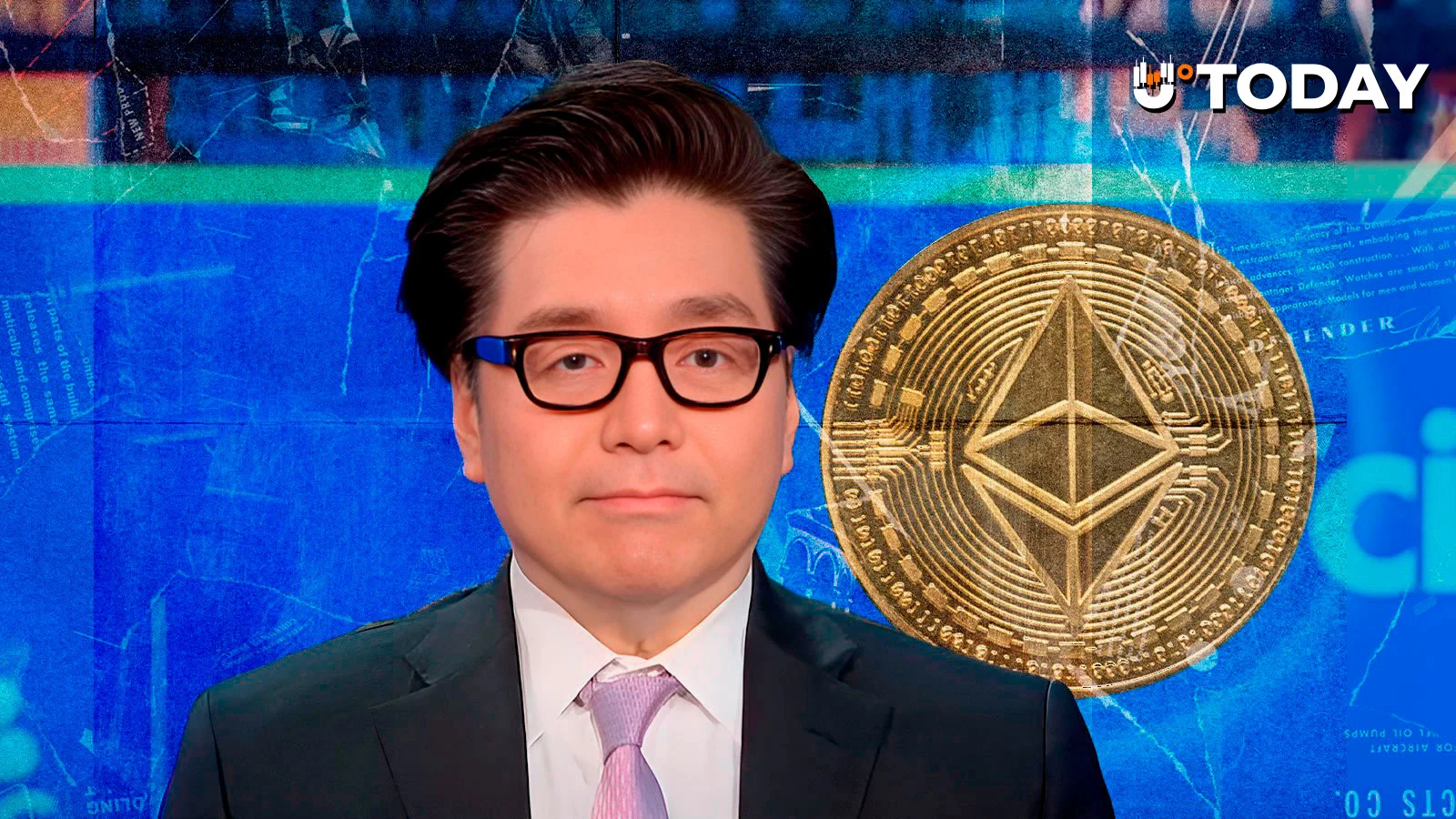
The aggressive buying strategy by BitMine, often advocated by its chairman Tom Lee, persists even as Ethereum has experienced a slight decrease of 0.23% in price over the past day, indicating a slowdown from its recent rally and weak market momentum.
The confirmation of a daily golden cross on XRP's chart, with the 23-day moving average crossing above the 50-day, signals a potential bullish momentum shift and a target of 37% price increase. A successful breakout and consolidation above the 200-day moving average near $1.92 could confirm XRP's exit from a prolonged sideways trend, setting a path towards the $2.50 psychological level. The technical bullish signals are reinforced by the narrative of XRP being confirmed as a 'digital commodity' by March 2026, suggesting potential for sustained positive price action if key support levels are maintained.
