
Navigating Crypto News

CoinFeather
Navigating Crypto News
Quick market read from this story
Bitcoin faces critical resistance at $72,000, with a sustained break above this level needed to target $80,000 and beyond.
Exchange outflow data suggests ongoing investor accumulation, indicating a belief in Bitcoin's current value despite price consolidation.
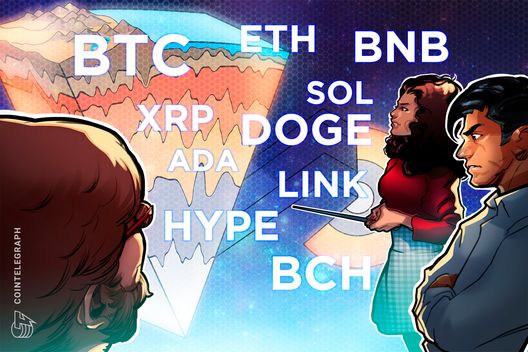
Several major altcoins like ETH, BNB, XRP, SOL, DOGE, ADA, BCH, and LINK are at key technical junctures, with their next price movements dependent on breaking immediate resistance or support levels.
The article provides technical analysis and price predictions for top cryptocurrencies, suggesting a neutral short-term outlook pending decisive price action above key resistance levels.
Deep Dive
Bitcoin (BTC) is currently facing significant resistance around the $72,000 mark, yet bulls are maintaining pressure. Analysts suggest that BTC must decisively cross and hold above this level to potentially re-enter the $80,000s. Despite market uncertainties, including geopolitical tensions, BTC has shown resilience, with recent data indicating consistent outflows from exchanges in March. This trend suggests genuine accumulation by investors, even if demand isn't yet strong enough for a new uptrend.
Bitcoin (BTC) is trading within a bullish ascending triangle pattern. For a sustained rally towards $84,000, BTC needs to break and hold above the $74,508 resistance. A failure to do so could lead to a drop towards the $60,000 to $62,500 support zone.
Ether (ETH) has bounced off its 50-day simple moving average, indicating positive sentiment. A move above $2,400 could propel ETH towards $2,600 and potentially $3,050. Conversely, a break below the 50-day SMA might see ETH fall to $1,900 or even $1,750.
BNB is experiencing a strong challenge from bears as it attempts to stay above the 20-day exponential moving average. The cryptocurrency is currently in a range between $570 and $687. A breakout above $687 could lead to $730 and $790, while a fall below $600 might signal a move towards $570.
XRP is seeing sellers attempt to keep it below moving averages, but bulls are applying pressure. A sustained break above the moving averages could target the $1.61 level and the downtrend line. A break below $1.27 would indicate bears remain in control.
Solana (SOL) is trading between its 50-day SMA of $86 and overhead resistance at $95. Clearing $95 could send SOL towards $117. A drop below the 50-day SMA would give sellers an advantage, potentially leading to a decline towards the lower end of its range around $76.
Dogecoin (DOGE) bounced off the $0.09 support but is struggling to move past the moving averages. A sharp downturn from this level could lead to a break below $0.09 and a potential fall to $0.06. A close above the moving averages might target $0.10 and then $0.12.
Hyperliquid (HYPE) rebounded off the $36.77 breakout level, with bulls aiming to establish it as support. Upsloping moving averages and a positive RSI suggest bullish momentum. A move above $43.77 could target $50. A break below $36.77 would invalidate this outlook, potentially leading to a drop to the 50-day SMA at $33.16.
Cardano (ADA) remains within a descending channel but is attempting to form a base near $0.25. A close above the moving averages could lead to a rally towards the downtrend line, with potential targets at $0.39 and $0.44. A sharp downturn and break below the moving averages could signal a decline below $0.25.
Bitcoin Cash (BCH) closed above the 20-day EMA but is struggling to reach the 50-day SMA. Bears are active at higher levels, and a break below the 20-day EMA could lead to a drop to $443, which is a critical support level to avoid completing a bearish head-and-shoulders pattern. A move above the 50-day SMA could initiate a rally to $520.
Chainlink (LINK) is gradually rising within an ascending channel. Bulls aim to push LINK towards the channel's resistance line. A decisive break above this resistance, and potentially the $11.61 level, could lead to a rally towards $14.98.
Source, catalyst, and sector overlap from the latest feed.
Bitcoin is consolidating around the $71,500 pivot, forming a potential inverse head and shoulders pattern that suggests a technical target of $76,000 to $80,000 if a breakout occurs. On-chain data indicates a decrease in short-term holder selling pressure, with realized profit and loss metrics returning to levels that preceded previous significant rallies, suggesting potential for further upside. Despite bullish technical and on-chain signals, weak spot volumes and negative Coinbase premium indicate a lack of strong US-based demand, raising concerns about the sustainability of any potential rally above $71,500. Derivatives markets show increased activity and positive funding rates, suggesting futures-driven speculation is contributing to price action, but this needs to be confirmed by robust spot demand for a sustained move.
Franklin Templeton and Ondo Finance are launching tokenized ETFs accessible via crypto wallets, signaling a significant step towards integrating traditional finance with decentralized infrastructure. The partnership enables 24/7 trading and access through DeFi applications, potentially increasing liquidity and adoption for tokenized assets beyond traditional brokerage channels. While initially targeting non-US investors due to regulatory uncertainty, this move by a major asset manager like Franklin Templeton could pave the way for broader institutional adoption of RWA products. The development highlights the growing trend of tokenized equities, with Ondo Finance already a dominant player, and suggests increased competition and innovation in the RWA sector.
The appointment of prominent tech and crypto leaders, including Coinbase co-founder Fred Ehrsam, to a US presidential advisory council signals potential future policy influence on digital assets. While the council's formation is a positive signal for crypto's integration into mainstream policy discussions, the lack of progress on market structure legislation in the US Senate indicates continued regulatory uncertainty. The inclusion of figures like Fred Ehrsam suggests a growing recognition of the crypto industry's importance by political bodies, potentially leading to more informed regulatory approaches.
Bitmine's launch of the MAVAN platform signifies a growing trend of institutional-grade infrastructure development in Ethereum staking, catering to increasing demand for yield and compliance. The expansion of Bitmine's staking operations to external clients, leveraging its significant ETH holdings, suggests a potential increase in staked ETH and associated rewards, impacting network economics. With backing from major investors and a stated goal to acquire 5% of total ETH supply, Bitmine's move could attract substantial institutional capital into ETH staking, reinforcing its position as a yield-generating asset.
Startale Group secured a significant $50 million investment from SBI, completing a $63 million Series A, which signals strong institutional confidence in their tokenized securities, stablecoin, and consumer onchain product development in Japan. The substantial funding will accelerate Startale's vertically integrated strategy, focusing on scaling their Strium blockchain for RWAs and tokenized equities, expanding stablecoin adoption (JPYSC, USDSC), and enhancing their consumer SuperApp. This development reinforces the growing trend of institutional players like SBI backing blockchain infrastructure for traditional asset tokenization and stablecoin use cases within regulated markets like Japan.
Bitcoin is testing the $72,000 resistance, with a potential short squeeze zone identified around $74,000 due to concentrated leveraged short positions. The market structure shows resilience with demand at lower levels, but a decisive break above $72,000 is required to confirm a bullish continuation and target higher price levels. While overhead short liquidity at $74,000 presents a potential catalyst for accelerated upside, it remains a speculative trigger until price action confirms entry into that zone. Traders are closely monitoring the interplay between technical resistance and derivatives positioning, suggesting that a move towards $74,000 could trigger significant volatility.
XRP's market capitalization has surpassed Russia's proposed threshold, positioning it for potential inclusion in the country's regulated digital asset market alongside BTC, ETH, and SOL. The Russian draft bill indicates a selective approach to crypto regulation, prioritizing large, liquid assets with established trading histories, suggesting a controlled market rather than broad access. While XRP meets the market cap criteria, the final decision on its inclusion in Russia's regulated market will depend on further criteria such as trading volume and public trading record, with a midyear deadline for the framework.
The partnership between Cardano's Midnight and Monument Bank signifies a major step towards integrating privacy-preserving blockchain technology into regulated financial services, potentially unlocking significant TVL and setting a precedent for future RWA tokenization. Monument Bank's plan to tokenize retail deposits and offer advanced financial tools like Lombard lending on-chain, leveraging Midnight's zero-knowledge cryptography, could attract substantial capital and redefine retail access to private banking services. This development highlights the growing intersection of traditional finance and blockchain, with a focus on privacy solutions, suggesting a potential shift in how regulated institutions approach digital asset adoption and customer offerings.
The upcoming expiration of $15 billion in Bitcoin options on Deribit, coinciding with a geopolitical deadline, introduces a potential volatility catalyst that traders should monitor for post-settlement price action. Despite the confluence of options expiry and geopolitical timing, implied volatility compression suggests a controlled settlement is anticipated, indicating a lack of immediate market panic. Bitcoin's resilience around the $70,000 level amidst macro uncertainty signals underlying spot demand and holder steadiness, providing a supportive backdrop for potential post-expiry price discovery.
Bitcoin's post-FOMC meeting performance has evolved from inconsistent reactions to a systematic downside bias, indicating its integration into the broader risk asset complex. This 'sell the Fed' tendency, particularly evident from 2024 through early 2026, suggests traders are increasingly using Fed events as de-risking opportunities, impacting short-term price action. The growing sensitivity to FOMC dates signifies Bitcoin's maturation as a global asset, responding to policy cadence and liquidity expectations within established macro frameworks. Traders should incorporate this recurring post-event weakness into their playbook, recognizing that calendar risk now plays a significant role in Bitcoin's pricing architecture.
Live Feed
Loading the broader stream in the same flow as the homepage feed.

Bhutan's continued Bitcoin outflows, totaling $36.7 million in the latest transaction, signal a strategic rebalancing of sovereign reserves, potentially impacting short-term supply dynamics. Thailand-listed DV8's plan to accumulate 10,000 BTC by 2028, alongside acquiring a licensed custody platform, indicates a growing trend of corporate treasury diversification and demand for regulated digital asset infrastructure. The diverging strategies between Bhutan's reserve deployment and DV8's corporate accumulation highlight Bitcoin's evolving role as both a tool for economic development and a treasury asset, suggesting a maturing market.

Ripple's RLUSD stablecoin entering the Monetary Authority of Singapore's sandbox for trade finance testing signals a move towards regulated institutional adoption of stablecoins in real-world applications. The pilot aims to automate trade finance payments by verifying shipment conditions, potentially reducing settlement times from days to minutes and improving efficiency in global commerce. This development highlights Singapore's role as a hub for regulated digital asset innovation, providing a secure environment for testing new payment rails for institutional use. While XRP is mentioned with current price levels, the core development focuses on the RLUSD stablecoin's application in trade finance, suggesting a strategic expansion for Ripple beyond its native token.

X's strategic hire of a design lead with deep Aave Labs and Coinbase Base experience signals a serious commitment to integrating sophisticated DeFi and self-custody wallet functionalities into its payment ecosystem. The appointment of Benji Taylor, who previously led product design for Aave and Coinbase's Base, suggests X is prioritizing user experience and advanced crypto-native features for its upcoming 'X Money' platform. While X Money's April launch was announced without explicit mention of blockchain, the recruitment of a crypto-native design expert indicates potential for future integration of decentralized technologies or crypto-adjacent services.

Now in testing, the platform aims to enable programmable payments and simplify blockchain adoption for financial institutions.
Coinbase's integration with Chainlink to publish exchange data on-chain signifies a crucial step in bridging TradFi and DeFi, potentially enhancing pricing, risk management, and product development within decentralized finance. The availability of Coinbase's order book, spot, and derivatives data on-chain via Chainlink DataLink empowers DeFi developers to build more sophisticated financial instruments and applications, potentially attracting greater institutional interest. This development establishes a new standard for programmable market infrastructure, accelerating the convergence of traditional and decentralized finance by providing institutional-grade data directly to blockchain networks.
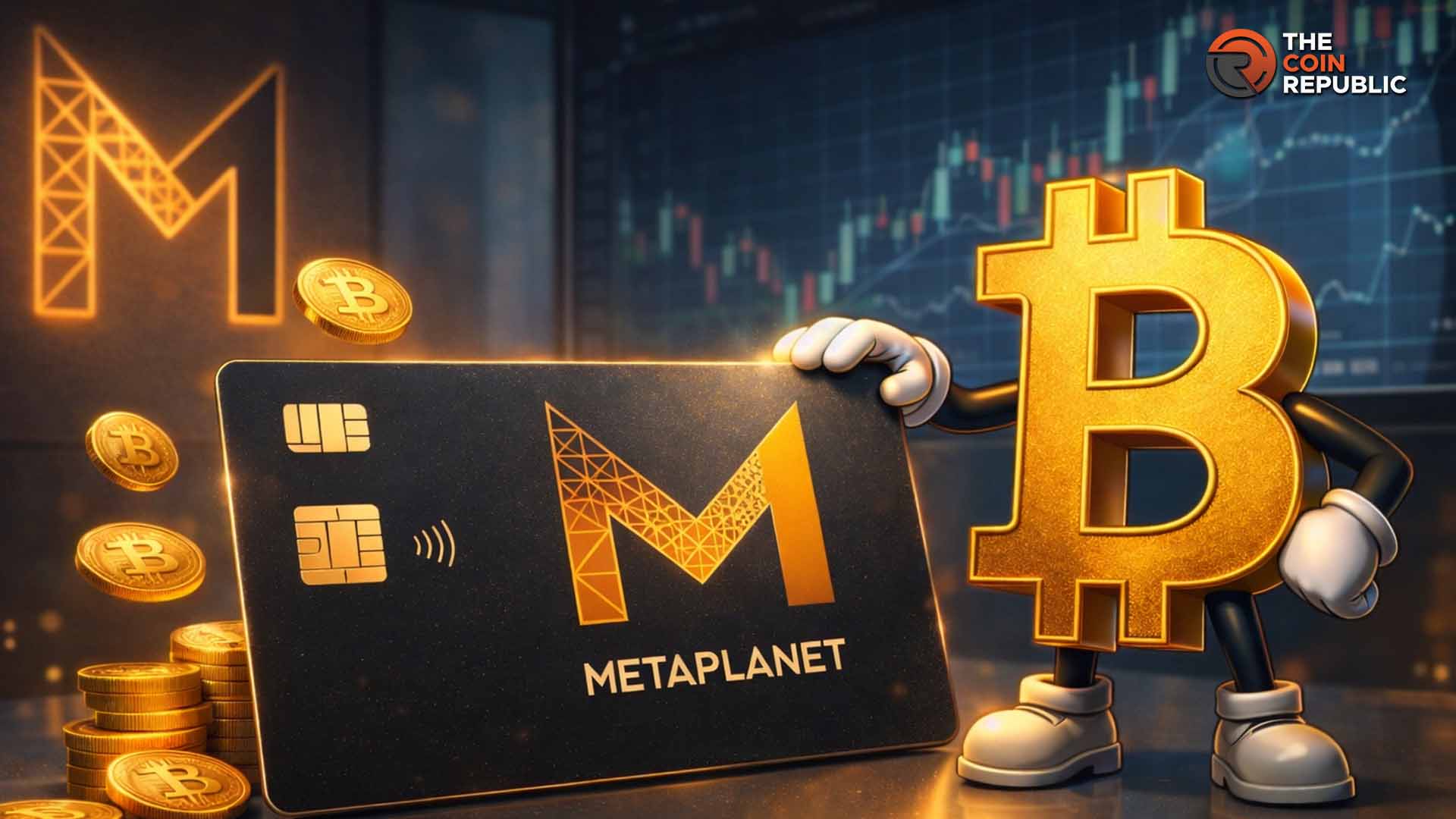
Metaplanet's launch of a Bitcoin rewards card for shareholders signals a strategic move to integrate BTC into everyday spending, potentially driving adoption and rewarding loyal investors. The positive market reaction to Metaplanet's crypto payment initiative, evidenced by stock price uptrends, suggests investor confidence in the company's strategy to leverage Bitcoin for growth. Metaplanet's continued aggressive Bitcoin accumulation, supported by recent funding rounds, positions it as a significant public holder and aligns with broader institutional interest in BTC treasuries. The exclusive offering of the Bitcoin card to shareholders creates a unique incentive structure, potentially attracting new investors interested in tangible Bitcoin-earning benefits tied to stock ownership.

McLaren Racing's entry into the Hedera Council signifies a growing trend of mainstream enterprises leveraging enterprise blockchains for fan engagement and digital asset initiatives. The partnership, which includes the launch of free-to-mint digital collectibles tied to F1 races, aims to onboard new users to Web3, potentially increasing adoption for Hedera and its ecosystem. As a governing member with voting rights, McLaren's involvement suggests a deeper commitment to Hedera's development, which could lead to further integration and innovation within the network.

Franklin Templeton's partnership with Ondo Finance to launch tokenized ETFs signifies a major TradFi institution actively integrating with blockchain technology, potentially driving significant capital into the RWA sector. The collaboration aims to enhance accessibility, liquidity, and settlement efficiency for ETFs, demonstrating a clear pathway for traditional financial products to leverage decentralized finance infrastructure. While the pilot is launching in select regions, the pending US regulatory approval highlights the ongoing challenges and opportunities in bridging traditional finance with the crypto ecosystem. The ONDO token's price action, despite a reported 4.17% gain, faces scrutiny regarding its direct correlation to the partnership's success, underscoring the speculative nature of RWA-related tokens.

Analysts suggest Circle's recent share selloff is overdone, as regulatory concerns regarding stablecoin yield prohibitions are unlikely to impact its core revenue model derived from U.S. Treasury investments. Cathie Wood's Ark Invest buying Circle shares on the dip indicates institutional conviction despite short-term regulatory headwinds, potentially signaling a bottom for the stock. Despite potential yield restrictions on platforms, the strategic demand for USDC remains intact, suggesting Circle's market position as a compliant stablecoin alternative is secure. Bernstein reiterates an 'Outperform' rating on Circle and Coinbase, highlighting that yield bans primarily affect distributors, not issuers like Circle, and that Coinbase may adapt to new reward models.
The appointment of key crypto figures like David Sacks and Fred Ehrsam to President Trump's Council of Advisors on Science and Technology signifies a major shift, moving digital assets from the periphery to the core of US tech policy discussions. This inclusion suggests a potential for more favorable regulatory clarity and a reduced adversarial stance from policymakers, which could foster greater innovation and institutional adoption within the crypto space. The convergence of political influence, regulatory openness, and increasing institutional capital, as evidenced by bank exposures to major cryptocurrencies, indicates a maturing crypto market poised for deeper integration into the global financial system.
Coinbase's reported rejection of the latest stablecoin yield compromise signals continued legislative hurdles for U.S. crypto market structure reform. The exchange's stance, despite being described as less severe than previous opposition, indicates that significant disagreements persist, potentially delaying regulatory clarity for stablecoins and related yield products. This development introduces uncertainty for market participants anticipating a finalized stablecoin framework, impacting sentiment around stablecoin issuers and platforms that rely on yield generation.

Crypto prediction markets, while capable of aggregating information, risk incentivizing manipulation and amplifying misinformation by financializing real-world instability. The global reach and low-friction settlement of crypto-based prediction markets create significant social risks, potentially distorting behavior around underlying events rather than merely forecasting them. Bad actors can exploit crypto prediction markets not only through privileged information but also by influencing the information environment, turning market odds into viral narratives that reshape probabilities. Treating all liquid crypto markets as legitimate due to price discovery is a mistake; building rails for speculating on instability is not financial innovation but moral hazard at internet scale.
Signal context only. Validate with price action, liquidity, and risk limits before taking a position.
