
Navigating Crypto News

CoinFeather
Navigating Crypto News
Quick market read from this story
Coinbase's integration with Chainlink to publish exchange data on-chain signifies a crucial step in bridging TradFi and DeFi, potentially enhancing pricing, risk management, and product development within decentralized finance.
The availability of Coinbase's order book, spot, and derivatives data on-chain via Chainlink DataLink empowers DeFi developers to build more sophisticated financial instruments and applications, potentially attracting greater institutional interest.
This development establishes a new standard for programmable market infrastructure, accelerating the convergence of traditional and decentralized finance by providing institutional-grade data directly to blockchain networks.
Source, catalyst, and sector overlap from the latest feed.
Live Feed
Loading the broader stream in the same flow as the homepage feed.

The upcoming expiration of $15 billion in Bitcoin options on Deribit, coinciding with a geopolitical deadline, introduces a potential volatility catalyst that traders should monitor for post-settlement price action. Despite the confluence of options expiry and geopolitical timing, implied volatility compression suggests a controlled settlement is anticipated, indicating a lack of immediate market panic. Bitcoin's resilience around the $70,000 level amidst macro uncertainty signals underlying spot demand and holder steadiness, providing a supportive backdrop for potential post-expiry price discovery.

Bitcoin's post-FOMC meeting performance has evolved from inconsistent reactions to a systematic downside bias, indicating its integration into the broader risk asset complex. This 'sell the Fed' tendency, particularly evident from 2024 through early 2026, suggests traders are increasingly using Fed events as de-risking opportunities, impacting short-term price action. The growing sensitivity to FOMC dates signifies Bitcoin's maturation as a global asset, responding to policy cadence and liquidity expectations within established macro frameworks. Traders should incorporate this recurring post-event weakness into their playbook, recognizing that calendar risk now plays a significant role in Bitcoin's pricing architecture.

Now in testing, the platform aims to enable programmable payments and simplify blockchain adoption for financial institutions.

Bitcoin is consolidating around the $71,500 pivot, forming a potential inverse head and shoulders pattern that suggests a technical target of $76,000 to $80,000 if a breakout occurs. On-chain data indicates a decrease in short-term holder selling pressure, with realized profit and loss metrics returning to levels that preceded previous significant rallies, suggesting potential for further upside. Despite bullish technical and on-chain signals, weak spot volumes and negative Coinbase premium indicate a lack of strong US-based demand, raising concerns about the sustainability of any potential rally above $71,500. Derivatives markets show increased activity and positive funding rates, suggesting futures-driven speculation is contributing to price action, but this needs to be confirmed by robust spot demand for a sustained move.
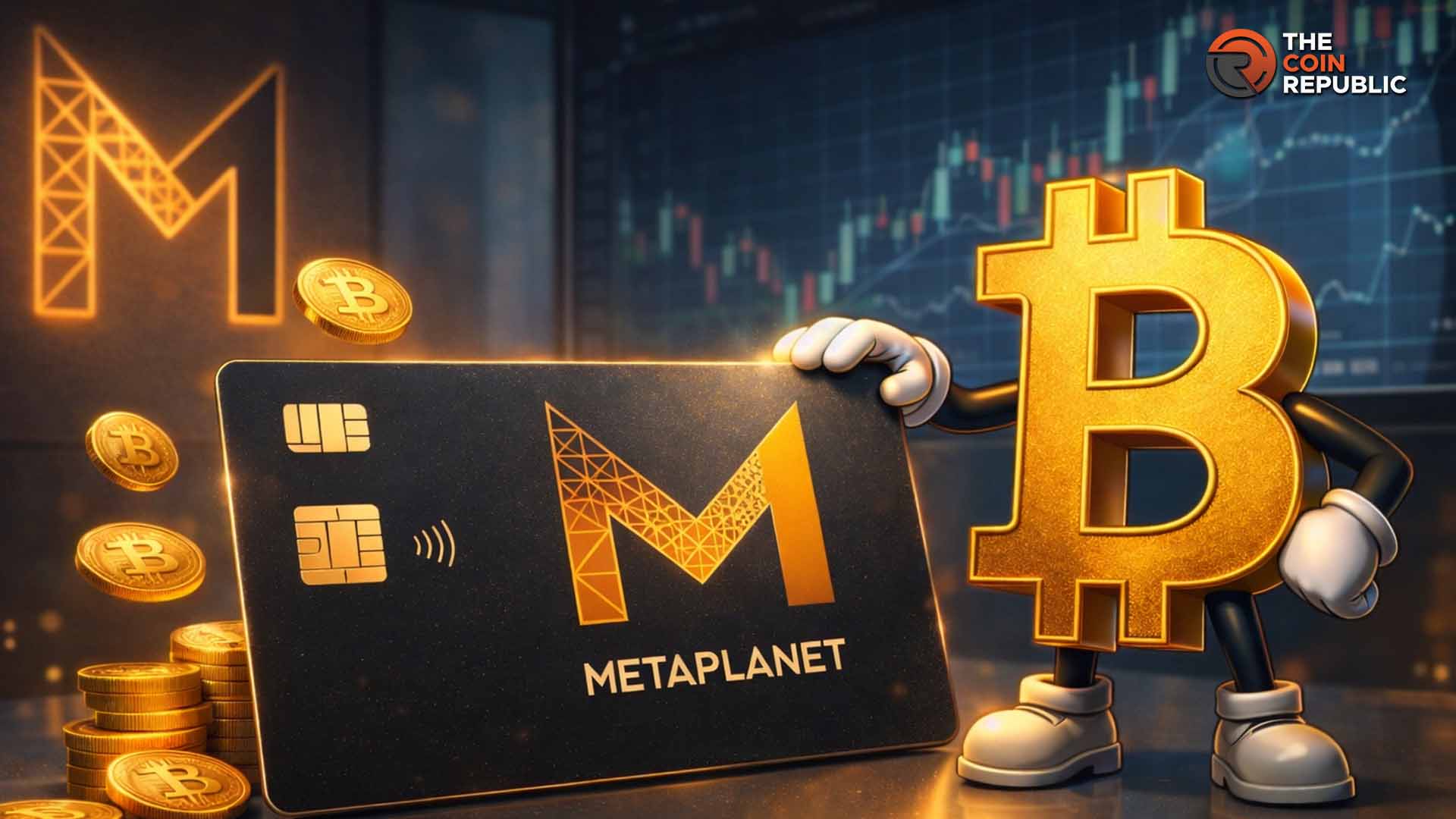
Metaplanet's launch of a Bitcoin rewards card for shareholders signals a strategic move to integrate BTC into everyday spending, potentially driving adoption and rewarding loyal investors. The positive market reaction to Metaplanet's crypto payment initiative, evidenced by stock price uptrends, suggests investor confidence in the company's strategy to leverage Bitcoin for growth. Metaplanet's continued aggressive Bitcoin accumulation, supported by recent funding rounds, positions it as a significant public holder and aligns with broader institutional interest in BTC treasuries. The exclusive offering of the Bitcoin card to shareholders creates a unique incentive structure, potentially attracting new investors interested in tangible Bitcoin-earning benefits tied to stock ownership.
Franklin Templeton's partnership with Ondo Finance to launch tokenized ETFs signifies a major TradFi institution actively integrating with blockchain technology, potentially driving significant capital into the RWA sector. The collaboration aims to enhance accessibility, liquidity, and settlement efficiency for ETFs, demonstrating a clear pathway for traditional financial products to leverage decentralized finance infrastructure. While the pilot is launching in select regions, the pending US regulatory approval highlights the ongoing challenges and opportunities in bridging traditional finance with the crypto ecosystem. The ONDO token's price action, despite a reported 4.17% gain, faces scrutiny regarding its direct correlation to the partnership's success, underscoring the speculative nature of RWA-related tokens.

Analysts suggest Circle's recent share selloff is overdone, as regulatory concerns regarding stablecoin yield prohibitions are unlikely to impact its core revenue model derived from U.S. Treasury investments. Cathie Wood's Ark Invest buying Circle shares on the dip indicates institutional conviction despite short-term regulatory headwinds, potentially signaling a bottom for the stock. Despite potential yield restrictions on platforms, the strategic demand for USDC remains intact, suggesting Circle's market position as a compliant stablecoin alternative is secure. Bernstein reiterates an 'Outperform' rating on Circle and Coinbase, highlighting that yield bans primarily affect distributors, not issuers like Circle, and that Coinbase may adapt to new reward models.
Coinbase's reported rejection of the latest stablecoin yield compromise signals continued legislative hurdles for U.S. crypto market structure reform. The exchange's stance, despite being described as less severe than previous opposition, indicates that significant disagreements persist, potentially delaying regulatory clarity for stablecoins and related yield products. This development introduces uncertainty for market participants anticipating a finalized stablecoin framework, impacting sentiment around stablecoin issuers and platforms that rely on yield generation.
Signal context only. Validate with price action, liquidity, and risk limits before taking a position.
