
Navigating Crypto News

CoinFeather
Navigating Crypto News
Quick market read from this story
Metaplanet's launch of a Bitcoin rewards card for shareholders signals a strategic move to integrate BTC into everyday spending, potentially driving adoption and rewarding loyal investors.
The positive market reaction to Metaplanet's crypto payment initiative, evidenced by stock price uptrends, suggests investor confidence in the company's strategy to leverage Bitcoin for growth.
Metaplanet's continued aggressive Bitcoin accumulation, supported by recent funding rounds, positions it as a significant public holder and aligns with broader institutional interest in BTC treasuries.
The exclusive offering of the Bitcoin card to shareholders creates a unique incentive structure, potentially attracting new investors interested in tangible Bitcoin-earning benefits tied to stock ownership.
Deep Dive
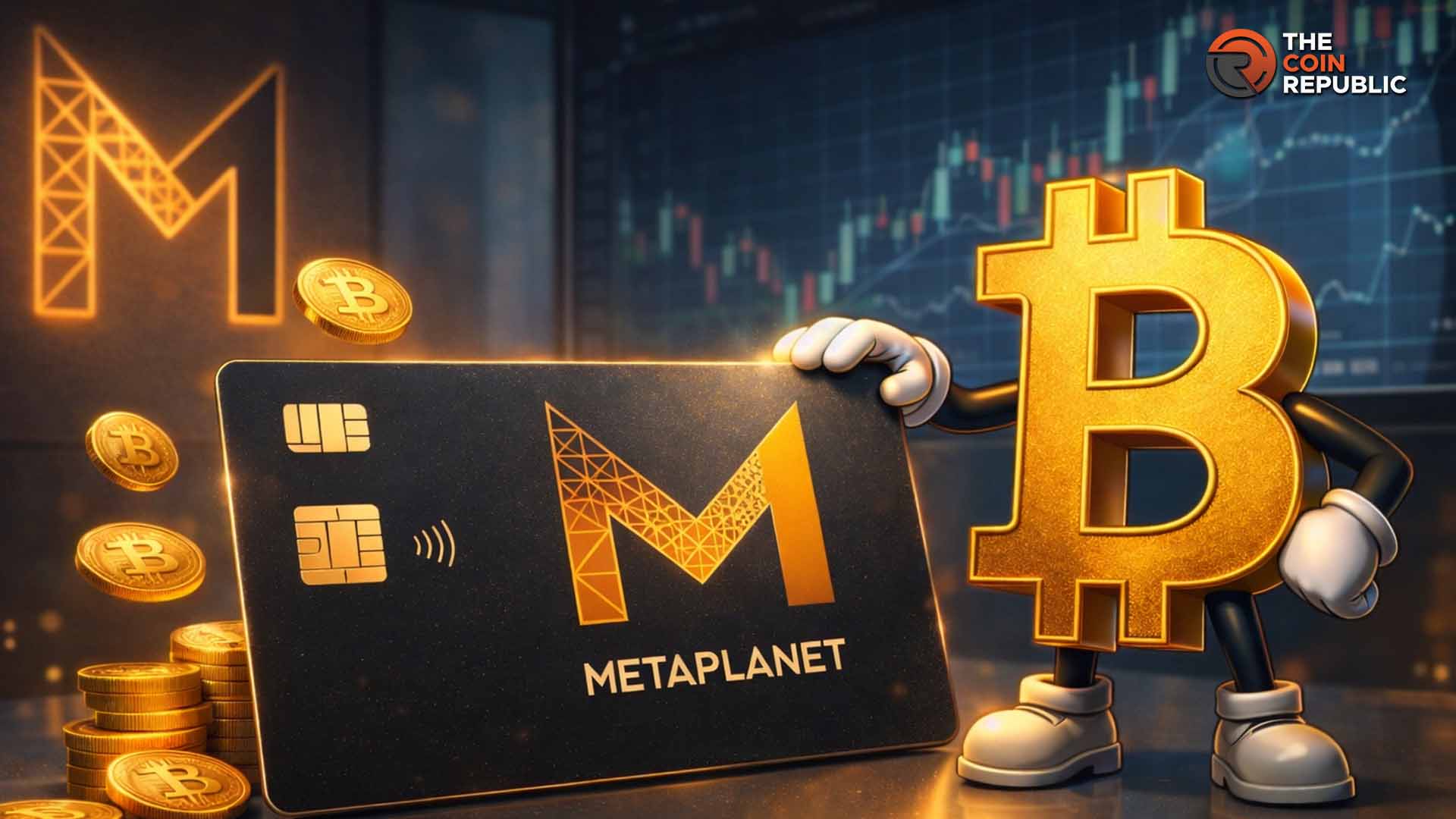
Metaplanet, a prominent Bitcoin treasury company in Asia, is set to launch a new payment card offering 1.6% cashback in Bitcoin on all purchases exclusively for its shareholders. This strategic move has been met with positive investor sentiment, driving an uptrend in the company's stock price.
The Metaplanet Card, slated for a summer launch, aims to integrate Bitcoin into everyday spending by rewarding users with BTC on purchases. By offering this benefit solely to shareholders, Metaplanet seeks to enhance shareholder value and potentially attract new investors interested in crypto-related perks.
This initiative aligns with Metaplanet's broader goal of promoting Bitcoin's use in daily life and payments within Japan. The country is witnessing increasing crypto adoption, with major financial institutions like Nomura Holdings, Daiwa Securities Group, and SMBC Nikko Securities exploring crypto trading services. Metaplanet's card could further enhance Bitcoin's accessibility and popularity in the Japanese market.
The announcement of the Bitcoin card has positively impacted Metaplanet's stock (MTPLF). The stock is currently trading around $318, showing a surge of nearly 3%. Over the past month, MTPLF has experienced a more significant increase of 6.3%.
Metaplanet continues its aggressive Bitcoin accumulation strategy, mirroring tactics employed by entities like Michael Saylor's Strategy. The company currently holds 35,102 BTC, ranking it as the 4th largest public holder of Bitcoin. To support this strategy, Metaplanet recently raised 40.8 billion yen ($255 million) by issuing new shares to global institutional investors. The company has plans to raise up to $531 million in total funding. These share issuances were conducted at a premium, with additional potential funding from fixed-strike warrants, ensuring that new shares increase the Bitcoin held per share, benefiting existing investors.
Source, catalyst, and sector overlap from the latest feed.
TRON DAO's expansion of its AI fund to $1 billion signals a strategic pivot towards becoming a primary payment layer for the burgeoning agent economy. The network's focus on low-fee, high-frequency transactions positions it as a competitor to slower blockchains like Ethereum for machine-to-machine payments. TRON's investment in agent identity, stablecoin rails, and tokenized RWAs indicates a move towards foundational infrastructure rather than speculative assets. This development highlights a growing trend of blockchains competing to provide the necessary infrastructure for AI-driven financial systems and autonomous agents.
Key Insights: MicroStrategy is preparing for another mega Bitcoin purchase spree courtesy of its latest announcement. The company just announced two equity offering programs collectively aimed at raising $42 billion, which will reportedly be invested in Bitcoin. MicroStrategy confirmed that the two equity offerings will feature a $21 billion MSTR stock offering and a $21 […] The post MicroStrategy Announces Plan to Raise $42 Billion for Mega Bitcoin Acquisition appeared first on The Coin Republic.
Key Insights: Circle stock price posted its worst day since its IPO after a leaked CLARITY Act draft moved to kill passive stablecoin yield. But the chart says the real damage may just be starting, and it could send the CRCL price towards the $50 zone. CLARITY Act Draft Bans Passive Stablecoin Yield Circle’s stock, […] The post $50 Next? CLARITY Act Ban Puts Circle Stock Price in Freefall Territory appeared first on The Coin Republic.
The NYSE's partnership with Securitize to build a system for trading tokenized securities signals a significant integration of traditional finance with blockchain technology. This collaboration aims to establish regulatory and technical standards for institutional tokenized markets, potentially paving the way for broader adoption and increased liquidity in RWA tokenization. While tokenized equities are gaining traction, the NYSE's focus on 'native tokenization' with Securitize suggests a move beyond derivatives or price trackers, addressing criticisms of current offerings. The NYSE's initiative, alongside Nasdaq's similar efforts, indicates a growing institutional race to develop infrastructure for tokenized assets, potentially impacting market access and trading paradigms.
Circle is advocating for regulatory adjustments in the EU's Market Integration Package, arguing that current rules hinder stablecoin adoption and institutional access, particularly for its euro-backed stablecoin EURC. The company's feedback highlights how restrictive thresholds and fragmented implementation of regulations like MiCA create operational friction and limit liquidity, impacting the growth potential of stablecoins within European markets. Circle's proposals aim to foster broader participation by suggesting more flexible criteria and supervisory assessments, which could lead to increased integration of stablecoins into traditional finance and settlement systems.
X's strategic hire of a design lead with deep Aave Labs and Coinbase Base experience signals a serious commitment to integrating sophisticated DeFi and self-custody wallet functionalities into its payment ecosystem. The appointment of Benji Taylor, who previously led product design for Aave and Coinbase's Base, suggests X is prioritizing user experience and advanced crypto-native features for its upcoming 'X Money' platform. While X Money's April launch was announced without explicit mention of blockchain, the recruitment of a crypto-native design expert indicates potential for future integration of decentralized technologies or crypto-adjacent services.
Franklin Templeton and Ondo Finance are launching tokenized ETFs accessible via crypto wallets, signaling a significant step towards integrating traditional finance with decentralized infrastructure. The partnership enables 24/7 trading and access through DeFi applications, potentially increasing liquidity and adoption for tokenized assets beyond traditional brokerage channels. While initially targeting non-US investors due to regulatory uncertainty, this move by a major asset manager like Franklin Templeton could pave the way for broader institutional adoption of RWA products. The development highlights the growing trend of tokenized equities, with Ondo Finance already a dominant player, and suggests increased competition and innovation in the RWA sector.
Franklin Templeton's partnership with Ondo Finance to tokenize ETFs signifies a growing trend of traditional finance integrating with blockchain technology, potentially increasing on-chain asset diversity. The offering of 24/7 trading for tokenized ETFs via Ondo's platform, though restricted to non-U.S. users, highlights a move towards broader accessibility for traditional investment products within digital asset ecosystems. This development, alongside similar initiatives from NYSE and Nasdaq, suggests a maturing market for tokenized securities, potentially driving institutional adoption and creating new avenues for capital flow into crypto-related infrastructure.
The increasing partnerships between traditional asset managers like Franklin Templeton and crypto firms such as Ondo Finance signal a significant acceleration in the tokenization of real-world assets, potentially unlocking substantial new capital flows into the digital asset space. Bitpanda's development of a MiCA-compliant Ethereum L2 solution, Vision Chain, indicates a strategic move to capture institutional demand for regulated tokenized asset trading in Europe, highlighting the growing importance of regulatory clarity for market infrastructure. The projected $13.5 trillion market for tokenized assets by 2030 underscores a major competitive landscape shift, where control over trading and access platforms will be as crucial as the assets themselves. Startale Group's substantial $63 million funding round, backed by major players like SBI Group and Sony Innovation Fund, demonstrates continued investor confidence in the underlying infrastructure required for the expansion of tokenized finance.
Bitmine's launch of the MAVAN platform signifies a growing trend of institutional-grade infrastructure development in Ethereum staking, catering to increasing demand for yield and compliance. The expansion of Bitmine's staking operations to external clients, leveraging its significant ETH holdings, suggests a potential increase in staked ETH and associated rewards, impacting network economics. With backing from major investors and a stated goal to acquire 5% of total ETH supply, Bitmine's move could attract substantial institutional capital into ETH staking, reinforcing its position as a yield-generating asset.
The partnership between Cardano's Midnight and Monument Bank signifies a major step towards integrating privacy-preserving blockchain technology into regulated financial services, potentially unlocking significant TVL and setting a precedent for future RWA tokenization. Monument Bank's plan to tokenize retail deposits and offer advanced financial tools like Lombard lending on-chain, leveraging Midnight's zero-knowledge cryptography, could attract substantial capital and redefine retail access to private banking services. This development highlights the growing intersection of traditional finance and blockchain, with a focus on privacy solutions, suggesting a potential shift in how regulated institutions approach digital asset adoption and customer offerings.
Coinbase's integration with Chainlink to publish exchange data on-chain signifies a crucial step in bridging TradFi and DeFi, potentially enhancing pricing, risk management, and product development within decentralized finance. The availability of Coinbase's order book, spot, and derivatives data on-chain via Chainlink DataLink empowers DeFi developers to build more sophisticated financial instruments and applications, potentially attracting greater institutional interest. This development establishes a new standard for programmable market infrastructure, accelerating the convergence of traditional and decentralized finance by providing institutional-grade data directly to blockchain networks.
McLaren Racing's entry into the Hedera Council signifies a growing trend of mainstream enterprises leveraging enterprise blockchains for fan engagement and digital asset initiatives. The partnership, which includes the launch of free-to-mint digital collectibles tied to F1 races, aims to onboard new users to Web3, potentially increasing adoption for Hedera and its ecosystem. As a governing member with voting rights, McLaren's involvement suggests a deeper commitment to Hedera's development, which could lead to further integration and innovation within the network.
Live Feed
Loading the broader stream in the same flow as the homepage feed.
Bitcoin is testing the $72,000 resistance, with a potential short squeeze zone identified around $74,000 due to concentrated leveraged short positions. The market structure shows resilience with demand at lower levels, but a decisive break above $72,000 is required to confirm a bullish continuation and target higher price levels. While overhead short liquidity at $74,000 presents a potential catalyst for accelerated upside, it remains a speculative trigger until price action confirms entry into that zone. Traders are closely monitoring the interplay between technical resistance and derivatives positioning, suggesting that a move towards $74,000 could trigger significant volatility.
XRP's market capitalization has surpassed Russia's proposed threshold, positioning it for potential inclusion in the country's regulated digital asset market alongside BTC, ETH, and SOL. The Russian draft bill indicates a selective approach to crypto regulation, prioritizing large, liquid assets with established trading histories, suggesting a controlled market rather than broad access. While XRP meets the market cap criteria, the final decision on its inclusion in Russia's regulated market will depend on further criteria such as trading volume and public trading record, with a midyear deadline for the framework.

The upcoming expiration of $15 billion in Bitcoin options on Deribit, coinciding with a geopolitical deadline, introduces a potential volatility catalyst that traders should monitor for post-settlement price action. Despite the confluence of options expiry and geopolitical timing, implied volatility compression suggests a controlled settlement is anticipated, indicating a lack of immediate market panic. Bitcoin's resilience around the $70,000 level amidst macro uncertainty signals underlying spot demand and holder steadiness, providing a supportive backdrop for potential post-expiry price discovery.

Bitcoin's post-FOMC meeting performance has evolved from inconsistent reactions to a systematic downside bias, indicating its integration into the broader risk asset complex. This 'sell the Fed' tendency, particularly evident from 2024 through early 2026, suggests traders are increasingly using Fed events as de-risking opportunities, impacting short-term price action. The growing sensitivity to FOMC dates signifies Bitcoin's maturation as a global asset, responding to policy cadence and liquidity expectations within established macro frameworks. Traders should incorporate this recurring post-event weakness into their playbook, recognizing that calendar risk now plays a significant role in Bitcoin's pricing architecture.

Now in testing, the platform aims to enable programmable payments and simplify blockchain adoption for financial institutions.

Bitcoin is consolidating around the $71,500 pivot, forming a potential inverse head and shoulders pattern that suggests a technical target of $76,000 to $80,000 if a breakout occurs. On-chain data indicates a decrease in short-term holder selling pressure, with realized profit and loss metrics returning to levels that preceded previous significant rallies, suggesting potential for further upside. Despite bullish technical and on-chain signals, weak spot volumes and negative Coinbase premium indicate a lack of strong US-based demand, raising concerns about the sustainability of any potential rally above $71,500. Derivatives markets show increased activity and positive funding rates, suggesting futures-driven speculation is contributing to price action, but this needs to be confirmed by robust spot demand for a sustained move.

Franklin Templeton's partnership with Ondo Finance to launch tokenized ETFs signifies a major TradFi institution actively integrating with blockchain technology, potentially driving significant capital into the RWA sector. The collaboration aims to enhance accessibility, liquidity, and settlement efficiency for ETFs, demonstrating a clear pathway for traditional financial products to leverage decentralized finance infrastructure. While the pilot is launching in select regions, the pending US regulatory approval highlights the ongoing challenges and opportunities in bridging traditional finance with the crypto ecosystem. The ONDO token's price action, despite a reported 4.17% gain, faces scrutiny regarding its direct correlation to the partnership's success, underscoring the speculative nature of RWA-related tokens.

Analysts suggest Circle's recent share selloff is overdone, as regulatory concerns regarding stablecoin yield prohibitions are unlikely to impact its core revenue model derived from U.S. Treasury investments. Cathie Wood's Ark Invest buying Circle shares on the dip indicates institutional conviction despite short-term regulatory headwinds, potentially signaling a bottom for the stock. Despite potential yield restrictions on platforms, the strategic demand for USDC remains intact, suggesting Circle's market position as a compliant stablecoin alternative is secure. Bernstein reiterates an 'Outperform' rating on Circle and Coinbase, highlighting that yield bans primarily affect distributors, not issuers like Circle, and that Coinbase may adapt to new reward models.
The appointment of key crypto figures like David Sacks and Fred Ehrsam to President Trump's Council of Advisors on Science and Technology signifies a major shift, moving digital assets from the periphery to the core of US tech policy discussions. This inclusion suggests a potential for more favorable regulatory clarity and a reduced adversarial stance from policymakers, which could foster greater innovation and institutional adoption within the crypto space. The convergence of political influence, regulatory openness, and increasing institutional capital, as evidenced by bank exposures to major cryptocurrencies, indicates a maturing crypto market poised for deeper integration into the global financial system.
Coinbase's reported rejection of the latest stablecoin yield compromise signals continued legislative hurdles for U.S. crypto market structure reform. The exchange's stance, despite being described as less severe than previous opposition, indicates that significant disagreements persist, potentially delaying regulatory clarity for stablecoins and related yield products. This development introduces uncertainty for market participants anticipating a finalized stablecoin framework, impacting sentiment around stablecoin issuers and platforms that rely on yield generation.

Bitcoin faces critical resistance at $72,000, with a sustained break above this level needed to target $80,000 and beyond. Exchange outflow data suggests ongoing investor accumulation, indicating a belief in Bitcoin's current value despite price consolidation. Several major altcoins like ETH, BNB, XRP, SOL, DOGE, ADA, BCH, and LINK are at key technical junctures, with their next price movements dependent on breaking immediate resistance or support levels. The article provides technical analysis and price predictions for top cryptocurrencies, suggesting a neutral short-term outlook pending decisive price action above key resistance levels.

Crypto prediction markets, while capable of aggregating information, risk incentivizing manipulation and amplifying misinformation by financializing real-world instability. The global reach and low-friction settlement of crypto-based prediction markets create significant social risks, potentially distorting behavior around underlying events rather than merely forecasting them. Bad actors can exploit crypto prediction markets not only through privileged information but also by influencing the information environment, turning market odds into viral narratives that reshape probabilities. Treating all liquid crypto markets as legitimate due to price discovery is a mistake; building rails for speculating on instability is not financial innovation but moral hazard at internet scale.

TRM Labs' integration of AI agents into its forensic tools aims to significantly enhance law enforcement's ability to track illicit crypto activity by simplifying complex blockchain analysis through natural language queries. The introduction of AI assistants addresses the growing challenge of increasing caseloads and the complexity of cross-chain investigations, potentially improving efficiency for regulatory and investigative bodies. With illicit crypto volume reaching $158 billion and AI-enabled fraud surging 500%, this development highlights the escalating arms race between criminals leveraging AI and the tools being developed to counter them.
CoinShares' filing for Bitcoin volatility ETFs introduces novel derivative products, potentially offering new hedging and speculative strategies for traders beyond direct BTC exposure. The introduction of leveraged and inverse volatility ETFs could increase market activity and provide tools for managing risk associated with Bitcoin's price swings. This move by CoinShares, following their acquisition of Valkyrie, signals a strategic expansion into U.S. ETF offerings, leveraging existing infrastructure for new product launches. The potential early June launch date for these ETFs, tracking the CME CF Bitcoin Volatility Index (BVX), presents a near-term catalyst for market participants interested in volatility-based trading.
Signal context only. Validate with price action, liquidity, and risk limits before taking a position.
