
Navigating Crypto News

CoinFeather
Navigating Crypto News
Quick market read from this story
The NYSE's collaboration with Securitize to develop systems for tokenized securities signifies a major step towards integrating traditional finance with blockchain infrastructure.
Securitize's role as the first digital transfer agent for the NYSE's platform highlights the growing importance of specialized blockchain firms in bridging TradFi and digital assets.
This development, alongside Nasdaq's recent pilot program, indicates a broader trend of established financial institutions actively exploring and building out tokenized asset trading capabilities.
The focus on "native" securities and round-the-clock trading infrastructure suggests a potential shift in market structure and operational efficiency for traditional assets.
Deep Dive
The New York Stock Exchange (NYSE) is partnering with Securitize, a tokenization specialist backed by BlackRock, to build infrastructure for trading tokenized securities. This collaboration aims to accelerate the adoption of digital asset trading systems on Wall Street and will involve developing standards for tokens representing real-world assets such as stocks, bonds, and exchange-traded funds (ETFs).
Securitize will serve as the first digital transfer agent for the NYSE's Digital Trading Platform. This platform is designed to facilitate round-the-clock trading of securities. The initiative signifies a growing commitment from traditional finance giants to explore blockchain-based trading solutions. This follows Nasdaq's recent approval for a pilot program involving tokenized securities and the SEC's ongoing efforts, under Chair Paul Atkins' Project Crypto, to develop regulations for on-chain financial markets.
Securitize CEO Carlos Domingo has been a proponent of "native" securities, which are tokens that embody the rights of traditional securities, such as voting and dividend distribution, while existing entirely on-chain. Securitize utilizes a blockchain-based system for recording ownership, contrasting with traditional transfer agents that rely on centralized databases. This approach has been applied to assets like BlackRock's $2 billion tokenized money-market fund, BUIDL, which operates on the Ethereum network.
The collaboration underscores a broader trend of financial institutions embracing tokenization. Securitize has previously been involved in projects such as issuing tokens for a luxury Maldivian resort backed by World Liberty Financial. In October, the firm, which received a $47 million funding round led by BlackRock in 2024, announced plans to list on the Nasdaq at a $1.25 billion valuation. Domingo stated that the partnership with NYSE is focused on building tokenization within existing market structures, ensuring necessary protections and operational integrity.
Source, catalyst, and sector overlap from the latest feed.
Bernstein analysts suggest Bitcoin's price has likely bottomed, projecting a rise to $150,000 by year-end, indicating a potential shift in market sentiment and a bullish outlook for the asset. Strategy's resilience in accumulating Bitcoin during market downturns, supported by its preferred share offering, highlights its strategic financial management and reinforces its position as a major corporate holder. The maturation of Bitcoin's market structure, evidenced by the debut of ETFs and Strategy's role as a 'Bitcoin bank of last resort,' suggests a growing and more resilient capital base, potentially altering traditional cycle-based market expectations.
Tether's commitment to a Big Four audit, though details remain undisclosed, signals a move towards greater transparency and potential regulatory compliance, which could bolster confidence in USDT's reserves. The impending audit is a critical step for Tether to align with regulatory frameworks like the GENIUS Act, potentially reducing systemic risk associated with stablecoin reserves and influencing future stablecoin oversight. While the announcement is positive for stablecoin stability, the lack of a named auditing firm introduces a degree of uncertainty, suggesting a 'watchful' stance until the audit's completion and findings are public.
Solana's launch of an enterprise-focused developer platform, backed by major players like Mastercard and Western Union, signals a strategic push to integrate traditional finance with its blockchain for practical use cases like stablecoin settlement and cross-border payments. The adoption of Solana's platform by established financial institutions indicates a growing trend of enterprise blockchain integration, potentially increasing demand for SOL and enhancing its utility beyond speculative trading. With a trading module expected later in 2026, the platform's full impact on market liquidity and transaction volume is still developing, suggesting a 'watchlist' approach for immediate trading decisions.
Geopolitical de-escalation initially fueled a short squeeze in AI altcoins like TAO, FET, and RENDER, demonstrating their sensitivity to macro risk sentiment. Conflicting reports regarding Iran talks created significant volatility, leading to over $670 million in crypto liquidations and highlighting the market's reaction to uncertainty. While AI altcoins saw short-term gains, the broader market faces headwinds from elevated oil prices and Treasury yields, potentially testing Bitcoin's store-of-value narrative. The convergence of geopolitical events and the Nvidia GTC conference provided a dual catalyst for AI-related crypto assets, suggesting sector-specific narratives can drive performance amidst macro noise.
MicroStrategy's announcement of a $44 billion equity plan to potentially buy more Bitcoin signals continued institutional commitment to BTC accumulation, despite the lack of immediate price reaction. The bipartisan bill targeting sports betting on prediction markets represents a significant regulatory risk for platforms like Kalshi and Polymarket, potentially impacting their core revenue streams and user activity. Polymarket and Kalshi's proactive measures, including referral programs, fee structure adjustments, and insider trading bans, indicate an effort to preemptively address regulatory scrutiny and bolster platform integrity. Coinbase's user complaints regarding excessive March Madness push notifications highlight a potential disconnect in user experience management and the need for greater notification customization.
The NYSE's partnership with Securitize to launch a tokenized securities platform signifies a major institutional embrace of blockchain technology, potentially accelerating the adoption of RWA tokenization. Securitize's designation as NYSE's first digital transfer agent establishes a precedent for on-chain settlement of traditional securities, indicating a significant shift in financial infrastructure. This move by the NYSE, alongside other major players like BlackRock and Franklin Templeton, suggests a growing trend towards tokenization, which could redefine market liquidity and accessibility for traditional assets.
Solana's new developer platform, targeting enterprise adoption with unified APIs and partnerships like Mastercard, signals a strategic push into traditional finance integration. The platform's focus on tokenized deposits, stablecoins, and RWAs, coupled with AI coding tool integration, aims to reduce institutional barriers and accelerate blockchain adoption. Despite significant ecosystem development and institutional partnerships, SOL's price action remains weak, trading below key resistance levels and indicating a lack of immediate bullish momentum. Traders should monitor SOL's ability to reclaim resistance levels at $97.65, $106.82, and $116.99 to confirm any potential bullish reversal, with current market structure suggesting continued downward pressure.
Solana's launch of an enterprise-focused developer platform, backed by major payment players like Mastercard, signals a strategic pivot towards institutional adoption and real-world asset integration. The platform's modular design and embedded compliance tools, including Chainalysis KYT, aim to bridge the gap between traditional finance and blockchain, potentially accelerating the issuance of stablecoins and tokenized assets. This development positions Solana as a contender for enterprise-grade financial applications, shifting the competitive landscape from raw performance to integration capabilities and regulatory alignment.
NoOnes's integration of AI into its P2P escrow system represents a significant advancement in fraud prevention for crypto transactions, potentially setting a new standard for platform security. The reported 28% reduction in disputed transactions and 85% identification of risky scenarios suggest that AI-driven behavioral analysis can effectively mitigate risks in P2P crypto trading. This development highlights the growing sophistication of fraud prevention tools in the crypto space, moving beyond traditional methods to proactive, AI-powered risk assessment. While not directly impacting asset prices, this enhancement in platform security could foster greater user trust and adoption in P2P crypto marketplaces.
Bittensor's TAO price surge past $300 is supported by a strong narrative around its positive-sum tokenomics and growing ecosystem, indicating potential for further upside if current momentum sustains. The partnership between Bittensor subnet SN4 Targon and Intel on decentralized compute using trusted execution environments represents a significant technical development that could drive real-world adoption and demand for TAO. While the narrative and ecosystem growth are bullish, the article cautions that TAO's price action is walking a tightrope, suggesting traders should monitor for signs of exhaustion or a potential pullback to the 200-day EMA.
XRP's inclusion in the top five crypto exposures reported by banks under Basel III signifies a formal integration into institutional risk management frameworks, moving beyond speculative trading. The data from the Bank for International Settlements, covering 150 banks including G-SIBs, indicates a broad, system-wide acceptance and monitoring of XRP within the core of global finance. XRP's alignment with modernizing payment systems like SWIFT and its potential to unlock significant value in cross-border transactions suggest a growing practical relevance for the asset in financial infrastructure.
Bernstein's call on Bitcoin's bottom, supported by the absence of structural damage and increasing institutional demand via ETFs, suggests a potential shift from a bear market to a bull phase, with a reiterated year-end target of $150,000 for 2026. CoinDesk's volatility analysis indicates that extreme implied volatility readings, similar to past capitulation events, may signal a bottom near $60,000, framing the recent sell-off as fear-driven rather than structurally bearish. Historical analysis of Bitcoin's weekly RSI shows that oversold conditions, as observed now, have preceded significant rallies (2,700%, 1,800%, 350%), presenting a bullish technical outlook if key support levels hold. A recurring bear market signal has triggered again, historically preceding substantial declines; however, reclaiming $70,000 could invalidate this signal, creating a critical inflection point for near-term price action.
The filing of multiple competing ETFs for Hyperliquid's HYPE token by major asset managers indicates institutional interest, but suggests that the early retail entry window for significant gains has likely closed. The article promotes Pepeto as a superior investment opportunity compared to assets being packaged for institutional ETFs, highlighting its presale pricing, working exchange, and experienced co-founder as key differentiators for retail investors. While Digitap and Mutuum Finance are presented as alternative investments, their projected return profiles are deemed less explosive than Pepeto's, positioning Pepeto as the primary 'best crypto to invest in' before its listing.
Microsoft stock is experiencing a near-term pullback driven by broader market weakness and geopolitical tensions, despite positive underlying economic data and continued AI growth narrative. The stock's long-term technical support at the 200-week moving average remains intact, suggesting resilience despite current volatility, which could be a factor for traders to watch for potential reversals. While AI competition is intensifying, Microsoft's integration of AI into Azure and products like Copilot continues to be a key driver for enterprise technology and long-term revenue growth.
BlackRock's CEO envisions digital wallets as the next frontier for asset management, aiming to integrate traditional investment products like stocks and ETFs, signaling a significant TradFi adoption trend. The firm's substantial existing AUM in stablecoin reserves ($65B) and digital asset ETPs ($80B) provides a strong foundation for this strategy, indicating tangible progress beyond mere rhetoric. This move could accelerate mainstream adoption of wallet-native investing by leveraging BlackRock's infrastructure to bridge traditional finance with crypto-native rails, potentially impacting market access and distribution models. While the long-term vision includes fractional private market access, current progress is focused on tokenized cash and Treasury products, suggesting a phased rollout prioritizing regulated and established assets.
Live Feed
Loading the broader stream in the same flow as the homepage feed.

Morgan Stanley's strategy shift indicates a maturing institutional approach to digital assets, moving beyond hype towards foundational infrastructure development. The bank's planned support for tokenized equities trading signals a significant step towards integrating traditional securities with blockchain technology, potentially impacting RWA and broader market structure. Despite current market conditions, the sustained investment in crypto infrastructure by major financial institutions suggests a long-term commitment to digital asset integration.

Proposed changes to the Clarity Act could significantly curtail stablecoin yield generation, impacting the value proposition for holding stablecoins like USDC and potentially reducing adoption. Circle's stock experienced an 18% decline due to the legislative threat, indicating market sensitivity to regulatory actions that affect core revenue streams and product utility. The concurrent news of Tether undergoing a full reserve audit introduces competitive pressure, potentially shifting market share away from USDC if USDT's transparency improves significantly. Despite a sharp sell-off, some analysts suggest the market may be overreacting, implying potential for a rebound if the final legislation is less restrictive than the draft suggests.

The maturation of DeFi tools, as highlighted by Aave and Ethena founders, suggests a shift towards more predictable yield generation, potentially attracting traditional finance capital seeking stable returns. The increasing sophistication of DeFi products, moving beyond simple token trading and borrowing to offer fixed-to-floating rate swaps, indicates a growing capacity for risk management within the crypto space. Aave's role as a liquidity provider is crucial for bootstrapping new DeFi products, signaling a strengthening of the underlying infrastructure that supports innovation and product development in the sector. While leverage still dominates DeFi yield generation, the potential integration of real-world assets (RWAs) through tokenization points to a future where yields are increasingly derived from traditional financial instruments, bridging the gap between crypto and TradFi.

The introduction of insurance-backed staking products, benchmarked by CESR, is transforming staked ETH from a speculative asset into a legitimate institutional yield product. This development allows cautious TradFi firms to integrate ETH staking into existing risk frameworks, potentially unlocking significant new institutional capital flows. By mitigating risks like slashing and downtime through insurance and standardized benchmarks, staked ETH becomes more palatable for regulated entities seeking predictable yield.
XRP's Q2 performance historically shows significant volatility, with an average April return of +24.8% and a notable +1,109% in Q2 2017, suggesting potential for a strong rebound after its -23% start to 2026. Despite historical bullish tendencies in Q2, the possibility of a 'bull trap' or further decline exists, as evidenced by a -59.4% Q2 in 2022 and a potential repeat of 2024's April weakness. The current oversold market condition for XRP, following a weak Q1 2026 and a bearish Q4 2025, sets the stage for a critical Q2 'moment of truth' with divergent outcomes.
Circle's CRCL stock has experienced a significant pullback of approximately 18% from recent highs, despite strong on-chain performance and increased usage of its USDC stablecoin. The stock's correction suggests that market sentiment is shifting from pure stablecoin optimism to a more cautious outlook, factoring in potential future interest rate cuts and regulatory uncertainties that could impact Circle's revenue streams. Traders are closely monitoring USDC's net inflow trends and the sustainability of stablecoin activity growth, as these metrics will determine if the recent dip in CRCL stock presents a buying opportunity or signals further downside.
The SEC chair's confirmed appearance at the Digital Asset Summit, following the release of new crypto guidance, signals a potentially more collaborative regulatory environment. Recent SEC guidance clarifying the classification of digital assets as securities or non-securities, including stablecoins and digital commodities, provides much-needed clarity for market participants. The SEC's stated intention to issue a proposed rule for a startup safe harbor program indicates a proactive approach to fostering innovation within a defined regulatory framework. The shift in enforcement focus towards 'quality over quantity' suggests a potential reduction in broad-based enforcement actions, which could be interpreted positively by the market.
The recent burning of 40 million RLUSD on Ethereum, following previous burns, raises questions about potential declining demand despite the stablecoin's overall growth trajectory. While token burns are a normal mechanism for fully-backed stablecoins to maintain parity with reserves, the frequency and scale of recent RLUSD burns may signal a shift in institutional redemption patterns. Despite concerns over burn activity, RLUSD's circulating supply remains robust, approaching $1.5 billion, indicating continued underlying adoption and potential for further growth towards the $2 billion milestone. The net reduction in RLUSD supply over the past week (45 million burned vs. 10 million minted) suggests a temporary slowdown in net issuance, which could impact its growth rate in the short term.

Shiba Inu (SHIB) exhibits a bullish divergence on the RSI and has broken above a key resistance level, suggesting potential for a near-term upward move. The technical setup points to a potential 37% price increase for SHIB, targeting the 200-day moving average around $0.00000842, contingent on holding support at $0.00000504. While technical indicators are positive, SHIB's price action remains heavily influenced by broader market sentiment, making the $0.0000068 level a critical short-term breakout point.
The SIREN token experienced a dramatic 78% price crash from its all-time high, wiping out significant market cap and investor value. On-chain analytics flagged a concentration of nearly 50% of SIREN's supply in one cluster prior to the crash, suggesting a potential pump-and-dump scheme was executed. Despite claims of an AI-powered insights engine, the SIREN Dapp reportedly lacks basic functionality and its AI agent struggles to provide meaningful responses, raising serious credibility issues. Technical indicators like MACD, RSI, and CMF are showing bearish signals post-crash, indicating continued downside risk with potential targets near the 200-day EMA.
Despite consistent outflows from Ethereum spot ETFs and negative Coinbase premium indicating weak institutional and US retail demand, the MVRV ratio has fallen below 0.8, a historically significant level that has preceded major bull rallies, creating a divergence between sentiment and on-chain valuation signals. The shift in demand towards yield-bearing Ethereum products over traditional spot ETFs suggests a change in institutional strategy, prioritizing income generation over direct price exposure, which could signal lower conviction in immediate price appreciation. The flattening 50-day moving average and RSI below its average indicate that while selling pressure may be easing, the conviction behind the recent price bounce is not yet confirmed by momentum indicators, leaving the market in a state of tension between valuation and demand.

Bitcoin's slip below $70,000, mirroring equity market weakness, suggests a continued correlation with risk assets driven by shifting interest rate expectations. The significant drop in Circle's stock (CRCL) and Coinbase (COIN) highlights the market's sensitivity to regulatory news impacting stablecoin yields and exchange operations. The shift from anticipated rate cuts to potential rate hikes by the Federal Reserve is creating a risk-off environment, pressuring speculative assets like cryptocurrencies. Tether's announcement of a full audit by a 'Big Four' firm, alongside regulatory concerns for USDC, could lead to a significant shift in stablecoin market dynamics and trust.
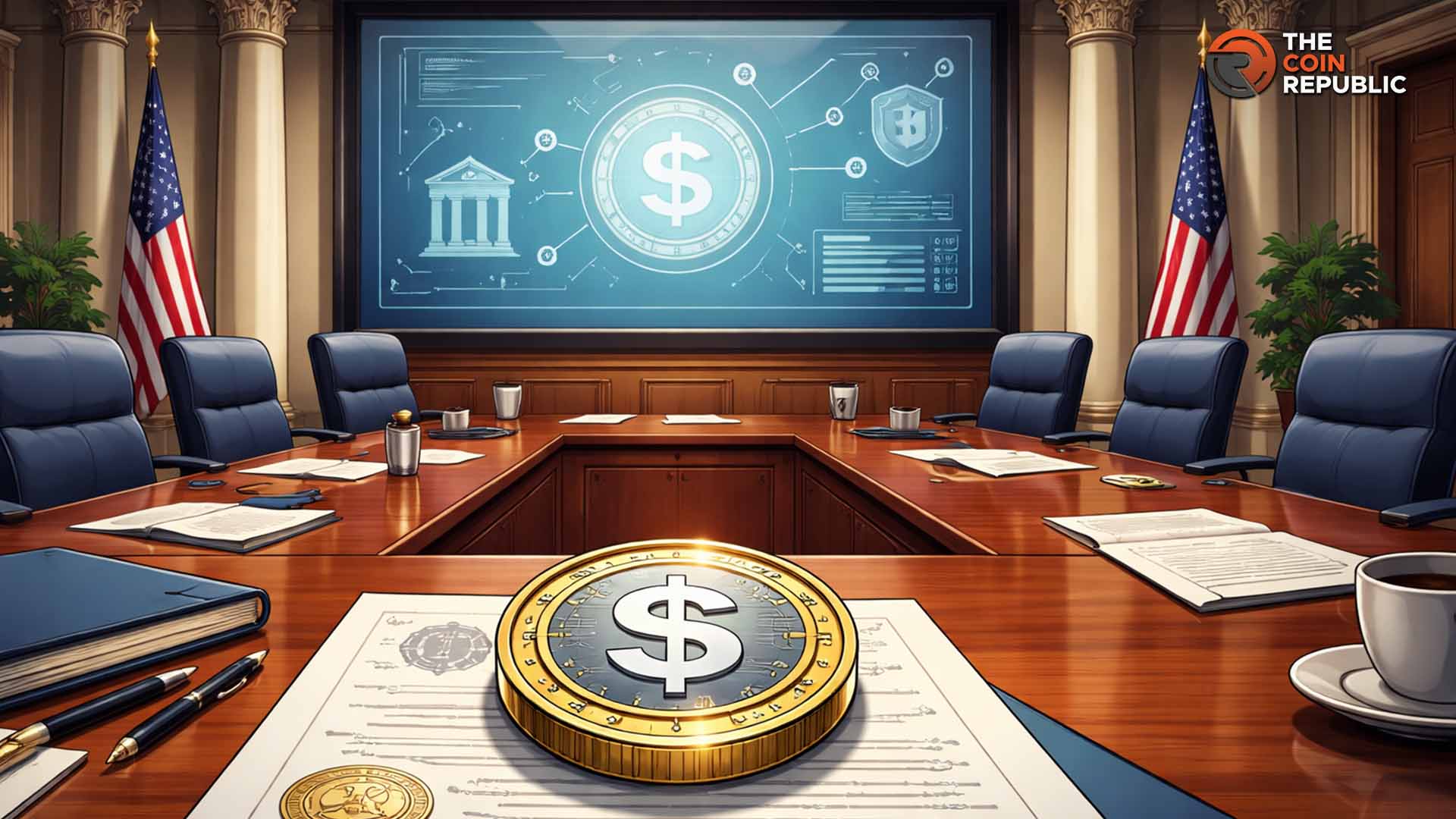
Delaware's proposed banking law modernization, including specific bills for stablecoins and digital assets, signals a proactive state-level regulatory approach to integrate crypto into its financial framework. The legislation aims to enhance regulatory authority and consumer protection, potentially setting a precedent for other states seeking to attract future financial services and jobs. By aligning with federal frameworks like the GENIUS Act and focusing on licensing, reserves, and AML for stablecoin issuers, Delaware is positioning itself as a potentially favorable jurisdiction for digital asset businesses.
Signal context only. Validate with price action, liquidity, and risk limits before taking a position.
