
Navigating Crypto News

CoinFeather
Navigating Crypto News

Quick market read from this story
Delaware's proposed banking law modernization, including specific bills for stablecoins and digital assets, signals a proactive state-level regulatory approach to integrate crypto into its financial framework.
The legislation aims to enhance regulatory authority and consumer protection, potentially setting a precedent for other states seeking to attract future financial services and jobs.
By aligning with federal frameworks like the GENIUS Act and focusing on licensing, reserves, and AML for stablecoin issuers, Delaware is positioning itself as a potentially favorable jurisdiction for digital asset businesses.
Source, catalyst, and sector overlap from the latest feed.
Prediction markets like Kalshi and Polymarket are implementing stricter anti-insider trading policies, directly impacting user behavior and platform integrity. The new rules, targeting politicians and athletes, aim to prevent the use of non-public information, signaling a proactive response to regulatory scrutiny. Escalating regulatory pressure, including proposed legislation and state-level actions like Utah's, suggests a challenging environment for prediction market platforms. Legal challenges, such as the lawsuit against Kalshi in Arizona, highlight the ongoing conflict between these platforms and existing gambling regulations.
Live Feed
Loading the broader stream in the same flow as the homepage feed.

Bernstein's call on Bitcoin's bottom, supported by the absence of structural damage and increasing institutional demand via ETFs, suggests a potential shift from a bear market to a bull phase, with a reiterated year-end target of $150,000 for 2026. CoinDesk's volatility analysis indicates that extreme implied volatility readings, similar to past capitulation events, may signal a bottom near $60,000, framing the recent sell-off as fear-driven rather than structurally bearish. Historical analysis of Bitcoin's weekly RSI shows that oversold conditions, as observed now, have preceded significant rallies (2,700%, 1,800%, 350%), presenting a bullish technical outlook if key support levels hold. A recurring bear market signal has triggered again, historically preceding substantial declines; however, reclaiming $70,000 could invalidate this signal, creating a critical inflection point for near-term price action.

BitGo and Susquehanna Crypto are launching institutional OTC access to prediction markets, enabling large investors to trade event-based contracts using crypto collateral, which addresses key infrastructure gaps for institutional participation. This development comes amid increasing regulatory scrutiny of prediction markets in the US, with several states taking action against platforms, highlighting a complex regulatory landscape that could impact future growth. The offering allows for bilateral trades using crypto collateral like Bitcoin or stablecoins, potentially increasing demand for these assets as collateral in new financial products. By facilitating institutional access to prediction markets, this partnership could signal a growing trend of integrating crypto-native financial products into traditional institutional workflows.

The filing of multiple competing ETFs for Hyperliquid's HYPE token by major asset managers indicates institutional interest, but suggests that the early retail entry window for significant gains has likely closed. The article promotes Pepeto as a superior investment opportunity compared to assets being packaged for institutional ETFs, highlighting its presale pricing, working exchange, and experienced co-founder as key differentiators for retail investors. While Digitap and Mutuum Finance are presented as alternative investments, their projected return profiles are deemed less explosive than Pepeto's, positioning Pepeto as the primary 'best crypto to invest in' before its listing.
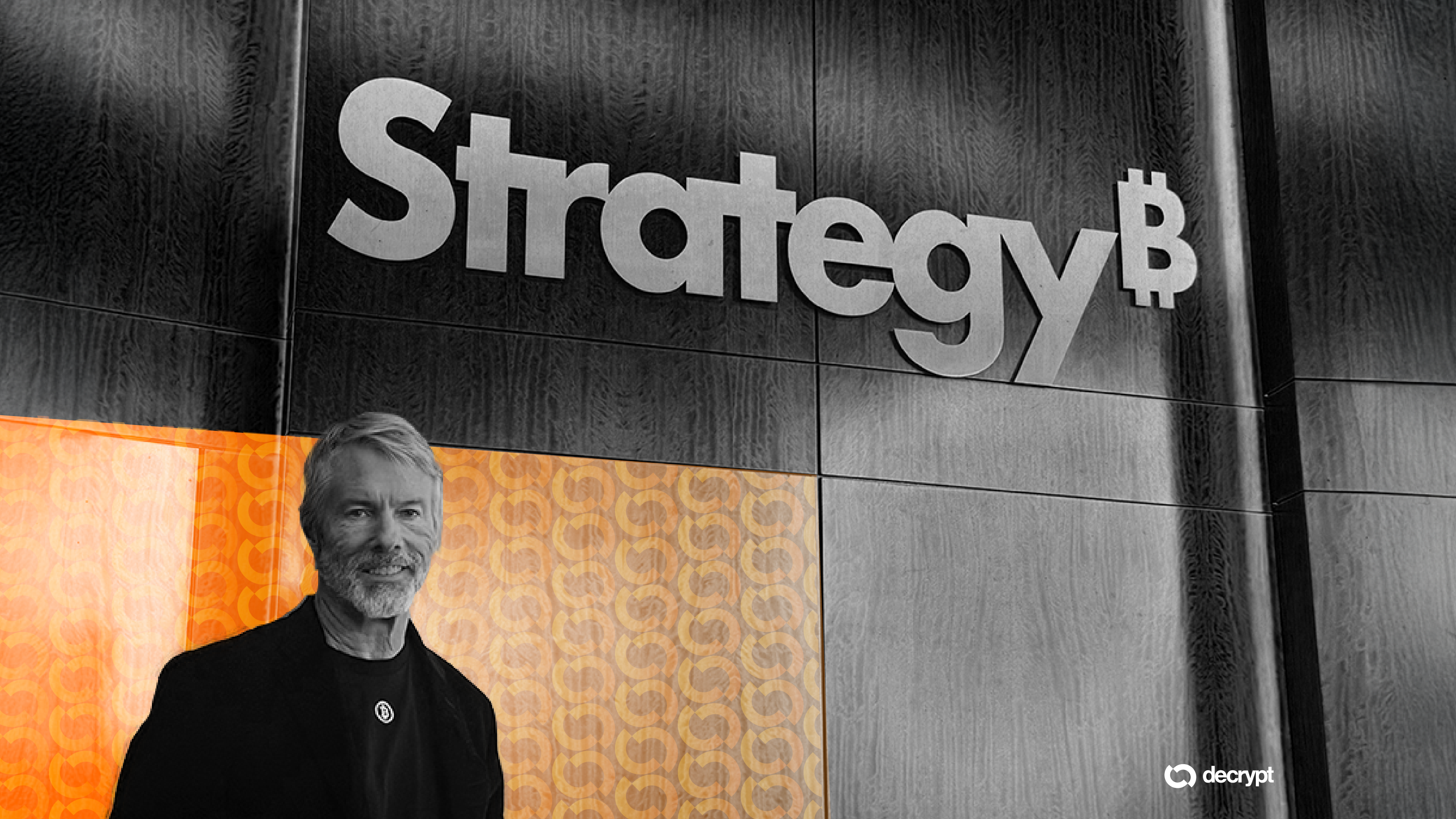
Bernstein analysts suggest Bitcoin's price has likely bottomed, projecting a rise to $150,000 by year-end, indicating a potential shift in market sentiment and a bullish outlook for the asset. Strategy's resilience in accumulating Bitcoin during market downturns, supported by its preferred share offering, highlights its strategic financial management and reinforces its position as a major corporate holder. The maturation of Bitcoin's market structure, evidenced by the debut of ETFs and Strategy's role as a 'Bitcoin bank of last resort,' suggests a growing and more resilient capital base, potentially altering traditional cycle-based market expectations.
Microsoft stock is experiencing a near-term pullback driven by broader market weakness and geopolitical tensions, despite positive underlying economic data and continued AI growth narrative. The stock's long-term technical support at the 200-week moving average remains intact, suggesting resilience despite current volatility, which could be a factor for traders to watch for potential reversals. While AI competition is intensifying, Microsoft's integration of AI into Azure and products like Copilot continues to be a key driver for enterprise technology and long-term revenue growth.

BlackRock's CEO envisions digital wallets as the next frontier for asset management, aiming to integrate traditional investment products like stocks and ETFs, signaling a significant TradFi adoption trend. The firm's substantial existing AUM in stablecoin reserves ($65B) and digital asset ETPs ($80B) provides a strong foundation for this strategy, indicating tangible progress beyond mere rhetoric. This move could accelerate mainstream adoption of wallet-native investing by leveraging BlackRock's infrastructure to bridge traditional finance with crypto-native rails, potentially impacting market access and distribution models. While the long-term vision includes fractional private market access, current progress is focused on tokenized cash and Treasury products, suggesting a phased rollout prioritizing regulated and established assets.

The NYSE's partnership with Securitize to launch a tokenized securities platform signifies a major institutional embrace of blockchain technology, potentially accelerating the adoption of RWA tokenization. Securitize's designation as NYSE's first digital transfer agent establishes a precedent for on-chain settlement of traditional securities, indicating a significant shift in financial infrastructure. This move by the NYSE, alongside other major players like BlackRock and Franklin Templeton, suggests a growing trend towards tokenization, which could redefine market liquidity and accessibility for traditional assets.

Morgan Stanley's strategy shift indicates a maturing institutional approach to digital assets, moving beyond hype towards foundational infrastructure development. The bank's planned support for tokenized equities trading signals a significant step towards integrating traditional securities with blockchain technology, potentially impacting RWA and broader market structure. Despite current market conditions, the sustained investment in crypto infrastructure by major financial institutions suggests a long-term commitment to digital asset integration.

The maturation of DeFi tools, as highlighted by Aave and Ethena founders, suggests a shift towards more predictable yield generation, potentially attracting traditional finance capital seeking stable returns. The increasing sophistication of DeFi products, moving beyond simple token trading and borrowing to offer fixed-to-floating rate swaps, indicates a growing capacity for risk management within the crypto space. Aave's role as a liquidity provider is crucial for bootstrapping new DeFi products, signaling a strengthening of the underlying infrastructure that supports innovation and product development in the sector. While leverage still dominates DeFi yield generation, the potential integration of real-world assets (RWAs) through tokenization points to a future where yields are increasingly derived from traditional financial instruments, bridging the gap between crypto and TradFi.

The introduction of insurance-backed staking products, benchmarked by CESR, is transforming staked ETH from a speculative asset into a legitimate institutional yield product. This development allows cautious TradFi firms to integrate ETH staking into existing risk frameworks, potentially unlocking significant new institutional capital flows. By mitigating risks like slashing and downtime through insurance and standardized benchmarks, staked ETH becomes more palatable for regulated entities seeking predictable yield.
XRP's Q2 performance historically shows significant volatility, with an average April return of +24.8% and a notable +1,109% in Q2 2017, suggesting potential for a strong rebound after its -23% start to 2026. Despite historical bullish tendencies in Q2, the possibility of a 'bull trap' or further decline exists, as evidenced by a -59.4% Q2 in 2022 and a potential repeat of 2024's April weakness. The current oversold market condition for XRP, following a weak Q1 2026 and a bearish Q4 2025, sets the stage for a critical Q2 'moment of truth' with divergent outcomes.
Circle's CRCL stock has experienced a significant pullback of approximately 18% from recent highs, despite strong on-chain performance and increased usage of its USDC stablecoin. The stock's correction suggests that market sentiment is shifting from pure stablecoin optimism to a more cautious outlook, factoring in potential future interest rate cuts and regulatory uncertainties that could impact Circle's revenue streams. Traders are closely monitoring USDC's net inflow trends and the sustainability of stablecoin activity growth, as these metrics will determine if the recent dip in CRCL stock presents a buying opportunity or signals further downside.
The recent burning of 40 million RLUSD on Ethereum, following previous burns, raises questions about potential declining demand despite the stablecoin's overall growth trajectory. While token burns are a normal mechanism for fully-backed stablecoins to maintain parity with reserves, the frequency and scale of recent RLUSD burns may signal a shift in institutional redemption patterns. Despite concerns over burn activity, RLUSD's circulating supply remains robust, approaching $1.5 billion, indicating continued underlying adoption and potential for further growth towards the $2 billion milestone. The net reduction in RLUSD supply over the past week (45 million burned vs. 10 million minted) suggests a temporary slowdown in net issuance, which could impact its growth rate in the short term.
Signal context only. Validate with price action, liquidity, and risk limits before taking a position.
Coinbase CEO Brian Armstrong's historical anecdote of selling brownies on Silk Road highlights the company's early efforts to legitimize crypto commerce and understand its practical applications. The decision to sue the SEC, despite internal opposition, is framed by Armstrong as a pivotal "brand moment" that ultimately clarified regulatory ambiguity for Coinbase. Armstrong's assertion of Bitcoin as the "new gold standard" underscores a bullish long-term outlook, positioning BTC as a superior store of value due to its provable scarcity and decentralization. The discussion on Coinbase's security architecture and the successful migration of funds during a critical period demonstrates the company's technical resilience and ability to execute under pressure.
