
Navigating Crypto News

CoinFeather
Navigating Crypto News

Quick market read from this story
BlackRock's CEO envisions digital wallets as the next frontier for asset management, aiming to integrate traditional investment products like stocks and ETFs, signaling a significant TradFi adoption trend.
The firm's substantial existing AUM in stablecoin reserves ($65B) and digital asset ETPs ($80B) provides a strong foundation for this strategy, indicating tangible progress beyond mere rhetoric.
This move could accelerate mainstream adoption of wallet-native investing by leveraging BlackRock's infrastructure to bridge traditional finance with crypto-native rails, potentially impacting market access and distribution models.
While the long-term vision includes fractional private market access, current progress is focused on tokenized cash and Treasury products, suggesting a phased rollout prioritizing regulated and established assets.
Deep Dive
BlackRock's 2026 chairman's letter, penned by Larry Fink, identifies digital wallets as the next significant distribution channel for asset management, aiming to integrate traditional investment products into these platforms. Fink stated that currently, there is limited access to traditional investment products within digital wallets, a gap BlackRock intends to fill. The firm reports nearly $150 billion in Assets Under Management (AUM) linked to digital assets, including $65 billion in stablecoin reserves and approximately $80 billion in digital asset Exchange Traded Products (ETPs).
The credibility of BlackRock's vision is supported by its existing involvement in the digital asset space. The firm's Circle Reserve Fund holds the majority of USDC's reserve assets, standing at over $68 billion as of March 20, exceeding the $65 billion mentioned in the letter. Furthermore, BlackRock's BUIDL tokenized Treasury fund has surpassed $2 billion across eight blockchain networks. In February, Uniswap Labs and Securitize enabled BUIDL to be tradable via UniswapX, with Securitize managing investor access and compliance, a move described by BlackRock's head of digital assets, Robert Mitchnick, as a significant step towards interoperability between tokenized dollar-yield funds and stablecoins.
Fink connects the digital wallet strategy to a broader distribution model, citing JioBlackRock's success in India, which onboarded over a million investors in under a year, as a precedent for smartphone-native access to capital markets. He posits that with half the world already using digital wallets on their phones, the next logical step is to make financial products accessible through them. The tokenized U.S. Treasury market is valued at approximately $12 billion as of March 23, while total stablecoin value is around $317 billion. This indicates that the on-chain cash and tokenized asset layers are sufficiently developed to function as a distribution system.
The practical implementation of BlackRock's wallet strategy likely begins with tokenized cash and Treasury products, areas where the firm already has established scale and market traction. Franklin Templeton's Benji platform serves as a precedent, offering a mobile application for trading tokenized fund positions with direct yield distribution to wallets. BlackRock's extensive experience managing nearly $80 billion in digital asset ETPs positions it to extend this to wallet delivery. The longer-term vision includes fractional access to private markets, such as infrastructure and private credit, distributed through wallet interfaces to a broader investor base.
The bull case for BlackRock's strategy hinges on its distribution capabilities, leveraging its presence in stablecoin reserves, tokenized Treasury funds, and digital asset ETPs. If successful, this could accelerate mainstream wallet-native investing. Conversely, the bear case suggests that these infrastructure improvements might remain backend operations, with everyday investors continuing to access products through traditional channels like brokers and advisors. The current BUIDL structure, for instance, is restricted to U.S.-qualified purchasers with a $5 million minimum, indicating a focus on institutional plumbing rather than mass retail distribution.
Key operational details remain unannounced, including a specific launch date, named wallet products, target blockchains, and the intended user base (institutional, wealth channel, or mass retail). Despite these unknowns, BlackRock's chairman's letter signifies a strategic shift from observing tokenization to actively operating within it at scale. Fink now views the distribution gap in digital wallets as a primary challenge for the firm. The ultimate form of BlackRock's wallet offering—whether a regulated tokenized Treasury wrapper via a fintech partner or a self-custody investment account—will shape the next phase of its digital asset endeavors. Success in this area could shift the competitive advantage of crypto-native infrastructure towards settlement finality, programmable compliance, and 24/7 market access, enabling the feasible delivery of regulated products through wallets.
Source, catalyst, and sector overlap from the latest feed.
A debate over Bitcoin's governance is reignited by BIP-110, a proposal to limit non-monetary data, with concerns that node support signaling may be artificially inflated (Sybil attack). The flashpoint stems from Bitcoin Core 30's loosening of OP_RETURN policies, prompting BIP-110 as a reaction to curb data storage and restore Bitcoin's monetary focus, though it risks technical constraints on Taproot. The core issue mirrors past Bitcoin governance battles, questioning who counts and who decides, with the current dispute highlighting the tension between visible node counts and actual economic support for rule changes. The 55% miner signaling threshold for BIP-110 activation introduces a concrete risk of chain split if broader consensus from economic actors is not achieved, making this a critical governance test.
Bitcoin's resilience above $71,000 despite geopolitical tensions and hawkish Fed signals suggests a decoupling from traditional risk assets, driven by sustained institutional inflows into digital asset products. The market is closely watching the $75,000 level as a potential catalyst for further upside, with dealer hedging flows expected to accelerate momentum if breached, while a retreat in oil prices would further support this move. While geopolitical events initially caused volatility, Bitcoin's ability to hold its ground and attract significant investment product inflows indicates a maturing market less susceptible to short-term macro shocks and more influenced by fundamental demand. The interplay between oil prices, inflation expectations, and Fed policy remains critical; a sustained rise in crude could pressure Bitcoin by maintaining a tighter monetary backdrop, potentially capping upside near $72,000-$82,000.
A proposed amendment to Kentucky's HB 380 could mandate hardware wallet providers to offer backdoor recovery mechanisms, potentially undermining self-custody principles established by prior legislation (HB 701). Critics argue that requiring hardware wallet providers to facilitate password or seed phrase resets would necessitate building cryptographic backdoors, forcing companies to choose between compliance and their core product design. If passed as written, the amendment could lead some hardware wallet manufacturers to restrict sales in Kentucky or withdraw from the market, thereby reducing self-custody options for residents. The Senate has a narrowing window to amend or remove the controversial Section 33, which could preserve Kentucky's consumer protection framework for crypto kiosks without compromising wallet sovereignty.
Strategy has significantly expanded its at-the-market fundraising capacity to over $64 billion, primarily by reconfiguring its preferred stock mix towards STRC and away from STRK, signaling an aggressive intent to continue accumulating Bitcoin. The shift towards STRC, a preferred stock with a higher variable dividend yield and greater market liquidity, suggests a strategic move to leverage more accessible and institutional-friendly funding for its Bitcoin acquisition strategy. While the expanded funding capacity could facilitate substantial Bitcoin purchases, concerns remain regarding the long-term sustainability of Strategy's capital structure, particularly the growing dividend obligations and potential for common stock dilution or asset sales to meet these costs. The increased reliance on STRC and potential for significant Bitcoin accumulation through these expanded programs could exert upward pressure on BTC price, contingent on the pace and scale of actual capital deployment.
Bitcoin's recent price action demonstrates it is trading more as a high-beta risk asset than a safe-haven "digital gold," as evidenced by its correlation with yield movements and inflation expectations. Gold's failure to act as a geopolitical hedge, coupled with significant ETF outflows, suggests investors are prioritizing liquidity and yield over traditional safe havens during periods of rising inflation and rates. The market's sensitivity to oil prices, inflation expectations, and Fed rate policy indicates that these macro factors will likely dictate near-term price action for both Bitcoin and gold, overshadowing narrative-driven safe-haven claims. For Bitcoin and gold to regain safe-haven status, a sustained decrease in Treasury yields, easing energy prices, and renewed positive ETF flows for Bitcoin are critical checkpoints.
BMO's integration with CME Group's tokenized cash platform on Google Cloud signifies a major step towards 24/7 institutional settlement, potentially reducing friction and increasing capital efficiency in traditional finance. This development highlights the growing institutional adoption of tokenization for core financial operations, moving beyond speculative assets to utility-based applications like collateral and treasury management. The partnership between a major bank, a derivatives exchange, and a cloud provider indicates a maturing ecosystem for tokenized assets, setting a precedent for future financial infrastructure.
The NYSE's partnership with Securitize to launch a tokenized securities platform signifies a major institutional embrace of blockchain technology, potentially accelerating the adoption of RWA tokenization. Securitize's designation as NYSE's first digital transfer agent establishes a precedent for on-chain settlement of traditional securities, indicating a significant shift in financial infrastructure. This move by the NYSE, alongside other major players like BlackRock and Franklin Templeton, suggests a growing trend towards tokenization, which could redefine market liquidity and accessibility for traditional assets.
Morgan Stanley's strategy shift indicates a maturing institutional approach to digital assets, moving beyond hype towards foundational infrastructure development. The bank's planned support for tokenized equities trading signals a significant step towards integrating traditional securities with blockchain technology, potentially impacting RWA and broader market structure. Despite current market conditions, the sustained investment in crypto infrastructure by major financial institutions suggests a long-term commitment to digital asset integration.
Solana's new developer platform, targeting enterprise adoption with unified APIs and partnerships like Mastercard, signals a strategic push into traditional finance integration. The platform's focus on tokenized deposits, stablecoins, and RWAs, coupled with AI coding tool integration, aims to reduce institutional barriers and accelerate blockchain adoption. Despite significant ecosystem development and institutional partnerships, SOL's price action remains weak, trading below key resistance levels and indicating a lack of immediate bullish momentum. Traders should monitor SOL's ability to reclaim resistance levels at $97.65, $106.82, and $116.99 to confirm any potential bullish reversal, with current market structure suggesting continued downward pressure.
Solana's launch of an enterprise-focused developer platform, backed by major payment players like Mastercard, signals a strategic pivot towards institutional adoption and real-world asset integration. The platform's modular design and embedded compliance tools, including Chainalysis KYT, aim to bridge the gap between traditional finance and blockchain, potentially accelerating the issuance of stablecoins and tokenized assets. This development positions Solana as a contender for enterprise-grade financial applications, shifting the competitive landscape from raw performance to integration capabilities and regulatory alignment.
JPMorgan CEO Jamie Dimon reiterates his strong belief in blockchain technology for institutional use, while maintaining deep skepticism towards cryptocurrency speculation, signaling a continued divide in institutional adoption perspectives. Dimon's emphasis on JPMorgan's proprietary blockchain solutions like Kinexys and JPM Coin highlights the bank's focus on practical, enterprise-level applications rather than speculative digital assets. The commentary from a major traditional finance leader reinforces the narrative that while underlying blockchain tech is gaining traction, the speculative crypto market faces ongoing scrutiny from established financial institutions.
Ontology's nearly 50% price surge is directly linked to the EU's eIDAS 2.0 digital identity framework, signaling potential for increased adoption of decentralized identity solutions. The development highlights a growing demand for interoperable identity systems, positioning Ontology as a key player in the emerging decentralized identity narrative. Traders are actively positioning around identity-focused infrastructure plays, suggesting a near-term bullish sentiment for ONT driven by this regulatory catalyst. While the fundamental catalyst is strong, the sustainability of ONT's rally hinges on its ability to maintain price above key support levels and break through resistance zones.
The NYSE's partnership with Securitize to build a tokenized securities platform signals a significant institutional embrace of blockchain for traditional finance infrastructure. Europe's focus on developing its own onchain settlement infrastructure, independent of US dollar stablecoins, indicates a strategic move towards monetary sovereignty in the digital asset space. Invesco's expansion into tokenized Treasury funds, alongside other major asset managers, highlights a growing trend of institutional adoption and demand for blockchain-based yield products. The progression of tokenization from pilot projects to core financial infrastructure globally suggests a fundamental shift in how assets will be issued, traded, and settled in the future.
Prediction markets like Kalshi and Polymarket are implementing stricter anti-insider trading policies, directly impacting user behavior and platform integrity. The new rules, targeting politicians and athletes, aim to prevent the use of non-public information, signaling a proactive response to regulatory scrutiny. Escalating regulatory pressure, including proposed legislation and state-level actions like Utah's, suggests a challenging environment for prediction market platforms. Legal challenges, such as the lawsuit against Kalshi in Arizona, highlight the ongoing conflict between these platforms and existing gambling regulations.
Live Feed
Loading the broader stream in the same flow as the homepage feed.
XRP Ledger's increasing dominance of payment transactions, now at 53.2%, signals a maturation towards real-world utility beyond speculative trading. The rapid growth of RLUSD, exceeding $1 billion market cap and doubling supply since December, highlights increasing demand for stable, efficient value transfer on XRPL. Convergence of payment dominance, growing DEX activity (34.2%), and institutional interest, including potential ECB collateral acceptance, positions XRPL as a multifunctional financial ecosystem.
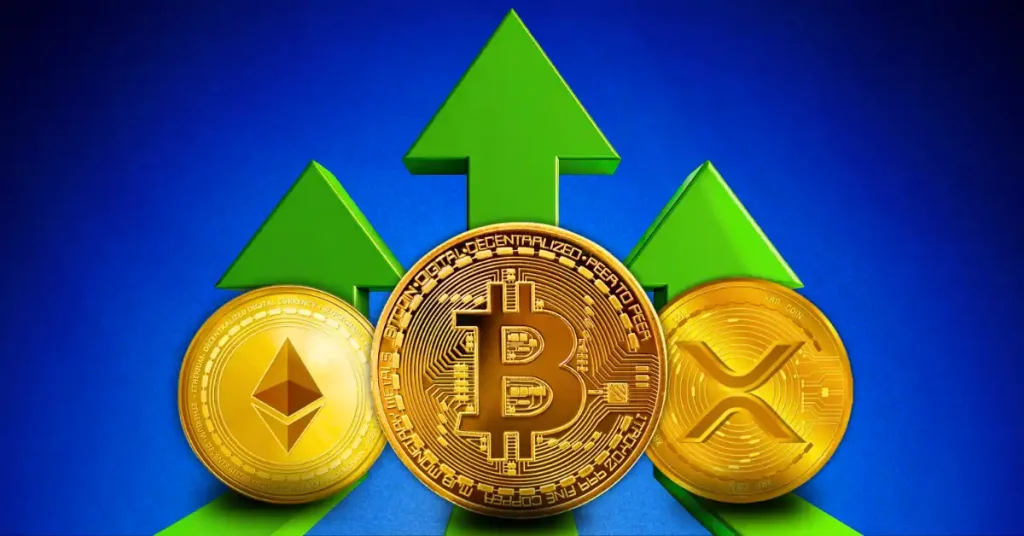
Technical analyst Gareth Soloway maintains a short-term bullish outlook for BTC, targeting $80,000-$85,000, but warns this is an intra-bear market rally, implying a larger downside trend is still in play. Soloway identifies Solana as the most bullish chart among the analyzed assets, with near-term targets at $100-$105 and a best-case scenario of $118, suggesting potential for near-term outperformance. While ETH shows a near-term bullish structure, its longer-term macro picture mirrors Bitcoin's bearish outlook, indicating potential for a significant pullback if key support levels are breached. XRP is presented with a strong chart setup, showing a breakout, pullback, and support hold, suggesting a potential move towards the $1.70 resistance level.

Tether's commitment to a full audit by a 'Big Four' firm signals a significant step towards enhanced transparency and regulatory compliance for the largest stablecoin by market cap. This move by Tether addresses historical concerns regarding reserve transparency, potentially bolstering confidence among institutional and retail users and mitigating future regulatory scrutiny. The audit's comprehensive scope, including assets, reserves, and internal controls, aims to set a new standard for stablecoin issuers, impacting market perception and competitive dynamics within the stablecoin sector.
XRP's inclusion in the top five crypto exposures reported by banks under Basel III signifies a formal integration into institutional risk management frameworks, moving beyond speculative trading. The data from the Bank for International Settlements, covering 150 banks including G-SIBs, indicates a broad, system-wide acceptance and monitoring of XRP within the core of global finance. XRP's alignment with modernizing payment systems like SWIFT and its potential to unlock significant value in cross-border transactions suggest a growing practical relevance for the asset in financial infrastructure.

Bernstein's call on Bitcoin's bottom, supported by the absence of structural damage and increasing institutional demand via ETFs, suggests a potential shift from a bear market to a bull phase, with a reiterated year-end target of $150,000 for 2026. CoinDesk's volatility analysis indicates that extreme implied volatility readings, similar to past capitulation events, may signal a bottom near $60,000, framing the recent sell-off as fear-driven rather than structurally bearish. Historical analysis of Bitcoin's weekly RSI shows that oversold conditions, as observed now, have preceded significant rallies (2,700%, 1,800%, 350%), presenting a bullish technical outlook if key support levels hold. A recurring bear market signal has triggered again, historically preceding substantial declines; however, reclaiming $70,000 could invalidate this signal, creating a critical inflection point for near-term price action.

BitGo and Susquehanna Crypto are launching institutional OTC access to prediction markets, enabling large investors to trade event-based contracts using crypto collateral, which addresses key infrastructure gaps for institutional participation. This development comes amid increasing regulatory scrutiny of prediction markets in the US, with several states taking action against platforms, highlighting a complex regulatory landscape that could impact future growth. The offering allows for bilateral trades using crypto collateral like Bitcoin or stablecoins, potentially increasing demand for these assets as collateral in new financial products. By facilitating institutional access to prediction markets, this partnership could signal a growing trend of integrating crypto-native financial products into traditional institutional workflows.

The filing of multiple competing ETFs for Hyperliquid's HYPE token by major asset managers indicates institutional interest, but suggests that the early retail entry window for significant gains has likely closed. The article promotes Pepeto as a superior investment opportunity compared to assets being packaged for institutional ETFs, highlighting its presale pricing, working exchange, and experienced co-founder as key differentiators for retail investors. While Digitap and Mutuum Finance are presented as alternative investments, their projected return profiles are deemed less explosive than Pepeto's, positioning Pepeto as the primary 'best crypto to invest in' before its listing.

Bernstein analysts suggest Bitcoin's price has likely bottomed, projecting a rise to $150,000 by year-end, indicating a potential shift in market sentiment and a bullish outlook for the asset. Strategy's resilience in accumulating Bitcoin during market downturns, supported by its preferred share offering, highlights its strategic financial management and reinforces its position as a major corporate holder. The maturation of Bitcoin's market structure, evidenced by the debut of ETFs and Strategy's role as a 'Bitcoin bank of last resort,' suggests a growing and more resilient capital base, potentially altering traditional cycle-based market expectations.
Microsoft stock is experiencing a near-term pullback driven by broader market weakness and geopolitical tensions, despite positive underlying economic data and continued AI growth narrative. The stock's long-term technical support at the 200-week moving average remains intact, suggesting resilience despite current volatility, which could be a factor for traders to watch for potential reversals. While AI competition is intensifying, Microsoft's integration of AI into Azure and products like Copilot continues to be a key driver for enterprise technology and long-term revenue growth.

Proposed changes to the Clarity Act could significantly curtail stablecoin yield generation, impacting the value proposition for holding stablecoins like USDC and potentially reducing adoption. Circle's stock experienced an 18% decline due to the legislative threat, indicating market sensitivity to regulatory actions that affect core revenue streams and product utility. The concurrent news of Tether undergoing a full reserve audit introduces competitive pressure, potentially shifting market share away from USDC if USDT's transparency improves significantly. Despite a sharp sell-off, some analysts suggest the market may be overreacting, implying potential for a rebound if the final legislation is less restrictive than the draft suggests.

The maturation of DeFi tools, as highlighted by Aave and Ethena founders, suggests a shift towards more predictable yield generation, potentially attracting traditional finance capital seeking stable returns. The increasing sophistication of DeFi products, moving beyond simple token trading and borrowing to offer fixed-to-floating rate swaps, indicates a growing capacity for risk management within the crypto space. Aave's role as a liquidity provider is crucial for bootstrapping new DeFi products, signaling a strengthening of the underlying infrastructure that supports innovation and product development in the sector. While leverage still dominates DeFi yield generation, the potential integration of real-world assets (RWAs) through tokenization points to a future where yields are increasingly derived from traditional financial instruments, bridging the gap between crypto and TradFi.

The introduction of insurance-backed staking products, benchmarked by CESR, is transforming staked ETH from a speculative asset into a legitimate institutional yield product. This development allows cautious TradFi firms to integrate ETH staking into existing risk frameworks, potentially unlocking significant new institutional capital flows. By mitigating risks like slashing and downtime through insurance and standardized benchmarks, staked ETH becomes more palatable for regulated entities seeking predictable yield.
Signal context only. Validate with price action, liquidity, and risk limits before taking a position.
