
Navigating Crypto News

CoinFeather
Navigating Crypto News

Quick market read from this story
H100's proposed all-stock acquisition of two Norwegian Bitcoin treasury companies aims to consolidate BTC holdings, potentially making it Europe's second-largest listed Bitcoin treasury and signaling a trend towards consolidation in the sector.
The all-stock nature of the deal allows sellers to maintain Bitcoin exposure while moving assets into a larger, publicly traded entity, suggesting a strategy to leverage public markets for Bitcoin accumulation despite current stock price weakness.
Despite H100's stock price decline, the acquisition highlights continued strategic accumulation of Bitcoin by European treasury firms, indicating underlying confidence in Bitcoin's long-term value proposition among these entities.
Deep Dive
Sweden-listed H100 Group has entered into a letter of intent (LOI) to acquire all shares of Norwegian Bitcoin companies Moonshot and Never Say Die. The acquisition will be conducted through the issuance of new H100 stock, with no cash consideration involved. This structure is designed to allow the sellers to maintain their Bitcoin exposure while integrating the assets into a larger, publicly traded entity.
A definitive agreement is anticipated by April 22, with the transaction expected to close after H100's annual general meeting. The company has noted some discrepancies in its publicly stated AGM dates, listing April 21 on its investor-relations calendar and May 21 in a previous company notice.
If the deal is finalized, H100 Group would become the second-largest listed Bitcoin treasury company in Europe, trailing only Germany's Bitcoin Group, which holds 3,605 BTC. Currently, H100 holds 1,051 BTC, and the target companies possess approximately 2,450 BTC. Post-acquisition, H100's total holdings are projected to reach 3,501 BTC, valued at roughly $239.7 million. This move would elevate H100's global ranking from 44th to 27th among Bitcoin treasury companies, surpassing entities like Cango Inc and France-based Capital B, according to Bitcointreasuries data.
Sander Andersen, chairman of H100, stated that the transaction would significantly enhance H100's scale, credibility, and access to capital markets within the Bitcoin sector. He described the acquisition as a valuable opportunity to strengthen the company's Bitcoin position in a capital-efficient manner, especially within the current challenging market environment, and indicated plans for future Bitcoin purchases.
This acquisition follows H100's prior purchase of Switzerland-based Future Holdings AG. The company's stock price has experienced a decline, falling over 74% in the last nine months and more than 26% year-to-date in 2026. This trend mirrors broader pressure on Bitcoin treasury stocks, as Bitcoin prices remain considerably below their October 2025 all-time high.
Despite market pressures, European Bitcoin treasury companies continue to accumulate BTC. Recently, Capital B announced the acquisition of 44 Bitcoin for 2.7 million euros, increasing its total holdings to 2,888 BTC at an average cost basis of $106,662 per coin. H100's average cost basis is reported at $114,615 per BTC.
Source, catalyst, and sector overlap from the latest feed.
Bitcoin's failure to hold the 200-week EMA at $68,300 signals potential downside risk, with traders eyeing a repeat of January's bear flag pattern that could target sub-$50,000 levels. Geopolitical instability and rising oil prices, coupled with gold entering a bear market, are creating a risk-off environment that is pressuring Bitcoin and other risk assets. The Federal Reserve's hawkish stance on interest rates, with markets repricing potential hikes in 2026, adds further headwinds for risk assets like Bitcoin. Long-term Bitcoin holders are exhibiting capitulation, selling at a loss, which, while indicating fear, could also signal a potential accumulation phase for new buyers if the trend reverses.
Coordinated networks of fake X accounts are leveraging viral geopolitical content and AI-generated impersonations to drive engagement for crypto scams, highlighting a persistent threat to user capital. The identified scam network generated six-figure profits by promoting pump-and-dump schemes and fake giveaways, indicating the significant financial incentives for malicious actors on social media. Despite platform efforts to combat bots and misinformation, the effectiveness of these measures is questioned as sophisticated scam operations continue to exploit user engagement for illicit gains. Traders should exercise extreme caution with unsolicited crypto promotions originating from social media, particularly those amplified by sensational or unverified content, as the risk of pump-and-dump schemes remains high.
Bithumb's potential CEO reappointment despite regulatory penalties suggests internal confidence or a strategic move to maintain leadership continuity amidst ongoing legal scrutiny. The exchange faces significant regulatory headwinds, including a partial suspension and substantial fine for AML failures, which could impact its operational capacity and license renewal. Despite Bithumb's challenges, the broader South Korean crypto market shows signs of growth and regulatory support, potentially creating a complex operating environment for exchanges.
Growing global unrest and communication blackouts are driving increased user interest in decentralized messaging and social media platforms, signaling a potential shift towards open protocols over centralized services. The inherent resilience of decentralized networks, characterized by a lack of single points of failure, positions them as a safer alternative during periods of censorship or internet shutdowns. While decentralized alternatives are gaining traction, established centralized platforms are expected to coexist, highlighting the need for continued innovation in the decentralized communication space to sustain user momentum. Increased search interest and app downloads for decentralized communication tools suggest a growing market segment driven by demand for enhanced privacy and security, though widespread replacement of incumbents is unlikely in the near term.
Boyaa Interactive's plan to allocate up to $70 million for crypto treasury expansion signals a strategic move to leverage market downturns for asset accumulation. The company's focus on tokens with "good market liquidity, large market value, wide recognition on the market and relatively long-term holding value" suggests a conservative approach to treasury management, prioritizing established assets like Bitcoin and Ethereum. This development highlights a continued trend of corporate treasuries seeking to diversify and potentially profit from crypto assets, even amidst broader market volatility and skepticism about treasury strategies.
Bittensor's TAO token is positioned as a key player in the decentralized AI sector, with price predictions suggesting significant long-term growth potential driven by increasing demand for AI infrastructure and its unique tokenomics. The Grayscale Bittensor Trust offering indicates growing institutional interest, potentially validating TAO's role in the AI crypto narrative and signaling a shift towards more traditional financial products integrating with decentralized AI. Technical analysis suggests TAO has defended key support levels around $160-$200, with projections indicating a potential retest of $500 by H1 2026, contingent on sustained bullish momentum and market adoption. Long-term price targets for TAO range from $1,000-$3,000 by 2030, reflecting an optimistic outlook based on the protocol's 'Bitcoin-like scarcity' and its potential to democratize machine intelligence.
XRP price predictions range from $2.80 to $10, contingent on the CLARITY Act, but institutional inflows into XRP ETFs and Ripple's Brazil expansion provide a foundational bullish case. Despite positive XRP developments, significant capital is reportedly rotating into the Pepeto presale, seeking higher potential returns (150x target) compared to XRP's projected gains. The article contrasts the long-term, regulatory-dependent upside of XRP with the perceived short-term, high-multiple opportunity in the Pepeto presale, highlighting a divergence in whale wallet strategies. The narrative suggests that while XRP's fundamentals are strengthening, the market is prioritizing presale opportunities with rapid listing catalysts for immediate, substantial gains.
The SEC's classification of Shiba Inu (SHIB) as a digital commodity, not a security, removes a significant regulatory overhang for meme tokens and could encourage broader adoption and investment in the sector. Ripple's co-founder Chris Larsen's substantial XRP injection into Evernorth, alongside SBI Holdings' significant investment, signals strong institutional backing and a strategic push to build an XRP-centric financial ecosystem valued over $1 billion. The Federal Reserve's decision to hold interest rates steady, coupled with a signal of fewer rate cuts than anticipated, suggests a prolonged period of higher capital costs, which could temper risk-on asset appetite, including Bitcoin. XRP's price action shows a gradually rising support line near $1.53, indicating buyer attempts to stabilize the price, but overall market uncertainty persists, suggesting a cautious outlook for the asset.
Michael Saylor's MicroStrategy continues its aggressive Bitcoin accumulation strategy, signaling strong conviction in BTC's long-term value despite current paper losses. The company's innovative use of perpetual preferred shares (STRC) to fund Bitcoin purchases highlights a novel approach to corporate treasury management and leverage in the crypto market. Saylor's 'orange march' narrative, coupled with consistent buying, acts as a bullish signal to the market, potentially influencing investor sentiment and encouraging further accumulation. If MicroStrategy reaches its potential goal of 1 million BTC, it would represent a significant portion of Bitcoin's total supply held by a single entity, impacting market dynamics.
Mt Gox's first Bitcoin transfer in four months, though small at $500, signals potential progress in the long-delayed repayment process. The minimal transfer amount suggests a cautious approach by Mt Gox, likely to avoid significant market impact while initiating distributions. Despite the small transfer, the market's focus remains on the $2 billion in Bitcoin held by Mt Gox, with the repayment deadline approaching. The news is largely informational, with the small transfer size and ongoing distribution complexities limiting immediate trading implications.
Bitcoin's reclaim of $70,000 is directly linked to a de-escalation of geopolitical tensions, suggesting that macro-driven risk premiums have been a significant factor in recent price action. The pause in US military strikes against Iran has removed a key bearish catalyst, allowing Bitcoin to rally towards immediate upside liquidity targets at $72K-$75K. While the price action is positive, the underlying structural headwinds for Bitcoin, such as underwater holders and the 200-week EMA, remain, indicating that sustained upside will depend on continued positive geopolitical developments or further fundamental catalysts. The standardization of crypto ETF options across major US exchanges is a structural development that improves institutional access and market depth, though its immediate price impact is likely to be gradual.
The SEC and CFTC have issued new interpretive guidance classifying most crypto assets as commodities rather than securities, providing much-needed clarity for the industry. Despite the positive development, the guidance is an interpretive rule and can be revised by future commissions, creating uncertainty about its long-term durability. The market's reaction is tempered by the understanding that legislative action from Congress is required for permanent regulatory certainty, as highlighted by Citi's reduced Bitcoin price target. The new framework offers more breathing room for staking, airdrops, and wrapped tokens, but its reliance on current commission interpretation rather than statutory law limits its immediate impact on repricing.
The removal of position limits on Bitcoin and Ether ETF options by major exchanges like NYSE, Nasdaq, Cboe, and MIAX signals a maturation of crypto derivatives markets, treating them akin to traditional commodities and potentially increasing institutional participation and liquidity. The shift to generic listing standards for spot crypto ETFs by the SEC, coupled with the removal of contract caps, indicates a regulatory move towards normalizing crypto-ETFs, reducing case-by-case scrutiny and facilitating easier product launches. The introduction of FLEX options for crypto ETFs provides institutions with greater customization for hedging and yield enhancement, potentially impacting implied volatility dynamics and the relationship between derivatives exposure and underlying spot market depth. This regulatory normalization and enhanced derivatives infrastructure could support institutional inflow forecasts for spot Bitcoin ETFs and align with long-term bullish price targets for assets like Ethereum, as suggested by market analysts.
Live Feed
Loading the broader stream in the same flow as the homepage feed.
Bitcoin's price surge towards $71K demonstrates its sensitivity to geopolitical de-escalation, as improved US-Iran talks reduced risk aversion and triggered significant short liquidations. The rapid repricing, amplified by $265 million in short liquidations within 15 minutes, highlights the impact of leveraged positions on amplifying price movements following macro news. Traders should monitor the stability of diplomatic tones and energy market reactions, as sustained de-escalation could support Bitcoin's retest of the $70K-$71K zone, while renewed tensions pose a reversal risk. The market's quick reaction underscores Bitcoin's increasing correlation with macro risk assets, where shifts in geopolitical sentiment directly influence trading dynamics and capital flows.

Geopolitical de-escalation has triggered a risk-on sentiment, leading to a ~5% surge in Bitcoin and other major cryptocurrencies as investors rotate out of safe-haven assets like gold and bonds. The postponement of U.S. attacks on Iran has directly benefited Bitcoin, pushing it above $71,000, indicating its sensitivity to global macro events and its role as a speculative asset in times of perceived reduced geopolitical risk. The sharp decline in oil prices and liquidations in tokenized Brent futures highlight the interconnectedness of traditional commodity markets and crypto derivatives, with significant price movements in one impacting the other. While the immediate reaction is bullish for crypto, the underlying geopolitical tensions remain, suggesting that this price action may be short-lived and dependent on sustained de-escalation.

Bitcoin's price action is increasingly dictated by global bond market dynamics, particularly US and Japanese yields, rather than solely by oil price shocks. Rising long-term yields in both US Treasuries and Japanese Government Bonds signal persistent inflation concerns and tightening financial conditions, creating a challenging macro environment for risk assets like Bitcoin. While Bitcoin's institutional demand via ETFs remains resilient, its short-term behavior as a liquidity-sensitive macro asset suggests it will remain under pressure until bond market pressures ease. The upcoming week's Treasury auctions and inflation expectation data will be critical in determining whether yields stabilize or continue to climb, directly impacting Bitcoin's potential for recovery.

Traders are placing significant bets on a ceasefire in the Iran conflict via Polymarket, suggesting a potential market relief rally if tensions de-escalate. Despite speculative bets on peace, ongoing geopolitical inflation concerns are pressuring crypto markets, with Bitcoin and Ether showing recent losses. The article highlights a divergence in market sentiment, with some participants anticipating a ceasefire while broader market conditions remain bearish due to geopolitical risks and rising US Treasury yields. While Bitcoin is presented as having a strong value-capture profile, recent ETF outflows and whale selling indicate a lack of immediate bullish conviction from institutional and large holders.

The exploit of Resolv Labs' USR stablecoin, resulting in an $80 million mint and a $25 million cash-out, highlights significant smart contract vulnerabilities in DeFi protocols that can lead to severe de-pegging events. The rapid conversion of illicitly minted USR into ETH and other stablecoins demonstrates a common cash-out path in DeFi exploits, underscoring the need for enhanced on-chain monitoring and preventative measures. Resolv Labs' actions to burn USR and pause protocol functions indicate a reactive approach to a critical security failure, suggesting potential loss of confidence and capital flight from the platform.
HDFC Bank's stock decline is directly linked to the resignation of its part-time chairman and the termination of three senior executives over AT-1 bond mis-selling allegations. The AT-1 bond controversy, involving alleged mis-selling to clients and subsequent losses after Credit Suisse's write-off, has eroded investor confidence in HDFC Bank's governance and client onboarding practices. The departure of senior leadership and the fallout from the bond issue suggest potential ongoing internal scrutiny and reputational damage, which could continue to pressure the stock in the short term.

Bitcoin's retreat to $68,200, driven by geopolitical tensions and a shift towards commodities, has created a CME gap near $70,000, signaling potential short-term volatility and a test of bullish sentiment. The liquidation of over $400 million in leveraged crypto futures, predominantly long positions, indicates a significant deleveraging event that could precede a price stabilization or further downside if sentiment remains weak. Despite the broader market pullback, privacy tokens (XMR, DASH) and select altcoins like BCH and LINK show relative strength with positive funding rates and volume, suggesting pockets of sustained buying interest amidst mixed market sentiment. The increased demand for BTC put options and ETH straddles points to traders hedging against potential price declines and betting on volatility, reflecting heightened uncertainty in the short-term outlook for major cryptocurrencies.
Solana is approaching a critical technical juncture with a bearish head and shoulders pattern suggesting a potential 12% downside if the neckline support at $88 breaks. Significant exchange outflows of 11.8 million SOL over 96 hours indicate reduced immediate sell pressure, but this is currently overshadowed by the bearish chart pattern, creating mixed signals for traders. The confluence of a bearish reversal pattern and substantial token outflows places SOL at a key decision point, where a breakdown below support could trigger significant selling pressure. Traders should monitor the $88 support level closely; a confirmed break would activate the head and shoulders pattern, while a bounce could invalidate the bearish setup and signal potential upside.

Bitcoin is on track to avoid a historic six-month losing streak, holding above $68,000 and showing early signs of outperformance against gold, which could signal a continuation of the broader uptrend if key support levels hold. The 200-week moving average near $59,000 continues to act as critical support, with Bitcoin consolidating above this level for two months, reinforcing its long-term trend despite recent volatility. The BTC-gold ratio's rebound suggests Bitcoin may be regaining its safe-haven appeal relative to traditional assets, a trend that historically precedes a strengthening of Bitcoin's overall market position.

Ripple CTO Emeritus David Schwartz is offering a small XRP bounty for identifying AI-generated prompts, highlighting a growing concern over AI-generated content in online discourse. The initiative, while small in scale (150 XRP total), serves as a public challenge to critics and signals a potential shift in how prominent figures engage with and verify online arguments. This event underscores the increasing relevance of AI detection and authenticity in digital interactions, a theme that could gain traction across various platforms and communities.

The MACD histogram has crossed below zero for the third time since October, historically preceding significant Bitcoin selloffs and indicating a renewed bearish momentum shift. Past instances show that bullish MACD crosses have only resulted in weak, short-lived bounces, suggesting that sellers remain in control and any upward price action may be capped. Traders should heed the MACD's bearish signal, as its consistent accuracy in flagging selloffs since Bitcoin's October high suggests potential downside risk despite recent resilience.
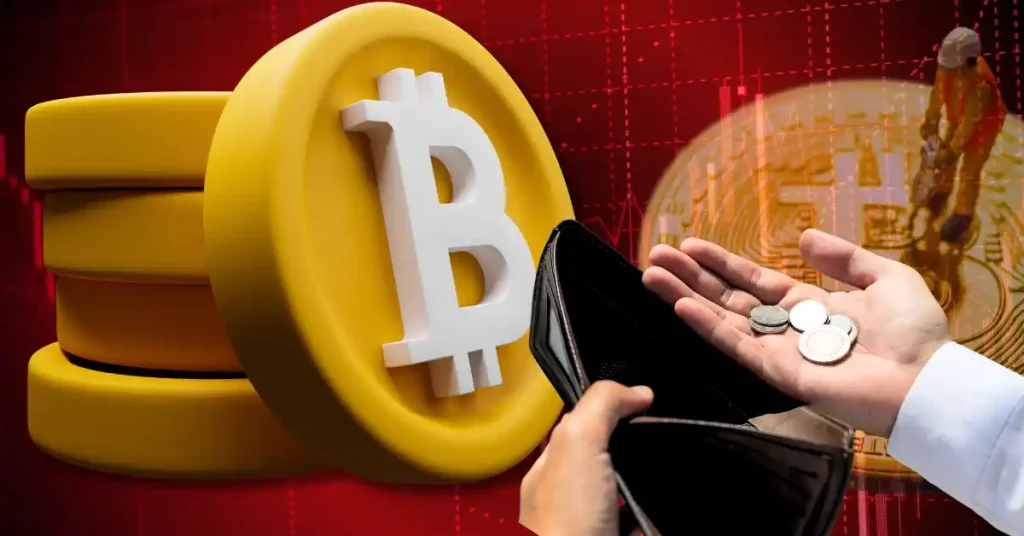
Bitcoin miners are currently operating at a significant loss, with production costs exceeding market price by approximately $20,000 per coin, exacerbated by rising energy prices due to surging oil costs. Despite operating at a loss, miners are not selling their reserves, with on-chain data showing a significant drop in miner outflows to exchanges, suggesting a potential bottoming of the market cycle. Historical data from 2019 and 2022 indicates that periods where Bitcoin traded below average production costs often marked cycle lows, implying a potential for a market recovery.

CZ's assertion of Bitcoin as a "hard asset" is challenged by community members citing its significant price volatility, suggesting a divergence in market perception regarding BTC's role as a stable store of value. Robert Kiyosaki's continued bullish outlook on Bitcoin, gold, and silver amidst predictions of a financial crisis highlights a narrative of "flight to safety" assets, potentially influencing investor sentiment during market downturns. Bitcoin's recent pullback below $70,000, influenced by Fed signals and geopolitical tensions, indicates sensitivity to macroeconomic factors and broader market risk-off sentiment, despite long-term bullish commentary.

XRP spot ETFs experienced negligible inflows of $0.64 million, starkly contrasting with Bitcoin's $95.18 million and even Solana's $21.10 million, indicating a significant lack of institutional conviction and demand for XRP compared to its peers. The persistent low institutional demand for XRP, as evidenced by ETF flows, suggests a continued struggle to establish itself as a core asset, likely leading to underperformance against competitors and difficulty breaking its current downtrend. While Ethereum saw net outflows, its scale of institutional engagement remains vastly different from XRP's, highlighting the market's current capital allocation favoring established narratives like Bitcoin and DeFi/staking infrastructure over smaller, less integrated assets.
Ethereum's price is at a critical juncture, with on-chain data indicating potential bottom formation due to low whale unrealized profits, suggesting limited downside risk. Historical indicators show ETH is entering a zone similar to past market bottoms, historically preceding strong upward moves and signaling a potential accumulation phase. Despite short-term selling pressure from geopolitical tensions and rate hike concerns, the combination of whale behavior and historical indicators suggests ETH may be poised for a recovery towards $3,500 if key support levels hold.
Signal context only. Validate with price action, liquidity, and risk limits before taking a position.
