
Navigating Crypto News

CoinFeather
Navigating Crypto News
Quick market read from this story
Bittensor's TAO token is positioned as a key player in the decentralized AI sector, with price predictions suggesting significant long-term growth potential driven by increasing demand for AI infrastructure and its unique tokenomics.
The Grayscale Bittensor Trust offering indicates growing institutional interest, potentially validating TAO's role in the AI crypto narrative and signaling a shift towards more traditional financial products integrating with decentralized AI.
Technical analysis suggests TAO has defended key support levels around $160-$200, with projections indicating a potential retest of $500 by H1 2026, contingent on sustained bullish momentum and market adoption.
Long-term price targets for TAO range from $1,000-$3,000 by 2030, reflecting an optimistic outlook based on the protocol's 'Bitcoin-like scarcity' and its potential to democratize machine intelligence.
Deep Dive
Bittensor, an open-source protocol facilitating a decentralized, blockchain-based marketplace for machine intelligence, is attracting significant investor interest. The native token, TAO, plays a crucial role in its ecosystem, enabling network security through staking, granting access to AI services, and rewarding contributors. With its unique Yuma Consensus mechanism and Bitcoin-like scarcity, Bittensor aims to democratize AI development and make intelligence a tradable commodity.
The live price of the TAO token is approximately $270.91731089. The token has experienced significant fluctuations since reaching an all-time high of $767.6797 on April 11, 2024. Its all-time low was recorded at $30.4010 on May 14, 2023. The current market cap stands at $2,916,544,075.04, with a 24-hour volume of $329,453,470.1127. The circulating supply is 10,765,440.0727 out of a total supply of 21,000,000.00.
Analysis of the weekly chart for Bittensor (TAO/USDT) indicates a trading range between $160–$200 for support and $720–$760 for resistance. After a period of weakness in 2025, where prices remained under $500, the token has shown signs of recovery, defending the $160–$200 support zone. If current bullish momentum continues, TAO could retest the $500 level by the first half of 2026, signaling the end of its corrective phase. Some forecasts suggest TAO could trade between $160 and $500 in 2026, with potential to reach $620.00 according to Changelly.
The price is currently sustaining above the 200-day EMA band. A continued upward trend in March could push the price towards $360, though consolidation might delay this target to April.
Looking further ahead, Bittensor's price is projected to see steady growth. By 2027, TAO is expected to trade between $400 and $1000. This trend is anticipated to continue, with forecasts suggesting a range of $600 to $1200 in 2028, and $800 to $2000 in 2029. By 2030, TAO could potentially trade between $1000 and $3000.
Long-term projections extend to 2050, assuming sustained relevance in enterprise blockchain use cases and continued innovation. By 2031, prices could range from $1200 to $3000, potentially reaching $10,000 by 2050. Other analyses predict TAO could reach $1200 by 2030 (Changelly), $1400 by 2030 (CoinCodex), and $1550 by 2030 (WalletInvestor).
Recent developments include Grayscale's announcement of its Bittensor Trust, indicating growing institutional interest in the decentralized AI sector. Key drivers for TAO's price growth are expected to be the increasing adoption of AI, expansion of subnets, institutional investment, and rising demand for decentralized computing resources. The token's utility in staking, accessing AI services, and rewarding miners underpins its long-term potential.
Source, catalyst, and sector overlap from the latest feed.
The prop trading industry is evolving beyond standardized evaluation models towards capital-backed custom plans, indicating a maturation of the sector and a shift towards more tailored trader experiences. Firms failing to adapt to custom plan structures risk losing market share to competitors offering flexible, trader-centric funding models, suggesting a consolidation trend driven by operational efficiency and trader retention. The adoption of capital-backed custom plans signifies a move towards treating prop trading as a serious financial product, backed by real capital and designed for specific trader profiles, which could enhance overall industry credibility and sustainability. Prop trading platforms are increasingly offering the technology to manage diverse custom plan structures at scale, reducing operational complexity for firms and enabling them to focus on business growth and brand building.
An early Ethereum investor has moved 15,002 ETH to Coinbase after a decade of dormancy, potentially signaling profit-taking intentions and introducing near-term selling pressure. Despite the potential for short-term selling pressure from the large ETH transfer, the overall trend for Ethereum remains bullish as long as it holds above the rising trendline support around $2,100-$1,800. The analyst's warning of a potential ETH price drop to $1800, coupled with the large holder's move to an exchange, suggests a cautious outlook for ETH in the immediate trading window.
A significant whale unlock of 1.82 million SOL ($163 million) on March 21 has added sell pressure to SOL, which is already down 70% from its cycle high, indicating potential for further downside in the short term. Despite SOL's price struggles and a 70% drop from its peak, the article highlights Pepeto's presale success, raising over $8 million and anticipating a Binance listing, suggesting a shift in trader focus towards high-potential altcoins. Solana's recovery faces headwinds from a large whale unlock and fading memecoin activity, with key catalysts like the Alpenglow upgrade and ETF filings offering long-term potential but not immediate price relief. The narrative contrasts SOL's substantial recovery needed to reach previous highs with Pepeto's projected 100x-300x gains from its presale, positioning Pepeto as a potential high-reward alternative for traders seeking significant returns.
BNB's price action is shifting from speculative volatility to on-chain utility and ecosystem liquidity, suggesting a maturing market environment that could support sustained price discovery. The dismissal of anti-terrorism claims against Binance by a US federal court removes a significant legal overhang, potentially bolstering investor confidence and reducing regulatory risk for BNB. With BNB consolidating around the $600 support level, a sustained hold could trigger a recovery towards $1,000 in 2026, contingent on growing ecosystem demand and network activity. Long-term projections indicate substantial growth potential for BNB, with forecasts suggesting prices could reach $4,500 by 2030 and significantly higher by 2040, driven by continued adoption and enterprise use cases.
Dogecoin is approaching a critical multi-year support zone around $0.053-$0.055, a level historically associated with the end of downtrends and the start of accumulation phases. Significant whale accumulation of over 470 million DOGE in 72 hours, occurring despite price weakness, suggests smart money is positioning for a potential upside move. The price action is forming a descending triangle pattern, indicating market contraction and building liquidity, which typically precedes a decisive breakout. While the setup suggests a potential breakout, the immediate catalyst for repricing hinges on DOGE holding the $0.053-$0.055 support and subsequently reclaiming $0.10, with $0.15 representing a significant structural confirmation.
H100's proposed all-stock acquisition of two Norwegian Bitcoin treasury companies aims to consolidate BTC holdings, potentially making it Europe's second-largest listed Bitcoin treasury and signaling a trend towards consolidation in the sector. The all-stock nature of the deal allows sellers to maintain Bitcoin exposure while moving assets into a larger, publicly traded entity, suggesting a strategy to leverage public markets for Bitcoin accumulation despite current stock price weakness. Despite H100's stock price decline, the acquisition highlights continued strategic accumulation of Bitcoin by European treasury firms, indicating underlying confidence in Bitcoin's long-term value proposition among these entities.
XRP price predictions range from $2.80 to $10, contingent on the CLARITY Act, but institutional inflows into XRP ETFs and Ripple's Brazil expansion provide a foundational bullish case. Despite positive XRP developments, significant capital is reportedly rotating into the Pepeto presale, seeking higher potential returns (150x target) compared to XRP's projected gains. The article contrasts the long-term, regulatory-dependent upside of XRP with the perceived short-term, high-multiple opportunity in the Pepeto presale, highlighting a divergence in whale wallet strategies. The narrative suggests that while XRP's fundamentals are strengthening, the market is prioritizing presale opportunities with rapid listing catalysts for immediate, substantial gains.
Boyaa Interactive's plan to allocate up to $70 million for crypto treasury expansion signals a strategic move to leverage market downturns for asset accumulation. The company's focus on tokens with "good market liquidity, large market value, wide recognition on the market and relatively long-term holding value" suggests a conservative approach to treasury management, prioritizing established assets like Bitcoin and Ethereum. This development highlights a continued trend of corporate treasuries seeking to diversify and potentially profit from crypto assets, even amidst broader market volatility and skepticism about treasury strategies.
The SEC's classification of Shiba Inu (SHIB) as a digital commodity, not a security, removes a significant regulatory overhang for meme tokens and could encourage broader adoption and investment in the sector. Ripple's co-founder Chris Larsen's substantial XRP injection into Evernorth, alongside SBI Holdings' significant investment, signals strong institutional backing and a strategic push to build an XRP-centric financial ecosystem valued over $1 billion. The Federal Reserve's decision to hold interest rates steady, coupled with a signal of fewer rate cuts than anticipated, suggests a prolonged period of higher capital costs, which could temper risk-on asset appetite, including Bitcoin. XRP's price action shows a gradually rising support line near $1.53, indicating buyer attempts to stabilize the price, but overall market uncertainty persists, suggesting a cautious outlook for the asset.
Michael Saylor's MicroStrategy continues its aggressive Bitcoin accumulation strategy, signaling strong conviction in BTC's long-term value despite current paper losses. The company's innovative use of perpetual preferred shares (STRC) to fund Bitcoin purchases highlights a novel approach to corporate treasury management and leverage in the crypto market. Saylor's 'orange march' narrative, coupled with consistent buying, acts as a bullish signal to the market, potentially influencing investor sentiment and encouraging further accumulation. If MicroStrategy reaches its potential goal of 1 million BTC, it would represent a significant portion of Bitcoin's total supply held by a single entity, impacting market dynamics.
The SEC and CFTC have issued new interpretive guidance classifying most crypto assets as commodities rather than securities, providing much-needed clarity for the industry. Despite the positive development, the guidance is an interpretive rule and can be revised by future commissions, creating uncertainty about its long-term durability. The market's reaction is tempered by the understanding that legislative action from Congress is required for permanent regulatory certainty, as highlighted by Citi's reduced Bitcoin price target. The new framework offers more breathing room for staking, airdrops, and wrapped tokens, but its reliance on current commission interpretation rather than statutory law limits its immediate impact on repricing.
The upcoming week features several protocol upgrades and token events, including hard forks for Akash and Casper, and a token generation event for Backpack, which could influence short-term price action for these specific assets. The presence of Federal Reserve Governor Stephen Miran speaking at the Digital Asset Summit highlights the ongoing intersection of traditional finance and digital assets, potentially offering insights into future monetary policy impacts on crypto. The article outlines a busy week for crypto markets with multiple token unlocks, governance votes, and protocol updates, suggesting a period of increased on-chain activity and potential volatility for affected projects. With GameStop (GME) reporting earnings and holding a significant Bitcoin treasury, its financial results could indirectly signal institutional sentiment or flow into Bitcoin.
Polymarket's acquisition of Brahma signals a strategic move to enhance user experience by simplifying complex blockchain interactions, potentially increasing adoption of its prediction markets. The integration of Brahma's infrastructure is expected to improve liquidity in niche prediction markets, attracting more capital and fostering broader participation within Polymarket's ecosystem. By acquiring Brahma, Polymarket is prioritizing technical infrastructure development to streamline operations and consolidate its platform capabilities, following a pattern of strategic acquisitions.
Hedera's price predictions for 2026-2030 suggest a significant upward trend, with potential highs reaching $1.05 in 2026 and $3.00 by 2030, indicating strong long-term bullish sentiment driven by enterprise adoption and ecosystem growth. The article highlights Hedera's unique permissioned blockchain model and its backing by major corporations like Google and IBM, suggesting a foundation for increased institutional interest and potential for an HBAR ETF, which could drive substantial liquidity. Despite current consolidation around $0.09-$0.10, the analysis points to a potential recovery cycle for HBAR in 2026, with key resistance levels at $0.20-$0.25 and $0.40-$0.50, implying a structured upward movement rather than a sharp rally. Long-term forecasts extending to 2050 project HBAR prices between $15-$30, contingent on Hedera maintaining relevance in enterprise blockchain use cases and sustained adoption, signaling a high growth potential for the asset over decades.
Bitcoin miners are pivoting from mining to AI compute due to significantly higher profit margins, leading to a substantial drop in the network's hashrate. Publicly traded mining companies are retrofitting facilities for AI clients, securing large contracts with tech giants like Microsoft and Google, shifting their valuation narrative. The shift to AI compute highlights a structural change in the energy and infrastructure demands of emerging technologies, potentially impacting Bitcoin's security model if sustained.
Live Feed
Loading the broader stream in the same flow as the homepage feed.

Bitcoin's failure to hold the 200-week EMA at $68,300 signals potential downside risk, with traders eyeing a repeat of January's bear flag pattern that could target sub-$50,000 levels. Geopolitical instability and rising oil prices, coupled with gold entering a bear market, are creating a risk-off environment that is pressuring Bitcoin and other risk assets. The Federal Reserve's hawkish stance on interest rates, with markets repricing potential hikes in 2026, adds further headwinds for risk assets like Bitcoin. Long-term Bitcoin holders are exhibiting capitulation, selling at a loss, which, while indicating fear, could also signal a potential accumulation phase for new buyers if the trend reverses.

The MACD histogram has crossed below zero for the third time since October, historically preceding significant Bitcoin selloffs and indicating a renewed bearish momentum shift. Past instances show that bullish MACD crosses have only resulted in weak, short-lived bounces, suggesting that sellers remain in control and any upward price action may be capped. Traders should heed the MACD's bearish signal, as its consistent accuracy in flagging selloffs since Bitcoin's October high suggests potential downside risk despite recent resilience.

Coordinated networks of fake X accounts are leveraging viral geopolitical content and AI-generated impersonations to drive engagement for crypto scams, highlighting a persistent threat to user capital. The identified scam network generated six-figure profits by promoting pump-and-dump schemes and fake giveaways, indicating the significant financial incentives for malicious actors on social media. Despite platform efforts to combat bots and misinformation, the effectiveness of these measures is questioned as sophisticated scam operations continue to exploit user engagement for illicit gains. Traders should exercise extreme caution with unsolicited crypto promotions originating from social media, particularly those amplified by sensational or unverified content, as the risk of pump-and-dump schemes remains high.

CZ's assertion of Bitcoin as a "hard asset" is challenged by community members citing its significant price volatility, suggesting a divergence in market perception regarding BTC's role as a stable store of value. Robert Kiyosaki's continued bullish outlook on Bitcoin, gold, and silver amidst predictions of a financial crisis highlights a narrative of "flight to safety" assets, potentially influencing investor sentiment during market downturns. Bitcoin's recent pullback below $70,000, influenced by Fed signals and geopolitical tensions, indicates sensitivity to macroeconomic factors and broader market risk-off sentiment, despite long-term bullish commentary.

XRP spot ETFs experienced negligible inflows of $0.64 million, starkly contrasting with Bitcoin's $95.18 million and even Solana's $21.10 million, indicating a significant lack of institutional conviction and demand for XRP compared to its peers. The persistent low institutional demand for XRP, as evidenced by ETF flows, suggests a continued struggle to establish itself as a core asset, likely leading to underperformance against competitors and difficulty breaking its current downtrend. While Ethereum saw net outflows, its scale of institutional engagement remains vastly different from XRP's, highlighting the market's current capital allocation favoring established narratives like Bitcoin and DeFi/staking infrastructure over smaller, less integrated assets.

The removal of position limits on Bitcoin and Ether ETF options by major exchanges like NYSE, Nasdaq, Cboe, and MIAX signals a maturation of crypto derivatives markets, treating them akin to traditional commodities and potentially increasing institutional participation and liquidity. The shift to generic listing standards for spot crypto ETFs by the SEC, coupled with the removal of contract caps, indicates a regulatory move towards normalizing crypto-ETFs, reducing case-by-case scrutiny and facilitating easier product launches. The introduction of FLEX options for crypto ETFs provides institutions with greater customization for hedging and yield enhancement, potentially impacting implied volatility dynamics and the relationship between derivatives exposure and underlying spot market depth. This regulatory normalization and enhanced derivatives infrastructure could support institutional inflow forecasts for spot Bitcoin ETFs and align with long-term bullish price targets for assets like Ethereum, as suggested by market analysts.

Prosecutors are questioning the authenticity of a letter submitted by Sam Bankman-Fried for his retrial motion, citing discrepancies in its shipping and labeling, which could impact the credibility of his legal defense. The challenge to the letter's origin introduces procedural complexity to SBF's post-conviction legal strategy, potentially delaying or complicating his pursuit of a new trial. This development highlights the ongoing legal battles surrounding the FTX founder, with implications for investor confidence in the resolution of related legal proceedings.

Ondo Finance has significantly expanded its tokenized stock offerings by adding over 60 new assets, bringing its total to over 250, solidifying its leading position in the RWA market. The platform's growth in tokenized stocks and user base is substantial, with over 185,700 holders, yet the native ONDO token has not mirrored this success, trading significantly below its all-time high. Despite strong platform growth and market share, the ONDO token's underperformance suggests a decoupling from fundamental progress, presenting a potential value opportunity for long-term holders if market sentiment shifts.
Aptos (APT) is undergoing a prolonged accumulation phase, with 2026 projected as a potential inflection point for a renewed growth cycle, targeting $30 as a key structural milestone. The current price action suggests APT is rebuilding its foundation around the $0.90-$1.00 support zone, indicating a shift from a bearish phase to stability, which is crucial for future upside potential. While long-term forecasts suggest APT could reach $70 by 2030, the immediate focus for 2026 is on reclaiming key resistance levels like $1.30-$1.50 to confirm a trend reversal and establish a healthier structure. Despite strong technological underpinnings, APT's market performance has been subdued due to early speculation cooling and token unlocks; recovery hinges on sustained network usage and developer activity.
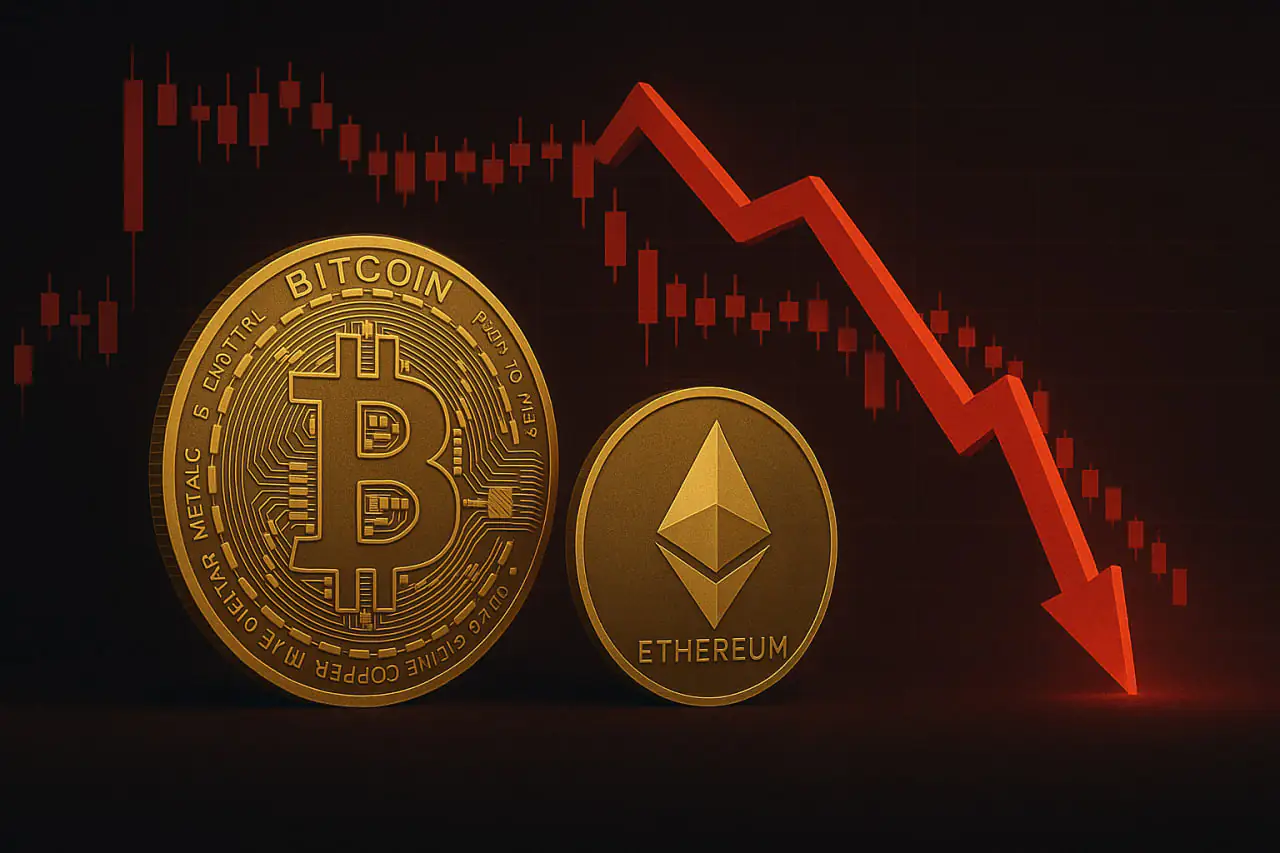
Geopolitical tensions and a hawkish macro environment are driving a broad market sell-off, leading to significant liquidations and a "Extreme Fear" sentiment in crypto. The crypto market is experiencing a systemic downturn, with Bitcoin and major altcoins like ETH, SOL, XRP, and BNB showing substantial weekly losses, indicating a risk-off sentiment across all asset classes. Over $300 million in long positions were liquidated in the past 24 hours, signaling that the market was heavily positioned for upside, which has now been invalidated by external factors. The lack of near-term interest rate cut expectations due to persistent inflation further exacerbates the downturn, as tighter liquidity conditions are historically detrimental to speculative assets like cryptocurrencies.
Signal context only. Validate with price action, liquidity, and risk limits before taking a position.
