
Navigating Crypto News

CoinFeather
Navigating Crypto News

Quick market read from this story
The upcoming week features several protocol upgrades and token events, including hard forks for Akash and Casper, and a token generation event for Backpack, which could influence short-term price action for these specific assets.
The presence of Federal Reserve Governor Stephen Miran speaking at the Digital Asset Summit highlights the ongoing intersection of traditional finance and digital assets, potentially offering insights into future monetary policy impacts on crypto.
The article outlines a busy week for crypto markets with multiple token unlocks, governance votes, and protocol updates, suggesting a period of increased on-chain activity and potential volatility for affected projects.
With GameStop (GME) reporting earnings and holding a significant Bitcoin treasury, its financial results could indirectly signal institutional sentiment or flow into Bitcoin.
Source, catalyst, and sector overlap from the latest feed.
The MACD histogram has crossed below zero for the third time since October, historically preceding significant Bitcoin selloffs and indicating a renewed bearish momentum shift. Past instances show that bullish MACD crosses have only resulted in weak, short-lived bounces, suggesting that sellers remain in control and any upward price action may be capped. Traders should heed the MACD's bearish signal, as its consistent accuracy in flagging selloffs since Bitcoin's October high suggests potential downside risk despite recent resilience.
Live Feed
Loading the broader stream in the same flow as the homepage feed.

CZ's assertion of Bitcoin as a "hard asset" is challenged by community members citing its significant price volatility, suggesting a divergence in market perception regarding BTC's role as a stable store of value. Robert Kiyosaki's continued bullish outlook on Bitcoin, gold, and silver amidst predictions of a financial crisis highlights a narrative of "flight to safety" assets, potentially influencing investor sentiment during market downturns. Bitcoin's recent pullback below $70,000, influenced by Fed signals and geopolitical tensions, indicates sensitivity to macroeconomic factors and broader market risk-off sentiment, despite long-term bullish commentary.
XRP spot ETFs experienced negligible inflows of $0.64 million, starkly contrasting with Bitcoin's $95.18 million and even Solana's $21.10 million, indicating a significant lack of institutional conviction and demand for XRP compared to its peers. The persistent low institutional demand for XRP, as evidenced by ETF flows, suggests a continued struggle to establish itself as a core asset, likely leading to underperformance against competitors and difficulty breaking its current downtrend. While Ethereum saw net outflows, its scale of institutional engagement remains vastly different from XRP's, highlighting the market's current capital allocation favoring established narratives like Bitcoin and DeFi/staking infrastructure over smaller, less integrated assets.
Ethereum's price is at a critical juncture, with on-chain data indicating potential bottom formation due to low whale unrealized profits, suggesting limited downside risk. Historical indicators show ETH is entering a zone similar to past market bottoms, historically preceding strong upward moves and signaling a potential accumulation phase. Despite short-term selling pressure from geopolitical tensions and rate hike concerns, the combination of whale behavior and historical indicators suggests ETH may be poised for a recovery towards $3,500 if key support levels hold.
The SEC and CFTC have issued new interpretive guidance classifying most crypto assets as commodities rather than securities, providing much-needed clarity for the industry. Despite the positive development, the guidance is an interpretive rule and can be revised by future commissions, creating uncertainty about its long-term durability. The market's reaction is tempered by the understanding that legislative action from Congress is required for permanent regulatory certainty, as highlighted by Citi's reduced Bitcoin price target. The new framework offers more breathing room for staking, airdrops, and wrapped tokens, but its reliance on current commission interpretation rather than statutory law limits its immediate impact on repricing.

The removal of position limits on Bitcoin and Ether ETF options by major exchanges like NYSE, Nasdaq, Cboe, and MIAX signals a maturation of crypto derivatives markets, treating them akin to traditional commodities and potentially increasing institutional participation and liquidity. The shift to generic listing standards for spot crypto ETFs by the SEC, coupled with the removal of contract caps, indicates a regulatory move towards normalizing crypto-ETFs, reducing case-by-case scrutiny and facilitating easier product launches. The introduction of FLEX options for crypto ETFs provides institutions with greater customization for hedging and yield enhancement, potentially impacting implied volatility dynamics and the relationship between derivatives exposure and underlying spot market depth. This regulatory normalization and enhanced derivatives infrastructure could support institutional inflow forecasts for spot Bitcoin ETFs and align with long-term bullish price targets for assets like Ethereum, as suggested by market analysts.

Scammers are leveraging geopolitical events like the Iran conflict to create fake panic and funnel users into crypto pump-and-dump schemes, highlighting a sophisticated manipulation tactic. The coordinated network of 11 X accounts demonstrates a methodical approach to scamming, involving account acquisition, viral content generation, and rapid username changes to evade detection. The success of these pump-and-dump schemes, generating six-figure profits, underscores the vulnerability of social media users to fear-driven engagement and the need for enhanced due diligence. The ease with which these scams can be operated raises concerns about potential nation-state actors employing similar tactics for more significant disruption, as noted by ZachXBT.

Ondo Finance has significantly expanded its tokenized stock offerings by adding over 60 new assets, bringing its total to over 250, solidifying its leading position in the RWA market. The platform's growth in tokenized stocks and user base is substantial, with over 185,700 holders, yet the native ONDO token has not mirrored this success, trading significantly below its all-time high. Despite strong platform growth and market share, the ONDO token's underperformance suggests a decoupling from fundamental progress, presenting a potential value opportunity for long-term holders if market sentiment shifts.
Geopolitical tensions surrounding the Strait of Hormuz and potential escalation with Iran are creating market uncertainty, leading to a sell-off in risk assets like Bitcoin. The crypto market has experienced a $412 million drop in the last 24 hours, with Bitcoin liquidations reaching $121 million, indicating a negative short-term sentiment driven by macro factors. Analysts foresee two potential market paths: a short-term bounce on de-escalation or further losses down to $66,000-$67,000 if tensions persist, exacerbated by rising oil prices and tightening liquidity. Upcoming inflation data remains a key concern, as high readings could pressure risk assets like crypto, potentially negating any short-term rallies even if geopolitical tensions ease.

The prop trading industry is evolving beyond standardized evaluation models towards capital-backed custom plans, indicating a maturation of the sector and a shift towards more tailored trader experiences. Firms failing to adapt to custom plan structures risk losing market share to competitors offering flexible, trader-centric funding models, suggesting a consolidation trend driven by operational efficiency and trader retention. The adoption of capital-backed custom plans signifies a move towards treating prop trading as a serious financial product, backed by real capital and designed for specific trader profiles, which could enhance overall industry credibility and sustainability. Prop trading platforms are increasingly offering the technology to manage diverse custom plan structures at scale, reducing operational complexity for firms and enabling them to focus on business growth and brand building.
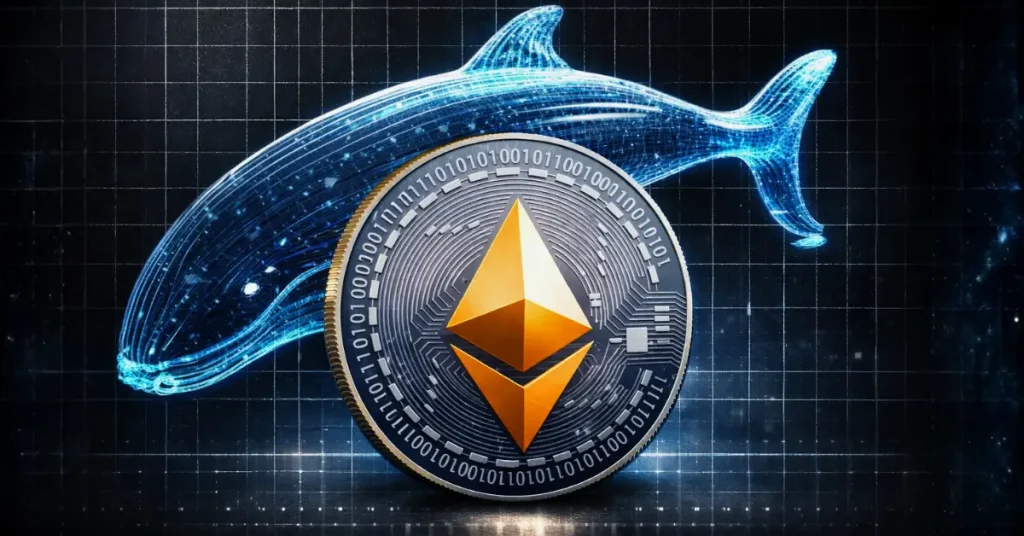
An early Ethereum investor has moved 15,002 ETH to Coinbase after a decade of dormancy, potentially signaling profit-taking intentions and introducing near-term selling pressure. Despite the potential for short-term selling pressure from the large ETH transfer, the overall trend for Ethereum remains bullish as long as it holds above the rising trendline support around $2,100-$1,800. The analyst's warning of a potential ETH price drop to $1800, coupled with the large holder's move to an exchange, suggests a cautious outlook for ETH in the immediate trading window.
Bittensor's TAO token is positioned as a key player in the decentralized AI sector, with price predictions suggesting significant long-term growth potential driven by increasing demand for AI infrastructure and its unique tokenomics. The Grayscale Bittensor Trust offering indicates growing institutional interest, potentially validating TAO's role in the AI crypto narrative and signaling a shift towards more traditional financial products integrating with decentralized AI. Technical analysis suggests TAO has defended key support levels around $160-$200, with projections indicating a potential retest of $500 by H1 2026, contingent on sustained bullish momentum and market adoption. Long-term price targets for TAO range from $1,000-$3,000 by 2030, reflecting an optimistic outlook based on the protocol's 'Bitcoin-like scarcity' and its potential to democratize machine intelligence.

Polymarket's acquisition of Brahma signals a strategic move to enhance user experience by simplifying complex blockchain interactions, potentially increasing adoption of its prediction markets. The integration of Brahma's infrastructure is expected to improve liquidity in niche prediction markets, attracting more capital and fostering broader participation within Polymarket's ecosystem. By acquiring Brahma, Polymarket is prioritizing technical infrastructure development to streamline operations and consolidate its platform capabilities, following a pattern of strategic acquisitions.
Signal context only. Validate with price action, liquidity, and risk limits before taking a position.
AKT
AKT
Prosecutors are questioning the authenticity of a letter submitted by Sam Bankman-Fried for his retrial motion, citing discrepancies in its shipping and labeling, which could impact the credibility of his legal defense. The challenge to the letter's origin introduces procedural complexity to SBF's post-conviction legal strategy, potentially delaying or complicating his pursuit of a new trial. This development highlights the ongoing legal battles surrounding the FTX founder, with implications for investor confidence in the resolution of related legal proceedings.
