
Navigating Crypto News

CoinFeather
Navigating Crypto News

Quick market read from this story
Scammers are leveraging geopolitical events like the Iran conflict to create fake panic and funnel users into crypto pump-and-dump schemes, highlighting a sophisticated manipulation tactic.
The coordinated network of 11 X accounts demonstrates a methodical approach to scamming, involving account acquisition, viral content generation, and rapid username changes to evade detection.
The success of these pump-and-dump schemes, generating six-figure profits, underscores the vulnerability of social media users to fear-driven engagement and the need for enhanced due diligence.
The ease with which these scams can be operated raises concerns about potential nation-state actors employing similar tactics for more significant disruption, as noted by ZachXBT.
Deep Dive
An on-chain investigator, ZachXBT, has uncovered a sophisticated network of 11 X (formerly Twitter) accounts that manufactured fake geopolitical panic regarding the Iran conflict to drive users into crypto pump-and-dump schemes. This operation has already yielded six-figure profits on-chain.
The scam network employs a methodical five-step process. They acquire existing X accounts, flood timelines with daily posts about war and politics to create a sense of urgency, cross-post content to amplify reach, promote fake giveaways and crypto scams, and finally, change usernames to evade detection. One prominent account, @wanglaurentceo, accumulated 79.9K followers and underwent 17 username changes, evolving from "usdtt11" to "xrpinsol" and "edtrumpofficial." ZachXBT noted that this persona appeared to be an AI-generated imitation of Mario Nawfal, created by using his profile photo with an image generation tool.
The content generated by the network was designed to capitalize on fear. Posts falsely claiming Iran threatened to sever undersea cables responsible for 95-99% of global internet traffic garnered significant engagement, including 26,000 retweets, 50,000 likes, and 1.8 million views, even after X's Community Notes flagged the information as incorrect. Legitimate, larger accounts inadvertently amplified these posts by interacting with them, extending their reach without realizing the deceptive nature of the content.
On February 22, 2026, all ten accounts within the network simultaneously promoted $ORAMAMA, a Solana-based meme coin, through PumpSwap. The promotion was brief, with each account posting about the coin only once and not mentioning it again. On-chain data, as reported by ZachXBT, confirmed that this scheme resulted in six-figure profits.
Following ZachXBT's exposé, all 11 implicated accounts simultaneously blocked the investigator, a move he described as indicative of a single operator. ZachXBT also voiced concerns about the potential implications if a nation-state actor were to replicate such a scheme, given its ease of execution. He urged for platform bans and legal action against such manipulative practices. He also advised users to scrutinize account histories and recent posts before engaging with content on social media, citing the prevalence of engagement farming and AI-generated spam. ZachXBT confirmed that Nikita Bier, X's head of product, is aware of these accounts.
Source, catalyst, and sector overlap from the latest feed.
Bitcoin miners are currently operating at a significant loss, with production costs exceeding market price by approximately $20,000 per coin, exacerbated by rising energy prices due to surging oil costs. Despite operating at a loss, miners are not selling their reserves, with on-chain data showing a significant drop in miner outflows to exchanges, suggesting a potential bottoming of the market cycle. Historical data from 2019 and 2022 indicates that periods where Bitcoin traded below average production costs often marked cycle lows, implying a potential for a market recovery.
Ethereum's price is at a critical juncture, with on-chain data indicating potential bottom formation due to low whale unrealized profits, suggesting limited downside risk. Historical indicators show ETH is entering a zone similar to past market bottoms, historically preceding strong upward moves and signaling a potential accumulation phase. Despite short-term selling pressure from geopolitical tensions and rate hike concerns, the combination of whale behavior and historical indicators suggests ETH may be poised for a recovery towards $3,500 if key support levels hold.
Geopolitical tensions surrounding the Strait of Hormuz and potential escalation with Iran are creating market uncertainty, leading to a sell-off in risk assets like Bitcoin. The crypto market has experienced a $412 million drop in the last 24 hours, with Bitcoin liquidations reaching $121 million, indicating a negative short-term sentiment driven by macro factors. Analysts foresee two potential market paths: a short-term bounce on de-escalation or further losses down to $66,000-$67,000 if tensions persist, exacerbated by rising oil prices and tightening liquidity. Upcoming inflation data remains a key concern, as high readings could pressure risk assets like crypto, potentially negating any short-term rallies even if geopolitical tensions ease.
The prop trading industry is evolving beyond standardized evaluation models towards capital-backed custom plans, indicating a maturation of the sector and a shift towards more tailored trader experiences. Firms failing to adapt to custom plan structures risk losing market share to competitors offering flexible, trader-centric funding models, suggesting a consolidation trend driven by operational efficiency and trader retention. The adoption of capital-backed custom plans signifies a move towards treating prop trading as a serious financial product, backed by real capital and designed for specific trader profiles, which could enhance overall industry credibility and sustainability. Prop trading platforms are increasingly offering the technology to manage diverse custom plan structures at scale, reducing operational complexity for firms and enabling them to focus on business growth and brand building.
An early Ethereum investor has moved 15,002 ETH to Coinbase after a decade of dormancy, potentially signaling profit-taking intentions and introducing near-term selling pressure. Despite the potential for short-term selling pressure from the large ETH transfer, the overall trend for Ethereum remains bullish as long as it holds above the rising trendline support around $2,100-$1,800. The analyst's warning of a potential ETH price drop to $1800, coupled with the large holder's move to an exchange, suggests a cautious outlook for ETH in the immediate trading window.
Dogecoin is approaching a critical long-term support zone near $0.0537, a level that has historically acted as a strong demand area. A rebound from the $0.0537 support could target $0.16, representing a potential 200% rally, contingent on buyers defending this key level. The monthly Relative Strength Index (RSI) for Dogecoin has reached its lowest point in 12 years, historically signaling potential seller exhaustion and a precursor to significant rebounds. Despite recent price action, Dogecoin maintains a rising long-term support structure around $0.10-$0.12, suggesting a potential stabilization zone if buying pressure emerges.
A significant whale unlock of 1.82 million SOL ($163 million) on March 21 has added sell pressure to SOL, which is already down 70% from its cycle high, indicating potential for further downside in the short term. Despite SOL's price struggles and a 70% drop from its peak, the article highlights Pepeto's presale success, raising over $8 million and anticipating a Binance listing, suggesting a shift in trader focus towards high-potential altcoins. Solana's recovery faces headwinds from a large whale unlock and fading memecoin activity, with key catalysts like the Alpenglow upgrade and ETF filings offering long-term potential but not immediate price relief. The narrative contrasts SOL's substantial recovery needed to reach previous highs with Pepeto's projected 100x-300x gains from its presale, positioning Pepeto as a potential high-reward alternative for traders seeking significant returns.
Dogecoin is approaching a critical multi-year support zone around $0.053-$0.055, a level historically associated with the end of downtrends and the start of accumulation phases. Significant whale accumulation of over 470 million DOGE in 72 hours, occurring despite price weakness, suggests smart money is positioning for a potential upside move. The price action is forming a descending triangle pattern, indicating market contraction and building liquidity, which typically precedes a decisive breakout. While the setup suggests a potential breakout, the immediate catalyst for repricing hinges on DOGE holding the $0.053-$0.055 support and subsequently reclaiming $0.10, with $0.15 representing a significant structural confirmation.
Shiba Inu (SHIB) is positioned at a multi-year demand zone in early 2026, presenting a potential inflection point for a new expansion phase or a gradual recovery towards the $0.00001600-$0.00001800 range. The article presents long-term price predictions for SHIB, with estimates reaching up to $0.000130 by 2030, contingent on improved adoption, demand, and ecosystem growth. While the article highlights a Biconomy promotion offering up to 380% APR on SHIB Earn Products, this is a short-term incentive and does not fundamentally alter the long-term price outlook or structural positioning.
Shiba Inu's extended 500-day consolidation phase, coupled with a strong historical pattern of significant rallies following such periods, suggests a potential for a substantial upward price movement. While the Shibarium L3 development is ongoing, the lack of concrete details and community impatience indicates it is not currently a significant price catalyst, with market focus remaining on price action. The repeated defense of a long-term demand zone for SHIB indicates persistent buyer interest, which, if sustained, could fuel a breakout from the current trading range. Traders are closely monitoring SHIB's price structure for signs of a breakout, as historical data suggests that prolonged periods of low volatility often precede sharp price expansions.
Live Feed
Loading the broader stream in the same flow as the homepage feed.
The 14% drop in Brent crude oil prices signifies a rapid unwinding of risk premium previously priced into supply disruption fears, indicating a shift in market sentiment from panic to de-escalation. President Trump's announcement to postpone strikes on Iranian energy infrastructure has directly eased fears of a prolonged Strait of Hormuz closure, leading to a significant sell-off in oil futures. While prices have fallen sharply, Brent crude remains elevated compared to pre-conflict levels, suggesting that residual geopolitical risk premium is still present in the market. Future oil price direction hinges on continued de-escalation, the status of Hormuz shipping, potential IEA reserve releases, and any further signals from the US administration, creating a volatile trading environment.
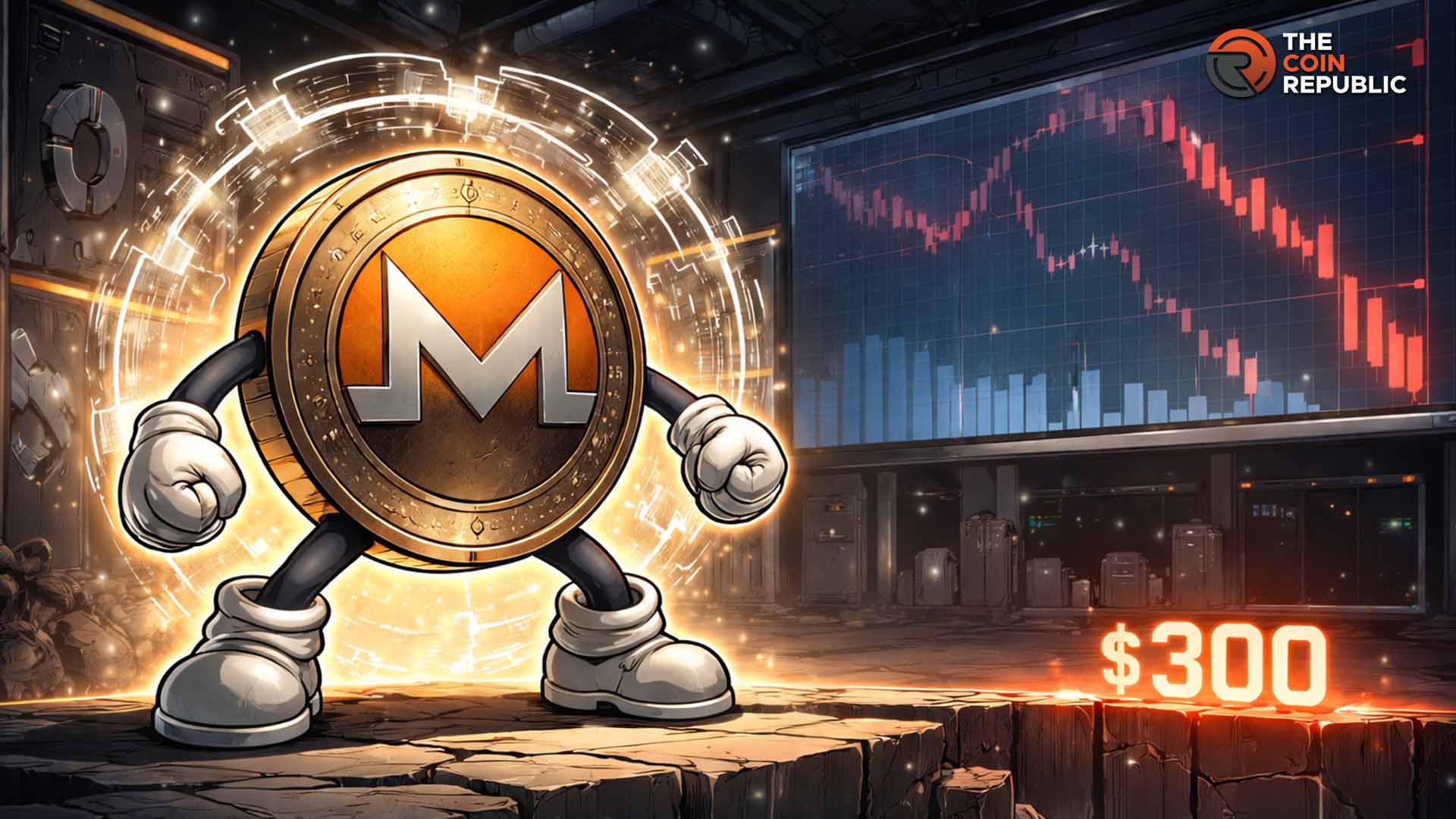
Monero's price action exhibits a bear flag continuation pattern on the chart, suggesting a potential 16% decline towards the $300 level despite recent fundamental upgrades. Increasing exchange inflows coinciding with price gains indicate potential selling pressure building, as traders may be moving XMR to exchanges to exit positions. Despite strong yearly gains and the recent FCMP++ upgrade enhancing privacy features, technical indicators and lopsided futures positioning point to a bearish short-term outlook for XMR. The inability of Monero's price to break above the 200-day moving average at $376 reinforces the bearish technical structure and the probability of further downside.

Brazil's finance minister has delayed a proposed tax on crypto transactions, citing concerns about political conflict during an election year. The proposed tax, which could impose rates up to 3.5% by classifying crypto as foreign exchange operations, faced significant pushback from industry groups arguing it is unconstitutional. This delay suggests a cautious approach to new crypto regulations in Brazil, potentially creating a period of regulatory uncertainty but avoiding immediate adverse market impact from the tax.
Bitcoin's price surge towards $71K demonstrates its sensitivity to geopolitical de-escalation, as improved US-Iran talks reduced risk aversion and triggered significant short liquidations. The rapid repricing, amplified by $265 million in short liquidations within 15 minutes, highlights the impact of leveraged positions on amplifying price movements following macro news. Traders should monitor the stability of diplomatic tones and energy market reactions, as sustained de-escalation could support Bitcoin's retest of the $70K-$71K zone, while renewed tensions pose a reversal risk. The market's quick reaction underscores Bitcoin's increasing correlation with macro risk assets, where shifts in geopolitical sentiment directly influence trading dynamics and capital flows.
Mt Gox's first Bitcoin transfer in four months, though small at $500, signals potential progress in the long-delayed repayment process. The minimal transfer amount suggests a cautious approach by Mt Gox, likely to avoid significant market impact while initiating distributions. Despite the small transfer, the market's focus remains on the $2 billion in Bitcoin held by Mt Gox, with the repayment deadline approaching. The news is largely informational, with the small transfer size and ongoing distribution complexities limiting immediate trading implications.

Geopolitical de-escalation has triggered a risk-on sentiment, leading to a ~5% surge in Bitcoin and other major cryptocurrencies as investors rotate out of safe-haven assets like gold and bonds. The postponement of U.S. attacks on Iran has directly benefited Bitcoin, pushing it above $71,000, indicating its sensitivity to global macro events and its role as a speculative asset in times of perceived reduced geopolitical risk. The sharp decline in oil prices and liquidations in tokenized Brent futures highlight the interconnectedness of traditional commodity markets and crypto derivatives, with significant price movements in one impacting the other. While the immediate reaction is bullish for crypto, the underlying geopolitical tensions remain, suggesting that this price action may be short-lived and dependent on sustained de-escalation.
Bitcoin's reclaim of $70,000 is directly linked to a de-escalation of geopolitical tensions, suggesting that macro-driven risk premiums have been a significant factor in recent price action. The pause in US military strikes against Iran has removed a key bearish catalyst, allowing Bitcoin to rally towards immediate upside liquidity targets at $72K-$75K. While the price action is positive, the underlying structural headwinds for Bitcoin, such as underwater holders and the 200-week EMA, remain, indicating that sustained upside will depend on continued positive geopolitical developments or further fundamental catalysts. The standardization of crypto ETF options across major US exchanges is a structural development that improves institutional access and market depth, though its immediate price impact is likely to be gradual.

Bitcoin's price action is increasingly dictated by global bond market dynamics, particularly US and Japanese yields, rather than solely by oil price shocks. Rising long-term yields in both US Treasuries and Japanese Government Bonds signal persistent inflation concerns and tightening financial conditions, creating a challenging macro environment for risk assets like Bitcoin. While Bitcoin's institutional demand via ETFs remains resilient, its short-term behavior as a liquidity-sensitive macro asset suggests it will remain under pressure until bond market pressures ease. The upcoming week's Treasury auctions and inflation expectation data will be critical in determining whether yields stabilize or continue to climb, directly impacting Bitcoin's potential for recovery.

Traders are placing significant bets on a ceasefire in the Iran conflict via Polymarket, suggesting a potential market relief rally if tensions de-escalate. Despite speculative bets on peace, ongoing geopolitical inflation concerns are pressuring crypto markets, with Bitcoin and Ether showing recent losses. The article highlights a divergence in market sentiment, with some participants anticipating a ceasefire while broader market conditions remain bearish due to geopolitical risks and rising US Treasury yields. While Bitcoin is presented as having a strong value-capture profile, recent ETF outflows and whale selling indicate a lack of immediate bullish conviction from institutional and large holders.

The exploit of Resolv Labs' USR stablecoin, resulting in an $80 million mint and a $25 million cash-out, highlights significant smart contract vulnerabilities in DeFi protocols that can lead to severe de-pegging events. The rapid conversion of illicitly minted USR into ETH and other stablecoins demonstrates a common cash-out path in DeFi exploits, underscoring the need for enhanced on-chain monitoring and preventative measures. Resolv Labs' actions to burn USR and pause protocol functions indicate a reactive approach to a critical security failure, suggesting potential loss of confidence and capital flight from the platform.
HDFC Bank's stock decline is directly linked to the resignation of its part-time chairman and the termination of three senior executives over AT-1 bond mis-selling allegations. The AT-1 bond controversy, involving alleged mis-selling to clients and subsequent losses after Credit Suisse's write-off, has eroded investor confidence in HDFC Bank's governance and client onboarding practices. The departure of senior leadership and the fallout from the bond issue suggest potential ongoing internal scrutiny and reputational damage, which could continue to pressure the stock in the short term.

Bitcoin's retreat to $68,200, driven by geopolitical tensions and a shift towards commodities, has created a CME gap near $70,000, signaling potential short-term volatility and a test of bullish sentiment. The liquidation of over $400 million in leveraged crypto futures, predominantly long positions, indicates a significant deleveraging event that could precede a price stabilization or further downside if sentiment remains weak. Despite the broader market pullback, privacy tokens (XMR, DASH) and select altcoins like BCH and LINK show relative strength with positive funding rates and volume, suggesting pockets of sustained buying interest amidst mixed market sentiment. The increased demand for BTC put options and ETH straddles points to traders hedging against potential price declines and betting on volatility, reflecting heightened uncertainty in the short-term outlook for major cryptocurrencies.
Solana is approaching a critical technical juncture with a bearish head and shoulders pattern suggesting a potential 12% downside if the neckline support at $88 breaks. Significant exchange outflows of 11.8 million SOL over 96 hours indicate reduced immediate sell pressure, but this is currently overshadowed by the bearish chart pattern, creating mixed signals for traders. The confluence of a bearish reversal pattern and substantial token outflows places SOL at a key decision point, where a breakdown below support could trigger significant selling pressure. Traders should monitor the $88 support level closely; a confirmed break would activate the head and shoulders pattern, while a bounce could invalidate the bearish setup and signal potential upside.

Bitcoin is on track to avoid a historic six-month losing streak, holding above $68,000 and showing early signs of outperformance against gold, which could signal a continuation of the broader uptrend if key support levels hold. The 200-week moving average near $59,000 continues to act as critical support, with Bitcoin consolidating above this level for two months, reinforcing its long-term trend despite recent volatility. The BTC-gold ratio's rebound suggests Bitcoin may be regaining its safe-haven appeal relative to traditional assets, a trend that historically precedes a strengthening of Bitcoin's overall market position.

Ripple CTO Emeritus David Schwartz is offering a small XRP bounty for identifying AI-generated prompts, highlighting a growing concern over AI-generated content in online discourse. The initiative, while small in scale (150 XRP total), serves as a public challenge to critics and signals a potential shift in how prominent figures engage with and verify online arguments. This event underscores the increasing relevance of AI detection and authenticity in digital interactions, a theme that could gain traction across various platforms and communities.

Bitcoin's failure to hold the 200-week EMA at $68,300 signals potential downside risk, with traders eyeing a repeat of January's bear flag pattern that could target sub-$50,000 levels. Geopolitical instability and rising oil prices, coupled with gold entering a bear market, are creating a risk-off environment that is pressuring Bitcoin and other risk assets. The Federal Reserve's hawkish stance on interest rates, with markets repricing potential hikes in 2026, adds further headwinds for risk assets like Bitcoin. Long-term Bitcoin holders are exhibiting capitulation, selling at a loss, which, while indicating fear, could also signal a potential accumulation phase for new buyers if the trend reverses.

The MACD histogram has crossed below zero for the third time since October, historically preceding significant Bitcoin selloffs and indicating a renewed bearish momentum shift. Past instances show that bullish MACD crosses have only resulted in weak, short-lived bounces, suggesting that sellers remain in control and any upward price action may be capped. Traders should heed the MACD's bearish signal, as its consistent accuracy in flagging selloffs since Bitcoin's October high suggests potential downside risk despite recent resilience.

Coordinated networks of fake X accounts are leveraging viral geopolitical content and AI-generated impersonations to drive engagement for crypto scams, highlighting a persistent threat to user capital. The identified scam network generated six-figure profits by promoting pump-and-dump schemes and fake giveaways, indicating the significant financial incentives for malicious actors on social media. Despite platform efforts to combat bots and misinformation, the effectiveness of these measures is questioned as sophisticated scam operations continue to exploit user engagement for illicit gains. Traders should exercise extreme caution with unsolicited crypto promotions originating from social media, particularly those amplified by sensational or unverified content, as the risk of pump-and-dump schemes remains high.
Signal context only. Validate with price action, liquidity, and risk limits before taking a position.
