
Navigating Crypto News

CoinFeather
Navigating Crypto News
Source, catalyst, and sector overlap from the latest feed.
The S&P 500's drop to its 2026 low, driven by oil price surges and geopolitical tensions, signals a weakening risk appetite that could pressure correlated assets like Bitcoin. Bitcoin's extended decoupling from U.S. equities suggests crypto markets may have priced in macro risks earlier, but a continued S&P 500 decline could still drag Bitcoin lower, with some analysts projecting a drop to $30,000-$40,000. Elevated oil prices and persistent geopolitical risks are increasing inflation concerns, potentially delaying anticipated Federal Reserve interest rate cuts and reducing demand for risk assets across markets.
Live Feed
Loading the broader stream in the same flow as the homepage feed.
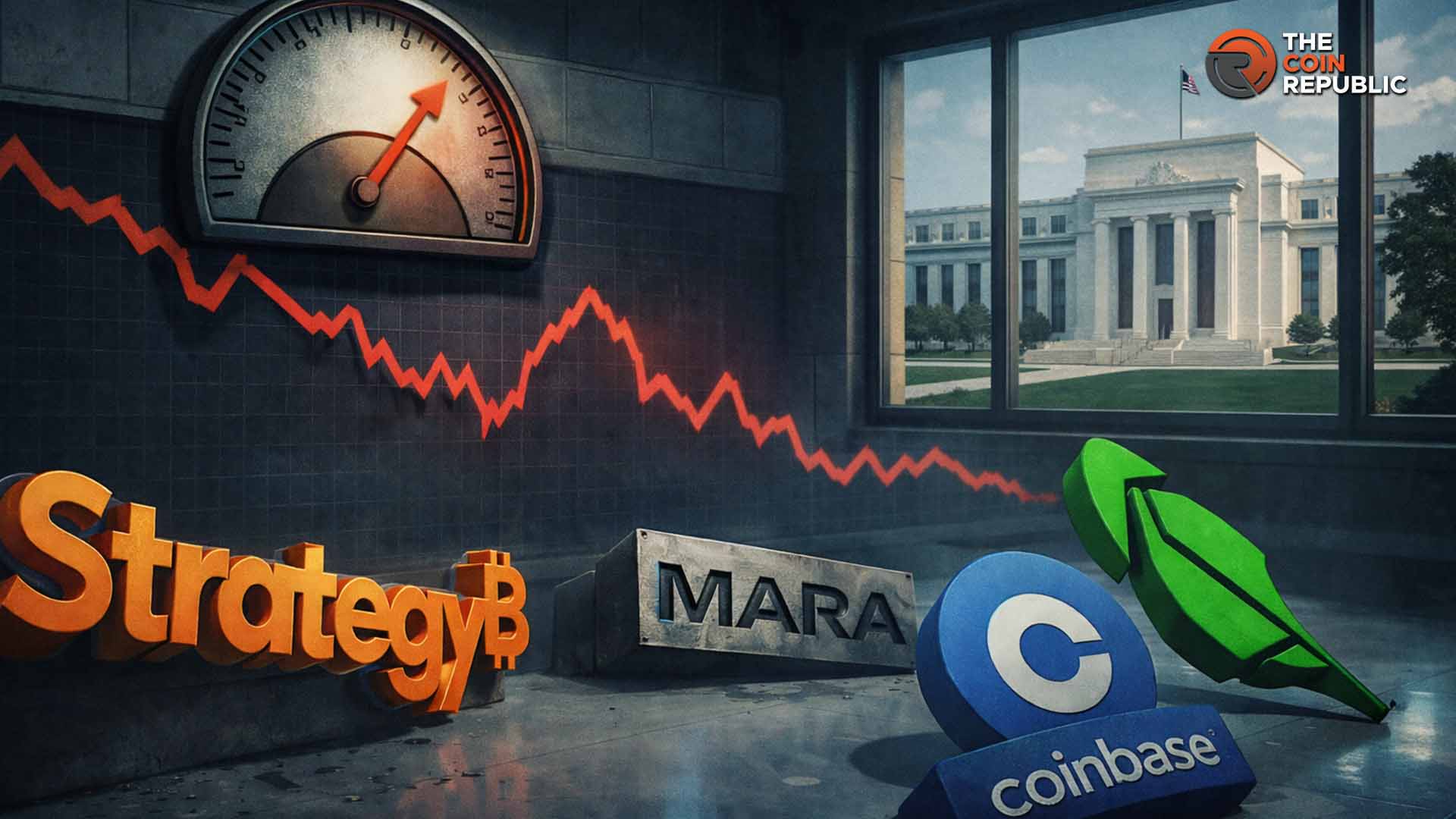
Rising Federal Reserve rate hike expectations are creating a cautious market environment, leading to significant downturns in major crypto-related stocks like MSTR, MARA, COIN, and HOOD. The geopolitical tension between the US and Iran is contributing to broader market caution, impacting investor sentiment and potentially pressuring crypto assets and related equities. Despite short-term declines, Coinbase (COIN) has shown positive signals over longer periods (5-day and 30-day), suggesting resilience or a different fundamental outlook compared to other crypto stocks.

Bitmine's increased ETH purchasing pace for three consecutive weeks, totaling $138 million in the last week, signals strong conviction from management that the crypto market downturn is nearing its end. Despite significant unrealized losses, the firm's aggressive accumulation of ETH, now representing 3.86% of circulating supply, suggests a strategic bet on a substantial price recovery. The sustained buying activity by a notable entity like Bitmine, led by Thomas Lee, could be interpreted by the market as a bullish signal for Ethereum's future price performance.

H100 Group's proposed acquisition of Moonshot and Never Say Die, aiming to triple its Bitcoin holdings to 3,500 BTC, signals a significant consolidation trend among European bitcoin treasury firms. The bitcoin-for-bitcoin acquisition structure preserves shareholder exposure while scaling the balance sheet, indicating a strategic approach to growth without immediate dilution. This move positions H100 as a major player in the European institutional bitcoin treasury space, potentially increasing its influence and market relevance. The deal, if completed, represents a substantial capital deployment into Bitcoin by a publicly listed entity, reinforcing institutional confidence in the asset.

Declining exchange outflows for SHIB below the one-billion-token threshold suggest weakening accumulation and increased likelihood of selling pressure. The failure of recent breakout attempts and trading below key EMAs reinforce a bearish technical structure for SHIB, indicating sellers are absorbing short-term optimism. Decreasing trading volume coupled with reduced outflows points to waning investor interest rather than accumulation, suggesting continued downside pressure for SHIB. Traders should monitor for a breakdown below support or a confirmed recovery of the 50 EMA with increased volume, as current on-chain and technical data remain bearish for SHIB.

Solana's price is consolidating within a range between $68 and $92, with a key resistance at $92 and support at $80, indicating a lack of strong directional momentum. Failure to break above $92 resistance increases the probability of a pullback to the $80 demand zone, which could act as a catalyst for a relief rally if it holds. A breakdown below the $80 support level would likely lead to further downside pressure, potentially testing the $68 range low, suggesting caution for traders anticipating a significant upward move. The current technical indicators, including a bearish MACD and incremental RSI, suggest that buying pressure is not yet sufficient for a sustained bullish breakout, reinforcing the range-bound outlook.

MicroStrategy's reduced pace of Bitcoin acquisition, buying $76.6 million last week compared to over $1 billion previously, signals a potential shift in their accumulation strategy or market conditions influencing their buying power. Despite the reduced weekly purchase, MicroStrategy's total holdings of 762,099 BTC at an average cost of $75,694 remain underwater relative to the current price near $70,000, indicating a long-term conviction despite short-term paper losses. The funding of these purchases through common stock sales suggests that while the company is committed to Bitcoin, it may be relying on equity markets rather than direct treasury assets for its ongoing accumulation.

Michael Saylor's Strategy continues its accumulation strategy by purchasing 1,031 BTC at $74,326, signaling conviction despite the current market trading below its average cost basis. The firm's total holdings now stand at 762,099 BTC, acquired at an average of $75,694, indicating an unrealized loss of approximately $4.3 billion, yet Saylor maintains a long-term 'hodl' perspective. Despite current market fear and an unrealized loss, Strategy's consistent buying below its average cost suggests a belief in future Bitcoin price appreciation, potentially influencing investor sentiment for $MSTR and $STRC.

Geopolitical de-escalation has triggered a significant risk-on sentiment shift in crypto markets, driving Bitcoin above $71,000 and boosting ETH and XRP. The rapid price surge suggests a combination of capital rotation into risk assets and a technical short squeeze, accelerating upward momentum. Key levels for BTC ($70K support, $73.5K-$75K resistance), ETH ($2,050 support, $2,250-$2,300 resistance), and XRP ($1.30-$1.32 support, $1.50-$1.55 resistance) will determine if this breakout sustains or leads to consolidation. While the immediate catalyst is geopolitical, sustained price action above key resistance levels is required to confirm a broader trend reversal rather than a short-term reaction.
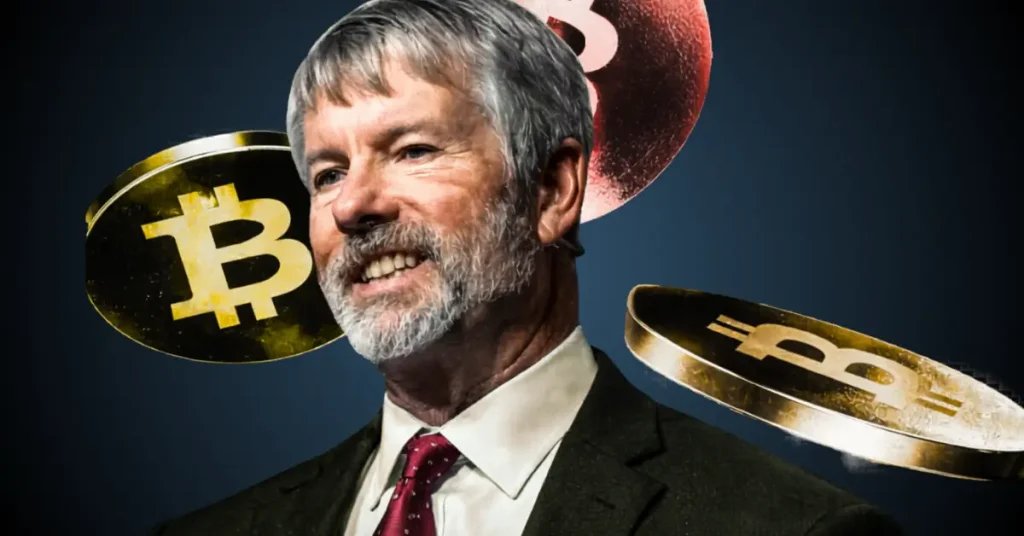
MicroStrategy's continued Bitcoin accumulation, adding 1,031 BTC at an average price of $74,326, reinforces its conviction in BTC as a long-term store of value. The firm's substantial holdings of 762,099 BTC at an average cost of $75,694 indicate a significant capital commitment, potentially influencing market sentiment for Bitcoin. This strategic purchase, while not a new event for MicroStrategy, signals ongoing institutional demand and confidence in Bitcoin's future price appreciation.
Bitcoin experienced a significant price surge, breaking above $71,000, directly correlating with geopolitical de-escalation news from the US. The market reaction suggests a heightened sensitivity to global stability, with Bitcoin acting as a risk-on asset that benefits from reduced geopolitical tensions. The price movement also coincided with substantial liquidations of leveraged long positions, indicating a potential short-term shakeout before further price discovery.
Geopolitical de-escalation signals from the US President have directly led to a risk-on sentiment shift, pushing Bitcoin back above $70,000 and benefiting other major altcoins. The temporary pause in military action against Iran has eased global market risk aversion, causing oil prices to drop and US stock futures to rebound, indicating a broader market recovery. Short sellers experienced significant losses totaling $271 million in the past hour and $364 million over 24 hours due to the unexpected positive market reaction to the geopolitical news.
Despite a recent 2% price increase and a decline in open interest, analysts maintain long-term bullish targets for XRP, projecting potential rallies to $27 based on intact multi-year ascending structures. Analysts suggest that a potential pullback to the $0.70-$0.80 range, while seemingly bearish, could serve as a technical reset before a significant upward move, reinforcing the long-term bullish thesis. The current market action for XRP is interpreted as an early phase of a larger cycle, with a major breakout anticipated only if key support levels, such as the 2020 cycle low, are maintained.
Dogecoin is approaching a critical long-term support zone near $0.0537, a level that has historically acted as a strong demand area. A rebound from the $0.0537 support could target $0.16, representing a potential 200% rally, contingent on buyers defending this key level. The monthly Relative Strength Index (RSI) for Dogecoin has reached its lowest point in 12 years, historically signaling potential seller exhaustion and a precursor to significant rebounds. Despite recent price action, Dogecoin maintains a rising long-term support structure around $0.10-$0.12, suggesting a potential stabilization zone if buying pressure emerges.
Signal context only. Validate with price action, liquidity, and risk limits before taking a position.
Quick market read from this story
HDFC Bank's stock decline is directly linked to the resignation of its part-time chairman and the termination of three senior executives over AT-1 bond mis-selling allegations.
The AT-1 bond controversy, involving alleged mis-selling to clients and subsequent losses after Credit Suisse's write-off, has eroded investor confidence in HDFC Bank's governance and client onboarding practices.
The departure of senior leadership and the fallout from the bond issue suggest potential ongoing internal scrutiny and reputational damage, which could continue to pressure the stock in the short term.
Deep Dive
HDFC Bank Limited shares have experienced significant selling pressure, dropping to ₹756.30 on Monday, a more than 3% decrease from the previous closing price. Over the past five trading days, the stock has fallen by 9.55%.
The recent decline in stock value follows the resignation of Atanu Chakraborty, the part-time chairman and independent director of HDFC Bank. Chakraborty stated his resignation was due to observed practices within the bank over the last two years that did not align with his personal values and ethics. Following his departure, Keki Mistry has been appointed as the interim part-time chairman for a three-month period.
Adding to the bank's challenges, three senior employees have been terminated in connection with the alleged mis-selling of high-risk AT-1 bonds issued by Credit Suisse. The terminated employees include Sampath Kumar (group head of branch banking), Harsh Gupta (EVP for Middle East, Africa and NRI business), and Payal Mandhyan (SVP).
Customers have reported that they were not adequately informed about the high-risk nature of these bonds, with bank staff in Dubai and Bahrain allegedly presenting them as fixed-maturity products with guaranteed returns. Investors ultimately incurred losses when these bonds were written off during the UBS-led bailout of Credit Suisse.
HDFC Bank acknowledged identifying
Coinbase's pursuit of financial inclusion through features like prediction markets has led to user backlash over notification fatigue, indicating a potential disconnect between strategic vision and user experience. The company's response, focusing on notification controls rather than removing prediction markets, suggests a strategy to balance innovation with user comfort, which could impact engagement metrics. While Coinbase aims for a broad financial ecosystem, the current user friction highlights the challenge of integrating speculative features without alienating core users focused on asset storage and traditional trading.
