
Navigating Crypto News

CoinFeather
Navigating Crypto News
Quick market read from this story
The S&P 500's drop to its 2026 low, driven by oil price surges and geopolitical tensions, signals a weakening risk appetite that could pressure correlated assets like Bitcoin.
Bitcoin's extended decoupling from U.S. equities suggests crypto markets may have priced in macro risks earlier, but a continued S&P 500 decline could still drag Bitcoin lower, with some analysts projecting a drop to $30,000-$40,000.
Elevated oil prices and persistent geopolitical risks are increasing inflation concerns, potentially delaying anticipated Federal Reserve interest rate cuts and reducing demand for risk assets across markets.
Deep Dive
The S&P 500 concluded Friday, March 20, at 6,506.48, its lowest finish of the year, extending a decline that has pushed the index down approximately 5% since early January. The index reached an intraday low of 6,473.52, falling below the 6,500 mark for the first time since mid-September 2025. This downturn has intensified scrutiny on the near-term prospects for U.S. equities, driven by escalating oil prices, geopolitical instability, and uncertainty surrounding Federal Reserve monetary policy.
Currently, the benchmark index is about 7.1% below its all-time high of 7,002 recorded on January 27, 2026. It has retreated to levels not seen since before the final surge of the 2025 rally. The S&P 500's close of 6,481.50 on September 5, 2025, was its previous record high before its subsequent rise. With the market now trading near this earlier range, analysts are closely monitoring whether current support levels will hold or if the correction will deepen.
The recent weakness in the market is partly attributed to a significant increase in energy prices. Brent crude has surged to approximately $114 per barrel, fueled by ongoing disruptions in the Middle East that are impacting market sentiment and raising concerns about oil supply. These rising energy costs are exacerbating inflation expectations at a time when investors had anticipated a more accommodative monetary policy from the Federal Reserve in 2026.
The persistent rise in energy costs is prompting investors to reassess the Federal Reserve's ability to implement interest rate cuts as quickly as initially projected for 2026. If inflation remains elevated due to oil prices, the central bank may have limited flexibility to ease policy. This potential shift has dampened demand for risk assets and placed downward pressure on equity valuations, particularly following an extended rally in large-cap stocks.
The broader geopolitical landscape has also contributed to increased caution across financial markets. As of March 23, the conflict involving the United States, Israel, and Iran has been ongoing for 24 days. Reports of new U.S. military deployments, warnings concerning the Strait of Hormuz, and threats directed at Iranian energy infrastructure have kept investors focused on the potential for further disruptions in global oil markets.
In contrast to the broader stock market, Bitcoin has exhibited a different trajectory. Market observers have noted that Bitcoin is currently experiencing its longest period of decoupling from the S&P 500 since 2020. While the stock market maintained relative strength through much of late 2025, Bitcoin entered a bear market earlier and continued to decline as crypto markets absorbed substantial selling pressure.
A pivotal moment occurred on October 10, when approximately 70,000 BTC were removed from open interest during a significant liquidation event. This single session erased over six months of open interest accumulation, reverting it to levels last seen in April 2025. Since then, Bitcoin has remained under pressure, influenced by geopolitical stress and a general decline in risk appetite.
This divergence has led some analysts to suggest that crypto markets may have reacted more swiftly than equities to the prevailing macroeconomic concerns. Bitcoin's inherent volatility may have made it more susceptible to shifts in sentiment, potentially explaining its earlier decline while the S&P 500 continued near record highs. As U.S. stocks now enter a correction phase, traders are observing whether these two asset classes will begin to move in tandem once again.
Analyst Tony Severino has cautioned that historical patterns show earlier recoveries in Bitcoin's correlation with the S&P 500 have often preceded broader declines in Bitcoin. This pattern could signal that weakness in equities might eventually extend further into the cryptocurrency markets.
Based on historical cycles, some analysts project that Bitcoin could potentially fall into the $30,000 to $40,000 range during 2026 if selling pressure persists.
On-chain data also remains a key focus. Bitcoin's Miners' Position Index (MPI) recently registered at -1.04, one of its lowest recorded readings. This indicates that miners are currently sending fewer coins to exchanges than their one-year average, suggesting reduced selling pressure from this cohort. However, past market cycles demonstrate that extremely low MPI readings have not always signaled a definitive bottom, as price weakness has sometimes continued before a recovery phase began.
Source, catalyst, and sector overlap from the latest feed.
Gold prices experienced a sharp decline from a record high of $5,246 to $4,330 following President Trump's announcement of de-escalation talks with Iran, signaling a reversal of safe-haven demand driven by geopolitical tensions. The rapid unwinding of war-driven gains in gold, silver, and platinum suggests that market participants are repricing geopolitical risk premiums lower, potentially impacting other assets that benefited from the uncertainty. The shift from a risk-off to a risk-on sentiment, triggered by diplomatic progress, could lead to sustained selling pressure on precious metals if de-escalation efforts continue, while also potentially benefiting riskier assets.
Geopolitical uncertainty surrounding US-Iran relations has introduced volatility, causing initial crypto market gains to partially reverse as Iran denied productive talks. XRP's leverage ratio has significantly decreased to 0.14, indicating a reduction in speculative positions and a more stable, albeit less active, market environment for short-term traders. Despite recent price dips, XRP exhibits a bullish divergence on its RSI and is retesting a multi-year ascending trendline within a macro ascending triangle pattern, suggesting potential for a significant upside if support holds.
The SEC dropping its lawsuit against Chris Larsen and Ripple marks a significant regulatory victory, potentially paving the way for increased institutional adoption and broader market acceptance of XRP. Ripple's recent ecosystem expansions, including a stablecoin (RLUSD), AMM, and EVM-compatible sidechain, position XRPL as a more versatile platform beyond payments, potentially attracting more developers and DeFi activity. Chris Larsen's substantial net worth and significant XRP holdings, coupled with his advocacy for blockchain technology, underscore his continued influence on the XRP ecosystem and the broader digital asset market.
Boyaa Interactive's proposed $70 million crypto treasury expansion, focusing on Bitcoin, signals a continued corporate commitment to digital assets as a strategic reserve and for Web3 initiatives. The company's existing holdings of 4,092 BTC and 302 ETH, acquired at an average cost of $68,211 and $1,661 respectively, indicate a significant integration of crypto into its balance sheet, potentially influencing future treasury management strategies. The need for shareholder approval due to the aggregated transaction size highlights the regulatory scrutiny and reporting requirements for publicly listed companies engaging in substantial crypto acquisitions, particularly under Hong Kong listing rules.
Strategy Inc. continues its aggressive Bitcoin accumulation strategy by purchasing an additional 1,031 BTC, signaling sustained institutional conviction despite current market price fluctuations. The company's funding mechanism, utilizing at-the-market stock sales, provides significant flexibility for future Bitcoin acquisitions, indicating potential for continued market support. Despite an estimated $4 billion in unrealized losses on its current holdings, Strategy's commitment to its Bitcoin-centric model remains firm, highlighting a long-term outlook that prioritizes asset accumulation over short-term price volatility. Strategy's ongoing accumulation, even with Bitcoin trading below its all-time high, reinforces its position as a major corporate holder and suggests a belief in Bitcoin's long-term value proposition, potentially influencing market sentiment.
Bitcoin's rapid surge above $70,000 was a direct response to a geopolitical de-escalation signal, demonstrating its sensitivity to macro factors over internal crypto developments. The market's swift repricing across oil, equities, and Bitcoin highlights how interconnected global financial conditions are, with geopolitical events acting as potent catalysts for risk-on/risk-off sentiment. While the immediate jump was significant, the sustainability of Bitcoin's price above $70,000 hinges on the durability of this macro de-escalation and upcoming economic data, rather than crypto-specific catalysts. The event underscores Bitcoin's current role as a high-beta risk asset, moving in tandem with traditional markets during periods of macro uncertainty and relief, rather than acting as a traditional safe haven.
Michael Saylor's "Orange March Continues" signal suggests MicroStrategy may be preparing for another Bitcoin purchase, potentially influencing short-term BTC price action despite current market headwinds. MicroStrategy's funding strategy is shifting from share dilution to STRC financing, with a significant increase in STRC contributions in the past two weeks, indicating a potential change in capital acquisition methods for its Bitcoin accumulation. Despite an approximate 10% unrealized loss on its Bitcoin holdings due to market volatility, MicroStrategy's continued aggressive buying pattern, highlighted by substantial weekly accumulations, underscores a strong conviction in Bitcoin's long-term value.
Backpack Exchange's launch of its BP token with a 25% user airdrop and no insider allocation signals a user-centric distribution strategy, potentially boosting community engagement. The BP token's structure, with long-term lockups tied to company milestones and a potential IPO, links its value to Backpack's corporate growth and equity, suggesting a dual utility beyond typical exchange tokens. The absence of founder and investor allocations at inception, coupled with the potential for BP conversion to company equity, positions the token as a unique instrument for aligning user and corporate interests.
Live Feed
Loading the broader stream in the same flow as the homepage feed.
Crypto ETP inflows significantly decelerated to $230 million last week, a sharp drop from $1.06 billion prior, indicating waning investor momentum following the Fed's 'hawkish pause' interpretation. Bitcoin ETPs absorbed nearly all recent inflows ($219.2 million), while Ether ETPs experienced outflows, suggesting a shift in institutional preference away from ETH towards BTC amidst macroeconomic uncertainty. Despite a slowdown, the four-week inflow streak for crypto ETPs highlights persistent, albeit moderating, institutional demand, with US spot Bitcoin ETFs contributing substantially to recent gains.
XRP's surge towards $2, fueled by short liquidations and a shift towards diplomacy, suggests a renewed bullish sentiment driven by geopolitical de-escalation and technical breakouts. Bitcoin Cash's outperformance against BTC, attributed to its upcoming quantum-resistant upgrade, highlights a potential long-term rotation towards assets prioritizing future-proofing against emerging technological threats. A significant accumulation of SHIB by a Bitfinex-linked whale indicates potential institutional interest or a strategic accumulation at perceived local lows, signaling a possible short-term bullish bias for the memecoin. The broader market faces uncertainty as Bitcoin consolidates within a defined range, with upcoming ETF decisions and rising energy costs creating a complex macroeconomic backdrop for traders.

The CoinDesk 20 Index is showing slight upward momentum, with Bitcoin Cash (BCH) and Solana (SOL) leading the gains, indicating a potential short-term positive sentiment for these specific assets within the broader market. While the CoinDesk 20 Index experienced a modest gain, the performance of individual assets like BCH and SOL suggests selective strength rather than a broad market rally, implying traders should focus on specific asset movements. The report highlights a mixed performance within the CoinDesk 20, with BCH and SOL outperforming while APT and ICP lagged, underscoring the importance of asset-specific analysis in the current market environment.
Bitcoin experienced a rapid 5% surge to $71,500, driven by geopolitical de-escalation news, leading to significant short liquidations and filling a CME gap, indicating a short-term bullish sentiment shift. The market reacted strongly to the perceived reduction in geopolitical risk, causing a sharp decline in oil prices and a rebound in Bitcoin, highlighting the correlation between macro-geopolitical events and crypto asset performance. While Bitcoin filled the $70,000 CME gap, attention now shifts to the $72,000-$75,000 liquidity zones, suggesting potential upside targets if bullish momentum continues, but also noting the $64K-$65K region as a significant support level.

Crypto ETFs experienced significant outflows totaling $177 million last week, indicating a potential cooling of institutional interest or profit-taking following recent price surges. Despite recent volatility and ETF outflows, Bitcoin has demonstrated resilience, outperforming traditional assets like the S&P 500 and gold since late February, suggesting underlying strength in its market position. Experts anticipate a potential altcoin rotation in Q2 if Bitcoin breaks the $80,000 'key inflection point,' signaling a shift in market dynamics driven by Bitcoin's performance. Geopolitical developments, specifically news regarding a potential Iran ceasefire, briefly boosted Bitcoin and other cryptocurrencies, highlighting the market's sensitivity to global events.
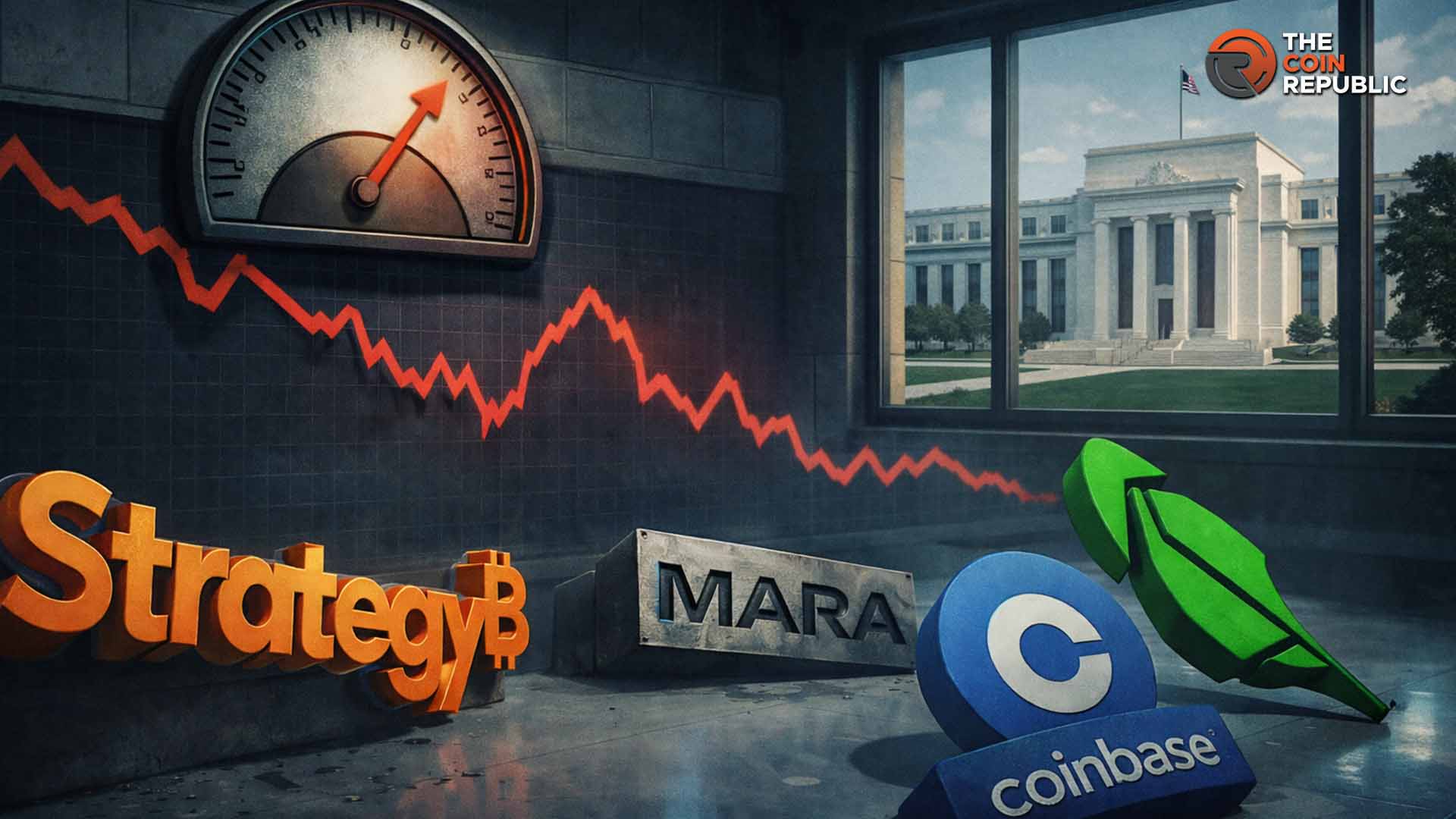
Rising Federal Reserve rate hike expectations are creating a cautious market environment, leading to significant downturns in major crypto-related stocks like MSTR, MARA, COIN, and HOOD. The geopolitical tension between the US and Iran is contributing to broader market caution, impacting investor sentiment and potentially pressuring crypto assets and related equities. Despite short-term declines, Coinbase (COIN) has shown positive signals over longer periods (5-day and 30-day), suggesting resilience or a different fundamental outlook compared to other crypto stocks.

Bitmine's increased ETH purchasing pace for three consecutive weeks, totaling $138 million in the last week, signals strong conviction from management that the crypto market downturn is nearing its end. Despite significant unrealized losses, the firm's aggressive accumulation of ETH, now representing 3.86% of circulating supply, suggests a strategic bet on a substantial price recovery. The sustained buying activity by a notable entity like Bitmine, led by Thomas Lee, could be interpreted by the market as a bullish signal for Ethereum's future price performance.
Despite a significant 2,095% surge in XRP futures volume on BitMEX, open interest has declined, indicating traders are adjusting positions rather than accumulating, suggesting caution amidst broader market weakness. XRP's price action shows a breakdown below the daily MA 50 and a continuation of a descending channel, signaling a loss of short-term structure and a bearish outlook for immediate price movements. The limited XRP spot ETF inflows and sustained 'extreme fear' market sentiment further underscore a lack of institutional and retail confidence, reinforcing the bearish short-term outlook for XRP.

The increasing reliance on social engineering tactics in crypto fraud, as exemplified by the $3.4M 'wrong number' scam, highlights a critical vulnerability in human psychology over technical exploits. Scammers employed a 'pig-butchering' model, gradually building trust through prolonged conversations before introducing fraudulent investment pitches, demonstrating a sophisticated, business-like approach to crypto crime. The scam's structure, where victims purchased Ether on legitimate exchanges and sent it to provided wallets, created a false sense of legitimacy and control, masking the underlying fraudulent intent. Law enforcement's successful seizure of $3.4M in USDT underscores the effectiveness of blockchain analytics in tracing laundered funds, even when converted to stablecoins and moved across addresses.

The significant price surge of SIREN, driven by an 88% concentrated supply in a few wallets, indicates a high risk of a pump-and-dump scheme, suggesting caution for traders. Analysis of trading activity reveals that the recent SIREN rally is primarily fueled by existing holders rather than new user adoption, questioning the token's organic growth and long-term sustainability. The concentration of SIREN supply raises concerns about potential market manipulation, which could lead to extreme volatility and significant losses for unsuspecting investors.

H100 Group's proposed acquisition of Moonshot and Never Say Die, aiming to triple its Bitcoin holdings to 3,500 BTC, signals a significant consolidation trend among European bitcoin treasury firms. The bitcoin-for-bitcoin acquisition structure preserves shareholder exposure while scaling the balance sheet, indicating a strategic approach to growth without immediate dilution. This move positions H100 as a major player in the European institutional bitcoin treasury space, potentially increasing its influence and market relevance. The deal, if completed, represents a substantial capital deployment into Bitcoin by a publicly listed entity, reinforcing institutional confidence in the asset.
Signal context only. Validate with price action, liquidity, and risk limits before taking a position.
