
Navigating Crypto News

CoinFeather
Navigating Crypto News

Quick market read from this story
US Treasury sanctions highlight North Korea's sophisticated use of fake IT worker schemes, leveraging stolen identities and AI deepfakes to funnel approximately $800 million to its weapons programs in 2024.
The report indicates a significant escalation in global illicit crypto flows, reaching a record $154–$158 billion in 2025, driven by sanctions evasion and industrialized fraud, signaling increased systemic risk.
The increasing sophistication of North Korean cyber operations, including AI-driven impersonation and malware deployment, poses an evolving threat to Western companies and the broader financial system.
Enforcement actions are intensifying, with secondary sanctions targeting financial institutions processing illicit transactions, suggesting a more aggressive stance against crypto-enabled illicit finance.
Deep Dive
The U.S. Treasury's Office of Foreign Assets Control (OFAC) has sanctioned six individuals and two entities for orchestrating a scheme that funneled approximately $800 million to North Korea's weapons programs in 2024. This operation involved North Korean nationals posing as remote IT workers for Western companies, using stolen identities and AI-generated deepfakes to secure employment and then sending their salaries back to Pyongyang.
The illicit network operated across North Korea, Vietnam, Laos, and Spain. The sanctioned entities include Amnokgang Technology Development Company, a North Korean firm managing overseas IT worker deployments and procuring military technology, and Quangvietdnbg International Services Company Limited, a Vietnam-based company that converted worker earnings into cryptocurrency. Key individuals sanctioned include Nguyen Quang Viet, CEO of Quangvietdnbg, who allegedly converted $2.5 million into crypto for the regime, and Yun Song Guk, a North Korean national managing IT worker groups in Laos.
North Korean operatives exploit stolen identities, fake credentials, and forged documents to gain employment as remote IT workers, earning up to $200,000 annually per individual. To evade detection, the regime now employs AI to alter workers' appearances and voices during video interviews, making them indistinguishable from the individuals whose identities they have stolen. Some embedded workers also engage in planting malware or extorting companies.
In 2025, global illicit cryptocurrency flows surged to a record $154–$158 billion, a 145% increase from the previous year. This rise was largely driven by sanctions evasion, particularly through the ruble-backed A7A5 stablecoin, and industrialized fraud. Hackers stole $2.87 billion across 150 incidents, with the Bybit exchange breach accounting for over half of the total losses. Stablecoins now constitute 84% of illicit transaction volume due to their liquidity and ease of cross-border transfers.
North Korea's crypto theft reached an estimated $2.02 billion in 2025, a 51% increase from the prior year, with operations spanning over 40 countries. An estimated 1,500 IT workers operate out of China, with hundreds more spread across Russia, Laos, Cambodia, and African nations. Scams have evolved from individual operations to structured businesses, with AI-enabled scams using deepfakes and voice cloning proving significantly more profitable. Impersonation fraud also saw a substantial increase.
Recent enforcement actions include the dismantling of the malicious proxy service SocksEscort by Europol and U.S. authorities, seizing domains and freezing cryptocurrency. The FBI has warned of North Korean group Kimsuky using malicious QR codes in spearphishing campaigns. In a landmark case, the DOJ filed for forfeiture of 127,000 BTC, valued at $15 billion, seized from the Prince Group, marking the largest crypto asset forfeiture in history. Analysts identify North Korea’s over-the-counter laundering brokers as vulnerable targets for future enforcement.
Source, catalyst, and sector overlap from the latest feed.
Solana's record-breaking $650 billion in stablecoin transactions in February 2026 signals a significant shift from speculative activity to institutional-grade financial infrastructure, potentially attracting further institutional capital. The increasing dominance of USDC over USDT in transaction volume highlights a growing institutional preference for compliance-focused stablecoins, which could benefit Solana as regulatory clarity emerges. Upcoming upgrades like Firedancer and Alpenglow, coupled with a favorable regulatory outlook and the growth of RWA and DeFi, position Solana for sustained utility and potential price appreciation, with analysts setting price targets up to $320.
Bitcoin is approaching a critical resistance zone between $76K-$79K, with a sustained break above this level potentially invalidating the February correction and signaling further upside. Institutional capital appears to be rotating from gold ETFs into Bitcoin ETFs, suggesting a growing perception of Bitcoin as a store-of-value asset amidst geopolitical uncertainty. A historically significant 100-week EMA retest signal has fired for Bitcoin above $70K, a level that has preceded major upward moves since 2014, indicating potential for a sustained rally if maintained. The divergence in ETF flows between gold (outflows) and Bitcoin (inflows) highlights a potential structural shift in investor sentiment, favoring Bitcoin as a crisis hedge over traditional safe havens.
Bitcoin demonstrated resilience, outperforming gold and equities during geopolitical tensions, suggesting its potential as a real-time geopolitical hedge. A significant $50M DeFi swap error on Aave highlights critical execution risks and slippage vulnerabilities within decentralized finance protocols, impacting user confidence. The launch of staking ETFs by BlackRock and Grayscale signals growing institutional adoption and a maturing crypto market, integrating traditional finance products with digital assets. Despite DeFi blunders and network issues on Solana, the market is simultaneously pricing in institutional legitimacy and the inherent risks within crypto infrastructure.
The XRP Ledger's v3.1.2 update addresses a critical security flaw that could have compromised $80 billion in network value, significantly enhancing protocol security and stability. The rapid patching of this vulnerability, identified with AI assistance, demonstrates the XRPL Foundation's commitment to safeguarding institutional capital and supports its growing role in DeFi. While the update is purely a security fix, the underlying technical improvements and increasing network activity suggest a strengthening foundation for XRP, potentially supporting near-term price consolidation and upside.
USDC's surpassing of USDT in transaction volume signals a potential shift in stablecoin dominance, driven by emerging use cases beyond traditional crypto trading. The ongoing regulatory debate, particularly in the UK, introduces uncertainty for stablecoin issuers and could influence future adoption and market structure. While USDC leads in transaction volume, USDT's larger market cap indicates continued market segmentation, with long-term leadership likely dependent on real economic utility. Mizuho's revised forecasts for Circle suggest increased confidence in USDC's long-term growth, projecting significant increases in wallet usage and market capitalization.
Delays in the CLARITY Act, driven by opposition from banking groups, are causing frustration among crypto industry leaders and lawmakers who fear it will stifle innovation. Industry executives like those from Coinbase and BitGo are pushing back against proposed changes, arguing they benefit large banks at the expense of consumers and hinder fair competition. Despite opposition, there's a stated commitment from industry representatives to negotiate in good faith, with a 73% probability of the CLARITY Act passing in 2026 according to Polymarket. The ongoing regulatory uncertainty surrounding the CLARITY Act creates a watchlist scenario for the crypto sector, as its passage or failure will significantly impact market structure and innovation.
Wells Fargo's trademark filing for 'WFUSD' signals a strategic move into digital asset services, potentially including stablecoin operations and exchange functionalities. This development aligns with broader industry trends of traditional financial institutions exploring blockchain and digital asset integration, suggesting increased institutional adoption. The filing indicates Wells Fargo's intent to leverage its existing infrastructure and prior investments in crypto analytics and trading platforms for future digital asset offerings. The potential launch of 'WFUSD' could represent a significant step towards institutional-backed stablecoins, impacting the existing stablecoin market and regulatory landscape.
Bitcoin's reclaim of the $70,000 level is primarily driven by a shift in geopolitical sentiment, suggesting that macro-economic stability is a key driver for near-term price action. Improved social sentiment and institutional buying provide a foundation for the current rebound, indicating a potential shift from fear to cautious optimism among market participants. While current price action is positive, the outlook remains sensitive to geopolitical developments and key resistance levels around $80,000, suggesting a need for continued monitoring. The narrative around regulatory clarity, specifically the Clarity Act and stablecoin frameworks, is contributing to a more stable outlook, reinforcing investor confidence.
The DOJ's decision to retry Roman Storm on money laundering and sanctions charges following a hung jury highlights the ongoing legal scrutiny of crypto mixers and developer liability. The retrial, expected in fall 2026, will focus on key charges, potentially impacting the broader narrative around privacy tools and open-source code in the crypto space. Despite a conviction on operating an unlicensed money transmitting business, the jury's inability to reach a verdict on other charges suggests a complex legal battle ahead, creating uncertainty for Tornado Cash and its ecosystem.
The federal court's decision denying Custodia Bank a master account signifies a significant regulatory hurdle for crypto-focused banks seeking traditional financial infrastructure access. This ruling could imply increased operational challenges and potential long-term viability concerns for similar institutions attempting to integrate into the established banking system. The denial of essential banking services, described as 'akin to a death sentence,' highlights the critical dependence of crypto banks on traditional financial intermediaries and the regulatory risks involved.
AI tokens are experiencing a significant resurgence, led by TAO, RENDER, and FET, indicating a potential rotation of capital into decentralized AI infrastructure as the broader crypto market stabilizes. The rally in AI tokens is driven by growing interest in agentic AI systems and the increasing demand for decentralized AI compute infrastructure, positioning projects like Bittensor and Render at the forefront of this narrative. With TAO, RENDER, and FET showing strong weekly gains and technical indicators turning bullish, the AI sector is re-emerging as a leading narrative that could potentially drive the next altcoin rally.
XRP's reported 1,500 TPS significantly outpaces Bitcoin and Ethereum, highlighting its potential for high-volume payment applications and challenging the scalability narrative of established Layer-1s. The XRP Ledger's efficient consensus mechanism, avoiding energy-intensive mining, positions it as a cost-effective and fast alternative for cross-border payments and real-time settlements. While Bitcoin and Ethereum focus on store of value and smart contracts respectively, XRP's performance metrics suggest a strategic advantage in the growing market for blockchain-based payment infrastructure. Despite the performance claims, the article speculates on a potential 1,500% rally for XRP, driven by evolving utility and institutional interest, though this remains a speculative outlook.
Live Feed
Loading the broader stream in the same flow as the homepage feed.
XRP Ledger's rapid growth in tokenized commodities, reaching over 15% of the global market and $1.14B, signals strong adoption for real-world asset tokenization on the platform. The XRPL's demonstrated speed (1,500 TPS) and efficiency are positioning it as a competitive infrastructure for tokenizing diverse assets like energy and diamonds, potentially attracting further institutional interest. This development highlights a significant shift in the RWA sector, with XRPL emerging as a key player, suggesting potential for increased network activity and utility for XRP.
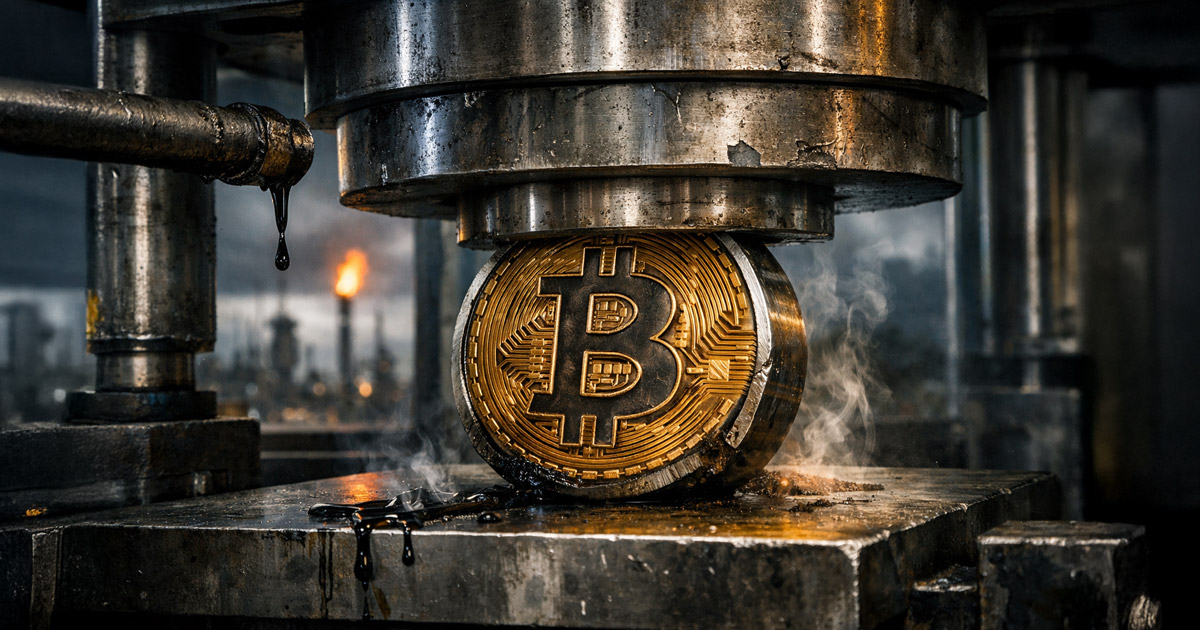
US Q4 GDP revision to 0.7% and sticky core PCE inflation (3.1%) indicate a deteriorating macro environment that challenges Bitcoin's recent stabilization. The Federal Reserve faces a difficult trade-off between slowing growth and persistent inflation, with potential 'higher for longer' rates posing a headwind for risk assets like Bitcoin. Despite positive ETF inflows and easing funding rates, Bitcoin's fragile internal recovery is now being tested by worsening macroeconomic conditions, suggesting a potential range-bound or downward price action if oil prices remain elevated. The confluence of slower economic growth, stubborn inflation, and geopolitical oil price shocks creates a complex scenario for Bitcoin, where a hawkish Fed stance could pressure prices towards the $60,000-$69,000 demand zone.

Cardano founder Charles Hoskinson is advocating for a strategic rebalancing of ecosystem funding, shifting focus from pure infrastructure development towards adoption, visibility, and real-world usage to drive network growth. The introduction of Cardano's Programmable Tokens standard (CIP-0113) aims to enable compliant, institutional-grade assets like regulated stablecoins and tokenized securities, potentially attracting traditional finance players and boosting adoption. Despite recent price dips, analysts suggest ADA could be at an inflection point, drawing parallels to its 2020-2021 rally, contingent on favorable macro conditions and the successful execution of the new funding and tokenization strategies.
Continued strong inflows into Bitcoin spot ETFs, totaling $180 million on March 13, signal sustained institutional demand for regulated crypto exposure. BlackRock's IBIT led Bitcoin ETF flows with $144 million, highlighting investor confidence in established providers and their liquidity. Ethereum spot ETFs also experienced positive net inflows of $26.69 million, indicating growing institutional interest beyond Bitcoin. The consistent inflows across both Bitcoin and Ethereum ETFs suggest a positive sentiment shift and potential for further price appreciation in the short term.
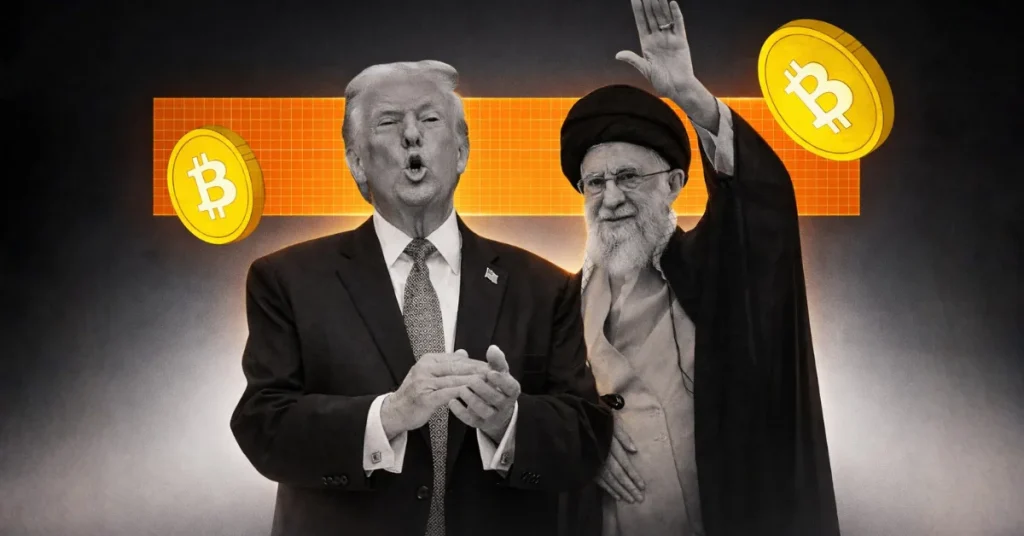
Geopolitical tensions involving Iran and potential oil supply disruptions are creating broader market risk aversion, leading to a near 2% pullback in Bitcoin's price from recent highs. Despite the short-term price drop, sustained inflows into Bitcoin ETFs indicate continued institutional demand, suggesting underlying strength that could buffer against further declines. Technical analysis suggests Bitcoin is testing key support levels around $66,000, with a bearish flag pattern indicating potential for further downside if these levels fail to hold. The interplay between geopolitical risk, oil market volatility, and Bitcoin's price action highlights its increasing correlation with traditional macro assets, making it sensitive to global events.
Spot Bitcoin ETFs have achieved their first five-day inflow streak of 2026, totaling $767.32 million, indicating sustained institutional demand and potentially signaling a shift in market sentiment towards accumulation. Spot Ether ETFs also extended their positive inflow streak to four days, accumulating $212.14 million, suggesting growing institutional interest in the second-largest cryptocurrency following a period of outflows. Despite positive ETF flows, Bitcoin remains range-bound due to rising Middle East tensions and macro uncertainty, with key liquidity clusters acting as resistance and support levels, suggesting consolidation until a significant catalyst emerges. The sustained inflows into both Bitcoin and Ether ETFs mark a significant positive development for the digital asset market in 2026, reversing earlier outflows and reinforcing the narrative of increasing institutional adoption.
PepetoSwap's upcoming launch and update are drawing significant capital ($7.9M raised) and attention, positioning it as a potential high-growth opportunity compared to larger, less dynamic assets like XRP and Cardano. The article contrasts PepetoSwap's zero-fee, cross-chain functionality with high gas fees on Ethereum, highlighting a potential competitive advantage that could drive adoption and volume. Despite positive developments for XRP and Cardano, their large market caps limit potential for exponential growth, making early-stage projects like Pepeto more attractive for investors seeking significant returns. The project's claims of AI-driven risk screening and a former Binance executive's involvement, coupled with a SolidProof audit, aim to build confidence for early investors anticipating a major exchange listing.
Coinbase exploring investment talks with Bybit signals a potential consolidation trend among major exchanges, aiming to navigate regulatory landscapes and expand market reach. A strategic partnership could enhance market standards and reduce loopholes, potentially benefiting institutional adoption and overall market integrity. Bybit's interest in a deal highlights its strategy to penetrate the US market, while Coinbase's move could be a defensive play or an opportunistic expansion into global derivatives.
A significant influx of over 112 billion SHIB tokens to exchanges, pushing reserves above 80 trillion, signals increased sell pressure that could counteract recent price recovery attempts. Despite breaking a short-term declining structure, SHIB remains below key resistance levels like the 26-day EMA, indicating that the current bounce may be a relief rally within a larger bearish trend. The surge in exchange reserves suggests that large holders are repositioning, creating potential downward pressure on SHIB's price if demand does not absorb the increased available supply.
Kraken's affiliated SPAC, KRAK Acquisition Corp., has raised $345 million and is actively seeking crypto-native firms in the $2 billion to $10 billion valuation range, signaling significant institutional interest in acquiring established digital asset businesses. The SPAC's focus on stablecoins, DeFi, and tokenization indicates a strategic move to integrate traditional finance with emerging blockchain sectors, potentially driving capital into these areas. This initiative by Kraken, following its own $800 million funding round, suggests an expansion of its influence and a potential pathway for promising crypto companies to access public markets via reverse mergers.
Dogecoin defended critical $0.088 support, with a potential short squeeze targeting the $0.10-$0.11 liquidation zone, though broader downtrend remains intact. Technical indicators like moving averages and A/D line show bearish sentiment, with CMF signaling capital outflows, suggesting the recent bounce lacks strong fundamental backing. While a short-term rally to $0.11 is possible due to liquidation clusters, a structural trend reversal for DOGE requires breaking above $0.127, indicating a need for caution. The broader market's relief rally, led by Bitcoin's bounce from $67,000, provided a tailwind for speculative assets like DOGE, but its sustainability is questionable given underlying technicals.

Changpeng Zhao's dispute of Forbes' $111B net worth estimate highlights the inherent volatility and speculative nature of valuing crypto-centric fortunes. The discrepancy between Forbes' and Bloomberg's valuations underscores the challenges in accurately assessing private crypto holdings, particularly illiquid assets like large BNB stakes. Zhao's argument that a 50% crypto market downturn should not lead to an increased net worth points to the difficulty in applying traditional valuation metrics to the crypto space. This event serves as a reminder for traders to critically evaluate wealth estimates for crypto leaders, as they are often based on assumptions and market conditions that can rapidly change.

Bitcoin demonstrates resilience by holding $71,000 despite geopolitical tensions and potential oil supply disruptions, indicating a maturing market response to macro events. The market's adaptation to Middle Eastern conflict headlines suggests a fading 'sell-the-headline' impulse, though resistance at $73,000-$74,000 remains a key short-term hurdle. Upcoming Fed meeting on March 17-18 becomes a critical focus, as sustained oil prices above $100 could challenge the market's pricing of rate cuts and impact risk assets like crypto.
Signal context only. Validate with price action, liquidity, and risk limits before taking a position.
