
Navigating Crypto News

CoinFeather
Navigating Crypto News
Quick market read from this story
Coinbase exploring investment talks with Bybit signals a potential consolidation trend among major exchanges, aiming to navigate regulatory landscapes and expand market reach.
A strategic partnership could enhance market standards and reduce loopholes, potentially benefiting institutional adoption and overall market integrity.
Bybit's interest in a deal highlights its strategy to penetrate the US market, while Coinbase's move could be a defensive play or an opportunistic expansion into global derivatives.
Deep Dive
Coinbase is reportedly in discussions with Bybit, a major global cryptocurrency exchange, regarding a potential investment deal. This strategic move could allow Bybit to expand its presence within the regulated United States market. While Bybit has not officially confirmed the ongoing talks, industry observers suggest that such a partnership could lead to enhanced standards and fewer loopholes in the cryptocurrency trading landscape.
This potential collaboration follows significant investments in the crypto exchange sector. Notable examples include ICE's backing of OKX at a substantial $25 billion valuation and Coinbase's own acquisition of Deribit for $2.9 billion in the previous year. These transactions highlight a trend of consolidation and strategic partnerships aimed at strengthening market positions and navigating regulatory environments.
Source, catalyst, and sector overlap from the latest feed.
The core argument that XRP's utility for institutional payments necessitates a higher price point, as outlined by Ripple's CTO, is gaining traction as infrastructure like stablecoin integration and regulatory approvals materialize. Ripple's strategy to leverage XRP as a gas token for its RLUSD stablecoin on the XRP Ledger, targeting the $33 trillion stablecoin market, positions XRP as essential for transaction fees, thereby driving demand. Despite XRP's current price being significantly below its peak, the development of key structural pieces like a national trust bank charter and Mastercard's inclusion in its Crypto Partner Program suggest a growing institutional readiness for XRP's use case. The divergence between Ripple's increasing company valuation and XRP's token price, coupled with on-chain data showing decreased exchange balances, indicates a potential disconnect that could resolve favorably for XRP holders if the underlying utility gains traction.
Live Feed
Loading the broader stream in the same flow as the homepage feed.

USDC's market cap nearing record highs driven by Middle Eastern capital flight suggests a flight to perceived safety within stablecoins amidst traditional market uncertainty. The surge in USDC demand, potentially linked to Dubai's real estate downturn, highlights stablecoins' role as a liquidity conduit during regional financial stress. USDC surpassing USDT in adjusted transaction volume indicates growing adoption and utility for USDC in active trading or capital movement, despite USDT's larger market cap. The acceptance of BTC for property purchases with discounts signals an increasing integration of cryptocurrencies into traditional asset transactions, driven by market conditions.
XRP Ledger transaction volume has tripled over the past year, indicating significant growth in on-chain activity driven by payments, liquidity operations, and tokenized assets. Despite a 300% surge in XRP Ledger transactions, XRP's price remains subdued, suggesting a potential disconnect between fundamental utility and market valuation that could present a buying opportunity on a price rebound. The increasing adoption of XRP Ledger for financial products and Evernorth's institutional accumulation strategy highlight growing real-world utility, which could attract further capital if XRP's price momentum returns.
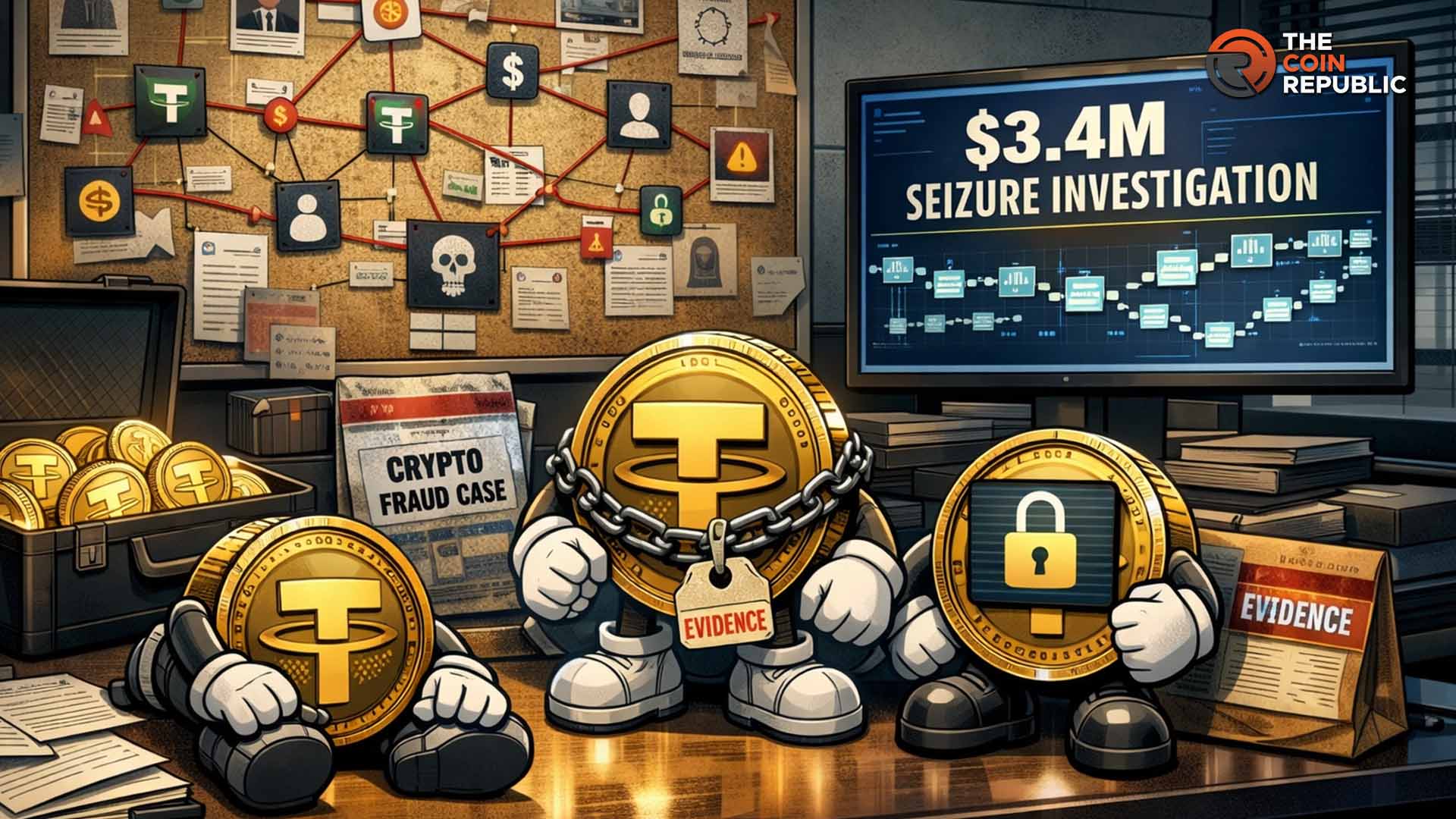
U.S. authorities are actively seizing Tether (USDT) linked to fraudulent schemes, signaling increased regulatory scrutiny on stablecoin usage in illicit activities. The ongoing forfeiture actions highlight a pattern of crypto scams using fake investment offers, emphasizing the need for investor vigilance and due diligence. The seizure of $3.44 million in USDT underscores the persistent challenges in tracing and recovering illicit funds within the cryptocurrency ecosystem.

Long-term Bitcoin holders sold less BTC in the 2025 cycle compared to 2021, indicating a potential structural shift in selling pressure dynamics. The increasing holdings of spot Bitcoin ETFs and corporate treasuries, now representing over 11% of supply, suggest a more stable ownership base that may temper extreme cycle-top distribution. On-chain metrics like LTH selling need re-evaluation due to large internal transfers from entities like Coinbase and the growing influence of institutional holders, potentially requiring new analytical frameworks. While not a direct price catalyst, the evolving ownership structure implies that historical patterns of sharp cycle-top corrections driven by retail distribution may become less pronounced.
The confirmation of a death cross on Shiba Inu's daily chart signals weakening momentum, suggesting potential for further price declines if current trends persist. Significant transfers of SHIB to exchanges, totaling over 112 billion in 48 hours, raise concerns about potential sell-offs that could exacerbate downward price pressure. Despite bearish technicals and large token transfers, the absence of extreme selling pressure and potential for broader market recovery offer a slim possibility for SHIB to rebound.

US Q4 GDP revision to 0.7% and sticky core PCE inflation (3.1%) indicate a deteriorating macro environment that challenges Bitcoin's recent stabilization. The Federal Reserve faces a difficult trade-off between slowing growth and persistent inflation, with potential 'higher for longer' rates posing a headwind for risk assets like Bitcoin. Despite positive ETF inflows and easing funding rates, Bitcoin's fragile internal recovery is now being tested by worsening macroeconomic conditions, suggesting a potential range-bound or downward price action if oil prices remain elevated. The confluence of slower economic growth, stubborn inflation, and geopolitical oil price shocks creates a complex scenario for Bitcoin, where a hawkish Fed stance could pressure prices towards the $60,000-$69,000 demand zone.

Cardano founder Charles Hoskinson is advocating for a strategic rebalancing of ecosystem funding, shifting focus from pure infrastructure development towards adoption, visibility, and real-world usage to drive network growth. The introduction of Cardano's Programmable Tokens standard (CIP-0113) aims to enable compliant, institutional-grade assets like regulated stablecoins and tokenized securities, potentially attracting traditional finance players and boosting adoption. Despite recent price dips, analysts suggest ADA could be at an inflection point, drawing parallels to its 2020-2021 rally, contingent on favorable macro conditions and the successful execution of the new funding and tokenization strategies.
Solana's record-breaking $650 billion in stablecoin transactions in February 2026 signals a significant shift from speculative activity to institutional-grade financial infrastructure, potentially attracting further institutional capital. The increasing dominance of USDC over USDT in transaction volume highlights a growing institutional preference for compliance-focused stablecoins, which could benefit Solana as regulatory clarity emerges. Upcoming upgrades like Firedancer and Alpenglow, coupled with a favorable regulatory outlook and the growth of RWA and DeFi, position Solana for sustained utility and potential price appreciation, with analysts setting price targets up to $320.
The OFFICIAL TRUMP (TRUMP) token experienced a significant price surge driven by an announcement of exclusive Mar-a-Lago access for top holders, indicating that event-driven incentives can still create short-term demand spikes in memecoins. A bullish technical breakout from a descending wedge pattern, supported by increased trading volume and a rising RSI, suggests renewed buyer interest, though sustainability hinges on holding above key support levels. While the current rally shows strong momentum, its speculative nature tied to an event implies potential for rapid reversals if buying pressure wanes, making it a high-risk, short-term trading opportunity.
Continued strong inflows into Bitcoin spot ETFs, totaling $180 million on March 13, signal sustained institutional demand for regulated crypto exposure. BlackRock's IBIT led Bitcoin ETF flows with $144 million, highlighting investor confidence in established providers and their liquidity. Ethereum spot ETFs also experienced positive net inflows of $26.69 million, indicating growing institutional interest beyond Bitcoin. The consistent inflows across both Bitcoin and Ethereum ETFs suggest a positive sentiment shift and potential for further price appreciation in the short term.
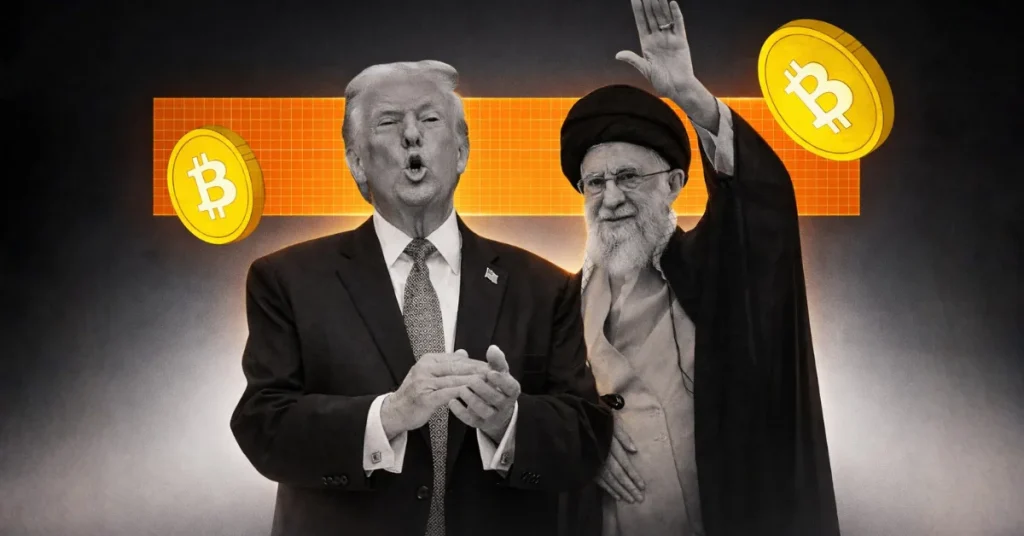
Geopolitical tensions involving Iran and potential oil supply disruptions are creating broader market risk aversion, leading to a near 2% pullback in Bitcoin's price from recent highs. Despite the short-term price drop, sustained inflows into Bitcoin ETFs indicate continued institutional demand, suggesting underlying strength that could buffer against further declines. Technical analysis suggests Bitcoin is testing key support levels around $66,000, with a bearish flag pattern indicating potential for further downside if these levels fail to hold. The interplay between geopolitical risk, oil market volatility, and Bitcoin's price action highlights its increasing correlation with traditional macro assets, making it sensitive to global events.
Spot Bitcoin ETFs have achieved their first five-day inflow streak of 2026, totaling $767.32 million, indicating sustained institutional demand and potentially signaling a shift in market sentiment towards accumulation. Spot Ether ETFs also extended their positive inflow streak to four days, accumulating $212.14 million, suggesting growing institutional interest in the second-largest cryptocurrency following a period of outflows. Despite positive ETF flows, Bitcoin remains range-bound due to rising Middle East tensions and macro uncertainty, with key liquidity clusters acting as resistance and support levels, suggesting consolidation until a significant catalyst emerges. The sustained inflows into both Bitcoin and Ether ETFs mark a significant positive development for the digital asset market in 2026, reversing earlier outflows and reinforcing the narrative of increasing institutional adoption.

US Treasury sanctions highlight North Korea's sophisticated use of fake IT worker schemes, leveraging stolen identities and AI deepfakes to funnel approximately $800 million to its weapons programs in 2024. The report indicates a significant escalation in global illicit crypto flows, reaching a record $154–$158 billion in 2025, driven by sanctions evasion and industrialized fraud, signaling increased systemic risk. The increasing sophistication of North Korean cyber operations, including AI-driven impersonation and malware deployment, poses an evolving threat to Western companies and the broader financial system. Enforcement actions are intensifying, with secondary sanctions targeting financial institutions processing illicit transactions, suggesting a more aggressive stance against crypto-enabled illicit finance.
Signal context only. Validate with price action, liquidity, and risk limits before taking a position.
CapPlace, a trading platform owned by Robertson Finance Inc., has launched, offering a diverse range of instruments including cryptocurrencies, stocks, and forex with competitive fees and multiple account tiers. The platform emphasizes user-friendliness with both web and mobile trading applications, aiming to attract traders of all experience levels, though it lacks advanced trading tools and extensive educational resources. While regulated by MISA and claiming FINRA oversight, the article notes a lack of clear information regarding CapPlace's regulatory status and financial stability, presenting a potential risk for investors. CapPlace's introduction of a new trading platform with a focus on CFD trading, including cryptocurrencies, represents a new entrant in the market that traders should monitor for performance and reliability.
