
Navigating Crypto News

CoinFeather
Navigating Crypto News

Quick market read from this story
US Q4 GDP revision to 0.7% and sticky core PCE inflation (3.1%) indicate a deteriorating macro environment that challenges Bitcoin's recent stabilization.
The Federal Reserve faces a difficult trade-off between slowing growth and persistent inflation, with potential 'higher for longer' rates posing a headwind for risk assets like Bitcoin.
Despite positive ETF inflows and easing funding rates, Bitcoin's fragile internal recovery is now being tested by worsening macroeconomic conditions, suggesting a potential range-bound or downward price action if oil prices remain elevated.
The confluence of slower economic growth, stubborn inflation, and geopolitical oil price shocks creates a complex scenario for Bitcoin, where a hawkish Fed stance could pressure prices towards the $60,000-$69,000 demand zone.
Deep Dive
The US economy is showing signs of weakening, with a significant downward revision to Q4 2025 GDP growth to 0.7%, down from 1.4%, and a mere 0.1% increase in real consumer spending. This slowdown, coupled with persistent core inflation at 3.1% year-over-year, presents a challenging macroeconomic backdrop. The situation is further complicated by a geopolitical oil shock, which has seen oil prices surge and gasoline prices rise, potentially exacerbating inflation and dampening growth.
Revised data for the fourth quarter of 2025 revealed a sharper deceleration than initially estimated. Key indicators such as exports, consumer spending, government spending, and investment all contributed to the downward revision. Real final sales to private domestic purchasers, a more refined measure of domestic demand, slowed to 1.9%. Business investment also showed signs of weakness, with core capital goods orders remaining flat and shipments declining.
Inflationary pressures remain a concern, with core PCE rising to 3.1% year-over-year, well above the Federal Reserve's 2% target. These figures predate the full impact of the recent energy shock, leading economists to warn of a worsening trade-off between growth and inflation. Goldman Sachs estimates that a temporary move to $100 oil could shave 0.4% off global growth and add 0.7% to global headline inflation.
Bitcoin is navigating a complex macroeconomic environment as the Federal Reserve prepares for its March 17-18 meeting. Futures markets have scaled back expectations for rate cuts in 2026, with only a quarter-point move anticipated by December, down from two prior to the recent conflict. The Fed faces a difficult balancing act between addressing sticky inflation and a potential economic slowdown, further complicated by rising energy costs.
Despite the challenging macro outlook, Bitcoin has shown signs of stabilization. ETF inflows have reportedly returned, spot demand is recovering, and funding rates have turned negative, indicating reduced market froth. Options volatility has also eased. BTC was trading around $70,600 as of press time, following a recent intraday high of $74,000. US spot Bitcoin ETFs saw net inflows of $583 million between March 9 and March 12, following a prior outflow.
The market is anticipating the Federal Reserve's response to these mixed signals. If Fed Chair Jerome Powell emphasizes inflation concerns, risk assets like Bitcoin could face a tougher environment. Conversely, acknowledging energy-related uncertainty while maintaining a cautious tone might lead to a market holding pattern. The potential scenarios range from Bitcoin retesting $75,000 if oil retreats and the shock is deemed temporary, to a potential retest of the $60,000–$69,000 demand zone if oil remains elevated and inflation fears harden.
The current economic conditions extend beyond the cryptocurrency market, impacting traditional assets such as stocks, retirement accounts, and mortgages. Slower growth poses a risk to stock valuations and earnings expectations, while sticky inflation pressures borrowing costs. Higher energy prices directly affect household budgets. The Federal Reserve's limited room to maneuver in cushioning a potential slowdown adds to the uncertainty for all risk assets.
For crypto investors, the key is observing whether Bitcoin's stabilization, supported by improving ETF demand and reduced market froth, can withstand the deteriorating macro backdrop. While the market is not in a state of mania, the pace of macro deterioration may be outpacing Bitcoin's internal repair. The coming weeks will be critical in determining if Bitcoin can hold its ground amidst these significant economic and geopolitical challenges.
Source, catalyst, and sector overlap from the latest feed.
Binance's lawsuit against the Wall Street Journal, while a familiar tactic, is now being interpreted by the market as a sign of increased confidence due to a perceived friendlier US regulatory and political climate. The shift in market perception suggests that negative press for Binance may carry less weight and trigger a smaller 'fear premium' compared to previous cycles, potentially impacting competitor positioning. While a friendlier political backdrop is noted, ongoing legal challenges and scrutiny, particularly regarding Iran sanctions, indicate that Binance still faces significant legal vulnerabilities, creating a divergence in potential market interpretations. The market is evaluating whether Binance's aggressive legal stance reflects genuine confidence stemming from a reduced regulatory overhang or an overestimation of its insulation from enforcement risks.
A significant $50 million loss occurred on Aave due to a user overriding a slippage warning, highlighting critical UX flaws in DeFi interfaces for large transactions. The incident resulted in substantial profits for MEV bots and block builders on Ethereum, demonstrating the ongoing extraction of value from user errors within the ecosystem. While Aave and CoW Protocol refunded fees, the event underscores the need for improved safeguards and clearer warnings to prevent catastrophic user errors in high-value DeFi trades. The potential identification of the trader as a known figure like Garrett Jin adds a layer of scrutiny to large-scale DeFi operations and risk management practices.
The escalating physical coercion incidents in France targeting crypto holders, including kidnappings and home invasions, highlight a critical shift from cybersecurity threats to personal security risks for digital asset owners. This trend forces a re-evaluation of self-custody's security model, as hardware wallets and private key protection are insufficient against real-world violence and extortion. The French government's response, offering emergency police services and security briefings, underscores the severity and systemic nature of this evolving criminal phenomenon, impacting the perception of France as a crypto-friendly jurisdiction. The increasing targeting of private individuals, not just industry insiders, suggests a broader operational security challenge for all crypto holders, necessitating adaptations like multisig, key separation, and lower public profiles.
The Federal Reserve's upcoming vote on a revised Basel capital proposal is a critical determinant for how banks will integrate Bitcoin into their balance sheets, potentially shifting the focus from legal permission to economic feasibility. A more favorable capital treatment for Bitcoin exposures could unlock significant bank-led custody, financing, and market-making services, thereby increasing Bitcoin's bankability and potentially its price stability. Conversely, a punitive capital framework would reinforce Bitcoin's status as a balance sheet hazard for large banks, limiting institutional adoption and keeping it on the periphery of the regulated financial system. The outcome of this regulatory review is poised to significantly influence the near-term trajectory of institutional Bitcoin adoption and its integration into traditional finance.
BlackRock's launch of the Staked Ethereum Trust ETF (ETHB) reframes Ethereum from a complex tech bet to a yield-bearing asset, potentially attracting traditional investors seeking income and broadening its appeal beyond pure crypto speculation. The ETHB product simplifies Ethereum's narrative for mainstream investors by emphasizing monthly income potential and brokerage account accessibility, directly addressing previous investor complaints about unstaked Ether lacking yield. While Grayscale previously offered staking rewards in its ETPs, BlackRock's involvement signifies mainstream ratification and leverages its vast distribution network, potentially shifting capital allocation towards ETH as a hybrid growth and yield asset. The success of ETHB hinges on whether the yield proposition outweighs ETH's inherent volatility and staking risks, with a potential 'black swan' scenario involving operational, liquidity, or regulatory issues impacting high-visibility products.
US spot Bitcoin ETFs have experienced five consecutive days of net inflows totaling $767.32 million, a significant streak not seen since late 2025, indicating renewed institutional interest potentially positioning Bitcoin as a competing safe-haven asset against gold amidst geopolitical uncertainty. Despite substantial ETF inflows, Bitcoin's price has remained range-bound, trading below key resistance levels around $71,300 and $72,000-$73,500, suggesting that current market dynamics or broader macroeconomic factors are preventing immediate price appreciation. The simultaneous positive inflows into both Bitcoin and Ether ETFs suggest a broader institutional appetite for crypto assets, potentially building a more diversified and solid base for long-term holding, though near-term price action remains contingent on breaking resistance and upcoming FOMC meeting outcomes.
Continued strong inflows into Bitcoin spot ETFs, totaling $180 million on March 13, signal sustained institutional demand for regulated crypto exposure. BlackRock's IBIT led Bitcoin ETF flows with $144 million, highlighting investor confidence in established providers and their liquidity. Ethereum spot ETFs also experienced positive net inflows of $26.69 million, indicating growing institutional interest beyond Bitcoin. The consistent inflows across both Bitcoin and Ethereum ETFs suggest a positive sentiment shift and potential for further price appreciation in the short term.
Spot Bitcoin ETFs have achieved their first five-day inflow streak of 2026, totaling $767.32 million, indicating sustained institutional demand and potentially signaling a shift in market sentiment towards accumulation. Spot Ether ETFs also extended their positive inflow streak to four days, accumulating $212.14 million, suggesting growing institutional interest in the second-largest cryptocurrency following a period of outflows. Despite positive ETF flows, Bitcoin remains range-bound due to rising Middle East tensions and macro uncertainty, with key liquidity clusters acting as resistance and support levels, suggesting consolidation until a significant catalyst emerges. The sustained inflows into both Bitcoin and Ether ETFs mark a significant positive development for the digital asset market in 2026, reversing earlier outflows and reinforcing the narrative of increasing institutional adoption.
Bitcoin is approaching a critical resistance zone between $76K-$79K, with a sustained break above this level potentially invalidating the February correction and signaling further upside. Institutional capital appears to be rotating from gold ETFs into Bitcoin ETFs, suggesting a growing perception of Bitcoin as a store-of-value asset amidst geopolitical uncertainty. A historically significant 100-week EMA retest signal has fired for Bitcoin above $70K, a level that has preceded major upward moves since 2014, indicating potential for a sustained rally if maintained. The divergence in ETF flows between gold (outflows) and Bitcoin (inflows) highlights a potential structural shift in investor sentiment, favoring Bitcoin as a crisis hedge over traditional safe havens.
BlackRock's cautious approach to 'exotic' crypto ETF structures signals a focus on established assets like BTC and ETH, potentially limiting immediate diversification for institutional investors seeking novel products. The launch of the iShares Staked Ethereum Trust (ETHB) and the upcoming Bitcoin Premium Income ETF indicate BlackRock's strategy to offer yield-generating products, catering to investor demand beyond simple spot exposure. Investor behavior in BlackRock's Bitcoin ETF (IBIT) shows a strong 'buy the dip' mentality among long-term holders, suggesting resilience in demand despite market volatility. BlackRock's measured expansion into crypto ETFs, prioritizing maturity, liquidity, and use cases, implies a conservative institutional adoption pathway rather than rapid, speculative product proliferation.
The core argument that XRP's utility for institutional payments necessitates a higher price point, as outlined by Ripple's CTO, is gaining traction as infrastructure like stablecoin integration and regulatory approvals materialize. Ripple's strategy to leverage XRP as a gas token for its RLUSD stablecoin on the XRP Ledger, targeting the $33 trillion stablecoin market, positions XRP as essential for transaction fees, thereby driving demand. Despite XRP's current price being significantly below its peak, the development of key structural pieces like a national trust bank charter and Mastercard's inclusion in its Crypto Partner Program suggest a growing institutional readiness for XRP's use case. The divergence between Ripple's increasing company valuation and XRP's token price, coupled with on-chain data showing decreased exchange balances, indicates a potential disconnect that could resolve favorably for XRP holders if the underlying utility gains traction.
XRP Ledger transaction volume has tripled over the past year, indicating significant growth in on-chain activity driven by payments, liquidity operations, and tokenized assets. Despite a 300% surge in XRP Ledger transactions, XRP's price remains subdued, suggesting a potential disconnect between fundamental utility and market valuation that could present a buying opportunity on a price rebound. The increasing adoption of XRP Ledger for financial products and Evernorth's institutional accumulation strategy highlight growing real-world utility, which could attract further capital if XRP's price momentum returns.
Long-term Bitcoin holders sold less BTC in the 2025 cycle compared to 2021, indicating a potential structural shift in selling pressure dynamics. The increasing holdings of spot Bitcoin ETFs and corporate treasuries, now representing over 11% of supply, suggest a more stable ownership base that may temper extreme cycle-top distribution. On-chain metrics like LTH selling need re-evaluation due to large internal transfers from entities like Coinbase and the growing influence of institutional holders, potentially requiring new analytical frameworks. While not a direct price catalyst, the evolving ownership structure implies that historical patterns of sharp cycle-top corrections driven by retail distribution may become less pronounced.
Avalanche price has fallen below the critical $10 support level, indicating continued bearish momentum and a struggle to reclaim previous highs. Despite the broader bearish trend, AVAX is showing signs of a potential short-term recovery within an ascending channel, suggesting a possible test of the $9.7 resistance. The lack of strong capital inflows, as indicated by the CMF, suggests that significant buying pressure has not yet returned, warranting caution for potential buyers.
XRP Ledger's rapid growth in tokenized commodities, reaching over 15% of the global market and $1.14B, signals strong adoption for real-world asset tokenization on the platform. The XRPL's demonstrated speed (1,500 TPS) and efficiency are positioning it as a competitive infrastructure for tokenizing diverse assets like energy and diamonds, potentially attracting further institutional interest. This development highlights a significant shift in the RWA sector, with XRPL emerging as a key player, suggesting potential for increased network activity and utility for XRP.
Live Feed
Loading the broader stream in the same flow as the homepage feed.

USDC's market cap nearing record highs driven by Middle Eastern capital flight suggests a flight to perceived safety within stablecoins amidst traditional market uncertainty. The surge in USDC demand, potentially linked to Dubai's real estate downturn, highlights stablecoins' role as a liquidity conduit during regional financial stress. USDC surpassing USDT in adjusted transaction volume indicates growing adoption and utility for USDC in active trading or capital movement, despite USDT's larger market cap. The acceptance of BTC for property purchases with discounts signals an increasing integration of cryptocurrencies into traditional asset transactions, driven by market conditions.

CapPlace, a trading platform owned by Robertson Finance Inc., has launched, offering a diverse range of instruments including cryptocurrencies, stocks, and forex with competitive fees and multiple account tiers. The platform emphasizes user-friendliness with both web and mobile trading applications, aiming to attract traders of all experience levels, though it lacks advanced trading tools and extensive educational resources. While regulated by MISA and claiming FINRA oversight, the article notes a lack of clear information regarding CapPlace's regulatory status and financial stability, presenting a potential risk for investors. CapPlace's introduction of a new trading platform with a focus on CFD trading, including cryptocurrencies, represents a new entrant in the market that traders should monitor for performance and reliability.

AlgoBI's platform review highlights its integration of TradingView and a broad range of over 300 instruments, including cryptocurrencies, positioning it as a comprehensive CFD trading solution. The platform's FSA regulation and security features like segregated funds and negative balance protection aim to build trust, which is crucial for attracting and retaining traders in the competitive CFD market. With tiered account structures offering increasing discounts on spreads and swaps, AlgoBI incentivizes user progression and loyalty, potentially driving higher trading volumes from its user base.
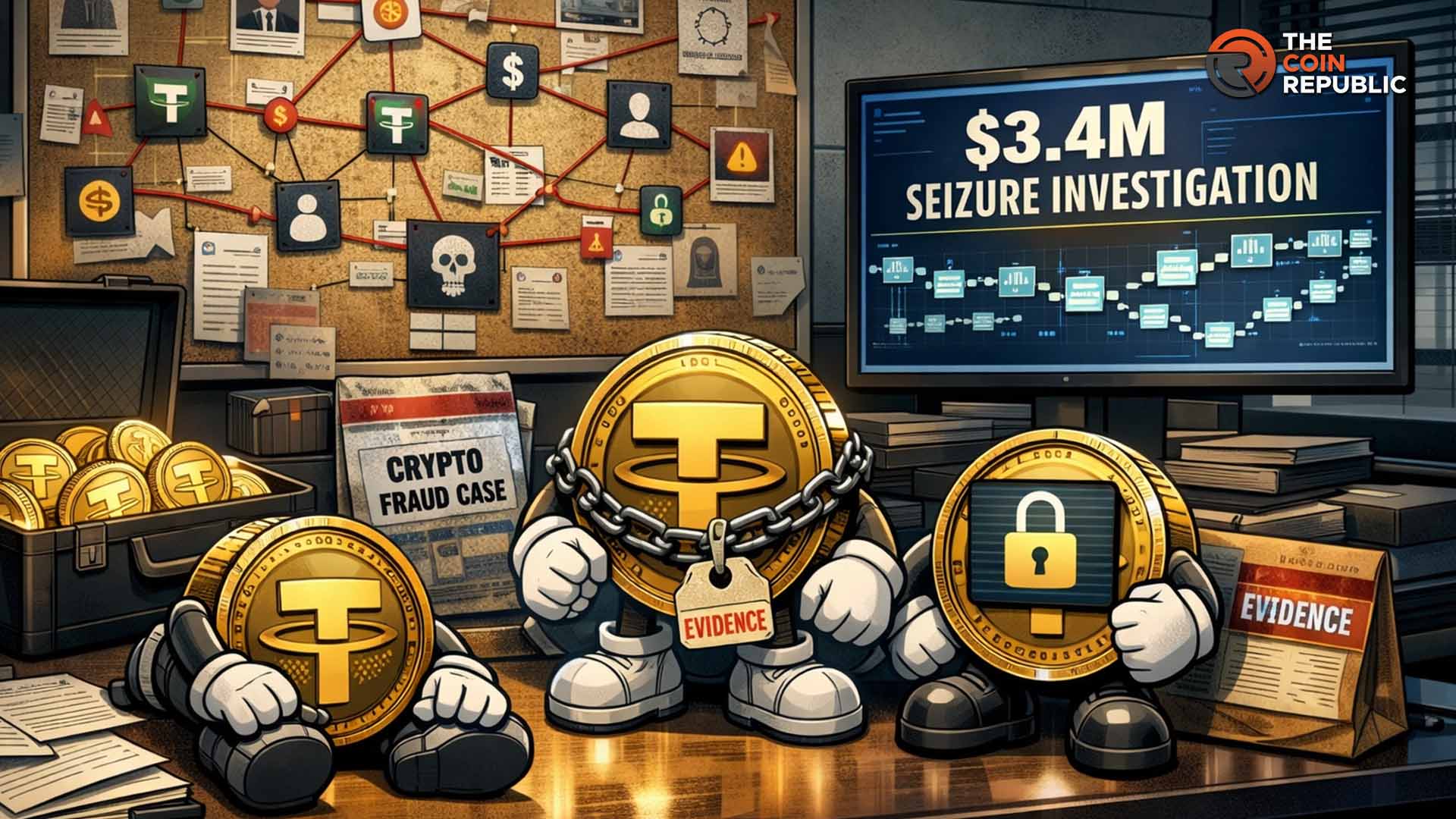
U.S. authorities are actively seizing Tether (USDT) linked to fraudulent schemes, signaling increased regulatory scrutiny on stablecoin usage in illicit activities. The ongoing forfeiture actions highlight a pattern of crypto scams using fake investment offers, emphasizing the need for investor vigilance and due diligence. The seizure of $3.44 million in USDT underscores the persistent challenges in tracing and recovering illicit funds within the cryptocurrency ecosystem.

The confirmation of a death cross on Shiba Inu's daily chart signals weakening momentum, suggesting potential for further price declines if current trends persist. Significant transfers of SHIB to exchanges, totaling over 112 billion in 48 hours, raise concerns about potential sell-offs that could exacerbate downward price pressure. Despite bearish technicals and large token transfers, the absence of extreme selling pressure and potential for broader market recovery offer a slim possibility for SHIB to rebound.

Cardano founder Charles Hoskinson is advocating for a strategic rebalancing of ecosystem funding, shifting focus from pure infrastructure development towards adoption, visibility, and real-world usage to drive network growth. The introduction of Cardano's Programmable Tokens standard (CIP-0113) aims to enable compliant, institutional-grade assets like regulated stablecoins and tokenized securities, potentially attracting traditional finance players and boosting adoption. Despite recent price dips, analysts suggest ADA could be at an inflection point, drawing parallels to its 2020-2021 rally, contingent on favorable macro conditions and the successful execution of the new funding and tokenization strategies.
Solana's record-breaking $650 billion in stablecoin transactions in February 2026 signals a significant shift from speculative activity to institutional-grade financial infrastructure, potentially attracting further institutional capital. The increasing dominance of USDC over USDT in transaction volume highlights a growing institutional preference for compliance-focused stablecoins, which could benefit Solana as regulatory clarity emerges. Upcoming upgrades like Firedancer and Alpenglow, coupled with a favorable regulatory outlook and the growth of RWA and DeFi, position Solana for sustained utility and potential price appreciation, with analysts setting price targets up to $320.
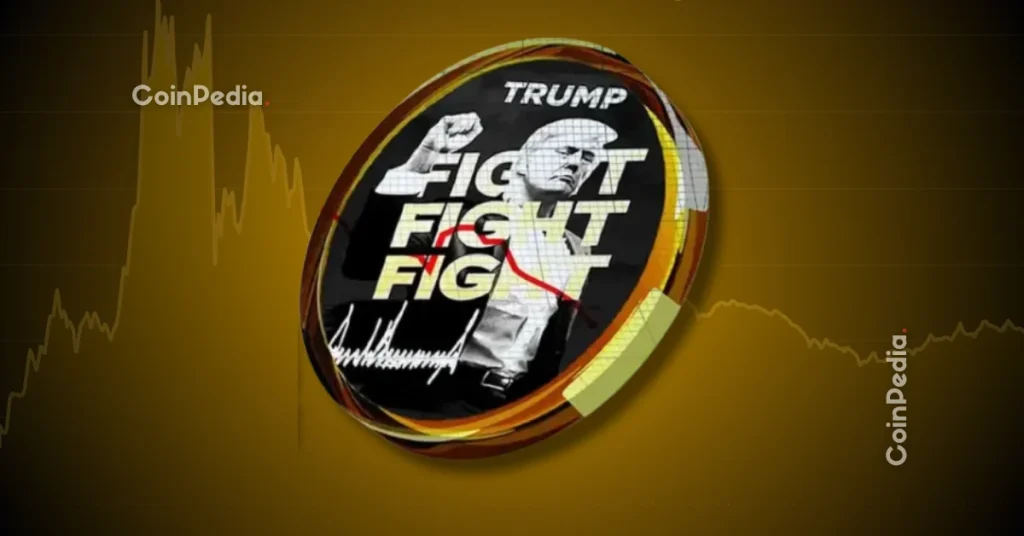
The OFFICIAL TRUMP (TRUMP) token experienced a significant price surge driven by an announcement of exclusive Mar-a-Lago access for top holders, indicating that event-driven incentives can still create short-term demand spikes in memecoins. A bullish technical breakout from a descending wedge pattern, supported by increased trading volume and a rising RSI, suggests renewed buyer interest, though sustainability hinges on holding above key support levels. While the current rally shows strong momentum, its speculative nature tied to an event implies potential for rapid reversals if buying pressure wanes, making it a high-risk, short-term trading opportunity.

Geopolitical tensions involving Iran and potential oil supply disruptions are creating broader market risk aversion, leading to a near 2% pullback in Bitcoin's price from recent highs. Despite the short-term price drop, sustained inflows into Bitcoin ETFs indicate continued institutional demand, suggesting underlying strength that could buffer against further declines. Technical analysis suggests Bitcoin is testing key support levels around $66,000, with a bearish flag pattern indicating potential for further downside if these levels fail to hold. The interplay between geopolitical risk, oil market volatility, and Bitcoin's price action highlights its increasing correlation with traditional macro assets, making it sensitive to global events.
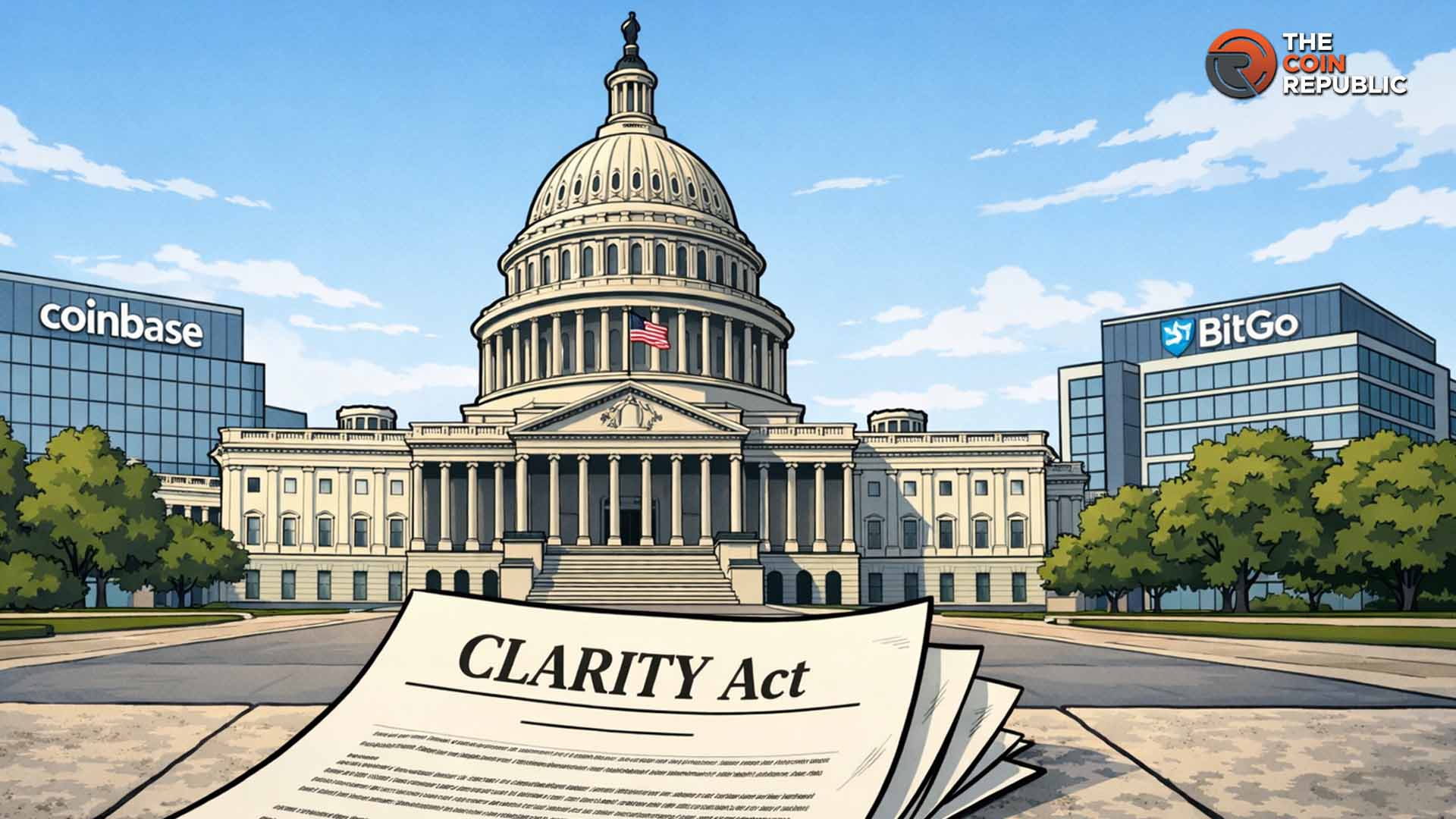
Delays in the CLARITY Act, driven by opposition from banking groups, are causing frustration among crypto industry leaders and lawmakers who fear it will stifle innovation. Industry executives like those from Coinbase and BitGo are pushing back against proposed changes, arguing they benefit large banks at the expense of consumers and hinder fair competition. Despite opposition, there's a stated commitment from industry representatives to negotiate in good faith, with a 73% probability of the CLARITY Act passing in 2026 according to Polymarket. The ongoing regulatory uncertainty surrounding the CLARITY Act creates a watchlist scenario for the crypto sector, as its passage or failure will significantly impact market structure and innovation.

US Treasury sanctions highlight North Korea's sophisticated use of fake IT worker schemes, leveraging stolen identities and AI deepfakes to funnel approximately $800 million to its weapons programs in 2024. The report indicates a significant escalation in global illicit crypto flows, reaching a record $154–$158 billion in 2025, driven by sanctions evasion and industrialized fraud, signaling increased systemic risk. The increasing sophistication of North Korean cyber operations, including AI-driven impersonation and malware deployment, poses an evolving threat to Western companies and the broader financial system. Enforcement actions are intensifying, with secondary sanctions targeting financial institutions processing illicit transactions, suggesting a more aggressive stance against crypto-enabled illicit finance.
Signal context only. Validate with price action, liquidity, and risk limits before taking a position.
