
Navigating Crypto News

CoinFeather
Navigating Crypto News
Quick market read from this story
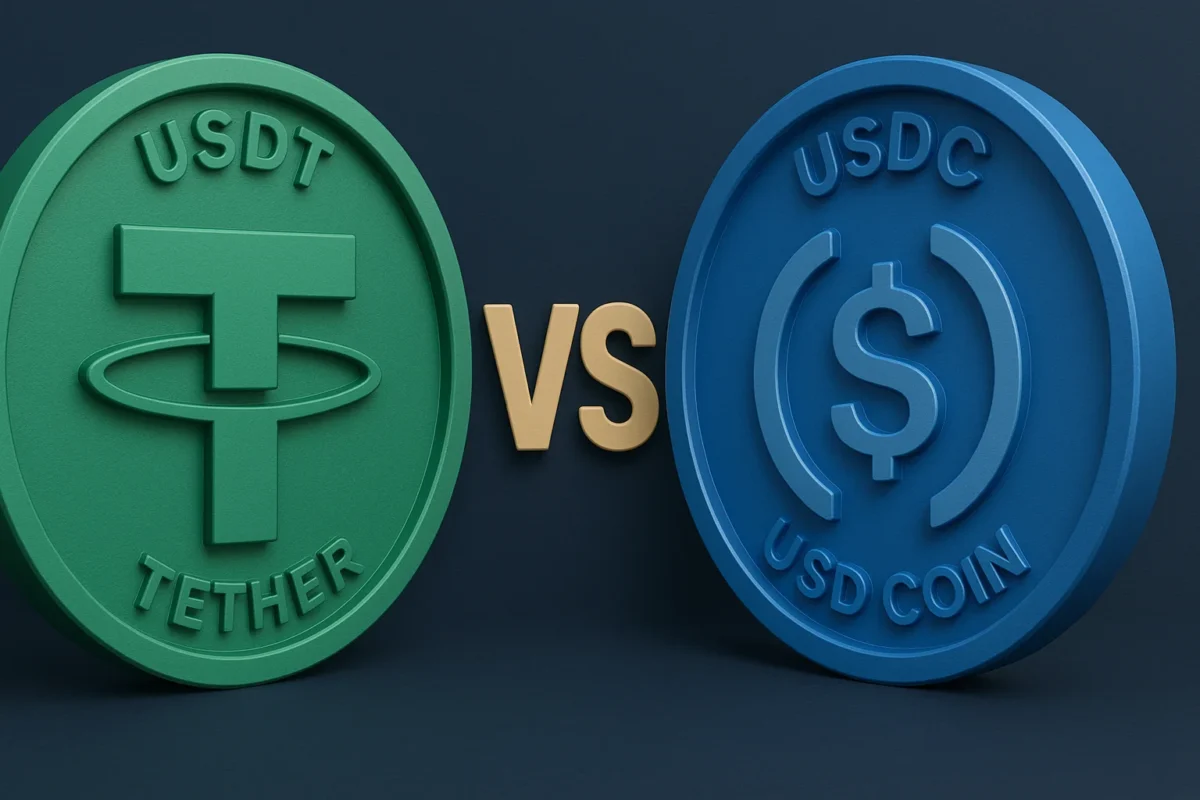
USDC's surpassing of USDT in transaction volume signals a potential shift in stablecoin dominance, driven by emerging use cases beyond traditional crypto trading.
The ongoing regulatory debate, particularly in the UK, introduces uncertainty for stablecoin issuers and could influence future adoption and market structure.
While USDC leads in transaction volume, USDT's larger market cap indicates continued market segmentation, with long-term leadership likely dependent on real economic utility.
Mizuho's revised forecasts for Circle suggest increased confidence in USDC's long-term growth, projecting significant increases in wallet usage and market capitalization.
Deep Dive
Circle's USDC has overtaken Tether's USDT in transaction volume for the first time since 2019, processing approximately $2.2 trillion in adjusted volume in 2026 compared to USDT's $1.3 trillion. This shift signifies a new phase in the stablecoin market, with USDC now holding an estimated 64% of adjusted stablecoin transaction share, a notable change from its previous ~30% share between 2019 and 2025.
Despite USDC's surge in transaction volume, Tether (USDT) remains the dominant stablecoin by market capitalization, valued at approximately $143 billion, while USDC holds around $78 billion. Analysts attribute USDC's increased activity to emerging real-world applications beyond traditional cryptocurrency trading, such as prediction markets and agentic commerce, indicating a move towards stablecoins as programmable financial infrastructure.
Mizuho analysts have revised their long-term growth outlook for Circle, projecting 11.7 million USDC wallets by 2027 and an expected market capitalization of $139 billion. These projections align with broader industry forecasts, with Standard Chartered anticipating the total stablecoin market to reach $2 trillion by the end of 2028.
The rapid growth of stablecoins has intensified regulatory focus globally, particularly in the United Kingdom. The Bank of England (BOE) is developing a regulatory framework, having launched a consultation in November 2025 that proposed reserve backing requirements and usage limits. Controversial proposals included holding limits for individuals and businesses accepting stablecoins as payment.
While the BOE initially proposed caps to mitigate risks of deposit migration from commercial banks, Deputy Governor Sarah Breeden has indicated openness to reconsidering these limits if alternative solutions can effectively address financial stability concerns. However, the central bank has expressed disappointment with the industry's lack of concrete alternative proposals.
Industry representatives, such as Tom Rhodes, chief legal officer at Agant, argue that the industry has actively participated in consultations and that the evolving nature of the market makes it challenging to provide definitive data for a comprehensive regulatory framework. They advocate for a more principles-based approach during the sector's development.
Stablecoins are at a critical juncture, balancing increasing adoption and integration into the global financial system with ongoing regulatory caution regarding systemic risks. The competition between USDC and USDT is increasingly defined by real-world usage and institutional adoption, alongside the evolving regulatory landscape that will shape the future of digital finance.
Source, catalyst, and sector overlap from the latest feed.
The XRP Ledger's v3.1.2 update addresses a critical security flaw that could have compromised $80 billion in network value, significantly enhancing protocol security and stability. The rapid patching of this vulnerability, identified with AI assistance, demonstrates the XRPL Foundation's commitment to safeguarding institutional capital and supports its growing role in DeFi. While the update is purely a security fix, the underlying technical improvements and increasing network activity suggest a strengthening foundation for XRP, potentially supporting near-term price consolidation and upside.
Geopolitical tensions impacting Iran's mining capacity are a minor concern for the global Bitcoin network, as only 8-10% of hashrate is on oil-sensitive grids, with the majority insulated from crude price shocks. The primary risk to Bitcoin miners stems from potential price compression of BTC due to geopolitical stress pushing capital away from risk assets, rather than direct increases in energy costs. Public Bitcoin miners are strategically pivoting towards AI and HPC workloads, leveraging their infrastructure for higher revenue streams, with over $65 billion in contracts already secured, indicating a structural shift in the industry. While the Iran conflict presents a double exposure for Gulf-based miners (rising power costs and potential BTC price drops), the broader industry trend towards AI infrastructure offers a hedge against volatile crypto market conditions.
The increasing use of USDT in illicit Amazonian gold trading highlights stablecoins' utility for bypassing sanctions and traditional financial controls in high-risk markets. Venezuela's role as a hub for illicit gold flows, now facilitated by USDT, underscores the growing intersection of organized crime, commodity markets, and digital assets. While Tether cooperates with law enforcement, the broader adoption of stablecoins in illicit activities necessitates enhanced regulatory scrutiny over digital asset flows. The convergence of tokenized gold products and illicit USDT usage in commodity trading signals a significant reshaping of traditional markets by blockchain technology.
Kraken's listing of Pi Network (PI) as the first major US exchange to do so provides significant market validation, potentially paving the way for broader adoption and further exchange listings. Despite the listing, PI remains 91% below its all-time high, and substantial monthly token unlocks present a structural selling pressure that could cap near-term upside. The concurrent development of Pi Network's native DEX and infrastructure upgrades suggests a strategic push towards building a functional Web3 ecosystem, aiming to convert its large user base into active participants. While the user base is large, the conversion to active on-chain participation and the impact of tokenomics, particularly early miner unlocks, remain key challenges for Pi Network's long-term success.
Hong Kong's proactive regulatory framework for stablecoins, requiring 100% reserve backing and strict AML compliance, signals a move towards institutional adoption and potentially increased stability in the sector. The licensing of major banks like HSBC and Standard Chartered for stablecoin issuance indicates a significant step in bridging traditional finance with digital assets, potentially compressing cross-border settlement times and enhancing corporate treasury liquidity. Hong Kong's comprehensive digital asset roadmap, including licensing for virtual asset dealing and custody, alongside cross-border blockchain initiatives, positions it as a competitive hub for institutional digital asset business. The distinction between licensed stablecoins and tokenized deposits highlights Hong Kong's nuanced approach to digital assets, aiming to foster innovation while maintaining robust financial oversight.
The appointment of a new CEO with a strong compliance background signals Binance.US's strategic pivot towards rebuilding trust and adhering to U.S. regulatory frameworks following the SEC's dismissal of its lawsuit. Binance.US's stated plans to expand staking, DeFi services, and tokenized asset offerings indicate a move to compete with other exchanges by offering yield-generating products and innovative financial instruments. The leadership change and strategic focus on compliance and product expansion for Binance.US occur in the context of the broader Binance entity still facing investigations and a significant prior settlement, highlighting a bifurcated risk profile between the global and U.S. operations. The timing of the new CEO's appointment, coinciding with the SEC's dismissal of its case with prejudice, suggests a coordinated effort to reset Binance.US's market position and operational trajectory within the U.S.
U.S. Treasury sanctions highlight the ongoing use of fraudulent IT operations by North Korea to fund weapons programs, with nearly $800 million generated in 2024 alone through these schemes. The sanctions target individuals and entities involved in converting funds, including approximately $2.5 million into cryptocurrency, underscoring the role of digital assets in illicit finance. This action reinforces the regulatory scrutiny on crypto's use in circumventing sanctions, potentially increasing compliance burdens for entities handling cross-border transactions.
The Federal Reserve's upcoming vote on a revised Basel capital proposal is a critical determinant for how banks will integrate Bitcoin into their balance sheets, potentially shifting the focus from legal permission to economic feasibility. A more favorable capital treatment for Bitcoin exposures could unlock significant bank-led custody, financing, and market-making services, thereby increasing Bitcoin's bankability and potentially its price stability. Conversely, a punitive capital framework would reinforce Bitcoin's status as a balance sheet hazard for large banks, limiting institutional adoption and keeping it on the periphery of the regulated financial system. The outcome of this regulatory review is poised to significantly influence the near-term trajectory of institutional Bitcoin adoption and its integration into traditional finance.
Stellar's XLM price is showing signs of recovery driven by increased social volume and a positive RSI shift, indicating renewed retail interest. Despite positive technicals and social sentiment, whale activity shows a negative delta, suggesting potential distribution into the retail-driven rally and questioning its sustainability. The admission of Akuna Wallet, built on Stellar, into the Bank of Ghana's regulatory sandbox provides a fundamental adoption narrative, potentially driving future network usage. The confluence of improving technical momentum, rising social engagement, and a new adoption narrative in Africa presents a short-term bullish case for XLM, though whale distribution warrants caution.
Senate Majority Leader John Thune indicates the CLARITY Act is unlikely to advance before April, citing other legislative priorities and potentially delaying regulatory clarity for the digital asset market. Despite potential delays, projections from Kristin Smith and JPMorgan suggest the CLARITY Act could still pass by July 2026, highlighting ongoing efforts to establish a clearer regulatory framework. Former President Donald Trump's call to fast-track the CLARITY Act and his warning about China gaining an advantage underscore the geopolitical implications of US regulatory inaction. The differing timelines and political pressures surrounding the CLARITY Act suggest a complex and uncertain path forward for crypto regulation in the US, impacting market sentiment and investment decisions.
Arthur Hayes highlights Hyperliquid's strong revenue and genuine trading activity as key differentiators, suggesting a potential $150 price target for HYPE based on its disciplined tokenomics and expanding market access. Hyperliquid's ability to offer 24/7 trading on non-traditional assets like oil and equity indices with high leverage presents a unique value proposition, attracting traders seeking alternatives to traditional markets. Hayes's bullish stance on HYPE is contingent on sustained revenue and continued team token supply restraint, with a sharp rise in P/E ratio or increased competition posing potential risks to the thesis. Beyond Hyperliquid, Hayes identifies Zcash as a privacy-focused narrative with potential upside due to increasing concerns over blockchain surveillance and AI analysis.
The article reframes the XRP narrative from replacing SWIFT to enabling institutional settlement infrastructure, driven by corporate treasury and tokenized capital markets demand. The DTCC's planned tokenization in H2 2026, referencing XRP and XLM as liquidity tokens, signals a potential structural role for XRP in bridging future tokenized asset networks. Mastercard's Crypto Partner Program, integrating treasury solutions with its payment network, creates a direct bridge between traditional finance and digital asset rails, potentially increasing demand for underlying settlement assets like XRP. While XRP's price action is currently outperforming, the core development is the potential for its ledger to become a critical liquidity bridge in a tokenized financial system, processing trillions in FX settlement.
Live Feed
Loading the broader stream in the same flow as the homepage feed.

The Ethereum Foundation's published mandate emphasizes a long-term goal of extreme decentralization, aiming for the protocol to function independently of the foundation itself. This strategic direction signals a commitment to core Ethereum principles like censorship resistance and user control, potentially influencing future development priorities and investor confidence. The foundation's stated intention to minimize its own role over time suggests a focus on robust, trustless core protocol layers and research, rather than direct operational control.

Increased ETH accumulation addresses and record staked supply suggest growing long-term confidence, potentially signaling a bottoming formation. A decisive break above the $2,200 resistance level is critical for ETH bulls, historically preceding significant price rallies. Despite current price weakness, rising network activity and accumulation trends present a bullish divergence for Ether.

KuCoin's launch of perpetual futures for Tesla and MicroStrategy stocks signifies a growing trend of crypto exchanges bridging traditional finance assets, potentially attracting new capital and user bases. The introduction of USDt-settled, 24/7 tradable equity derivatives on KuCoin offers continuous exposure to stock price movements, bypassing traditional market hours and potentially increasing trading volume for these synthetic products. This development aligns with the broader market trend of RWA tokenization, with tokenized equity market cap surging, indicating increased institutional and retail interest in integrating traditional assets with blockchain technology. While KuCoin's move expands derivative offerings, potential regulatory restrictions in certain jurisdictions could limit the global adoption and impact of these new contracts.
Bitcoin's price action is currently characterized as a counter-trend bounce, suggesting that the dominant market direction has not yet shifted despite recent upward movement. A decisive break and hold above the $74,460 level is critical for confirming a new rally and unlocking higher price targets, while failure to do so indicates a continuation of the current range-bound trading. The observed decline in attention from crypto influencers and prominent traders towards Bitcoin, shifting towards traditional assets like gold, may signal a potential turning point in market sentiment.
Bitcoin's price surge to near $74K is driven by technical breakouts and commentary on oil prices, overshadowing persistent PCE inflation data that suggests the Fed may delay rate cuts. Despite Bitcoin's upward momentum, analysts note the broader market structure lacks confirmation of a long-term bottom, indicating potential for continued volatility. Persistent core PCE inflation at 3.1% and unchanged core capital goods orders suggest a stagflationary environment, complicating the Federal Reserve's monetary policy decisions and reducing the likelihood of near-term rate cuts.

A massive $50 million USDT to AAVE trade resulted in extreme slippage, leaving the trader with only $36,000, highlighting significant risks in large DeFi swaps. Speculation points to Bitcoin OG Garrett Jin as the potential trader behind the $50M slippage event, based on wallet analysis and recent transaction patterns. The substantial losses were distributed among liquidity providers, arbitrage bots, and protocol fees, with a significant portion going to the block builder, underscoring MEV dynamics. Aave's founder indicated plans to refund fees, but the incident serves as a stark reminder of the operational risks and lack of traditional financial safeguards in DeFi for large-scale transactions.

Geopolitical tensions in the Middle East have triggered a sharp, albeit potentially short-lived, pullback in Bitcoin and other risk assets, demonstrating crypto's sensitivity to global macro events. Despite the intraday dip, Bitcoin remains in a net gain for the 24-hour period, suggesting underlying bullish momentum may persist if geopolitical concerns do not escalate further. The market's reaction highlights the correlation between crypto and traditional risk assets, with gold's pullback and oil's rise indicating a flight to safety that temporarily sidelined crypto investors.

The Ethereum Foundation has clarified its mandate, prioritizing censorship resistance, open source, privacy, and security (CROPS) over adoption metrics or market performance. This strategic focus implies the EF will not back projects heavily reliant on centralized infrastructure or opaque code, signaling a potential shift in ecosystem development priorities. The 'walkaway test' reinforces the EF's commitment to Ethereum's core functionality, suggesting a long-term vision independent of the Foundation's continued existence.

A dormant whale's $7 million investment in TRUMP tokens, triggered by a Mar-a-Lago gala announcement, demonstrates speculative interest in politically-linked memecoins. The TRUMP token experienced a 60% rally following the gala news, highlighting the sensitivity of memecoins to event-driven narratives and influencer activity. Despite the recent surge, TRUMP remains significantly down from its all-time high, indicating high volatility and speculative risk associated with the asset.
Fidelity's Jurrien Timmer maintains that Bitcoin's $60,000 level represents a significant cyclical floor, supported by his power law model and the Bitcoin-to-gold ratio. The analysis suggests that despite potential short-term dips below $60,000, the current market conditions, influenced by institutional adoption via ETFs, indicate a shallower crypto winter than in previous cycles. Traders should monitor the $60,000 price level as a key support zone, with deviations from the power law trendline and Z-score of the Bitcoin-gold ratio serving as potential indicators of cycle bottoms.

Historical forum evidence suggests Satoshi Nakamoto and Hal Finney supported the creation of altcoins, challenging modern Bitcoin maximalist narratives and implying a broader ecosystem vision than currently practiced. The early Bitcoin community's openness to forks and alternative blockchains, as highlighted by the Zcash founder, suggests a potential shift in understanding the 'original vision' for crypto, which may influence how new projects are perceived. This historical context could reframe the debate around altcoins and ecosystem expansion, potentially impacting sentiment towards projects that build on or fork from Bitcoin's foundational principles.
The upcoming Litecoin halving, approximately 500 days away, will reduce miner rewards from 6.25 LTC to 3.125 LTC per block, a programmed supply shock designed to curb inflation. Historically, Litecoin price has seen pre-halving rallies followed by post-halving dips, suggesting that while the event is a known supply-side catalyst, its immediate price impact may be muted or even negative. The market sentiment surrounding the Litecoin halving remains a key variable, as past performance may not dictate future outcomes given evolving market conditions and investor psychology.

MoonPay's integration of Ledger hardware signing for its AI agents addresses a critical security gap in autonomous trading, potentially enabling wider adoption of AI-driven financial management in crypto. By ensuring private keys remain on the hardware signer, this development mitigates the risk of key compromise associated with AI agents, a significant hurdle for institutional and retail users managing substantial assets. This move signals a growing trend towards enhanced security for AI-powered crypto tools, suggesting that future developments in this space will likely prioritize user control and non-custodial solutions.
Signal context only. Validate with price action, liquidity, and risk limits before taking a position.
