
Navigating Crypto News

CoinFeather
Navigating Crypto News

Quick market read from this story
Accelerating ETH staking and increasing exchange outflows are tightening liquid supply, potentially establishing a stronger structural price floor for ETH.
With 33.1% of ETH supply staked and exchange balances at multi-year lows, reduced availability increases price sensitivity to demand.
The significant ETH locked in staking and slow exit queue times suggest that even with shifting sentiment, supply re-entry into circulation will be gradual.
Sustained demand for staking, evidenced by a long entry queue, combined with reduced exchange reserves, points to a tightening market dynamic for ETH.
Deep Dive
Ether's (ETH) liquid supply on the Ethereum network is experiencing a significant contraction, driven by increasing staking participation, consistent exchange outflows, and declining exchange reserves. Analysts suggest these factors may signal the beginning of a new phase for ETH, potentially establishing a stronger structural price floor.
Approximately 38.1 million ETH, representing about 33.1% of the total supply, is now locked in staking. This marks the highest level recorded, indicating a substantial shift of tokens from tradable inventory to illiquid capital. Staking infrastructure provider Everstake noted that this steady reduction in liquid supply, coupled with ongoing demand, creates conditions for a structurally stronger price environment.
Crypto analyst Gaah corroborated this, highlighting the visible contraction in liquid supply due to the scale of locked ETH. Validator activity further reinforces this trend, with a substantial ETH entry queue and a significantly smaller exit queue, suggesting that even with potential sentiment shifts, the supply re-entering circulation will be gradual.
ETH has seen consistent outflows from major exchanges over recent weeks. Notably, a $1.67 billion ETH withdrawal occurred from OKX on March 22, following two separate outflows exceeding $300 million from Binance in early February. These large negative netflows indicate that ETH is being moved away from exchanges, rather than being positioned for sale.
The overall contraction in exchange-held supply reduces immediate selling pressure and tightens liquidity in spot markets. Data from CryptoQuant shows that the ETH supply on exchanges has fallen to its lowest level since 2016. Binance-specific reserves are near their December 2020 lows, with approximately 3.3 million ETH remaining.
With fewer coins available for trading, the price sensitivity to demand increases. This reduced supply could enable ETH to move strongly above its current range of $2,000 to $2,200 once market momentum returns.
Source, catalyst, and sector overlap from the latest feed.
Large Bitcoin holders have accumulated over 61,000 BTC in the past month, signaling potential accumulation ahead of a market breakout despite ongoing geopolitical uncertainty. Historical patterns suggest that whale accumulation alongside retail selling can precede the start of bull cycles, indicating a potentially bullish undertone for Bitcoin. Despite accumulation by whales, the Crypto Fear & Greed Index remains in "extreme fear," highlighting a divergence between large holder behavior and broader market sentiment. While some whales are accumulating, others are moving assets to exchanges amid market dips, suggesting a bifurcated strategy among major holders influenced by short-term price action and geopolitical events.
UK sanctions on Xinbi, a $20B crypto guarantee marketplace, aim to isolate illicit actors from legitimate crypto services, potentially reducing the perceived risk of crypto for mainstream adoption. The UK's targeted approach highlights a distinction between legitimate and illicit crypto ecosystems, which could positively influence the industry's reputation and regulatory perception. By cutting off access to legitimate crypto ties, these sanctions directly impact the operational capacity of scam networks, suggesting a proactive regulatory stance against crypto-enabled fraud.
ARK Invest's adoption of Kalshi's prediction market data signals a growing institutional interest in alternative data sources for investment decision-making and risk management. The integration of prediction market insights into ARK's workflow suggests a potential shift towards more dynamic and forward-looking investment strategies, leveraging real-time sentiment and expectations. The increasing use of prediction markets by entities like the Federal Reserve and academic institutions highlights their evolving role as valuable tools for gauging economic and market sentiment beyond traditional metrics.
A US federal judge has temporarily blocked the Pentagon's ban on Anthropic, a significant development for the AI firm's government contracts and market position. The ruling suggests the Pentagon's actions against Anthropic may have been arbitrary and an abuse of discretion, potentially impacting future government dealings with AI companies. This temporary injunction provides Anthropic with crucial breathing room, allowing it to continue operations and potentially renegotiate terms with the Pentagon.
US lawmakers are introducing new legislation to curb insider trading on prediction markets, signaling increased regulatory scrutiny on platforms like Kalshi and Polymarket. The proposed bill imposes penalties of up to double the profit made from insider trading, indicating a serious intent to deter illicit activities and protect market integrity. This regulatory push could impact the perceived legitimacy and operational freedom of prediction markets, potentially affecting user participation and platform development.
Bitmine's significant ETH accumulation, totaling over $253 million across multiple wallets, signals strong conviction in Ethereum's long-term value despite recent price dips. The upcoming MAVAN upgrade is positioned to enhance Bitmine's staking rewards, potentially increasing annual revenue by over 47% and reinforcing its role as a major ETH staking provider. Despite substantial ETH purchases and positive developments like the MAVAN upgrade, ETH price has continued to decline, suggesting broader market pressures are outweighing project-specific accumulation news in the short term. The mention of the CLARITY Act passing as a potential catalyst highlights the market's sensitivity to regulatory developments impacting Ethereum's future outlook.
Charles Hoskinson's praise for Midnight's novel tokenomics, emphasizing controlled supply and protocol revenue for sustainability, signals a potential shift in blockchain economic models away from traditional inflation. Midnight's proposed model, which uses protocol revenue to buy back and burn its native asset (NIGHT), aims for deflationary pressure and long-term budget stability, potentially appealing to investors wary of dilution. The success of Midnight's tokenomics hinges on execution and actual network usage; if it fails to attract significant activity, its deflationary and self-sustaining benefits may remain theoretical, posing a risk to its long-term viability.
Ethereum Classic's 'fifthening' mechanism, a 20% block reward reduction every 5 million blocks, is a more gradual approach to supply control compared to Bitcoin's 50% halving, signaling a predictable path towards scarcity for ETC. The recent ETC reward reduction in May-June 2024, lowering rewards to 2.048 ETC, and the upcoming 2026 reduction to 1.6384 ETC, are expected to gradually tighten supply, potentially increasing scarcity and influencing investor sentiment, though likely with less dramatic market reactions than Bitcoin halvings. As block rewards decrease, miners will face reduced income, potentially impacting the network's hash rate and increasing the relative importance of transaction fees for miner profitability, necessitating adaptation to the evolving economic model.
Monacoin's upcoming halving in late 2026, reducing block rewards from 6.25 to 3.125 MONA, is a predictable supply-side event that historically correlates with price cycles due to increased scarcity. The halving mechanism is designed to reduce inflation and could potentially increase the long-term valuation of MONA, though broader market conditions will also significantly influence price action. Miners will face reduced profitability post-halving, potentially leading to consolidation in mining operations and a greater reliance on transaction fees for revenue.
Bitcoin's recent breach of the $70,000 support level, influenced by geopolitical tensions and options expirations, suggests near-term volatility and potential for further downside. Despite price pullbacks, on-chain data indicates continued whale and retail accumulation, hinting at underlying bullish conviction that could fuel a future rally. Analysts are monitoring key price levels like $48,387 and $36,657 as potential dip-buying opportunities, historically preceding significant bull runs. Broader economic pressures including rising unemployment, inflation, and geopolitical conflicts are creating a cautious market environment, potentially leading to a recessionary outlook that could impact crypto prices.
Bitcoin's price decline is accompanied by a significant 30% drop in active network addresses since August 2025, indicating a weakening user base that could hinder sustained recovery efforts. The 50-day SMA resistance at $70,010 and a bearish RSI signal suggest immediate overhead pressure, limiting upside potential in the short term. A historical pattern mirroring the July 2022 UTXO Realized Price structure, which preceded a major bear market leg, raises concerns about potential further downside despite short-term oversold conditions. The limited and reactive nature of retail participation, capped at 0.7% of network activity, suggests a lack of fundamental support for a robust price rebound.
An early Ethereum ICO investor realized a significant profit by selling 11,552 ETH for $23.42 million, demonstrating the long-term wealth generation potential of holding ETH since its inception. The sale of a substantial ETH holding at $2,027 per coin represents profit-taking activity, which could add to selling pressure in the short term, though the overall impact is mitigated by the long holding period. This event highlights the significant capital appreciation possible in early-stage crypto investments, with the original $12,000 ICO purchase now valued at approximately $79.5 million.
Live Feed
Loading the broader stream in the same flow as the homepage feed.
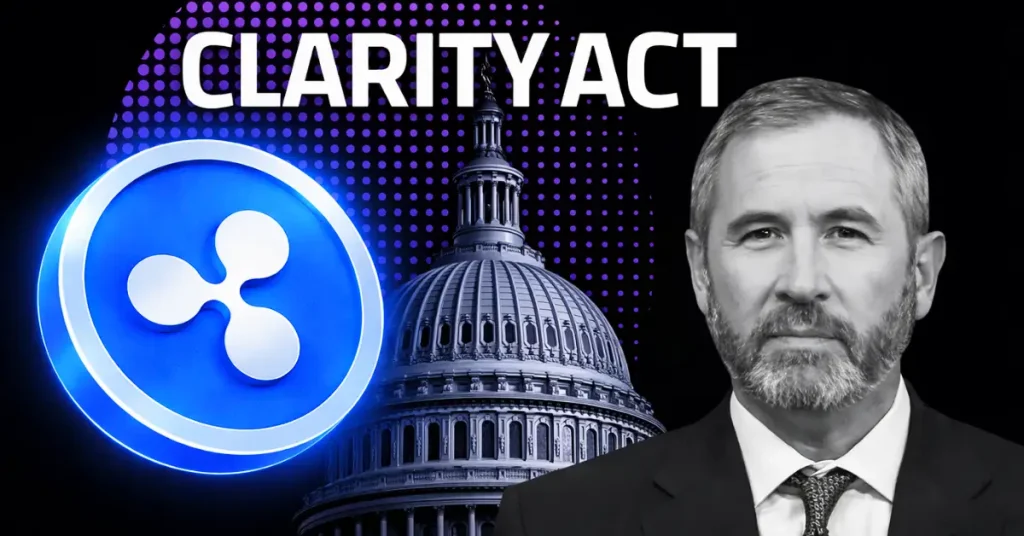
Ripple CEO Brad Garlinghouse's neutral stance on the CLARITY Act, while predicting a 90% chance of passage by May, suggests a potentially favorable regulatory environment for stablecoins is approaching. Garlinghouse's critique of 'useless' stablecoins and emphasis on trust, regulation, and transparency signals a market consolidation favoring compliant and established players. The ongoing negotiations around the CLARITY Act, involving both lawmakers and industry participants like Coinbase, indicate a significant regulatory development that could reshape the crypto market structure.

Chainlink is experiencing a significant increase in large wallet accumulation, with holders of 1,000+ LINK reaching a new high since December 2025, signaling potential investor confidence and accumulation ahead of a possible breakout. Coinbase's integration of Chainlink to publish proprietary exchange data on-chain via DataLink represents a major adoption for Chainlink's infrastructure, enhancing DeFi market data reliability and enabling new on-chain financial products. Despite current consolidation, the combination of increased whale holdings and the Coinbase integration provides a bullish on-chain and fundamental backdrop for LINK, suggesting a potential price appreciation above $10 in the near term, supported by historical April performance.
With SWIFT already having tested Ripple and Stellar, the focus is now shifting to a bigger question: what’s holding back full-scale live integration?

Significant outflows from spot Bitcoin ETFs suggest a cooling of institutional demand, potentially signaling a pause in accumulation and raising questions about Bitcoin's ability to sustain levels near $70,000 amid macroeconomic uncertainty. The largest single-day ETF outflow in three weeks indicates a shift in institutional sentiment, moving from robust inflows to net withdrawals, which could precede a period of price consolidation or correction. While the ETFs allow for easier market access, the recent moderation in flows highlights that institutional investors are adopting a more cautious stance, potentially awaiting clearer macroeconomic signals or price discovery.

The crypto Fear and Greed Index dropping to 10 indicates extreme market fear, a condition historically preceding significant price rallies, with whale wallets accumulating BTC while retail sells. Pepeto's $8 million presale raise and upcoming Binance listing, coupled with projected 100x returns, suggest strong conviction from early investors despite broader market downturn. While ETH and XRP are testing key support levels with modest upside potential, the high-risk, high-reward profile of presale tokens like Pepeto is being highlighted as a primary wealth-building opportunity during this market reset. The article frames Pepeto as a "personal trading guard" with zero-fee trades and risk scoring, positioning it as a novel solution for traders seeking safety and efficiency amidst market volatility.

Bitcoin's 200-week moving average crossing $59,000 suggests a potential permanent price floor, indicating strong long-term support. The 200WMA historically acts as a bedrock support level during bear markets, often coinciding with institutional and retail accumulation phases. While past breaches of the 200WMA were anomaly events marking cycle bottoms, the current sustained hold above this level signals a shift in market sentiment and potential for sustained upward price action.

Geopolitical tensions are driving a risk-off sentiment in crypto markets, causing Bitcoin and Ethereum to decline and triggering significant liquidations. The crypto market is increasingly behaving as a liquidity-sensitive asset tied to global macro conditions, rather than a traditional hedge. With Bitcoin testing key support levels around $68,000 and Ethereum near $2,050, a breakdown could lead to further downside if geopolitical uncertainty persists. Elevated volatility is expected in the short term, with macro headlines dictating market direction over technical setups.

Hyperliquid's HYPE price is at a critical juncture with near-equal long and short positions totaling $3.46 billion, indicating a stalemate driven by whale activity. The historical price action of HYPE shows a pattern of extreme volatility, with sharp rallies followed by significant pullbacks, suggesting the current consolidation could precede a substantial move. The unique native matching system on Hyperliquid, where the protocol automatically creates opposing positions, ensures balanced trades and clear risk management, contributing to the current price battle. Despite balanced positions, short traders are committing more margin and have realized higher profits, indicating potential short-term downward pressure on HYPE.

The impending expiry of $15.58 billion in Bitcoin and Ethereum options today introduces potential for short-term price volatility as markets gravitate towards 'max pain' levels. While put/call ratios suggest a bullish leaning, Bitcoin's current trading price below key resistance levels indicates a bearish bias unless a significant upward move occurs before expiry. Ethereum's options expiry is expected to result in less pronounced price action compared to Bitcoin, with the ETH price likely to remain range-bound due to its proximity to the 'max pain' level. Traders should monitor Bitcoin's ability to break above $72,000-$75,000 for a bullish shift, while a sustained move below $70,000 could signal further weakness post-expiry.

The expiration of $13.5 billion in BTC and ETH options on Deribit today, the largest settlement of Q1 2026, is creating market volatility and potentially driving capital towards new presale opportunities like Pepeto. Pepeto, a new meme exchange built by the co-founder of the original Pepe coin, is attracting significant capital ($8M+ raised) and is positioned for a potential 100x return, especially with an upcoming Binance listing. While SOL and ADA are showing signs of recovery, with potential upside targets of 26% and 55% respectively, the article emphasizes that presale entries like Pepeto offer the highest potential for life-changing multiples.

Tether's engagement of KPMG for a comprehensive audit of its USDT reserves signifies a proactive step towards enhancing transparency and addressing regulatory concerns, potentially bolstering market confidence in the stablecoin's backing. The move beyond BDO Italia's attestations to a full audit by a 'Big Four' firm like KPMG indicates a maturing approach to reserve management, which could set a precedent for other stablecoin issuers facing increased scrutiny. By hiring PwC to prepare its systems, Tether is demonstrating a commitment to robust internal controls, a critical factor for maintaining stability and trust, especially as the company explores U.S. expansion.

Brazil's new law empowers authorities to freeze, seize, and liquidate crypto assets linked to serious crimes, signaling a more aggressive stance on illicit finance. The legislation allows for early liquidation of seized crypto before conviction and redirects these funds to public security, potentially impacting the available supply of certain assets if significant seizures occur. This development enhances Brazil's ability to cooperate internationally on asset recovery, potentially increasing the risk for criminals attempting to move illicit funds across borders. While Brazil considered a national Bitcoin reserve, the focus has shifted to utilizing seized crypto, indicating a pragmatic approach to asset management and law enforcement funding.

Disruptions to Russian oil exports by Ukraine, coupled with Middle East tensions, are prolonging elevated energy prices, which could lead to persistent inflation and pressure central banks to maintain or increase borrowing costs, negatively impacting risk assets like Bitcoin. Traders are pricing in a potential Federal Reserve rate hike within two weeks, driven by sticky inflation concerns stemming from energy market instability, suggesting a near-term bearish outlook for Bitcoin as liquidity tightens. The article suggests that Bitcoin's recent resilience may be tested, with the $65,000–$75,000 range becoming vulnerable to a downside break due to these macroeconomic pressures.

The arrest of a key facilitator in a transnational crypto scam network highlights a global effort to dismantle illicit operations, potentially reducing the prevalence of crypto-related fraud. Increased law enforcement action against scam compounds, supported by blockchain tracing tools, signals a maturing regulatory environment that could indirectly benefit legitimate crypto adoption by improving ecosystem trust. This development underscores the growing intersection of organized crime and cryptocurrency, emphasizing the need for enhanced crypto forensics and cross-border cooperation to combat financial crime.
Signal context only. Validate with price action, liquidity, and risk limits before taking a position.
