
Navigating Crypto News

CoinFeather
Navigating Crypto News

Source, catalyst, and sector overlap from the latest feed.
Anchorage Digital's integration of Tron custody and future staking support provides institutional investors with a regulated on-ramp to TRX and TRC-20 assets, potentially increasing demand and liquidity for the Tron ecosystem. The move by a U.S.-regulated crypto bank to support Tron, a network with significant stablecoin volume ($86 billion), signals growing institutional comfort with established altcoin ecosystems and could drive further adoption of stablecoins on Tron. This development positions Tron as a key network for institutional stablecoin transactions within Anchorage's framework, bridging traditional finance with the broader crypto market and potentially impacting stablecoin market dynamics.
Live Feed
Loading the broader stream in the same flow as the homepage feed.
David Sacks' departure from his dedicated White House crypto role to PCAST signifies a structural shift in how crypto policy is handled, potentially integrating it more into broader tech discussions rather than a singular focus. While Sacks retains influence, the formal authority tied to his previous role, which chaired the President's Working Group on Digital Asset Markets, is now dispersed, potentially reducing the visibility and direct impact of a dedicated crypto policy lead. The move, driven by tenure limits rather than a policy disagreement, suggests continuity in the administration's approach to AI and crypto, but the lack of a direct replacement for the 'crypto czar' role may lead to a less centralized policy-making process.
Solana is testing a critical ascending trendline support, with repeated rejections below resistance indicating potential downside risk if this level fails. The tightening price structure suggests a potential breakdown is imminent, which could lead to a significant move lower if buyers do not regain control of the support zone. Market participants should monitor the trendline closely as a break below could signal a shift in short-term market structure to bearish, potentially targeting lower price levels.
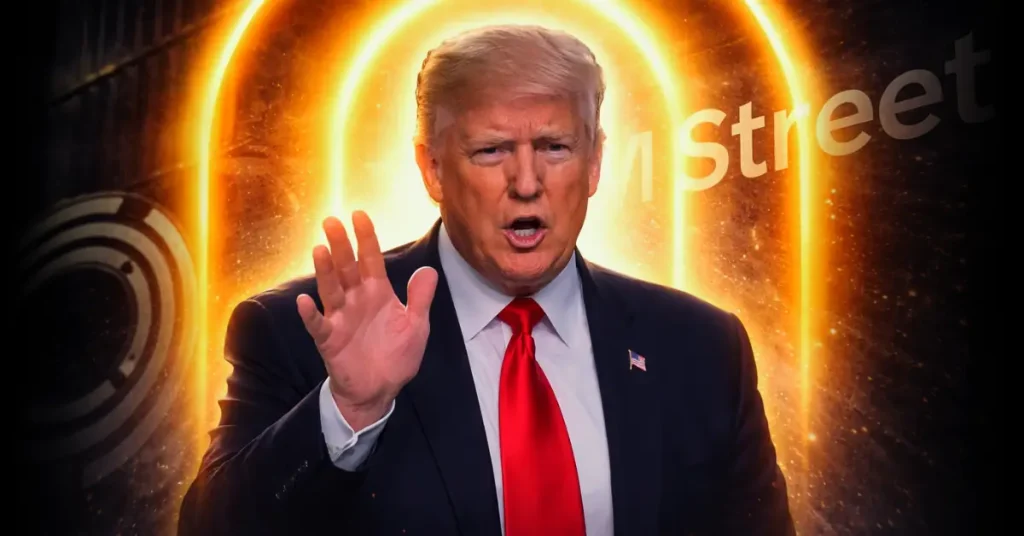
The U.S. government's decision to place President Trump's signature on dollar bills, starting with the $100 note in June 2026, represents a significant shift in currency tradition and national symbolism. This move, framed as a celebration of America's 250th anniversary and Trump's leadership, could influence public perception and potentially impact the perceived value or trust associated with U.S. currency. While the article focuses on traditional currency, the association of a prominent political figure with national financial instruments may indirectly influence sentiment in markets that track political stability and economic policy.
GrafTech's announcement of significant graphite electrode price increases, driven by rising input costs and geopolitical factors, signals potential for similar price adjustments by competitors like HEG. The market is interpreting GrafTech's price hike as a positive indicator for the graphite electrode sector, leading to a substantial surge in HEG's stock price. This development suggests a potential shift in pricing power within the graphite electrode market, allowing manufacturers to pass on increased operational costs to customers.

Tether's engagement of KPMG for a comprehensive USDT audit signals a significant step towards greater transparency, potentially alleviating past concerns over reserve backing and improving investor confidence. The dual engagement with KPMG and PwC for auditing and system preparation, alongside plans to register under the GENIUS Act, indicates Tether's strategic push for U.S. market expansion and regulatory compliance. This move by Tether to secure a Big Four audit is a notable development for the stablecoin market, setting a new standard for transparency and potentially influencing regulatory approaches to stablecoin issuers.

The cross-chain bridge sector, with TVL consistently exceeding $20B, is evolving from a niche concern to critical infrastructure, driven by the industry's shift towards multi-chain connectivity rather than a single dominant chain. While bridges are essential for DeFi, alternative swap-based cross-chain execution methods like ChangeNOW are gaining traction by avoiding the risks associated with lock-and-mint models and large locked pools. Security remains paramount, with users increasingly favoring bridges with robust architectures, multiple audits, and bug bounties, while also being wary of phishing risks and wrapped token contingent value. The market's focus is shifting from which chain will win to how value moves between them, highlighting the strategic importance of bridge design, chain/asset coverage, fee transparency, and non-custodial approaches.

Robert Kiyosaki reiterates his strategy of accumulating Bitcoin and Ethereum during potential market downturns, signaling a long-term conviction in these assets as crisis hedges. Kiyosaki's defense of his 'get rich in a crisis' stance, despite criticism, highlights a persistent narrative among some investors that crypto assets can outperform traditional markets during economic turmoil. The author's personal anecdote of buying Bitcoin at $600 underscores a 'buy and hold' strategy, suggesting that early adoption and conviction are key to profiting from crypto's volatility.
Ethereum is testing a critical $2,100 support level, with derivatives data showing an increase in long positions, suggesting potential upward pressure if the support holds. A breakdown below $2,100 could lead to a significant price drop towards the $1,900-$2,000 range, indicating a high-risk pivot point for traders. Despite increased long interest, Ethereum has not yet confirmed a breakout, meaning traders should remain cautious as sideways action could precede further declines.
Bitcoin faces significant resistance around the $72,000 to $72,600 zone, with orderbook data indicating heavy sell pressure that could lead to a downside move before any substantial rebound. The current market structure suggests Bitcoin is range-bound between $62,100 and $72,000, with repeated rejections at the upper band indicating a lack of immediate bullish momentum. Increased volatility risk is noted heading into the weekend, a pattern that could be exacerbated by thin liquidity and headline-driven moves, potentially leading to price sweeps into lower liquidity pockets. Traders should monitor the $72,000 resistance level for a decisive breakout; failure to do so, coupled with the observed overhead supply, implies a higher probability of testing lower support levels first.

Adam Back's assertion of a new $59,000 "math floor" for Bitcoin, based on the 200-week SMA, suggests a strong long-term support level is forming, potentially signaling continued bullish momentum for the asset. The 200-week moving average surpassing $59,000, highlighted by a prominent figure like Adam Back, reinforces a narrative of increasing structural value and potential for higher price floors in future cycles, aligning with 'hyperbitcoinization' theories. Despite short-term volatility, the sustained rise of the 200-week SMA to $59,000, coupled with institutional accumulation, provides a technical basis for ultra-bullish outlooks, implying that significant upside potential remains for Bitcoin.

Tether's engagement of KPMG for its first full USDT audit signals a significant step towards enhanced transparency and regulatory compliance, potentially bolstering market confidence. The audit initiative coincides with Tether's strategic push into the US market under new stablecoin legislation, suggesting a proactive approach to meeting regulatory demands and securing future growth. While the audit aims to provide a comprehensive view of USDT's reserves, the lack of a committed completion date and past regulatory settlements indicate that market participants should monitor ongoing developments closely.
XRP is consolidating below the critical $1.40 support level, with immediate resistance at $1.375, indicating a short-term bearish bias unless this level is reclaimed. Despite price weakness, rising long positions and open interest suggest underlying bullish conviction, creating a potential divergence that could fuel a rebound if resistance breaks. XRP's relative strength compared to stagnant altcoins, coupled with the growing African crypto market, presents a complex backdrop for its near-term price action, making it a watchlist candidate.

Bitmine's significant ETH accumulation, totaling over $253 million across multiple wallets, signals strong conviction in Ethereum's long-term value despite recent price dips. The upcoming MAVAN upgrade is positioned to enhance Bitmine's staking rewards, potentially increasing annual revenue by over 47% and reinforcing its role as a major ETH staking provider. Despite substantial ETH purchases and positive developments like the MAVAN upgrade, ETH price has continued to decline, suggesting broader market pressures are outweighing project-specific accumulation news in the short term. The mention of the CLARITY Act passing as a potential catalyst highlights the market's sensitivity to regulatory developments impacting Ethereum's future outlook.

Charles Hoskinson's praise for Midnight's novel tokenomics, emphasizing controlled supply and protocol revenue for sustainability, signals a potential shift in blockchain economic models away from traditional inflation. Midnight's proposed model, which uses protocol revenue to buy back and burn its native asset (NIGHT), aims for deflationary pressure and long-term budget stability, potentially appealing to investors wary of dilution. The success of Midnight's tokenomics hinges on execution and actual network usage; if it fails to attract significant activity, its deflationary and self-sustaining benefits may remain theoretical, posing a risk to its long-term viability.
Ethereum Classic's 'fifthening' mechanism, a 20% block reward reduction every 5 million blocks, is a more gradual approach to supply control compared to Bitcoin's 50% halving, signaling a predictable path towards scarcity for ETC. The recent ETC reward reduction in May-June 2024, lowering rewards to 2.048 ETC, and the upcoming 2026 reduction to 1.6384 ETC, are expected to gradually tighten supply, potentially increasing scarcity and influencing investor sentiment, though likely with less dramatic market reactions than Bitcoin halvings. As block rewards decrease, miners will face reduced income, potentially impacting the network's hash rate and increasing the relative importance of transaction fees for miner profitability, necessitating adaptation to the evolving economic model.

Bitcoin's price decline is accompanied by a significant 30% drop in active network addresses since August 2025, indicating a weakening user base that could hinder sustained recovery efforts. The 50-day SMA resistance at $70,010 and a bearish RSI signal suggest immediate overhead pressure, limiting upside potential in the short term. A historical pattern mirroring the July 2022 UTXO Realized Price structure, which preceded a major bear market leg, raises concerns about potential further downside despite short-term oversold conditions. The limited and reactive nature of retail participation, capped at 0.7% of network activity, suggests a lack of fundamental support for a robust price rebound.

Ripple CEO Brad Garlinghouse's neutral stance on the CLARITY Act, while predicting a 90% chance of passage by May, suggests a potentially favorable regulatory environment for stablecoins is approaching. Garlinghouse's critique of 'useless' stablecoins and emphasis on trust, regulation, and transparency signals a market consolidation favoring compliant and established players. The ongoing negotiations around the CLARITY Act, involving both lawmakers and industry participants like Coinbase, indicate a significant regulatory development that could reshape the crypto market structure.
Signal context only. Validate with price action, liquidity, and risk limits before taking a position.
Quick market read from this story
Significant outflows from spot Bitcoin ETFs suggest a cooling of institutional demand, potentially signaling a pause in accumulation and raising questions about Bitcoin's ability to sustain levels near $70,000 amid macroeconomic uncertainty.
The largest single-day ETF outflow in three weeks indicates a shift in institutional sentiment, moving from robust inflows to net withdrawals, which could precede a period of price consolidation or correction.
While the ETFs allow for easier market access, the recent moderation in flows highlights that institutional investors are adopting a more cautious stance, potentially awaiting clearer macroeconomic signals or price discovery.
Deep Dive
Institutional demand for bitcoin appears to be cooling, with significant outflows observed from U.S.-listed spot bitcoin exchange-traded funds (ETFs). On Thursday, investors withdrew a combined $171.12 million from the 11 ETFs, marking the largest single-day outflow in over three weeks, according to data from SoSoValue.
Major funds experienced notable withdrawals. BlackRock’s IBIT saw $41.92 million in outflows, while other funds including FBTC, GBTC, BITB, and ARKB each recorded outflows between $20 million and $30 million. This pullback follows a period of strong inflows, where these ETFs attracted over $2 billion between late February and mid-March. However, momentum has since moderated, with only $95.8 million in inflows last week and net outflows of $70.71 million in the current week.
The moderation in ETF flows suggests a potential pause in institutional accumulation, with investors adopting a more cautious approach. Launched in January 2024, these ETFs provide market participants with exposure to bitcoin without the need for direct ownership. The slowdown in demand raises questions about bitcoin's ability to sustain its price near $70,000 amidst broader macroeconomic uncertainties.
Bitcoin's price decline below $68,000, driven by rising U.S. Treasury yields and geopolitical tensions, suggests potential for further downside towards the $66,000 liquidity cluster. Negative funding rates and increased bond market volatility (MOVE index) indicate a bearish sentiment among derivatives traders and heightened macro-economic uncertainty, pressuring risk assets like Bitcoin. The correlation between rising U.S. Treasury yields, a strengthening dollar (DXY), and falling Bitcoin prices highlights the sensitivity of crypto markets to traditional macro factors. Significant long liquidations exceeding $50 million, with a majority in Bitcoin, underscore the immediate selling pressure and potential for cascading liquidations if the price continues to drop.
