
Navigating Crypto News

CoinFeather
Navigating Crypto News

Quick market read from this story
Disruptions to Russian oil exports by Ukraine, coupled with Middle East tensions, are prolonging elevated energy prices, which could lead to persistent inflation and pressure central banks to maintain or increase borrowing costs, negatively impacting risk assets like Bitcoin.
Traders are pricing in a potential Federal Reserve rate hike within two weeks, driven by sticky inflation concerns stemming from energy market instability, suggesting a near-term bearish outlook for Bitcoin as liquidity tightens.
The article suggests that Bitcoin's recent resilience may be tested, with the $65,000–$75,000 range becoming vulnerable to a downside break due to these macroeconomic pressures.
Deep Dive
Bitcoin and other risk assets face increased volatility as Ukraine's drone strikes on Russian oil infrastructure have exacerbated global energy market instability. This disruption complicates President Donald Trump's efforts to stabilize oil prices, which were already strained by the Iran war, and adds pressure to inflation outlooks, potentially influencing central bank policies.
Markets have been closely monitoring the Iran war and its impact on oil supply through the Strait of Hormuz, which had driven prices higher and fueled fears of persistent inflation and potential Federal Reserve rate hikes. In response, the Trump administration had temporarily lifted sanctions on Russian crude to offset supply shortages.
However, recent Ukrainian drone attacks on Russian ports and refineries in the Leningrad region have significantly impacted Russia's oil export capacity, with approximately 40% now offline. This situation presents the most serious threat to Russian oil exports since 2022, creating a significant logistics challenge in moving oil to buyers.
Michael Kern, editor at Oilprice.com, noted that the Russian disruption, combined with the Middle East conflict and the de facto closure of the Strait of Hormuz, contributes to already elevated oil prices. This suggests that oil prices may remain high for longer than anticipated.
Elevated and persistent energy prices pose a risk to cryptocurrencies like bitcoin. Higher energy costs can contribute to stubborn inflation, potentially prompting global central banks to increase borrowing costs and reduce liquidity in the financial system.
Traders are already anticipating a potential short-term Fed rate hike, with options market activity indicating a strong possibility of an increase within the next two weeks. These macroeconomic factors suggest that bitcoin's recent stability may be tested, with its current trading range of $65,000–$75,000 potentially vulnerable to a downward break.
As of press time, bitcoin was trading near $68,500, showing a nearly 2% decrease in the past 24 hours. Meanwhile, WTI oil has recovered to $93.50 per barrel after an earlier dip, and Brent crude has surpassed the $100 mark.
Source, catalyst, and sector overlap from the latest feed.
Significant outflows from spot Bitcoin ETFs suggest a cooling of institutional demand, potentially signaling a pause in accumulation and raising questions about Bitcoin's ability to sustain levels near $70,000 amid macroeconomic uncertainty. The largest single-day ETF outflow in three weeks indicates a shift in institutional sentiment, moving from robust inflows to net withdrawals, which could precede a period of price consolidation or correction. While the ETFs allow for easier market access, the recent moderation in flows highlights that institutional investors are adopting a more cautious stance, potentially awaiting clearer macroeconomic signals or price discovery.
XRP's sharp late-session sell-off below $1.36, accompanied by a spike in volume, indicates forced liquidations rather than profit-taking, suggesting weak underlying support. Rising leverage in XRP, with traders adding positions despite falling prices, creates a fragile setup where compressed volatility could precede a larger directional move. The immediate trading focus for XRP is on holding $1.35 as support; a break below this level could trigger further downside towards $1.30, while reclaiming $1.40 is necessary for structural stabilization.
Despite short-term price declines driven by geopolitical uncertainty, sustained ETF inflows and exchange outflows indicate underlying institutional accumulation and a potential shift towards self-custody. The market is at a critical juncture, needing to decide between breaking through the established uptrend or confirming the 50-day moving average as support, suggesting a near-term directional move is imminent. BlackRock's observation of investor concentration in Bitcoin and Ether, while shunning altcoins, highlights a potential bifurcation in market sentiment and capital allocation within the crypto space.
Tether's engagement of KPMG for a full audit and PwC for system preparation signals a significant move towards enhanced transparency, potentially alleviating past concerns about USDT reserves and bolstering confidence among institutional investors and regulators. The audit initiative, coupled with preparations for U.S. expansion and potential fundraising, suggests Tether is proactively addressing regulatory scrutiny and market demands for greater accountability, which could pave the way for broader adoption and integration into traditional finance. By undergoing a comprehensive audit, Tether aims to move beyond monthly attestations to a full financial statement audit, a critical step that could redefine market expectations for stablecoin issuers and influence the competitive landscape for dollar-pegged assets.
David Sacks' transition from White House AI and Crypto Czar to the President's Council of Advisors on Science and Technology signifies a shift in focus towards broader tech policy, potentially reducing direct crypto regulatory influence from this specific role. The move addresses concerns about Sacks exceeding his term limit as a special government employee, providing a more stable advisory position while potentially limiting his day-to-day crypto policy impact. With Sacks moving to a role focused on AI, quantum computing, and nuclear power, the direct oversight and advocacy for crypto policy within the White House may see a diffusion of influence.
Ethereum Classic's 'fifthening' mechanism, a 20% block reward reduction every 5 million blocks, is a more gradual approach to supply control compared to Bitcoin's 50% halving, signaling a predictable path towards scarcity for ETC. The recent ETC reward reduction in May-June 2024, lowering rewards to 2.048 ETC, and the upcoming 2026 reduction to 1.6384 ETC, are expected to gradually tighten supply, potentially increasing scarcity and influencing investor sentiment, though likely with less dramatic market reactions than Bitcoin halvings. As block rewards decrease, miners will face reduced income, potentially impacting the network's hash rate and increasing the relative importance of transaction fees for miner profitability, necessitating adaptation to the evolving economic model.
Bitcoin's price decline is accompanied by a significant 30% drop in active network addresses since August 2025, indicating a weakening user base that could hinder sustained recovery efforts. The 50-day SMA resistance at $70,010 and a bearish RSI signal suggest immediate overhead pressure, limiting upside potential in the short term. A historical pattern mirroring the July 2022 UTXO Realized Price structure, which preceded a major bear market leg, raises concerns about potential further downside despite short-term oversold conditions. The limited and reactive nature of retail participation, capped at 0.7% of network activity, suggests a lack of fundamental support for a robust price rebound.
An early Ethereum ICO investor realized a significant profit by selling 11,552 ETH for $23.42 million, demonstrating the long-term wealth generation potential of holding ETH since its inception. The sale of a substantial ETH holding at $2,027 per coin represents profit-taking activity, which could add to selling pressure in the short term, though the overall impact is mitigated by the long holding period. This event highlights the significant capital appreciation possible in early-stage crypto investments, with the original $12,000 ICO purchase now valued at approximately $79.5 million.
Bitcoin's 200-week moving average crossing $59,000 suggests a potential permanent price floor, indicating strong long-term support. The 200WMA historically acts as a bedrock support level during bear markets, often coinciding with institutional and retail accumulation phases. While past breaches of the 200WMA were anomaly events marking cycle bottoms, the current sustained hold above this level signals a shift in market sentiment and potential for sustained upward price action.
Geopolitical tensions are driving a risk-off sentiment in crypto markets, causing Bitcoin and Ethereum to decline and triggering significant liquidations. The crypto market is increasingly behaving as a liquidity-sensitive asset tied to global macro conditions, rather than a traditional hedge. With Bitcoin testing key support levels around $68,000 and Ethereum near $2,050, a breakdown could lead to further downside if geopolitical uncertainty persists. Elevated volatility is expected in the short term, with macro headlines dictating market direction over technical setups.
Live Feed
Loading the broader stream in the same flow as the homepage feed.
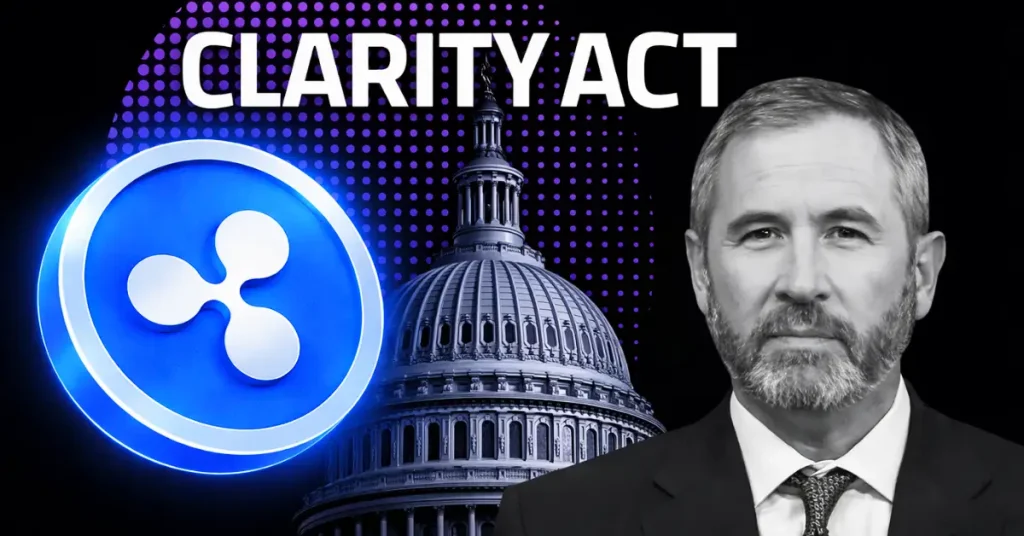
Ripple CEO Brad Garlinghouse's neutral stance on the CLARITY Act, while predicting a 90% chance of passage by May, suggests a potentially favorable regulatory environment for stablecoins is approaching. Garlinghouse's critique of 'useless' stablecoins and emphasis on trust, regulation, and transparency signals a market consolidation favoring compliant and established players. The ongoing negotiations around the CLARITY Act, involving both lawmakers and industry participants like Coinbase, indicate a significant regulatory development that could reshape the crypto market structure.

Chainlink is experiencing a significant increase in large wallet accumulation, with holders of 1,000+ LINK reaching a new high since December 2025, signaling potential investor confidence and accumulation ahead of a possible breakout. Coinbase's integration of Chainlink to publish proprietary exchange data on-chain via DataLink represents a major adoption for Chainlink's infrastructure, enhancing DeFi market data reliability and enabling new on-chain financial products. Despite current consolidation, the combination of increased whale holdings and the Coinbase integration provides a bullish on-chain and fundamental backdrop for LINK, suggesting a potential price appreciation above $10 in the near term, supported by historical April performance.
With SWIFT already having tested Ripple and Stellar, the focus is now shifting to a bigger question: what’s holding back full-scale live integration?

The crypto Fear and Greed Index dropping to 10 indicates extreme market fear, a condition historically preceding significant price rallies, with whale wallets accumulating BTC while retail sells. Pepeto's $8 million presale raise and upcoming Binance listing, coupled with projected 100x returns, suggest strong conviction from early investors despite broader market downturn. While ETH and XRP are testing key support levels with modest upside potential, the high-risk, high-reward profile of presale tokens like Pepeto is being highlighted as a primary wealth-building opportunity during this market reset. The article frames Pepeto as a "personal trading guard" with zero-fee trades and risk scoring, positioning it as a novel solution for traders seeking safety and efficiency amidst market volatility.

Hyperliquid's HYPE price is at a critical juncture with near-equal long and short positions totaling $3.46 billion, indicating a stalemate driven by whale activity. The historical price action of HYPE shows a pattern of extreme volatility, with sharp rallies followed by significant pullbacks, suggesting the current consolidation could precede a substantial move. The unique native matching system on Hyperliquid, where the protocol automatically creates opposing positions, ensures balanced trades and clear risk management, contributing to the current price battle. Despite balanced positions, short traders are committing more margin and have realized higher profits, indicating potential short-term downward pressure on HYPE.

The impending expiry of $15.58 billion in Bitcoin and Ethereum options today introduces potential for short-term price volatility as markets gravitate towards 'max pain' levels. While put/call ratios suggest a bullish leaning, Bitcoin's current trading price below key resistance levels indicates a bearish bias unless a significant upward move occurs before expiry. Ethereum's options expiry is expected to result in less pronounced price action compared to Bitcoin, with the ETH price likely to remain range-bound due to its proximity to the 'max pain' level. Traders should monitor Bitcoin's ability to break above $72,000-$75,000 for a bullish shift, while a sustained move below $70,000 could signal further weakness post-expiry.

Large Bitcoin holders have accumulated over 61,000 BTC in the past month, signaling potential accumulation ahead of a market breakout despite ongoing geopolitical uncertainty. Historical patterns suggest that whale accumulation alongside retail selling can precede the start of bull cycles, indicating a potentially bullish undertone for Bitcoin. Despite accumulation by whales, the Crypto Fear & Greed Index remains in "extreme fear," highlighting a divergence between large holder behavior and broader market sentiment. While some whales are accumulating, others are moving assets to exchanges amid market dips, suggesting a bifurcated strategy among major holders influenced by short-term price action and geopolitical events.

The expiration of $13.5 billion in BTC and ETH options on Deribit today, the largest settlement of Q1 2026, is creating market volatility and potentially driving capital towards new presale opportunities like Pepeto. Pepeto, a new meme exchange built by the co-founder of the original Pepe coin, is attracting significant capital ($8M+ raised) and is positioned for a potential 100x return, especially with an upcoming Binance listing. While SOL and ADA are showing signs of recovery, with potential upside targets of 26% and 55% respectively, the article emphasizes that presale entries like Pepeto offer the highest potential for life-changing multiples.

Tether's engagement of KPMG for a comprehensive audit of its USDT reserves signifies a proactive step towards enhancing transparency and addressing regulatory concerns, potentially bolstering market confidence in the stablecoin's backing. The move beyond BDO Italia's attestations to a full audit by a 'Big Four' firm like KPMG indicates a maturing approach to reserve management, which could set a precedent for other stablecoin issuers facing increased scrutiny. By hiring PwC to prepare its systems, Tether is demonstrating a commitment to robust internal controls, a critical factor for maintaining stability and trust, especially as the company explores U.S. expansion.

Brazil's new law empowers authorities to freeze, seize, and liquidate crypto assets linked to serious crimes, signaling a more aggressive stance on illicit finance. The legislation allows for early liquidation of seized crypto before conviction and redirects these funds to public security, potentially impacting the available supply of certain assets if significant seizures occur. This development enhances Brazil's ability to cooperate internationally on asset recovery, potentially increasing the risk for criminals attempting to move illicit funds across borders. While Brazil considered a national Bitcoin reserve, the focus has shifted to utilizing seized crypto, indicating a pragmatic approach to asset management and law enforcement funding.

The arrest of a key facilitator in a transnational crypto scam network highlights a global effort to dismantle illicit operations, potentially reducing the prevalence of crypto-related fraud. Increased law enforcement action against scam compounds, supported by blockchain tracing tools, signals a maturing regulatory environment that could indirectly benefit legitimate crypto adoption by improving ecosystem trust. This development underscores the growing intersection of organized crime and cryptocurrency, emphasizing the need for enhanced crypto forensics and cross-border cooperation to combat financial crime.

David Sacks' departure from his White House crypto czar role removes a key advocate for initiatives like the Clarity Act, potentially slowing regulatory progress. While Sacks is stepping down as czar, his continued role on PCAST suggests ongoing, albeit broader, influence on AI and crypto policy, mitigating immediate negative impact. The uncertainty surrounding a potential replacement or redistribution of responsibilities for crypto policy leadership could create a period of watchful waiting for market participants. The unfinished status of key legislative proposals like the Clarity Act and Strategic Bitcoin Reserve, coupled with Sacks' exit, may lead to increased volatility or reduced investor confidence in near-term regulatory clarity.

Brazil's new law enabling the seizure and liquidation of crypto assets linked to crime represents a significant regulatory development, potentially impacting illicit finance flows and increasing the available supply of seized assets for public security funding. The practical application of this law could lead to increased on-chain monitoring and enforcement actions against criminal entities utilizing cryptocurrencies, signaling a more assertive stance by Brazilian authorities. While the law targets criminal activity, the mechanism for liquidating seized assets could introduce new dynamics to the market for those specific cryptocurrencies, depending on the volume and frequency of sales.
Signal context only. Validate with price action, liquidity, and risk limits before taking a position.
