
Navigating Crypto News

CoinFeather
Navigating Crypto News

Quick market read from this story
The expiration of $13.5 billion in BTC and ETH options on Deribit today, the largest settlement of Q1 2026, is creating market volatility and potentially driving capital towards new presale opportunities like Pepeto.
Pepeto, a new meme exchange built by the co-founder of the original Pepe coin, is attracting significant capital ($8M+ raised) and is positioned for a potential 100x return, especially with an upcoming Binance listing.
While SOL and ADA are showing signs of recovery, with potential upside targets of 26% and 55% respectively, the article emphasizes that presale entries like Pepeto offer the highest potential for life-changing multiples.
Deep Dive
A significant event in the crypto market is unfolding today, March 27, with approximately $13.5 billion in Bitcoin and Ether options expiring on Deribit. This marks the largest single settlement event of Q1 2026. The forced adjustments in positions are driving capital towards promising crypto presales, particularly those with tangible products, such as Pepeto. Analysts are projecting substantial returns, with potential for 100x gains for early investors in Pepeto, especially with an upcoming Binance listing.
The massive options expiry is creating a market reset, prompting investors to seek out the best crypto presales offering clear value. Pepeto is highlighted as a leading presale, built by the co-founder of the original Pepe coin. The platform aims to address common trader issues like capital leakage through fees, risky contracts, and costly transfers. PepetoSwap offers zero-fee trades, a cross-chain bridge with zero cost, and a risk scorer for contract verification, all of which are already live and have undergone a SolidProof audit.
The development team behind Pepeto includes a former Binance expert, lending credibility to the project. The presale has already raised over $8 million, described as the fastest capital flow this cycle, even during a period of market fear. With an entry price of $0.000000186, analysts anticipate a 100x return following its listing on Binance. Additionally, the project offers a 193% APY staking reward for existing holders.
In comparison, established cryptocurrencies like Solana (SOL) are trading around $87.17, facing resistance at $95, with a potential upside to $117 (26% gain). Cardano (ADA) is priced at $0.27, showing signs of recovery with a potential run to $0.42 (55% gain). While these assets offer steady growth, the potential for life-changing multiples is seen in presale opportunities like Pepeto.
The article emphasizes that early entry into presales like Pepeto can lead to generational wealth, drawing parallels to the success of DOGE, which grew from $0.007 to a $90 billion market cap. The Pepeto official website is presented as the current entry point for investors looking to capitalize on this opportunity before the Binance listing, which is expected to trigger significant returns.
What makes Pepeto the best crypto presale as $13.5B in options expire? Pepeto is live, verified, has raised over $8 million, and analysts project 100x from presale entry with an upcoming Binance listing.
What will drive the best crypto presale price after listing? Pepeto's growing user base and the official website's ongoing presale access are expected to drive demand.
How much return can the best crypto presale deliver this cycle? The co-founder of Pepe, which reached an $11 billion market cap with no products, is behind Pepeto, offering a potential 100x return from presale entry.
Source, catalyst, and sector overlap from the latest feed.
Over $100 million in tokens are scheduled to unlock across ten projects between March 30 and April 5, introducing potential selling pressure to the market. Projects with the highest percentage unlocks relative to circulating supply, specifically Definitive's EDGE (13.8%), GUNZ (4.1%), and EigenCloud's EIGEN (2.04%), face the greatest risk of short-term price depreciation. Sui's SUI token unlock of $47.5 million on April 1 represents the largest single event, warranting close observation of its price action. The compressed timeframe of these unlocks across multiple assets could lead to increased volatility and trading opportunities for short-term focused participants.
Pi Network mandates a Protocol 21 upgrade by April 6, with non-compliant nodes facing disconnection, signaling ongoing network development towards v23.0. Despite the technical upgrade, significant community frustration persists regarding unresolved KYC verification issues, impacting user access and sentiment. The mandatory upgrade highlights the critical role of node operators in Pi Network's ecosystem, while community concerns about declining participation raise questions about decentralization.
Cosmos (ATOM) is in a repair phase, attempting to stabilize after a prolonged decline, with recovery contingent on reclaiming key resistance levels like $3.00. The interoperability narrative for Cosmos remains relevant as the industry matures towards multi-chain ecosystems, potentially supporting long-term price targets up to $62 by 2030. Current price action shows ATOM consolidating within a $1.50-$2.00 range, indicating a balanced market with fading selling pressure but lacking strong accumulation signals for a breakout. While long-term projections suggest significant upside potential by 2050, near-term price action is characterized by consolidation, implying a 'HOLD' or 'WATCHLIST' stance rather than an immediate buy signal.
Litecoin is currently consolidating between $50-$60, with $60 acting as a key resistance and $50 as a demand floor, indicating a need for a breakout to establish a new trend. Price predictions suggest a gradual recovery for LTC in 2026, with targets ranging from $100-$150, contingent on reclaiming resistance levels above $60-$65. Long-term forecasts for Litecoin by 2030 anticipate significant growth, potentially reaching $1000+, driven by its established role as a reliable payment network and increasing crypto adoption. The next Litecoin halving is anticipated in July 2027, which could impact supply dynamics and potentially influence price action leading up to and following the event.
Despite a general market downturn, specific altcoins like Bittensor (TAO), Siren (SIREN), and Midnight (NIGHT) are highlighted with potential price targets, suggesting selective opportunities amidst broader weakness. The article presents a watchlist of altcoins with price targets for the upcoming week, indicating a focus on short-term trading opportunities rather than long-term structural plays. Factors such as institutional participation and geopolitical uncertainty are cited as influencing market sentiment, but the analysis focuses on technical indicators and specific coin performance for the watchlist.
Cardano's listing on Bitstamp via Robinhood significantly enhances its U.S. market access and global liquidity, potentially driving increased investor interest and trading volume. Analyst projections suggest a potential 585% surge for ADA to $5.36 in the next bull cycle, supported by technical indicators and recent positive market developments. Despite short-term resistance near $0.70, the MACD and RSI indicators suggest underlying bullish momentum for ADA, indicating potential for gradual gains. The acquisition of Bitstamp by Robinhood adds a layer of institutional backing and expanded regulatory compliance, which could positively influence ADA's perceived stability and accessibility.
Pepeto is positioned as a high-potential opportunity due to its presale pricing and upcoming Binance listing, contrasting with the longer recovery timelines for established assets like BNB and SUI. The article highlights the growing institutional acceptance of blockchain, evidenced by the RWA tokenization hearing, suggesting a favorable environment for projects like Pepeto that align with regulatory clarity. Analysts are favoring Pepeto for its utility-focused platform and the potential for significant returns, driven by its presale success and confirmed exchange listing, which is expected to tighten supply.
The upcoming PCE inflation data on March 28th is a critical macro catalyst that could influence the Federal Reserve's monetary policy, directly impacting risk assets like Cardano (ADA) by determining whether interest rates remain high or are cut. While Cardano's price prediction is currently tied to macro factors and faces resistance at $0.27, the Pepeto presale is presented as an independent opportunity with built-in catalysts like an $8 million raise and a confirmed Binance listing, aiming for significant returns irrespective of broader market movements. The article contrasts the uncertain near-term outlook for ADA, dependent on inflation data and breaking key resistance levels, with the perceived immediate upside potential of the Pepeto presale, which is already live with audited tools and analyst projections of 100x-300x returns. Traders are advised to consider the Pepeto presale as a potentially more immediate opportunity for high returns compared to Cardano, which requires broader market recovery and specific price level breaks to see substantial gains.
The easing of geopolitical tensions with Iran, signaled by oil prices falling below $100, is creating a more favorable macro environment, potentially driving capital rotation into riskier assets like cryptocurrencies. Pepeto is positioning itself as a high-potential 'next crypto to explode' with a Binance listing imminent, a $8 million presale raise, and projected 100x returns, leveraging its co-founder's history with Pepe and its utility features like zero-fee trading and a risk scorer. While large-cap assets like BTC and AVAX show signs of recovery and utility-driven growth (RWA, AI), the article emphasizes that the most significant multiples this cycle are likely to come from early-stage presale entries like Pepeto, which offers a combination of product utility and exchange listing catalysts.
BNP Paribas' expansion into crypto ETNs for retail clients in France signifies growing institutional acceptance and provides a regulated on-ramp for traditional investors seeking Bitcoin and Ether exposure. The offering of ETNs, rather than direct asset holding, highlights a strategy by traditional finance to bridge the gap for risk-averse retail investors, potentially increasing indirect demand for underlying crypto assets. This move by a major European bank, alongside other recent developments like the UK lifting its ban on crypto ETNs, indicates a broader trend of increasing accessibility and regulatory normalization for digital assets in Europe.
A White House advisor's warning suggests that industry resistance to the Clarity Act compromise could lead to significantly harsher regulations under a future Democratic administration, impacting stablecoin yields and DeFi. Coinbase's opposition to provisions limiting stablecoin yield payments highlights a key point of contention in the Clarity Act, potentially altering how exchanges offer interest-bearing products and impacting the stablecoin savings narrative. The ongoing legislative delays and internal industry disagreements over the Clarity Act create regulatory uncertainty, which could pressure crypto assets and exchanges if a more stringent regulatory framework is imposed.
Despite reaching a new all-time high, HYPE shows signs of bearish divergence and significant long liquidations, suggesting a potential pullback is imminent. Robust utility and strong on-chain metrics like increasing TVL and DEX volume on the Hyperliquid network are currently propping up HYPE's price, creating a tug-of-war between bullish fundamentals and bearish technical signals. The surge in derivatives volume and open interest, coupled with substantial long liquidations, indicates heightened market activity and potential volatility for HYPE in the short term. While HYPE's price has rallied significantly, the increasing long liquidations and bearish RSI divergence suggest that the current upside momentum may not be sustainable without further fundamental catalysts.
Live Feed
Loading the broader stream in the same flow as the homepage feed.

Veteran trader Peter Brandt warns of a potential 75% Bitcoin crash, drawing parallels to the 2022 downturn, suggesting a significant risk of downside repricing if historical patterns repeat. On-chain indicators and derivatives market data suggest potential overheating, with rising liquidations and speculative interest signaling increased volatility and vulnerability for leveraged positions. Technical indicators like MACD and Awesome Oscillator show slowing bullish momentum, indicating Bitcoin may face resistance near $110K and potential pullback towards $108K-$108.5K support levels.

Ethereum has reclaimed its 200-day Moving Average, a technical indicator suggesting a potential bullish trend reversal and a move towards the $4,000 price target predicted by market experts. Consistent inflows into Ethereum ETFs, coupled with strong DeFi ecosystem performance and increasing whale accumulation, indicate growing institutional and retail confidence in ETH's upward trajectory. Significant whale activity, including a large SOL to ETH swap, suggests a strategic rotation into Ethereum, anticipating outperformance against other major altcoins like Solana. The resurgence of Ethereum's Layer-1 stablecoin market share and transaction volume highlights its foundational role in DeFi, reinforcing its market position and potential for further price appreciation.

Significant whale accumulation, evidenced by a 1,645% surge in net flows, suggests strong conviction for PEPE's potential price appreciation. Despite recent pullbacks and liquidations, PEPE's resilience above key Fibonacci support and a positive funding rate in derivatives indicate sustained trader optimism. While technical indicators like MACD and RSI show slowing momentum and neutrality, the underlying whale accumulation and bullish derivatives sentiment could precede a breakout, though the target of $0.0003 remains speculative.

A significant whale dump of 1 trillion PEPE tokens, coupled with a decrease in whale holdings and realized losses, indicates waning confidence and potential capitulation, suggesting a bearish outlook for the memecoin. Despite a surge in trading volume and open interest in derivatives markets, the formation of a bearish head and shoulders pattern on the PEPE chart signals a potential 53% price decline, targeting a significant drop to $0.000001011. While some short-term bullish indicators and a mixed long/short ratio exist, the overwhelming technical bearish signals and large-scale whale selling suggest a high probability of a significant price correction in the near term.
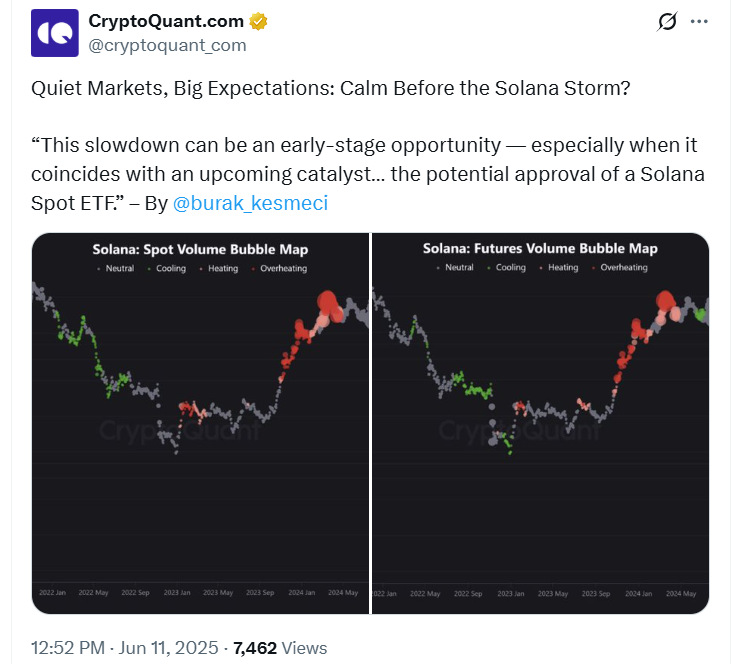
Solana's on-chain indicators suggest a cooling market phase, which analysts interpret as a potential precursor to a significant price breakout, driven by anticipation of a SOL ETF approval. The SEC's request for amendments to Solana ETF filings, with a decision potentially by mid-July or early August, represents a key regulatory catalyst that could unlock institutional capital and drive demand for SOL. The burgeoning Solana memecoin ecosystem, exemplified by Pump.Fun's rapid growth and high token launch volume, is contributing to positive sentiment and potential price appreciation for the SOL network.
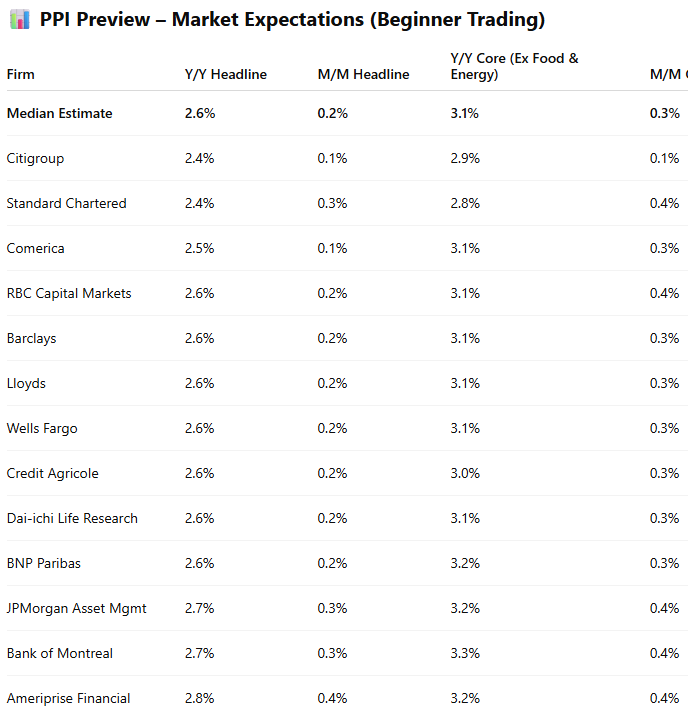
US PPI inflation at 2.6% aligns with forecasts, reinforcing market expectations for two Fed rate cuts this year, which could provide a tailwind for risk assets if realized. JPMorgan's warning of oil prices potentially reaching $120 due to Middle East tensions introduces a significant inflation risk that could derail dovish Fed expectations and pressure crypto markets. The upcoming expiration of substantial BTC and ETH options contracts, coupled with bearish put-call ratios and max pain points, suggests potential short-term price volatility and downside risk for major cryptocurrencies. Geopolitical tensions and renewed tariff discussions are contributing to broader market uncertainty, weighing on Bitcoin and other crypto prices despite the supportive inflation data.
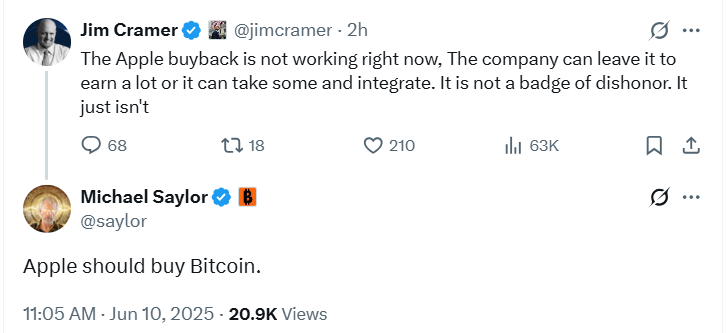
Michael Saylor's proposal for Apple to allocate cash reserves to Bitcoin instead of stock buybacks highlights a growing narrative around corporate treasury diversification and inflation hedging. While the direct impact on Apple's stock or Bitcoin's price is speculative, the repeated advocacy by a prominent figure like Saylor for major tech companies to adopt Bitcoin signals increasing institutional interest and potential future adoption trends. The online support for Saylor's idea, coupled with past instances of tech giants like Tesla making BTC purchases, suggests a growing sentiment among crypto advocates for broader corporate adoption, which could influence market perception.
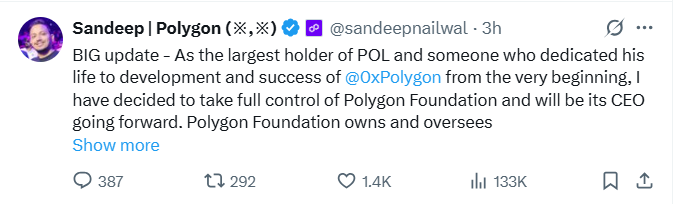
Sandeep Nailwal's assumption of CEO role at Polygon Foundation signals a strategic pivot towards Polygon PoS and Agglayer, potentially boosting POL's utility and investor confidence. The discontinuation of the zkEVM project by 2026 and focus on PoS and Agglayer indicates a consolidation of resources and a clearer development path, which could lead to improved transaction performance and new use cases like RWA and stablecoin payments. The SEC dropping its case against MATIC, coupled with Nailwal's active leadership and plans for POL staker airdrops, creates a more favorable environment for POL price appreciation, contingent on the successful execution of the Agglayer roadmap. Internal leadership changes and a shift to a more agile, startup-like approach aim to accelerate decision-making and adapt to market dynamics, suggesting a potential for faster innovation and value creation for POL holders.
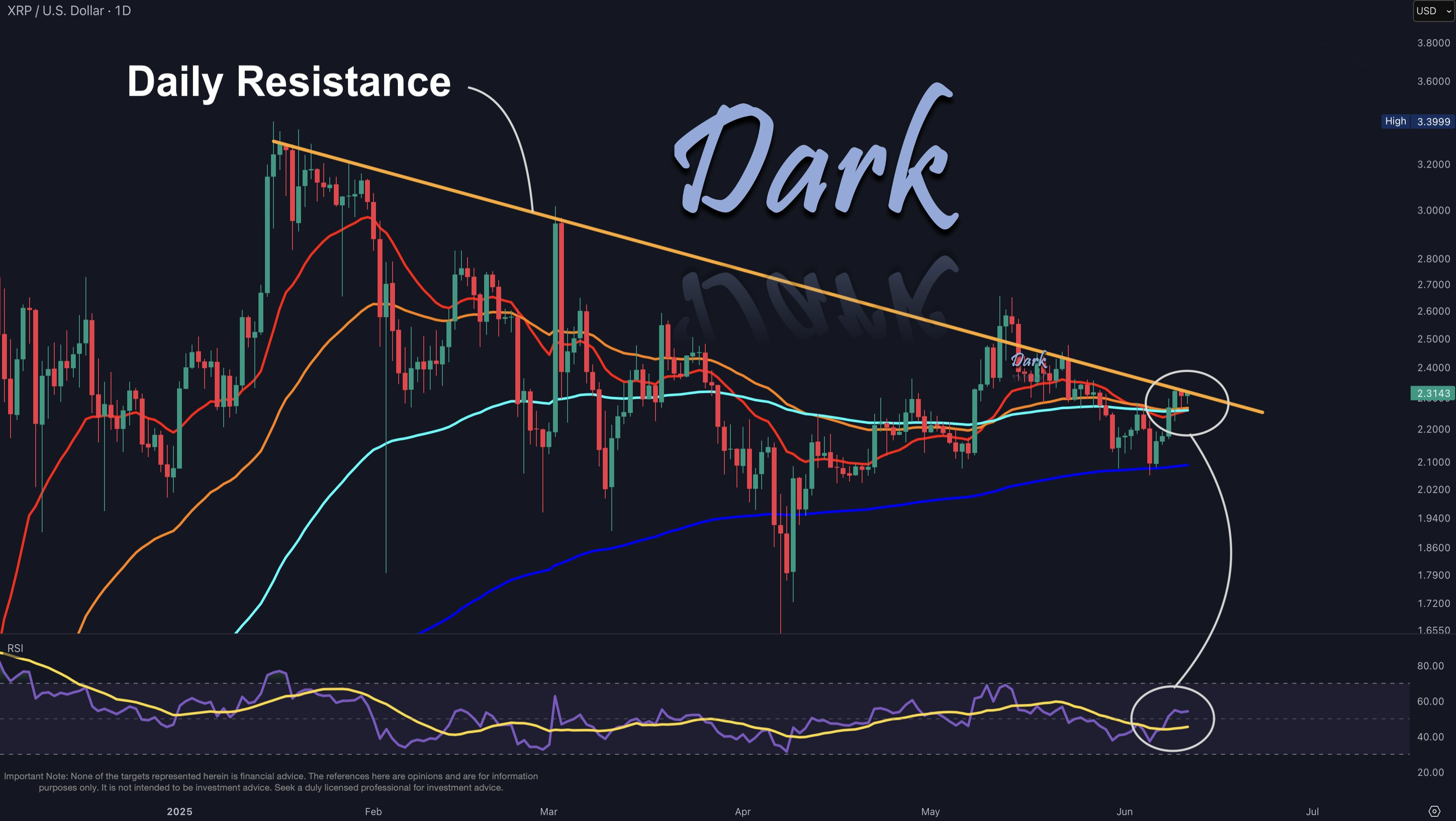
The Ripple vs. SEC lawsuit remains a critical overhang for XRP, with a former SEC lawyer outlining four potential settlement scenarios that could impact the asset's price and Ripple's future IPO plans. The ongoing legal battle, particularly the injunction against Ripple, directly hinders its ability to pursue an IPO, making its resolution a key driver for potential upside and market clarity. While the lawsuit's outcome is uncertain, recent analyst predictions suggest a bullish outlook for XRP price, contingent on breaking key resistance levels, indicating potential short-term trading opportunities.
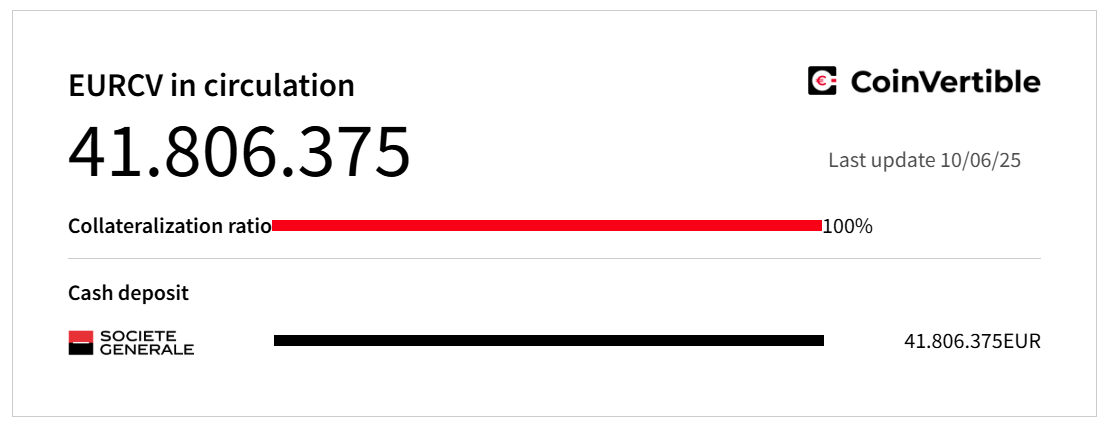
Societe Generale's launch of a USD-pegged stablecoin (USDCV) on both Ethereum and Solana signifies a major traditional finance institution expanding its digital asset offerings. The dual-chain deployment on Ethereum and Solana aims to broaden adoption, leveraging the strengths of established and rapidly growing blockchain ecosystems. With BNY Mellon as custodian and compliance with MiCA regulation, the USDCV launch signals increasing institutional confidence and regulatory preparedness in the stablecoin market. The exclusion of US persons from USDCV, mirroring EURCV, highlights ongoing regulatory complexities for stablecoin issuers targeting global markets.

Increased optimism surrounding potential Solana ETF approvals, with Polymarket odds surging to 92%, suggests significant institutional interest and a potential catalyst for SOL price appreciation. The SEC's request for amendments from 7 ETF applicants indicates an expedited review process, potentially leading to approvals within weeks and driving demand for SOL similar to BTC's ETF impact. Despite positive ETF sentiment, SOL price has recently pulled back to a two-month support level, presenting a potential entry point for traders anticipating a positive regulatory outcome. The inclusion of staking language in ETF applications could unlock new demand drivers for SOL, enhancing its appeal to institutional investors and potentially boosting network activity.
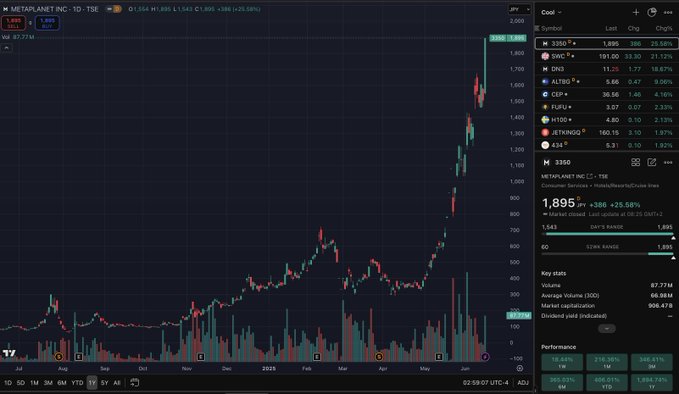
Metaplanet's stock surge to a 12-year high, driven by its aggressive Bitcoin accumulation strategy, signals strong investor confidence in BTC as a treasury reserve asset. Circle's post-IPO stock performance demonstrates significant market enthusiasm for stablecoin issuers, potentially indicating a broader trend of institutional adoption and validation. The positive momentum across crypto-related stocks like MARA, COIN, and RIOT, alongside Metaplanet and Circle, suggests a general market uplift and increased investor appetite for the crypto sector. Metaplanet's strategic Bitcoin accumulation, now holding over 8,888 BTC, positions it as a significant player in the public company Bitcoin holder landscape and a hedge against economic headwinds.
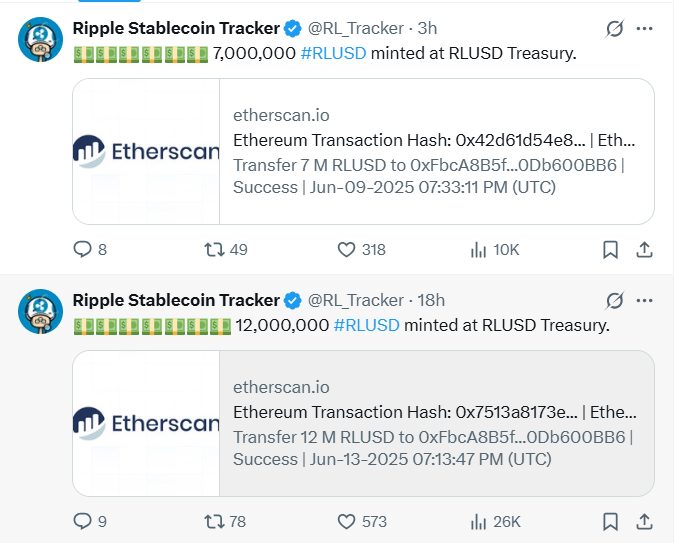
Ripple's RLUSD stablecoin has resumed minting on Ethereum after a 30-day pause, signaling a potential supply increase or expansion plans. The RLUSD minting occurs just days before a U.S. Senate vote on the GENIUS Act, which could introduce stricter stablecoin regulations, creating regulatory uncertainty. Despite a slight depeg, RLUSD is trading near its peg and has seen renewed attention, indicating market interest in its performance amidst regulatory headwinds and competition. The restart of RLUSD minting on Ethereum, rather than XRP Ledger, raises questions among users about Ripple's strategy and the future development of its stablecoin ecosystem.
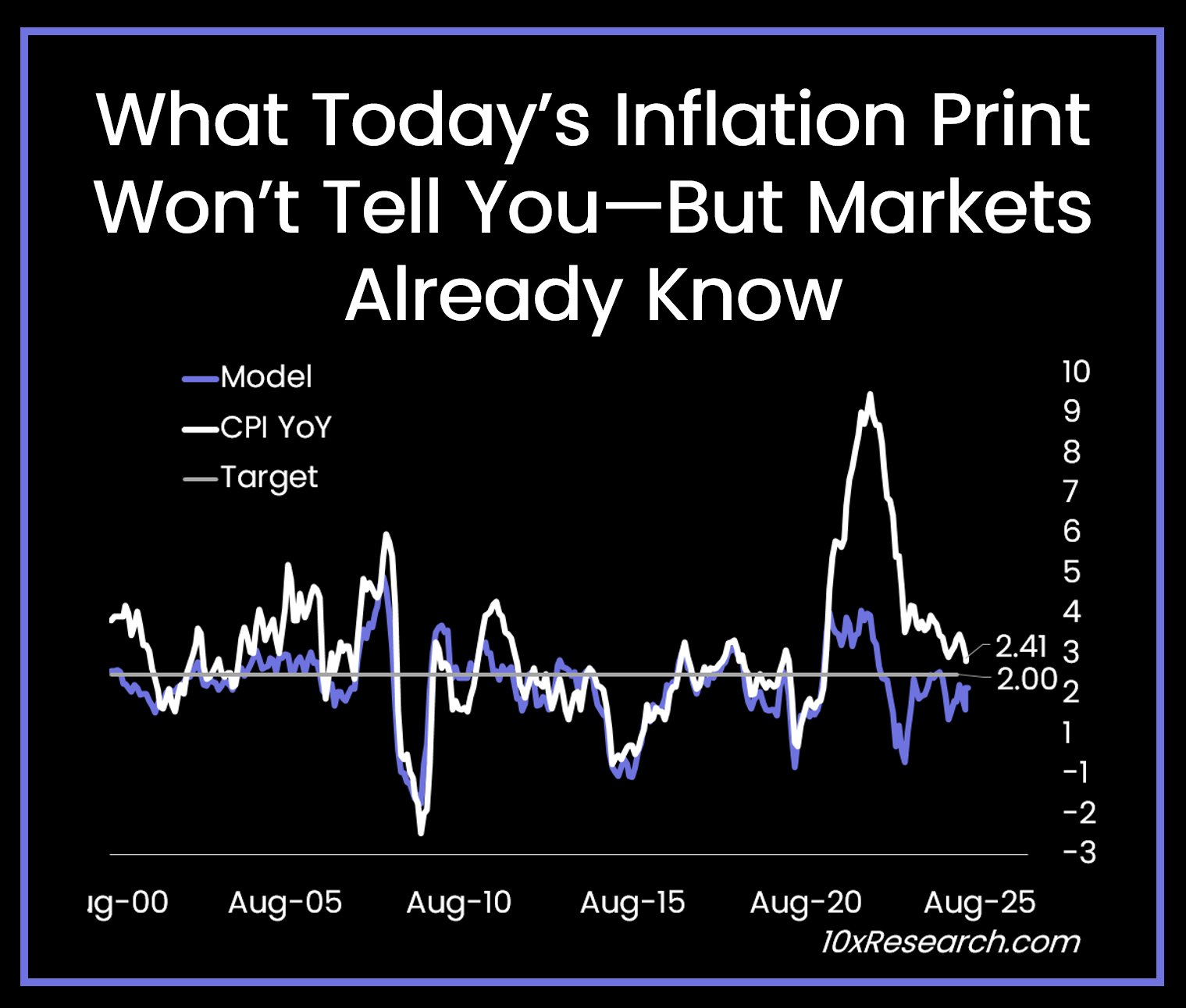
US CPI inflation at 2.4% was slightly below the 2.5% forecast, indicating a potential easing of price pressures that could support risk assets like Bitcoin and Ethereum. Despite the slightly lower-than-expected CPI, the market's focus remains on potential Federal Reserve rate cuts, with CME FedWatch showing high probabilities for September and December, which could be a tailwind for crypto. While Bitcoin and Ethereum saw minor price movements, the underlying sentiment suggests resilience, with analysts like 10x Research noting that even weaker data might reignite stimulus discussions, potentially benefiting crypto. Whale accumulation of Bitcoin and increased futures trading volume for Ethereum suggest underlying strength and potential for upside, despite current price range-bound action.
Signal context only. Validate with price action, liquidity, and risk limits before taking a position.
