
Navigating Crypto News

CoinFeather
Navigating Crypto News
Quick market read from this story
The U.S. government's decision to place President Trump's signature on dollar bills, starting with the $100 note in June 2026, represents a significant shift in currency tradition and national symbolism.
This move, framed as a celebration of America's 250th anniversary and Trump's leadership, could influence public perception and potentially impact the perceived value or trust associated with U.S. currency.
While the article focuses on traditional currency, the association of a prominent political figure with national financial instruments may indirectly influence sentiment in markets that track political stability and economic policy.
Source, catalyst, and sector overlap from the latest feed.
Anchorage Digital's addition of TRON custody provides U.S. institutions with a regulated on-ramp, potentially increasing institutional demand for TRX and TRC-20 tokens. The integration of TRON, a network with significant stablecoin activity, by a federally chartered crypto bank highlights a growing trend of traditional finance infrastructure supporting diverse blockchain ecosystems. Future support for TRC-20 tokens and native staking by Anchorage Digital could further enhance TRX's appeal to institutional investors seeking yield and broader network participation.
Live Feed
Loading the broader stream in the same flow as the homepage feed.

Visa's integration as a super validator on Canton Network signals growing institutional adoption of privacy-preserving blockchain solutions. Ondo's price surge, driven by its real-world asset tokenization partnership with Franklin Templeton, highlights the sector's potential despite broader market downturns. Broader market sentiment remains bearish due to geopolitical tensions and rising interest rates, impacting major cryptocurrencies like Bitcoin and Ether. The return of ETF outflows and macro headwinds suggest continued pressure on Bitcoin and Ether, with potential for further downside if key support levels break.

GameStop's decision to pledge its entire Bitcoin holdings as collateral for a covered call strategy, rather than selling, indicates a shift from a passive treasury reserve to an active income-generating approach, potentially signaling a change in its broader crypto thesis. The company's $131.6 million loss on digital assets, primarily due to accounting derecognition and unrealized losses, highlights the financial risks and complexities of corporate Bitcoin treasury management, especially when combined with derivative strategies. While GameStop's core retail business faces revenue declines, the strategic use of its Bitcoin collateral for options trading, coupled with a significant cash position, suggests a focus on financial engineering and potential future acquisitions rather than direct crypto market participation.

The significant liquidation of $300 million in Bitcoin and Ether longs indicates a crowded bullish sentiment unwinding, suggesting a potential short-term bearish pressure as leveraged positions are forced out. A broader risk-off sentiment, driven by rising oil prices and geopolitical concerns, is dragging down crypto assets alongside equities, implying that macro factors are currently overriding crypto-specific developments. While most altcoins are underperforming, ONDO's gains from tokenizing Franklin Templeton ETFs highlight a specific RWA narrative gaining traction, potentially creating isolated opportunities amidst general market weakness. The continued demand for put options and negative funding rates on certain altcoins like XRP suggest that traders are anticipating further downside, reinforcing a bearish outlook for these specific assets.
Nexa's upcoming halving event in 2026, reducing block rewards by 50%, is a fundamental supply-side shock designed to increase scarcity and potentially influence price dynamics over the long term. The halving event is a critical milestone for Nexa, signaling a shift in its tokenomics that could impact miner profitability and encourage greater efficiency in network operations. While historically correlated with bull cycles for Bitcoin, Nexa's halving is not a direct price catalyst but rather a structural event that may spur speculation and align with long-term value appreciation narratives if demand persists.
Anchorage Digital's introduction of regulated institutional custody for TRX, following the SEC settlement with Justin Sun, removes a significant regulatory overhang and opens the door for institutional capital inflow into the TRON ecosystem. The phased rollout of Anchorage's services, including future TRC-20 USDT custody and TRX staking, presents a clear roadmap for increased institutional participation and yield generation within TRON, potentially driving demand for TRX. TRX's outperformance against a bleeding crypto market highlights the market's pricing of TRON's recent regulatory clarity and infrastructure expansion, contrasting with broader macro pressures affecting assets like Bitcoin. The substantial scale of TRON's network, evidenced by over $86 billion in TRC-20 USDT circulation and $24 billion TVL, provides a strong fundamental basis for institutional interest, amplified by recent developments in AI funding and developer tooling.

Decentraland's MANA is showing signs of potential recovery, with on-chain metrics like rising Open Interest and a positive 30-day MVRV ratio indicating renewed trader interest and short-term holder profitability. Despite a significant decline since 2021, MANA is retesting a critical support level established in early 2021, suggesting a potential reversal if it can maintain a weekly close above $0.35, which could pave the way for a $1.00 target. Accumulation by mid-tier 'whale' and 'shark' wallet tiers, coupled with positive funding rates, suggests that significant market participants are positioning for potential upside, providing a foundational support for future price action. Long-term price predictions for MANA range significantly, with forecasts for 2030 suggesting a potential high of $5.15, contingent on growing metaverse adoption and user activity within Decentraland.
Pi Network's price predictions for 2026-2030 range from $0.85 to $22.00, indicating a speculative outlook based on potential future adoption and market conditions rather than current utility. Despite attracting millions of users for mobile mining, Pi Coin faces significant challenges due to a lack of exchange listings, limited liquidity, and minimal real-world integration, which are hindering its price recovery and relevance. The article presents a highly speculative price forecast for Pi Coin, with projected highs of $3.50 in 2026 and $22.00 by 2030, but these targets are not supported by current fundamental developments or clear catalysts.
Mortgage rates have reached a 7-month high of 6.62%, signaling increased borrowing costs that could dampen demand during the crucial spring home-buying season. Geopolitical tensions and persistent inflation concerns are driving Treasury yields higher, directly impacting mortgage rates and creating market uncertainty. Despite a recent surge in rates, purchase applications remain slightly above last year's levels, indicating underlying buyer caution rather than a complete withdrawal from the market. The current volatility in mortgage rates, influenced by global events and economic data, presents a challenging environment for buyers and sellers alike, with potential for delayed decisions.

The CLARITY Act's passage is stalled by disagreements over stablecoin yield rewards, impacting market structure legislation that defines SEC vs. CFTC jurisdiction and token classification. The delay in the CLARITY Act, particularly concerning stablecoin yields, has led to market repricing, with Coinbase and Circle experiencing significant drops, indicating investor sensitivity to regulatory uncertainty. Failure to pass the CLARITY Act before the midterms could leave the US crypto market operating under ambiguous agency guidance and enforcement history, hindering institutional adoption and capital formation. The core of the CLARITY Act debate extends beyond stablecoin yields to fundamental issues like developer liability, self-custody rights, and the creation of a lawful US fundraising path for crypto projects.

The UK's ban on crypto donations to political parties, coupled with a £100,000 cap on overseas donations, signals a heightened regulatory scrutiny on digital asset usage in political financing. This regulatory tightening, alongside expanded crypto tax reporting rules aligned with the OECD's CARF, indicates a broader trend towards increased transparency and control over crypto assets within the UK. While not directly impacting trading of specific assets, these regulatory moves by a major economy like the UK could influence investor sentiment and prompt similar actions in other jurisdictions, creating a watch-and-wait environment.

Vietnam detained ONUS-linked suspects in an alleged token fraud case as police described price manipulation, false promotions and centralized market control.

Significant net outflows from Bitcoin and Ethereum ETFs on March 26 indicate institutional investors are reducing exposure amid market uncertainty and upcoming options expiries. The concentration of leverage and open interest on major exchanges suggests a fragile market structure driven by a limited set of participants, amplifying short-term volatility risks. Upcoming Bitcoin and Ethereum options expiries totaling $16.4 billion could introduce short-term market friction as traders manage positions ahead of settlement. Subdued activity in Solana and XRP ETFs points to a cautious, wait-and-see approach for smaller-cap crypto products, reflecting selective institutional engagement.
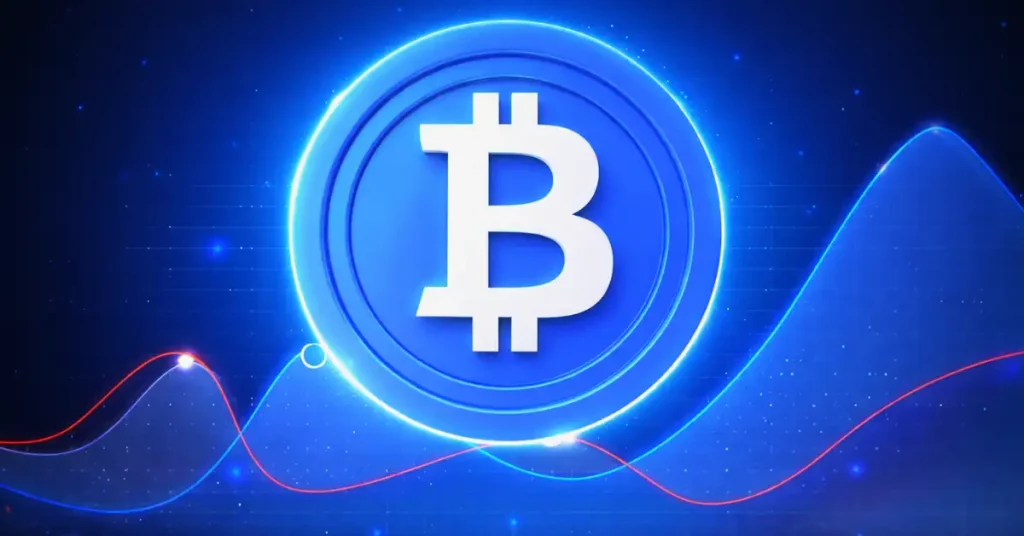
Bitcoin's current consolidation near $68,000, coupled with derivatives data showing weak conviction and rising leverage, suggests a potential liquidity sweep to $66K before any upward move to $72K. The dominance of perpetual futures volume over spot indicates a market driven by leveraged positions, increasing the likelihood of sharp, volatility-driven price action rather than a steady trend. Traders should anticipate potential short-term downside volatility as Bitcoin tests lower liquidity zones around $66K-$68K, which could precede a move towards the $70K-$72K resistance area.
The TRUMP coin, a Solana-based memecoin tied to Donald Trump, is presented with price predictions ranging from $14-$42 by 2026 and up to $212.25 by 2030, indicating significant speculative potential driven by political events and community efforts. Despite a history of volatility and pump-and-dump accusations, renewed interest is noted due to a new game launch and on-chain data showing mid-tier wallet accumulation, suggesting potential for a speculative rebound. The article focuses heavily on price predictions and speculative future performance, with limited discussion of underlying utility or fundamental value beyond its association with Donald Trump and a new game release.
Ripple's experimental stablecoin payment on XRP Ledger signals potential for expanded real-world use cases beyond speculation. The successful integration of stablecoins for payments on XRPL could drive further institutional adoption by offering a less volatile transaction medium. Increased stablecoin activity and payment transaction volume on XRPL, coupled with AI-driven security enhancements, suggest growing infrastructure maturity for institutional use. Ripple's ongoing development of payment solutions and its USD stablecoin's market cap growth indicate a strategic push into broader financial services integration.
Signal context only. Validate with price action, liquidity, and risk limits before taking a position.
Zcash's CIO presents a bullish outlook, projecting a $4,000 price target based on capturing a small fraction of Bitcoin and gold markets, highlighting its potential as an undervalued privacy asset. The analysis posits that Zcash's enhanced privacy features, particularly against AI-driven deanonymization and traditional asset transfer limitations, offer a distinct advantage over Bitcoin and gold for capital seeking digital privacy. The recent closure of the SEC's investigation into Zcash provides a degree of regulatory clarity, though the potential for future regulatory shifts remains a consideration for market participants.
